mirror of
https://github.com/openclaw/openclaw.git
synced 2026-06-20 13:42:02 +08:00
Compare commits
2241 Commits
codex/fix-
...
detached-w
| Author | SHA1 | Date | |
|---|---|---|---|

|
2de191988a | ||
|
|
e276b09db2 | ||
|
|
3d1e1143e2 | ||
|
|
620ddd6609 | ||
|
|
c700bfc35d | ||
|
|
50458789ad | ||
|
|
ea37a833dc | ||
|
|
94e2bf258d | ||
|
|
042c117342 | ||
|
|
92a4d72709 | ||
|
|
648f60c188 | ||
|
|
a48b655006 | ||
|
|
b9d108453f | ||
|
|
1df6d0467c | ||
|
|
60827fa096 | ||
|
|
cdce715ba4 | ||
|
|
7b5f09ab9d | ||
|
|
f88ffa7f79 | ||
|
|
3fb2c9a916 | ||
|
|
1f25db1514 | ||
|
|
aff96ea963 | ||
|
|
24c4e458f9 | ||
|
|
444ece721c | ||
|
|
221e550eb9 | ||
|
|
c9be0ece71 | ||
|
|
84f535c315 | ||
|
|
66c1190bcc | ||
|
|
f070a92e19 | ||
|
|
d63671fce0 | ||
|
|
41a01cdae5 | ||
|
|
67d2026e22 | ||
|
|
9de39accdb | ||
|
|
4e01916a7e | ||
|
|
a89c1baddc | ||
|
|
66e1c3982d | ||
|
|
98a0b22e8e | ||
|
|
4bc5eab390 | ||
|
|
2ad17098fe | ||
|
|
54d7728e74 | ||
|
|
4d27f3b04c | ||
|
|
4800d4e1d7 | ||
|
|
2c53354901 | ||
|
|
212f6ddf8f | ||
|
|
a80874a4c1 | ||
|
|
485c258aaf | ||
|
|
a4130ae8ed | ||
|
|
b36d688f78 | ||
|
|
a1b4ef9b2f | ||
|
|
f19e3ab298 | ||
|
|
f96eca4ab2 | ||
|
|
c68a582e6e | ||
|
|
451b37ece1 | ||
|
|
b414c8b863 | ||
|
|
be47599cad | ||
|
|
66ae458cce | ||
|
|
0ce5e358d4 | ||
|
|
3c354c0907 | ||
|
|
df3aa90a20 | ||
|
|
1d5b58ac18 | ||
|
|
9fc0d2a6bf | ||
|
|
77b424b15e | ||
|
|
97492cf602 | ||
|
|
fd90c30c23 | ||
|
|
4e6dfc015e | ||
|
|
4ebeb18fde | ||
|
|
3730d6d17a | ||
|
|
52cca21ea8 | ||
|
|
f657a25422 | ||
|
|
b64e1d8b91 | ||
|
|
03de50e70b | ||
|
|
7d9a9d83ff | ||
|
|
d5b326523f | ||
|
|
6159b17cdf | ||
|
|
f06493f0ea | ||
|
|
d41c9860d7 | ||
|
|
4277078bc5 | ||
|
|
f9a1875127 | ||
|
|
f309656325 | ||
|
|
f039d80306 | ||
|
|
4d4f3eb404 | ||
|
|
733c0c2fda | ||
|
|
efc19f0ddb | ||
|
|
8fbf0972e7 | ||
|
|
f38a498985 | ||
|
|
55f094ea33 | ||
|
|
d64948f5c2 | ||
|
|
517801282a | ||
|
|
c206702add | ||
|
|
9b38606d5c | ||
|
|
c0563aa532 | ||
|
|
aa76cf43f0 | ||
|
|
1d4e4314dd | ||
|
|
64089fd15e | ||
|
|
99fb9ab444 | ||
|
|
34334f0e68 | ||
|
|
21cfc21e4f | ||
|
|
f44a7423c2 | ||
|
|
055c17b088 | ||
|
|
84cd786911 | ||
|
|
bd3ad3436e | ||
|
|
c67a9c5259 | ||
|
|
28ee477930 | ||
|
|
4ca5f51430 | ||
|
|
8cb73844c8 | ||
|
|
d83215084f | ||
|
|
4cfc8cd5be | ||
|
|
25e51bba52 | ||
|
|
53495f5136 | ||
|
|
0787266637 | ||
|
|
2ecea9395b | ||
|
|
ec193a2b82 | ||
|
|
8c4ecf42df | ||
|
|
6682b12563 | ||
|
|
beb2fded6d | ||
|
|
a1f277e30e | ||
|
|
6d427f8c2a | ||
|
|
39cb6ecbb9 | ||
|
|
dc3df91e95 | ||
|
|
bb6ba38a10 | ||
|
|
9a93ea9d7a | ||
|
|
3e081c5d21 | ||
|
|
c72f539ced | ||
|
|
83801c49f7 | ||
|
|
812f96cf24 | ||
|
|
2f84c47b8b | ||
|
|
d385b96451 | ||
|
|
d4e1a790ab | ||
|
|
34abb441f6 | ||
|
|
984ecd98ca | ||
|
|
528f296cfc | ||
|
|
45381135df | ||
|
|
2a14f76964 | ||
|
|
ca3e5ffd89 | ||
|
|
9686e518bc | ||
|
|
5ca33f7cb4 | ||
|
|
dfe2e81829 | ||
|
|
3eed321081 | ||
|
|
2a35ea4f07 | ||
|
|
efda761724 | ||
|
|
c63d6bf508 | ||
|
|
bcbb3de760 | ||
|
|
590474a9a4 | ||
|
|
10e14bd5be | ||
|
|
bfea6bebc9 | ||
|
|
ab4eb5aa94 | ||
|
|
f5c49758fc | ||
|
|
394c7a2357 | ||
|
|
91ad6c2739 | ||
|
|
04697eca88 | ||
|
|
1908967cfa | ||
|
|
f54cf74ef6 | ||
|
|
44166f7cfe | ||
|
|
6a87d6e814 | ||
|
|
0f871664c5 | ||
|
|
0a5515297e | ||
|
|
97a3089cec | ||
|
|
555f74cf67 | ||
|
|
9e93aa0c32 | ||
|
|
bf5b6cba70 | ||
|
|
24b915ed41 | ||
|
|
8233ca6401 | ||
|
|
bf2fbf071b | ||
|
|
199f4d78d9 | ||
|
|
4da808da50 | ||
|
|
67bd9edd8b | ||
|
|
6de5f92835 | ||
|
|
83a0f1fd52 | ||
|
|
314654bd0f | ||
|
|
22d99ee9df | ||
|
|
8f92c0607c | ||
|
|
74f0dc87de | ||
|
|
43f6ffd0ae | ||
|
|
c560793482 | ||
|
|
1212412ff1 | ||
|
|
a56aa6ccbe | ||
|
|
59032f63b1 | ||
|
|
72f4b4186b | ||
|
|
aa8331c836 | ||
|
|
4862d34925 | ||
|
|
e39af9545f | ||
|
|
e28984c74a | ||
|
|
3d3d585165 | ||
|
|
5200ffb90c | ||
|
|
0969336ef6 | ||
|
|
2d6f44b6ce | ||
|
|
ff5904f5f4 | ||
|
|
faae8e08b3 | ||
|
|
f8f98c116e | ||
|
|
b7d362ddbb | ||
|
|
a4ac25972b | ||
|
|
b73103ab85 | ||
|
|
14435c8bdf | ||
|
|
9380128193 | ||
|
|
5bbfa40255 | ||
|
|
496ccc3f73 | ||
|
|
383fa94c92 | ||
|
|
d1485ada9c | ||
|
|
1917c09d1c | ||
|
|
6798cbbd52 | ||
|
|
10d7c4d50e | ||
|
|
37bed56c1d | ||
|
|
caf8d75dfb | ||
|
|
ac8f0c9c0d | ||
|
|
9a1761d80c | ||
|
|
89a5eadd4e | ||
|
|
77876bd05c | ||
|
|
805481c176 | ||
|
|
9d8e923ddb | ||
|
|
af711f9e9f | ||
|
|
346aa0ed47 | ||
|
|
6f076dcde7 | ||
|
|
1f71137d1e | ||
|
|
046d983d26 | ||
|
|
550b946696 | ||
|
|
13e707fb7f | ||
|
|
1bef457cb6 | ||
|
|
f40bd56793 | ||
|
|
473225c471 | ||
|
|
f62766b996 | ||
|
|
22a9dade9c | ||
|
|
3fb87b127c | ||
|
|
e1fe71872c | ||
|
|
c96a0b1112 | ||
|
|
0dda02515f | ||
|
|
a86c43e1fd | ||
|
|
60d83b1d32 | ||
|
|
7ac3c2ca88 | ||
|
|
1ce9c355ab | ||
|
|
7b7d69a31e | ||
|
|
ac0515ce7e | ||
|
|
6e18f0e59e | ||
|
|
ba58bc3787 | ||
|
|
58a3527e17 | ||
|
|
2172bf1cdd | ||
|
|
a5ea6d3cf4 | ||
|
|
f1d04006e0 | ||
|
|
861e23b02c | ||
|
|
6ffcf4523d | ||
|
|
cf3c1994dc | ||
|
|
e88a9e5ee4 | ||
|
|
158ebbb2ed | ||
|
|
aaad2468c8 | ||
|
|
1652707c6e | ||
|
|
f8f9f13e0d | ||
|
|
91bb931b0f | ||
|
|
e7343dbfa8 | ||
|
|
b7446a0c65 | ||
|
|
2070142c49 | ||
|
|
570fb5594c | ||
|
|
17fcbcefbc | ||
|
|
57326feb8d | ||
|
|
58da2f5897 | ||
|
|
0e9d63a417 | ||
|
|
cbe124689d | ||
|
|
a0919685be | ||
|
|
ecfd6cfa73 | ||
|
|
fc0c707b98 | ||
|
|
15a7869bbc | ||
|
|
b97d50f2fb | ||
|
|
5aaec6a389 | ||
|
|
cef82adf19 | ||
|
|
cea60d603e | ||
|
|
3455c857a0 | ||
|
|
0001551143 | ||
|
|
3ea27c63e2 | ||
|
|
d9b05e601e | ||
|
|
4a5a43fb98 | ||
|
|
212c4af50d | ||
|
|
de9f726add | ||
|
|
daabd058fc | ||
|
|
7bc3019691 | ||
|
|
73728127b6 | ||
|
|
6fb74d4985 | ||
|
|
9a94194329 | ||
|
|
4e2541e5fb | ||
|
|
f76883d46c | ||
|
|
1fd049e307 | ||
|
|
e90c89cf8b | ||
|
|
a4a34edd21 | ||
|
|
f48c91ac2f | ||
|
|
8bfa06e992 | ||
|
|
e89e214516 | ||
|
|
310d2db312 | ||
|
|
3b2db583cd | ||
|
|
7481478303 | ||
|
|
f0f4fa6978 | ||
|
|
da22866030 | ||
|
|
808be2cae7 | ||
|
|
7b2a723891 | ||
|
|
40d2e5aa45 | ||
|
|
d2c1b743c0 | ||
|
|
966a3ea27c | ||
|
|
b4543caf55 | ||
|
|
e069169765 | ||
|
|
127bafa0b9 | ||
|
|
23ff2a9cf7 | ||
|
|
db0d212835 | ||
|
|
f00ef03d91 | ||
|
|
607c855621 | ||
|
|
2bca977ced | ||
|
|
688adf732d | ||
|
|
1af8bd90c3 | ||
|
|
26f1f28ffe | ||
|
|
f60c3bf6e0 | ||
|
|
5530cec127 | ||
|
|
46d6f500f3 | ||
|
|
c6784493fc | ||
|
|
4db3c5145f | ||
|
|
cc8f4e98a6 | ||
|
|
d5f8f62ab2 | ||
|
|
eed0a93c59 | ||
|
|
57b55883c5 | ||
|
|
85826c83e4 | ||
|
|
3a20606c04 | ||
|
|
2dabf1932f | ||
|
|
2e1ddedc58 | ||
|
|
dc30298b29 | ||
|
|
8879ed153d | ||
|
|
5d6ee4f73e | ||
|
|
e8b401d0c8 | ||
|
|
2fc429dfbf | ||
|
|
f1cc8f0cfc | ||
|
|
b2ca265f11 | ||
|
|
4a4f52b097 | ||
|
|
a018257487 | ||
|
|
f6921fd733 | ||
|
|
20debfab90 | ||
|
|
78288e37ed | ||
|
|
859eb06662 | ||
|
|
f98e98ab66 | ||
|
|
d97d5c04f0 | ||
|
|
6f450c2d1f | ||
|
|
5f2e77a6e1 | ||
|
|
554507b413 | ||
|
|
de2a9459e5 | ||
|
|
ea1e933b29 | ||
|
|
848f154f3e | ||
|
|
f298f86a7f | ||
|
|
8f648078bd | ||
|
|
ed463f6de0 | ||
|
|
3a3ab31d2b | ||
|
|
1d7d268a63 | ||
|
|
1687c672a7 | ||
|
|
045010bb78 | ||
|
|
6794ff411a | ||
|
|
35e31ed351 | ||
|
|
2d59395883 | ||
|
|
67ebc433f9 | ||
|
|
93a6c93865 | ||
|
|
b3a97df754 | ||
|
|
8ba5865383 | ||
|
|
60baaf6e04 | ||
|
|
b928f360a1 | ||
|
|
a2b093cf6a | ||
|
|
0195da6b0e | ||
|
|
6d40de45c7 | ||
|
|
98316cfbbd | ||
|
|
3cb142ff2e | ||
|
|
501a68a69b | ||
|
|
b5038fd9a1 | ||
|
|
cfd796a515 | ||
|
|
7d728afa12 | ||
|
|
712644f0d9 | ||
|
|
511a6c0ad0 | ||
|
|
155162a8cd | ||
|
|
4fa961d4f1 | ||
|
|
0c245c35c5 | ||
|
|
cd783b9946 | ||
|
|
afebeb5e9a | ||
|
|
866d1eef0a | ||
|
|
ab1e091e39 | ||
|
|
d1fb2d25ea | ||
|
|
2b7b5774b6 | ||
|
|
73e497f9be | ||
|
|
85912849cc | ||
|
|
a5d6330f87 | ||
|
|
58759bb565 | ||
|
|
f168a62068 | ||
|
|
796f272f7d | ||
|
|
ebfab7bf84 | ||
|
|
90b8f3fba2 | ||
|
|
d8b18f1d96 | ||
|
|
a07b9fc840 | ||
|
|
9e27d04dc3 | ||
|
|
fe0055a1d1 | ||
|
|
6ccac3d208 | ||
|
|
5e7b5cf285 | ||
|
|
ec86d0f64a | ||
|
|
5dbfaa15fa | ||
|
|
d3eeadba94 | ||
|
|
858a3f72fa | ||
|
|
f6d336935d | ||
|
|
1cc9bc58a2 | ||
|
|
1f1ff0567a | ||
|
|
cc919db83b | ||
|
|
84aed919a9 | ||
|
|
162bf51adb | ||
|
|
28fe0296c4 | ||
|
|
00e613f12d | ||
|
|
7474b52584 | ||
|
|
438799e929 | ||
|
|
28be124cc1 | ||
|
|
a7e029fde9 | ||
|
|
c39314c14a | ||
|
|
3f3bc97cd3 | ||
|
|
235cdb3f81 | ||
|
|
6b525023d4 | ||
|
|
5cc4426f88 | ||
|
|
089e038dfe | ||
|
|
4a870300dd | ||
|
|
90c1ab2cef | ||
|
|
16bd427cb6 | ||
|
|
e45a50c828 | ||
|
|
4180e7cd59 | ||
|
|
6d776593ea | ||
|
|
df525b90f2 | ||
|
|
630f2bcabe | ||
|
|
106b770c40 | ||
|
|
960bc52e3c | ||
|
|
1a7d89e85b | ||
|
|
3d994aa03b | ||
|
|
72979129fb | ||
|
|
e11039087c | ||
|
|
cd2ef0f3a3 | ||
|
|
07785c6dbc | ||
|
|
753183e081 | ||
|
|
c95d6049c2 | ||
|
|
76891c9cf8 | ||
|
|
8aadca4c3e | ||
|
|
aad9a833c0 | ||
|
|
6368559c02 | ||
|
|
31e5cd6376 | ||
|
|
e7d33b4870 | ||
|
|
f38727acd9 | ||
|
|
8c5a4eb866 | ||
|
|
ca1aa08709 | ||
|
|
54f121f843 | ||
|
|
fa2f53993a | ||
|
|
53239102f8 | ||
|
|
6f9cebf1ca | ||
|
|
791dbf4f9d | ||
|
|
cdaa70facb | ||
|
|
d13869aab9 | ||
|
|
464cbbc9f9 | ||
|
|
aa73df571d | ||
|
|
4852935e8e | ||
|
|
c035c5c0d2 | ||
|
|
68502c90d1 | ||
|
|
66385670e4 | ||
|
|
3f2e73b723 | ||
|
|
cf88e4876d | ||
|
|
840bf00887 | ||
|
|
e85e6bc4fb | ||
|
|
40c30d0062 | ||
|
|
6d55fa19db | ||
|
|
e5747629c3 | ||
|
|
552c0f22a6 | ||
|
|
dd618aa545 | ||
|
|
de4429ceb3 | ||
|
|
334f0a4de2 | ||
|
|
442deb0816 | ||
|
|
25ce5a5822 | ||
|
|
992b2143dd | ||
|
|
f7ceb98b72 | ||
|
|
a2eb8fa48f | ||
|
|
26cc1bc681 | ||
|
|
9501656a8e | ||
|
|
ef3f9796c8 | ||
|
|
eaaab098fb | ||
|
|
13a0d7a9e0 | ||
|
|
49ae60d6ca | ||
|
|
31437b9e3b | ||
|
|
3b9e0da02d | ||
|
|
4b5987829d | ||
|
|
c778562379 | ||
|
|
f45bc09206 | ||
|
|
18c4fd5678 | ||
|
|
c2fb4007c2 | ||
|
|
dc3b10285d | ||
|
|
458a52610a | ||
|
|
996eb9a024 | ||
|
|
2c3542e315 | ||
|
|
a0dd5f7e8e | ||
|
|
e910fe446a | ||
|
|
110f8bd2e1 | ||
|
|
dee99f27d1 | ||
|
|
a50ec27d3b | ||
|
|
a09bf67fa5 | ||
|
|
361750775d | ||
|
|
a22b789547 | ||
|
|
36068281fb | ||
|
|
0e4ddf7b38 | ||
|
|
c8d722d093 | ||
|
|
27f34f0491 | ||
|
|
6b99917d4e | ||
|
|
3abb5fd291 | ||
|
|
569247cff8 | ||
|
|
576ce7c656 | ||
|
|
4143da0ffa | ||
|
|
ac39cef969 | ||
|
|
30cbfa3457 | ||
|
|
3213fcddbe | ||
|
|
4c12ff6d23 | ||
|
|
ed65e8017d | ||
|
|
7db9a53254 | ||
|
|
52b8e318bd | ||
|
|
ca34c7cd7b | ||
|
|
5cf01ac7c1 | ||
|
|
e493d1d2fd | ||
|
|
75ffa29054 | ||
|
|
4749993bb5 | ||
|
|
0266cf4d10 | ||
|
|
b295f4afd8 | ||
|
|
e2351b5fdc | ||
|
|
5d8dceb37f | ||
|
|
5af1a51f8e | ||
|
|
8e0bcd0585 | ||
|
|
3ca8ad3845 | ||
|
|
6f4d13f3bd | ||
|
|
c54464a887 | ||
|
|
41ee813a45 | ||
|
|
8567dcfdd4 | ||
|
|
c756d61cdc | ||
|
|
b1c032245c | ||
|
|
503b748a8e | ||
|
|
cad1d04491 | ||
|
|
c9dfb19001 | ||
|
|
5d6041de81 | ||
|
|
647c56ef66 | ||
|
|
1da928211b | ||
|
|
141c7f8eaa | ||
|
|
d834d270df | ||
|
|
8a0977f405 | ||
|
|
c86beb237e | ||
|
|
2482e70fb8 | ||
|
|
c03f97f954 | ||
|
|
8b5030447a | ||
|
|
48c4a026dd | ||
|
|
420b1da82f | ||
|
|
afdbf48914 | ||
|
|
c0b8250f4f | ||
|
|
d89cee8787 | ||
|
|
815e2fc529 | ||
|
|
18b45e63f2 | ||
|
|
855c7cf989 | ||
|
|
78f0fb660c | ||
|
|
30895f7135 | ||
|
|
76812401ca | ||
|
|
5edf876a5e | ||
|
|
1e7c7dd02f | ||
|
|
f61712437f | ||
|
|
99ef3a63c5 | ||
|
|
af0f7e1bc7 | ||
|
|
8742e8fae3 | ||
|
|
8dde0acbae | ||
|
|
ff55cd5c16 | ||
|
|
0e7a992d3f | ||
|
|
77e588ebc3 | ||
|
|
5ae059db16 | ||
|
|
a8a701291b | ||
|
|
2c7c06c9b3 | ||
|
|
d0cf6731aa | ||
|
|
a001b5343f | ||
|
|
50e71daaa0 | ||
|
|
8b76bcba90 | ||
|
|
c550642cde | ||
|
|
fde25bfb8c | ||
|
|
08e1eb7a9f | ||
|
|
c408bbe9c9 | ||
|
|
809f42eeea | ||
|
|
087f1584df | ||
|
|
f7422e1fbc | ||
|
|
169b68d709 | ||
|
|
014eaa8492 | ||
|
|
e9d052d728 | ||
|
|
f897025d9b | ||
|
|
5f075d3d49 | ||
|
|
8747351383 | ||
|
|
bb5d9948c2 | ||
|
|
be6dbd4084 | ||
|
|
bbbb57f7f8 | ||
|
|
4dd999274b | ||
|
|
7c862da6a1 | ||
|
|
125b1e0e20 | ||
|
|
55c7776364 | ||
|
|
16e7f04a43 | ||
|
|
2e2f927d5d | ||
|
|
0a38098248 | ||
|
|
f61896b03c | ||
|
|
2745e5b3bd | ||
|
|
f70b651b12 | ||
|
|
dadcfb574f | ||
|
|
729feb4b99 | ||
|
|
8c3a8f0b1b | ||
|
|
ee0c8177bf | ||
|
|
462074c4c2 | ||
|
|
c0a9b694f3 | ||
|
|
2c43c441b2 | ||
|
|
b39f3cf266 | ||
|
|
79dfb4db69 | ||
|
|
990bd81726 | ||
|
|
90979d7c3e | ||
|
|
8eb577b361 | ||
|
|
7edce9c8fa | ||
|
|
e75cd46ba6 | ||
|
|
38923d13a6 | ||
|
|
b303b6c492 | ||
|
|
b6e55bf819 | ||
|
|
c47c4b3574 | ||
|
|
d155d578eb | ||
|
|
3a1e469732 | ||
|
|
f334ca2b50 | ||
|
|
e606656b56 | ||
|
|
9feeb921f5 | ||
|
|
c050cdaa96 | ||
|
|
783bb1f759 | ||
|
|
4ba12bd134 | ||
|
|
f0c6b102be | ||
|
|
354dbf2161 | ||
|
|
1a3a040cc3 | ||
|
|
6184f17c91 | ||
|
|
bbac7773ff | ||
|
|
aaf9064a75 | ||
|
|
36b98f78b2 | ||
|
|
ddd2c2a602 | ||
|
|
f7eb746081 | ||
|
|
c2e4b47d7b | ||
|
|
628e6cd446 | ||
|
|
5d8cecbe7d | ||
|
|
2b08233a3e | ||
|
|
a464f5926b | ||
|
|
20cf51169b | ||
|
|
eed71160ae | ||
|
|
5c2f4afcce | ||
|
|
1df50183b2 | ||
|
|
0747a9c85a | ||
|
|
7876e3e736 | ||
|
|
1519b006b8 | ||
|
|
f93b7da4c4 | ||
|
|
9bcf8f8243 | ||
|
|
474b08bfbd | ||
|
|
00fadb978f | ||
|
|
f665c767e6 | ||
|
|
81d6cf9c82 | ||
|
|
f513bae67e | ||
|
|
76c8db3766 | ||
|
|
3ed0995fa9 | ||
|
|
df06343dfa | ||
|
|
8448569aca | ||
|
|
114b87caf2 | ||
|
|
dfca5bd0fe | ||
|
|
89d3117ad0 | ||
|
|
42817a1707 | ||
|
|
8c249a8cca | ||
|
|
8d7a722487 | ||
|
|
f8a0ae0b08 | ||
|
|
06e3d53c8a | ||
|
|
7815d25eef | ||
|
|
8caad53f57 | ||
|
|
769198e67e | ||
|
|
41ef752dd8 | ||
|
|
c580933623 | ||
|
|
b9d5c1a58b | ||
|
|
1d26f0cc6e | ||
|
|
75e09e21f2 | ||
|
|
a027a40c90 | ||
|
|
97f713f459 | ||
|
|
c0a16650d5 | ||
|
|
a71b810e43 | ||
|
|
ccc23f6cb6 | ||
|
|
c66703300a | ||
|
|
79cd5ed368 | ||
|
|
54d9a09912 | ||
|
|
24f8d6470e | ||
|
|
73d8d3b2eb | ||
|
|
d851f9e816 | ||
|
|
d7f9f67296 | ||
|
|
14c4d6457a | ||
|
|
1fad8efa12 | ||
|
|
7b27d08e56 | ||
|
|
8de7aefe0a | ||
|
|
d6c90b5af1 | ||
|
|
2535331e94 | ||
|
|
acace04c35 | ||
|
|
0b3d876e74 | ||
|
|
d565c2cc34 | ||
|
|
5f3bb53788 | ||
|
|
a954e2fb46 | ||
|
|
b2b835fb18 | ||
|
|
62703d8430 | ||
|
|
4d7d14cfa7 | ||
|
|
bac3d26fe7 | ||
|
|
2a0a498b0d | ||
|
|
3b81bf4c7c | ||
|
|
40c9da1d57 | ||
|
|
48aa076d12 | ||
|
|
310b5e4f6a | ||
|
|
418056f7a0 | ||
|
|
af954a81d1 | ||
|
|
605cb60586 | ||
|
|
a861da41b5 | ||
|
|
199bb1fe05 | ||
|
|
d3e12cee7e | ||
|
|
d3b70f9823 | ||
|
|
f7f88e52e4 | ||
|
|
675eb38ad0 | ||
|
|
a90daa5759 | ||
|
|
e477125608 | ||
|
|
7995d43625 | ||
|
|
68cf9e52a2 | ||
|
|
e53a8bd865 | ||
|
|
290371399f | ||
|
|
e2099301c5 | ||
|
|
f810cc4d58 | ||
|
|
efb37f8949 | ||
|
|
c93b2540ec | ||
|
|
ab726235bd | ||
|
|
824b5e4d91 | ||
|
|
bb70b41340 | ||
|
|
a9fab78f64 | ||
|
|
e4f04d92a3 | ||
|
|
24ef516879 | ||
|
|
2e3ef1b9e1 | ||
|
|
4ac8b08265 | ||
|
|
e00f9c7a9d | ||
|
|
e19e94ef07 | ||
|
|
cfba24fa3c | ||
|
|
8ebb3ff0d4 | ||
|
|
4451e8479a | ||
|
|
271fc360e7 | ||
|
|
82355d1d9f | ||
|
|
769a09842d | ||
|
|
82fe6f50ef | ||
|
|
a45ebf3281 | ||
|
|
be7a415eb0 | ||
|
|
f377db1015 | ||
|
|
0b6c39be18 | ||
|
|
3ea1bf4232 | ||
|
|
54e4e16844 | ||
|
|
00951dc9f9 | ||
|
|
82b529a6d9 | ||
|
|
5775fe272a | ||
|
|
8e79080bef | ||
|
|
7d4f1a6777 | ||
|
|
89706d323c | ||
|
|
e4c4f955b3 | ||
|
|
74c198f2e8 | ||
|
|
0ee5baf6c5 | ||
|
|
1ffc02e930 | ||
|
|
1ce2596195 | ||
|
|
857b9cd326 | ||
|
|
9d5ab4a54c | ||
|
|
299694d721 | ||
|
|
2713089220 | ||
|
|
b945248650 | ||
|
|
b1a3ad49a4 | ||
|
|
c66f16ac55 | ||
|
|
92859357bb | ||
|
|
dd9d2ebd01 | ||
|
|
5817a76236 | ||
|
|
a0d9598425 | ||
|
|
daaebb8558 | ||
|
|
f57ce21d73 | ||
|
|
b71c91022b | ||
|
|
d07c921ae3 | ||
|
|
132d3c76a0 | ||
|
|
35dcd06764 | ||
|
|
7ae670e501 | ||
|
|
878f2122e5 | ||
|
|
807c6648f9 | ||
|
|
178c36532d | ||
|
|
26f7198eda | ||
|
|
bec52e5f7e | ||
|
|
5aad79571e | ||
|
|
671579663b | ||
|
|
7b0e950e09 | ||
|
|
8205de84a9 | ||
|
|
c65f356ddc | ||
|
|
7e18c07e41 | ||
|
|
3fe8b24c4e | ||
|
|
c95507978f | ||
|
|
59d07f0ab4 | ||
|
|
5c1d6feb33 | ||
|
|
e8fd148437 | ||
|
|
2a283e87a7 | ||
|
|
15b2827fc1 | ||
|
|
65645ec54f | ||
|
|
e8ae3901b6 | ||
|
|
8e444ac5a6 | ||
|
|
6b45ba88a1 | ||
|
|
353950894a | ||
|
|
9da4d5f5df | ||
|
|
c6af0437c9 | ||
|
|
a2f2e5738e | ||
|
|
35fb3f7e1c | ||
|
|
a189394590 | ||
|
|
685f9903ec | ||
|
|
24431e5114 | ||
|
|
ee856ab31f | ||
|
|
acd86a06cd | ||
|
|
77e6e4cf87 | ||
|
|
7e9ff0f86e | ||
|
|
12a59b0a18 | ||
|
|
baf11b83d7 | ||
|
|
3a59eddd07 | ||
|
|
2cfb660a9b | ||
|
|
42805d26cf | ||
|
|
7e659e168b | ||
|
|
94081d8863 | ||
|
|
bb7e9823a8 | ||
|
|
4acab55db8 | ||
|
|
f4853115a9 | ||
|
|
6ba8626c25 | ||
|
|
dbc8179f31 | ||
|
|
cd330f5f98 | ||
|
|
fd48dfa68f | ||
|
|
2e08c77582 | ||
|
|
a2753e2d9f | ||
|
|
c73a6d2f68 | ||
|
|
272536015f | ||
|
|
59b98334f6 | ||
|
|
0dc4c4076c | ||
|
|
26db52ed69 | ||
|
|
0c5bdbde89 | ||
|
|
5c1c52f870 | ||
|
|
8507935d3a | ||
|
|
992ff81ae1 | ||
|
|
6878c19449 | ||
|
|
f8bac822b6 | ||
|
|
ed04d38bec | ||
|
|
ce1be0f43d | ||
|
|
81818df1b4 | ||
|
|
b21540fabc | ||
|
|
350aa6343a | ||
|
|
b2cae7f12a | ||
|
|
a98754d504 | ||
|
|
d59604b15e | ||
|
|
041266a669 | ||
|
|
4d2854a2b0 | ||
|
|
80e78f7b90 | ||
|
|
fc137ec5e3 | ||
|
|
63e53fbf2e | ||
|
|
98c681e033 | ||
|
|
678b019467 | ||
|
|
dafc71c913 | ||
|
|
3ae5d95bfd | ||
|
|
012b577e84 | ||
|
|
8a37bb4ed6 | ||
|
|
cd45f53b4e | ||
|
|
c9103c2e47 | ||
|
|
f835da1667 | ||
|
|
56a9fd4b34 | ||
|
|
988447ca24 | ||
|
|
0f7c40e508 | ||
|
|
21d500a65f | ||
|
|
5bb180061a | ||
|
|
372c0051ba | ||
|
|
8b7d76bfbb | ||
|
|
894e728fd0 | ||
|
|
5262757f9a | ||
|
|
59caf03d67 | ||
|
|
36dd58ac2a | ||
|
|
51606e9889 | ||
|
|
781b1de921 | ||
|
|
2285429aa2 | ||
|
|
29427fefc7 | ||
|
|
15c7f478da | ||
|
|
006a8aeb8c | ||
|
|
ad9da24317 | ||
|
|
c635efd233 | ||
|
|
a327b6750d | ||
|
|
ac717a92e8 | ||
|
|
c2db918c60 | ||
|
|
42d100c390 | ||
|
|
82e349a48a | ||
|
|
00d21d1b23 | ||
|
|
900e291f31 | ||
|
|
687ede50a5 | ||
|
|
f624b1d246 | ||
|
|
1d27e0ef08 | ||
|
|
b31d243c57 | ||
|
|
c4488d5ef5 | ||
|
|
a4b94f77b9 | ||
|
|
77d9fd693f | ||
|
|
6429fa0a7f | ||
|
|
eb10803691 | ||
|
|
1183832d4f | ||
|
|
d842ec4179 | ||
|
|
e95efa4373 | ||
|
|
86f108401b | ||
|
|
f4bbd0122a | ||
|
|
69ba924b53 | ||
|
|
16c608e393 | ||
|
|
1d41ef724a | ||
|
|
892baf2e81 | ||
|
|
99dfc1b616 | ||
|
|
728295c046 | ||
|
|
d74533c718 | ||
|
|
461d0050d9 | ||
|
|
4c66978591 | ||
|
|
1a98090bf3 | ||
|
|
628b454eff | ||
|
|
75c551e89e | ||
|
|
29919bb6e4 | ||
|
|
69d25f5f16 | ||
|
|
8c11210fe5 | ||
|
|
c3c7a9953f | ||
|
|
de129a6530 | ||
|
|
3525273930 | ||
|
|
d7f489f85e | ||
|
|
b555214c96 | ||
|
|
f44ab20d4d | ||
|
|
36ed36768c | ||
|
|
b23d59a522 | ||
|
|
e588e904a7 | ||
|
|
55f05df77e | ||
|
|
e485f24301 | ||
|
|
90801ba400 | ||
|
|
f697b01747 | ||
|
|
44a6e50fcc | ||
|
|
fbccc18e74 | ||
|
|
2c2dc00fb4 | ||
|
|
01b7516a95 | ||
|
|
6ea3cddf0d | ||
|
|
ecfaf64526 | ||
|
|
05cac5b980 | ||
|
|
4db162db7f | ||
|
|
8ecb6bbb12 | ||
|
|
51b5d16faf | ||
|
|
bf59917cd1 | ||
|
|
b10ae0bf13 | ||
|
|
6f5459364a | ||
|
|
b878d50e0e | ||
|
|
4af7641350 | ||
|
|
405c63fb32 | ||
|
|
78df859e15 | ||
|
|
898fd0482a | ||
|
|
c1817c62e3 | ||
|
|
3a3fae0eac | ||
|
|
6c343f1f58 | ||
|
|
b8ef507cc0 | ||
|
|
c56b56e514 | ||
|
|
053c5b05c1 | ||
|
|
7fd57717a9 | ||
|
|
d5933af80b | ||
|
|
489404d75e | ||
|
|
4ffa6218c4 | ||
|
|
f2fdb9d125 | ||
|
|
7694a926c4 | ||
|
|
045ea7bf6a | ||
|
|
b2974da33a | ||
|
|
8c392f0019 | ||
|
|
a1b01f0281 | ||
|
|
5dcf526a43 | ||
|
|
a5dafa27b6 | ||
|
|
bd7418d4e9 | ||
|
|
943cb47274 | ||
|
|
4caa882476 | ||
|
|
52ef42302e | ||
|
|
4de56b18ba | ||
|
|
a177d8d454 | ||
|
|
23dca0a089 | ||
|
|
4efd3c3d74 | ||
|
|
41699cfc2d | ||
|
|
0a57279309 | ||
|
|
1470de5d3e | ||
|
|
84185cb3eb | ||
|
|
be7f4a2342 | ||
|
|
2bfd808a83 | ||
|
|
4f00b76925 | ||
|
|
89d2c145df | ||
|
|
4dfcc030ae | ||
|
|
893d0635b6 | ||
|
|
6e58f1f9f5 | ||
|
|
7c6f2c0a5a | ||
|
|
f8705f512b | ||
|
|
ed28df48a4 | ||
|
|
229eb72cf6 | ||
|
|
78ac118427 | ||
|
|
ee6b7daca3 | ||
|
|
32222812ea | ||
|
|
b2753fd0de | ||
|
|
568df95736 | ||
|
|
3e60eaa884 | ||
|
|
8f4331e3b4 | ||
|
|
0149ca0669 | ||
|
|
dc86349c02 | ||
|
|
69ba56d2c8 | ||
|
|
b3fa5880dd | ||
|
|
cb790c858b | ||
|
|
ef98bcf630 | ||
|
|
33154ce745 | ||
|
|
20cce166ef | ||
|
|
ec4c2cb62c | ||
|
|
d2a219ea44 | ||
|
|
b9d0fc5630 | ||
|
|
931581070a | ||
|
|
963ad1df06 | ||
|
|
3830e687dd | ||
|
|
1bca9ba479 | ||
|
|
7d2e068b27 | ||
|
|
c5b3f00d11 | ||
|
|
890e299e30 | ||
|
|
bb4498cef7 | ||
|
|
b855b1d047 | ||
|
|
c727388f93 | ||
|
|
a780151fd1 | ||
|
|
f09a4d9ba0 | ||
|
|
7883412294 | ||
|
|
ec3bbae49b | ||
|
|
edfa074e0f | ||
|
|
8dd1abedec | ||
|
|
becd14424d | ||
|
|
804bb0f2c3 | ||
|
|
e99a24d645 | ||
|
|
dcaccdc5c4 | ||
|
|
7bb670c0bc | ||
|
|
f6eb671d62 | ||
|
|
9c32c2bf26 | ||
|
|
88d3620a85 | ||
|
|
7821fae05d | ||
|
|
bb669df26a | ||
|
|
7320dfc1ff | ||
|
|
7611d41136 | ||
|
|
f49d9bcae9 | ||
|
|
7734a40a56 | ||
|
|
fb4395c1fe | ||
|
|
ea4889ecdc | ||
|
|
9e665e4328 | ||
|
|
7f35f76914 | ||
|
|
df918c4de5 | ||
|
|
94d5c3dd6b | ||
|
|
2e61d2ce3f | ||
|
|
a1d4eb255a | ||
|
|
2791b00e72 | ||
|
|
8b79141997 | ||
|
|
2a8226f8e2 | ||
|
|
64f258fc49 | ||
|
|
60e2ccbd5b | ||
|
|
aaa6b05f3b | ||
|
|
9e1df98475 | ||
|
|
5e7306bcfc | ||
|
|
1077cb74f9 | ||
|
|
5754667c87 | ||
|
|
18d0af3a13 | ||
|
|
277885f0a4 | ||
|
|
dd90297dfc | ||
|
|
059d4b6d47 | ||
|
|
6aa4515798 | ||
|
|
732db75279 | ||
|
|
9b1b56aad1 | ||
|
|
8602c81068 | ||
|
|
2e230021b6 | ||
|
|
b778253cca | ||
|
|
1c3c9c9d29 | ||
|
|
0c3354c320 | ||
|
|
bf136ab1d9 | ||
|
|
1d8713bae3 | ||
|
|
0ac265f418 | ||
|
|
d204471879 | ||
|
|
adff956863 | ||
|
|
808ba47a89 | ||
|
|
507b718917 | ||
|
|
3d2f51c0a4 | ||
|
|
7fc5a18d89 | ||
|
|
2cc97989d3 | ||
|
|
ccedc506a5 | ||
|
|
0aea99883c | ||
|
|
7d7dc7510e | ||
|
|
2e2cbdd19d | ||
|
|
cd3e6e1faf | ||
|
|
ec7635256b | ||
|
|
5ca65c84cc | ||
|
|
90c06c04c8 | ||
|
|
fb92ca1a4d | ||
|
|
5042b8b8e3 | ||
|
|
8db4bb7583 | ||
|
|
0bc4472b7e | ||
|
|
e0bf756b50 | ||
|
|
0c0463b2b7 | ||
|
|
b1d03b4057 | ||
|
|
6f1d321aab | ||
|
|
ff4edd0559 | ||
|
|
d974ceac21 | ||
|
|
1c46fa0031 | ||
|
|
3c03d41f13 | ||
|
|
4c52731051 | ||
|
|
da43277cc9 | ||
|
|
e49be93f2c | ||
|
|
9463f1c498 | ||
|
|
734bb9c2e7 | ||
|
|
0c4e0d7030 | ||
|
|
5702ab695b | ||
|
|
9727ed4547 | ||
|
|
55ee327981 | ||
|
|
3aae0fb16d | ||
|
|
874eebe539 | ||
|
|
f3a5b96b62 | ||
|
|
9577d6609b | ||
|
|
0329ec40db | ||
|
|
81b66e5bf3 | ||
|
|
5ed9016914 | ||
|
|
778ac4330a | ||
|
|
5e77cbd9ec | ||
|
|
711b1a8f64 | ||
|
|
956b04975d | ||
|
|
97ee0c6fd3 | ||
|
|
a2888f8f7d | ||
|
|
16c949ed5f | ||
|
|
3d5c0c3b87 | ||
|
|
f1c2be7d32 | ||
|
|
87ef32c937 | ||
|
|
06715db218 | ||
|
|
ed1dfe23d4 | ||
|
|
1769fb2aa1 | ||
|
|
4491bdad76 | ||
|
|
95be2c1605 | ||
|
|
58742acaab | ||
|
|
59b5db5cbf | ||
|
|
d5b1329bf3 | ||
|
|
e1e0120c0d | ||
|
|
75e7fc97f8 | ||
|
|
58d0c179d7 | ||
|
|
2d26929ff1 | ||
|
|
7026ddadba | ||
|
|
ef3ac6a58e | ||
|
|
9b25c8f8e1 | ||
|
|
5977579da4 | ||
|
|
54cf4cd857 | ||
|
|
e7dfc88bfa | ||
|
|
c6c222ba84 | ||
|
|
85eac42d34 | ||
|
|
5ddca5dd56 | ||
|
|
20463d1272 | ||
|
|
06a4bf5701 | ||
|
|
653100488d | ||
|
|
731d4666d2 | ||
|
|
d21f07a39e | ||
|
|
5bf30d258f | ||
|
|
70b67b0c68 | ||
|
|
f958e311d2 | ||
|
|
bb14412e87 | ||
|
|
62430d9f3a | ||
|
|
82a2db71e8 | ||
|
|
3425823dfb | ||
|
|
c96871db30 | ||
|
|
472bcbbccc | ||
|
|
9386e3a9d4 | ||
|
|
d35bdf6311 | ||
|
|
fdbb0fb561 | ||
|
|
c8003f1b33 | ||
|
|
1f14c8d96b | ||
|
|
bd288e7683 | ||
|
|
34f9211e5c | ||
|
|
df956f8162 | ||
|
|
c2a192a48a | ||
|
|
c7f08d19ea | ||
|
|
5012c38adc | ||
|
|
95cdaf957b | ||
|
|
58a9905976 | ||
|
|
a848ddaa7e | ||
|
|
8d1510eb7b | ||
|
|
09d7f276cb | ||
|
|
64f32418b9 | ||
|
|
2aaa17dc6f | ||
|
|
e0d1810632 | ||
|
|
7fbd31818b | ||
|
|
66e06b50ba | ||
|
|
088b41b04b | ||
|
|
17c4f62312 | ||
|
|
1898b2093f | ||
|
|
4bc46ccfed | ||
|
|
1169dd7039 | ||
|
|
2cab81d9a7 | ||
|
|
6821b8bfaa | ||
|
|
0a9616caa8 | ||
|
|
3362cccc20 | ||
|
|
6b2d418973 | ||
|
|
acd4e0a32f | ||
|
|
0a87707092 | ||
|
|
3745d5b135 | ||
|
|
665a8496d7 | ||
|
|
30073feb6f | ||
|
|
16851e2d55 | ||
|
|
e31dfa9897 | ||
|
|
4d6eeebda2 | ||
|
|
3a371a32e2 | ||
|
|
5a9ee98419 | ||
|
|
4c090accd3 | ||
|
|
074efc94dc | ||
|
|
a80ecb9937 | ||
|
|
604a5e07d0 | ||
|
|
f190bf0a07 | ||
|
|
7b05b4b68e | ||
|
|
f8610da4c5 | ||
|
|
9843a4f1fc | ||
|
|
f12d6bf3bb | ||
|
|
1b73ce9193 | ||
|
|
8d3bd4859e | ||
|
|
87eac5377c | ||
|
|
2f29a58b4e | ||
|
|
450c3a8ed2 | ||
|
|
daabbce9a0 | ||
|
|
8fa63ac380 | ||
|
|
5c28cfbf09 | ||
|
|
27b14124d0 | ||
|
|
41d649c31a | ||
|
|
8b404eccff | ||
|
|
3624dda67d | ||
|
|
b2b3bf35cd | ||
|
|
eea7ba5345 | ||
|
|
0bf3b84669 | ||
|
|
60ea8e9a1c | ||
|
|
34afe10b00 | ||
|
|
f366c38df8 | ||
|
|
b4e4f96fd5 | ||
|
|
3bb9e5f580 | ||
|
|
0d2a4b4fec | ||
|
|
a7436c8b4a | ||
|
|
905b18530f | ||
|
|
37d5971db3 | ||
|
|
b4e38a7eb0 | ||
|
|
30dcebae80 | ||
|
|
546edcaa03 | ||
|
|
66701d5a1e | ||
|
|
f95c706298 | ||
|
|
25efa8cf81 | ||
|
|
36f4913e30 | ||
|
|
4e46488d1b | ||
|
|
e5c38290a6 | ||
|
|
4c15f1310b | ||
|
|
20bfa3cce3 | ||
|
|
356110c52f | ||
|
|
a14f7c5c6d | ||
|
|
60961a7f55 | ||
|
|
9c42e6424d | ||
|
|
50e5f95cc6 | ||
|
|
2f378ecd1d | ||
|
|
5237a149ff | ||
|
|
3f8c6dd341 | ||
|
|
3487e7f8e2 | ||
|
|
e121889a9f | ||
|
|
135c3848b9 | ||
|
|
e3c58e04c9 | ||
|
|
1558a352f8 | ||
|
|
8f0628d43b | ||
|
|
f08b1cd972 | ||
|
|
1795a426c9 | ||
|
|
02a4dc1a91 | ||
|
|
7184200c17 | ||
|
|
a88c6f0fe7 | ||
|
|
4015138df9 | ||
|
|
dae060390b | ||
|
|
d86527d8c6 | ||
|
|
323493fa1b | ||
|
|
64d237dd02 | ||
|
|
62f9cf53c9 | ||
|
|
d2240a9476 | ||
|
|
10dbb21380 | ||
|
|
3329824eed | ||
|
|
d7cc6f7643 | ||
|
|
6c0bff111c | ||
|
|
3587e0ef95 | ||
|
|
82364e901a | ||
|
|
5a5ca6d62c | ||
|
|
8820a43818 | ||
|
|
e9f5619716 | ||
|
|
f4372613d8 | ||
|
|
e58d50b7a8 | ||
|
|
6ee8e194c0 | ||
|
|
dfed74b254 | ||
|
|
072e8cfe62 | ||
|
|
a70fdc88e0 | ||
|
|
4f15d77ecc | ||
|
|
b90d4ea3d7 | ||
|
|
381a8e860a | ||
|
|
56625a189b | ||
|
|
fecd4fcc55 | ||
|
|
33a698fe10 | ||
|
|
7eecfa411d | ||
|
|
e59f5ecac3 | ||
|
|
aa0dc118f1 | ||
|
|
38de896419 | ||
|
|
900681751d | ||
|
|
37f449d7e1 | ||
|
|
6a5ff83b24 | ||
|
|
26e80cc6cc | ||
|
|
213c36cf51 | ||
|
|
024f4614a1 | ||
|
|
1dabfef28d | ||
|
|
1b76966f05 | ||
|
|
bf1d49093a | ||
|
|
a743b30b8b | ||
|
|
0381852c26 | ||
|
|
0abe64a4ff | ||
|
|
852484965f | ||
|
|
55604a9a91 | ||
|
|
73d3cf9920 | ||
|
|
3deea5a426 | ||
|
|
df84225504 | ||
|
|
67ffb6f6c2 | ||
|
|
1277294293 | ||
|
|
296471b692 | ||
|
|
4b127adc9d | ||
|
|
0d6643e244 | ||
|
|
311bc842b8 | ||
|
|
d4f556a052 | ||
|
|
5b24009271 | ||
|
|
cf3d27ab94 | ||
|
|
00415e2010 | ||
|
|
ff8605f3c2 | ||
|
|
1e11b36d80 | ||
|
|
c09031f15a | ||
|
|
63965dc70b | ||
|
|
ca9f969831 | ||
|
|
a2ab9e6a8e | ||
|
|
3c501d3554 | ||
|
|
556905a3f4 | ||
|
|
0eebb49fef | ||
|
|
8a9d5e37be | ||
|
|
c91d3d4537 | ||
|
|
4f92b1fbb0 | ||
|
|
6eafb5f844 | ||
|
|
59afcf9922 | ||
|
|
ad181b2361 | ||
|
|
29f206243b | ||
|
|
df192c514c | ||
|
|
1c35795fce | ||
|
|
49d99c7500 | ||
|
|
44da6d2e90 | ||
|
|
224cbd9ff6 | ||
|
|
366ee11a80 | ||
|
|
36820f1676 | ||
|
|
177ab718a0 | ||
|
|
575202b06e | ||
|
|
b5fa2ed5cb | ||
|
|
5a5f10a6ce | ||
|
|
e63cbe831b | ||
|
|
df3e65c8d3 | ||
|
|
5577d81ab6 | ||
|
|
aac84372ab | ||
|
|
26c9dbdd02 | ||
|
|
af62e61fbe | ||
|
|
14779eaeb0 | ||
|
|
8d3f8a8268 | ||
|
|
088d3bd6be | ||
|
|
1c496d046e | ||
|
|
0362f21784 | ||
|
|
07b839f9b1 | ||
|
|
12246711d8 | ||
|
|
9376f52419 | ||
|
|
a1c44d28fc | ||
|
|
692438cbb2 | ||
|
|
955270fb73 | ||
|
|
94779b4fb1 | ||
|
|
a165f7b063 | ||
|
|
9dc4a270e4 | ||
|
|
8ab89989c2 | ||
|
|
b5dcc11273 | ||
|
|
e04a63d08a | ||
|
|
3fdc70a434 | ||
|
|
3d06d90e83 | ||
|
|
cc2a377009 | ||
|
|
792653df15 | ||
|
|
a16331c36e | ||
|
|
36a58e714c | ||
|
|
f3283a330b | ||
|
|
ea25cf2595 | ||
|
|
9315302516 | ||
|
|
f94d6778b1 | ||
|
|
8c7f17b953 | ||
|
|
891e42beec | ||
|
|
10a92e2ff4 | ||
|
|
68e0e456f3 | ||
|
|
ce1fffa97e | ||
|
|
99755fcb2f | ||
|
|
dd27aa945e | ||
|
|
f126088761 | ||
|
|
305a80ce32 | ||
|
|
ac00ba1943 | ||
|
|
f2e08295e6 | ||
|
|
3d42e33dd0 | ||
|
|
99237c2dde | ||
|
|
9a2675e9fd | ||
|
|
25a2ea4480 | ||
|
|
e02c6ca82a | ||
|
|
43d4be9027 | ||
|
|
48aae82bbc | ||
|
|
7c09ba70ef | ||
|
|
6157933e39 | ||
|
|
bd20a920a2 | ||
|
|
a0a4a768dc | ||
|
|
95ee120a91 | ||
|
|
961eb95e9a | ||
|
|
8efbe8c1ed | ||
|
|
190a4b4869 | ||
|
|
31281bc92f | ||
|
|
587e72df4d | ||
|
|
1490e2b1d3 | ||
|
|
66f57a6e1b | ||
|
|
120c384f00 | ||
|
|
b75ad800a5 | ||
|
|
55a3c8ea07 | ||
|
|
80b1fa17bf | ||
|
|
75b4c059b8 | ||
|
|
86734ef93a | ||
|
|
448a33b90c | ||
|
|
c602824215 | ||
|
|
114ff23f2a | ||
|
|
8c43768e27 | ||
|
|
a56dbae80b | ||
|
|
85cfba675a | ||
|
|
ab4efa47b5 | ||
|
|
28787985c4 | ||
|
|
fbdbd998d3 | ||
|
|
a372e4a152 | ||
|
|
2c59ba24af | ||
|
|
117ae85bf5 | ||
|
|
5b11985439 | ||
|
|
a5980df101 | ||
|
|
c70be4b4af | ||
|
|
b6abd68a29 | ||
|
|
527895f036 | ||
|
|
907df51478 | ||
|
|
93ce76afe3 | ||
|
|
241349cdc5 | ||
|
|
3df3981e26 | ||
|
|
1b20c1aca4 | ||
|
|
d1e3ed3743 | ||
|
|
6d85dda336 | ||
|
|
77f1ea0de8 | ||
|
|
8f3e2296f9 | ||
|
|
aa017bf9dd | ||
|
|
df4c086c52 | ||
|
|
20248c475f | ||
|
|
31233a1995 | ||
|
|
8cfdc8dea1 | ||
|
|
a7ac3c666c | ||
|
|
b2589ac451 | ||
|
|
fdf7dbd6eb | ||
|
|
88111453cb | ||
|
|
1f7f8b02d0 | ||
|
|
139a3f49fe | ||
|
|
f1ec7a75f6 | ||
|
|
96a6f55da8 | ||
|
|
be68309e7b | ||
|
|
eed595bba9 | ||
|
|
0c5471ef8e | ||
|
|
b42c999633 | ||
|
|
a78d922acf | ||
|
|
bde246e7af | ||
|
|
3ceba442b7 | ||
|
|
da3977e681 | ||
|
|
ab143a754c | ||
|
|
6eb04c8aab | ||
|
|
8628d05ecd | ||
|
|
08ca248378 | ||
|
|
ae3d731810 | ||
|
|
0369bd75c1 | ||
|
|
7c71255948 | ||
|
|
019f32cdb8 | ||
|
|
2c3871b4b1 | ||
|
|
a8977cde64 | ||
|
|
7daa0d047a | ||
|
|
101c16b0b1 | ||
|
|
54eaf85ea2 | ||
|
|
95517edaeb | ||
|
|
285bfb3f93 | ||
|
|
d4824f9a8f | ||
|
|
74b4a08592 | ||
|
|
eddcf722da | ||
|
|
e157c83c65 | ||
|
|
74f2c4a56b | ||
|
|
21d850dd66 | ||
|
|
c441dcd47a | ||
|
|
35176f3cb7 | ||
|
|
df27091f5f | ||
|
|
7c91d0dbc9 | ||
|
|
66ea85f9d4 | ||
|
|
9fc36837b4 | ||
|
|
2bc031c357 | ||
|
|
6a8704cf26 | ||
|
|
a945605b3c | ||
|
|
a08fbfb1ae | ||
|
|
6d38bd4768 | ||
|
|
9c7cb6b67d | ||
|
|
8dbe1b4f5a | ||
|
|
418cb55cb9 | ||
|
|
8820547a07 | ||
|
|
4ecc8c0d0e | ||
|
|
67593a8108 | ||
|
|
f881f086bb | ||
|
|
6c4cfa585f | ||
|
|
c73e80b5a7 | ||
|
|
bfc77b0f45 | ||
|
|
01d49cf32f | ||
|
|
3792a39fd6 | ||
|
|
b051b0511c | ||
|
|
d70e6b13d7 | ||
|
|
fad06f7c21 | ||
|
|
2677f7cf14 | ||
|
|
785b9b1bc0 | ||
|
|
2c22a15719 | ||
|
|
143c1e81a2 | ||
|
|
6c12ec1ed2 | ||
|
|
df9a38120b | ||
|
|
4ce3f3eafc | ||
|
|
4c6fc974fc | ||
|
|
bb1b30d329 | ||
|
|
9763d446d9 | ||
|
|
9387ec9933 | ||
|
|
e14efafa68 | ||
|
|
085d0c5d30 | ||
|
|
5207d081d4 | ||
|
|
028434a00f | ||
|
|
dc5ed7edea | ||
|
|
c15b295a85 | ||
|
|
aee2681ab1 | ||
|
|
6b6f0feb3c | ||
|
|
c4b8d6d5ab | ||
|
|
1c0672b74f | ||
|
|
1de5610b24 | ||
|
|
ebba080ffc | ||
|
|
268824ff3a | ||
|
|
78448c0a26 | ||
|
|
21ca387eda | ||
|
|
9e2ac8a1cb | ||
|
|
3b9fb972da | ||
|
|
645c7b1897 | ||
|
|
2e1b5407dd | ||
|
|
380de88a61 | ||
|
|
ae3b10c15c | ||
|
|
431db078f2 | ||
|
|
abe33319d3 | ||
|
|
ee601ae993 | ||
|
|
45f800f4f8 | ||
|
|
d63394247e | ||
|
|
98c2a38bc3 | ||
|
|
e36f2f92c5 | ||
|
|
72e56097ec | ||
|
|
ddb7a8dd80 | ||
|
|
0cfb83edfa | ||
|
|
5b92dbaeee | ||
|
|
83f6a26d77 | ||
|
|
ae4b997a00 | ||
|
|
666f48d9b8 | ||
|
|
0a105c0900 | ||
|
|
8f8492d172 | ||
|
|
6640b35298 | ||
|
|
eede525970 | ||
|
|
b13844732e | ||
|
|
3d07dfbb65 | ||
|
|
5da237c887 | ||
|
|
20266c14cb | ||
|
|
f682413f57 | ||
|
|
1a47660518 | ||
|
|
c848ebc8ce | ||
|
|
d0c83777fb | ||
|
|
c4764095f8 | ||
|
|
4fec8073b1 | ||
|
|
6a7961736a | ||
|
|
92776b8d77 | ||
|
|
03d042d2b9 | ||
|
|
5b2ae49107 | ||
|
|
4c8337f27b | ||
|
|
de1b6abf94 | ||
|
|
26945ddb49 | ||
|
|
b42937908d | ||
|
|
ad7f605a6d | ||
|
|
feb8e1e81f | ||
|
|
9dbbee8a02 | ||
|
|
d77360c076 | ||
|
|
bb064d359a | ||
|
|
cfd5f9e4e3 | ||
|
|
afb28631a5 | ||
|
|
9af8288c05 | ||
|
|
82865ad480 | ||
|
|
403783a3b1 | ||
|
|
48a7014e6b | ||
|
|
4503a43b90 | ||
|
|
b2f94d9bb8 | ||
|
|
cdcdb4bb93 | ||
|
|
f5447aab88 | ||
|
|
38ad06912b | ||
|
|
383c854313 | ||
|
|
94ef2f1b0d | ||
|
|
0bca55acea | ||
|
|
fdd6b9b525 | ||
|
|
598ee39527 | ||
|
|
f619368769 | ||
|
|
c473b174c5 | ||
|
|
5d9a04d4c1 | ||
|
|
fbaa7a34fa | ||
|
|
1ea332a658 | ||
|
|
ca2d297c50 | ||
|
|
fcee268373 | ||
|
|
ea71a59127 | ||
|
|
e4841d767d | ||
|
|
d35cc6ef86 | ||
|
|
cb5a25d8d8 | ||
|
|
2c590bdbc4 | ||
|
|
fa87c6334a | ||
|
|
d696242f35 | ||
|
|
35b0586cb1 | ||
|
|
512bf8d365 | ||
|
|
903f771c93 | ||
|
|
acdf2b1c8a | ||
|
|
35a784c165 | ||
|
|
0fd9aa8e00 | ||
|
|
c8347e70da | ||
|
|
e76c2812b7 | ||
|
|
67af6f0baf | ||
|
|
aa023e4283 | ||
|
|
c37e49f275 | ||
|
|
910a0e40d2 | ||
|
|
dda70915a0 | ||
|
|
d4fb7d893d | ||
|
|
c4412c6b0c | ||
|
|
067f27f6a2 | ||
|
|
19d8069aea | ||
|
|
000fc7f233 | ||
|
|
fcae3bf943 | ||
|
|
4df9772b6e | ||
|
|
d660ea70ab | ||
|
|
87fa88ac3d | ||
|
|
e24b80b15e | ||
|
|
2204753b62 | ||
|
|
6437aa8532 | ||
|
|
15b86ac6d0 | ||
|
|
e01d2e7e7a | ||
|
|
d5a0d3c524 | ||
|
|
7995e408ce | ||
|
|
1094b3d372 | ||
|
|
a8e140e395 | ||
|
|
42590106ab | ||
|
|
9259e593e6 | ||
|
|
9c2b094f3f | ||
|
|
8a4a63ca07 | ||
|
|
a24af49100 | ||
|
|
f00f0a9596 | ||
|
|
a5aceebc01 | ||
|
|
27afd01577 | ||
|
|
077cfca229 | ||
|
|
686e5976df | ||
|
|
eddd9a1a1c | ||
|
|
b35becfb1d | ||
|
|
2c5290a7b1 | ||
|
|
ed1744bcaa | ||
|
|
879bb5dd91 | ||
|
|
68a64a14d9 | ||
|
|
26dbc3da15 | ||
|
|
b23f56fa8c | ||
|
|
346e38e275 | ||
|
|
24d769449d | ||
|
|
12d351b79c | ||
|
|
079eb18bf7 | ||
|
|
aff8a0c0e7 | ||
|
|
c545e4605e | ||
|
|
7518b8d339 | ||
|
|
b7b3846793 | ||
|
|
50fcdb36a8 | ||
|
|
0b8f09819f | ||
|
|
df1a82f6c1 | ||
|
|
51f0037e61 | ||
|
|
88dfc6e7b6 | ||
|
|
43cb94a39a | ||
|
|
1f0431cd11 | ||
|
|
d46f684898 | ||
|
|
3bb69edf58 | ||
|
|
c146738996 | ||
|
|
ad826ea450 | ||
|
|
2de988ae4b | ||
|
|
786de3eca2 | ||
|
|
3cf0dda22a | ||
|
|
5f92094d51 | ||
|
|
3ef8f0edd8 | ||
|
|
156ee544ed | ||
|
|
4938b2cc43 | ||
|
|
5fde14b844 | ||
|
|
559de69488 | ||
|
|
10cd000f60 | ||
|
|
4b761f6e23 | ||
|
|
7d9e349129 | ||
|
|
b8c95e5825 | ||
|
|
d0f090e188 | ||
|
|
93abf5ee4d | ||
|
|
f3b636481f | ||
|
|
4904e15349 | ||
|
|
a19e492fb3 | ||
|
|
48f74a599e | ||
|
|
03904a7e9c | ||
|
|
6a189eec0b | ||
|
|
659bcc5e5b | ||
|
|
485f4167e1 | ||
|
|
23e50859eb | ||
|
|
6c45d78e07 | ||
|
|
bc44ce2c8e | ||
|
|
d6bb36730b | ||
|
|
9f09001014 | ||
|
|
f17fd735ef | ||
|
|
48042c3875 | ||
|
|
6fec1ec2d6 | ||
|
|
766954d9a1 | ||
|
|
5b6667ef97 | ||
|
|
f1b08eea54 | ||
|
|
bf6116af3f | ||
|
|
74f31241ed | ||
|
|
1fe14627a2 | ||
|
|
90fac50987 | ||
|
|
3f32aa7582 | ||
|
|
50375ab31a | ||
|
|
a1d484d877 | ||
|
|
3632636a86 | ||
|
|
48bcb89a47 | ||
|
|
8f156df4ac | ||
|
|
93f2da8426 | ||
|
|
6474795890 | ||
|
|
571c4db5d4 | ||
|
|
7de76ac6e3 | ||
|
|
0d9eca0e1a | ||
|
|
4d3ce427ad | ||
|
|
362e48d876 | ||
|
|
8bf37f0b9f | ||
|
|
4081603ad5 | ||
|
|
e7076617f9 | ||
|
|
443faaea81 | ||
|
|
81d32c05f4 | ||
|
|
5959c9927e | ||
|
|
c185335817 | ||
|
|
2389b3bdd3 | ||
|
|
2b68af784f | ||
|
|
faae37d38c | ||
|
|
ecebc4541a | ||
|
|
a5689accc4 | ||
|
|
269a5b0cfc | ||
|
|
0450f98157 | ||
|
|
279f82ba5f | ||
|
|
a52725e81a | ||
|
|
e3a08c8e8a | ||
|
|
d8b6ec4abf | ||
|
|
d90bc6893f | ||
|
|
f2c7cec8de | ||
|
|
f80a8e7b6c | ||
|
|
12db6dfc8d | ||
|
|
3686255a55 | ||
|
|
af38536fb9 | ||
|
|
c247e36664 | ||
|
|
913d23c877 | ||
|
|
1cff54c783 | ||
|
|
b4f5c748c3 | ||
|
|
a1279f012b | ||
|
|
d96120ad7b | ||
|
|
7b7489f41f | ||
|
|
80bff30612 | ||
|
|
a09e228e3e | ||
|
|
d2edb559b9 | ||
|
|
97fc3ed2ba | ||
|
|
2c918754c2 | ||
|
|
bb5fa6403e | ||
|
|
c9e12cbd32 | ||
|
|
18ae46f8e3 | ||
|
|
6d32406690 | ||
|
|
cdc6f023c9 | ||
|
|
2393065a54 | ||
|
|
493288bf2e | ||
|
|
0703120f87 | ||
|
|
5e260b09fe | ||
|
|
d9f416bd18 | ||
|
|
742fc47be2 | ||
|
|
917d21f5c3 | ||
|
|
4962644149 | ||
|
|
bd487d5eb2 | ||
|
|
f10b92c810 | ||
|
|
812490ab8a | ||
|
|
518e1b5e23 | ||
|
|
ccbef550e5 | ||
|
|
3b4f411f7c | ||
|
|
c78620f5e9 | ||
|
|
b2427bd1f4 | ||
|
|
99e3d4a069 | ||
|
|
b78713a363 | ||
|
|
76d2d7a975 | ||
|
|
60d332ac0d | ||
|
|
b22bbf5660 | ||
|
|
d742db1ea4 | ||
|
|
1be43777e0 | ||
|
|
0c0170b7fb | ||
|
|
6750bc36dd | ||
|
|
0dcc30b39c | ||
|
|
bde62fcf82 | ||
|
|
4cfebae118 | ||
|
|
b5dfeaab4c | ||
|
|
c902d20eb7 | ||
|
|
b62251817e | ||
|
|
0d2fcd3bbf | ||
|
|
d230552956 | ||
|
|
9e641af011 | ||
|
|
80730c53bd | ||
|
|
a9c7c2e1ed | ||
|
|
24051ddf38 | ||
|
|
e8786e0f01 | ||
|
|
3949a7efc0 | ||
|
|
9eed092baa | ||
|
|
eba501c303 | ||
|
|
52623e033f | ||
|
|
f4697f7b0d | ||
|
|
38b72a6ae0 | ||
|
|
e4abecd0f2 | ||
|
|
6259064f93 | ||
|
|
7ba3bb3399 | ||
|
|
bfa2feaa92 | ||
|
|
b65563f049 | ||
|
|
b484173efe | ||
|
|
b6faa69451 | ||
|
|
44afe200e6 | ||
|
|
941aca5e5e | ||
|
|
91465f620b | ||
|
|
b27595f278 | ||
|
|
eed627d3f2 | ||
|
|
1e35eed277 | ||
|
|
1a041001d3 | ||
|
|
01d092ff89 | ||
|
|
6ac482ca63 | ||
|
|
c6e2298950 | ||
|
|
5c244b3bd2 | ||
|
|
539a95fc7a | ||
|
|
b1a228fc3a | ||
|
|
3cc9d53eb3 | ||
|
|
eb501536d2 | ||
|
|
1a689240dc | ||
|
|
98e89f5939 | ||
|
|
a383e09f52 | ||
|
|
d0614b4b4e | ||
|
|
408e07f96b | ||
|
|
5568cada24 | ||
|
|
92f9e09a8e | ||
|
|
0b95510ec5 | ||
|
|
2d1f4af67a | ||
|
|
3704069c3f | ||
|
|
5fbc95ecd2 | ||
|
|
ab75bba102 | ||
|
|
9be6a9a1dd | ||
|
|
79c287880b | ||
|
|
334da74237 | ||
|
|
2a60cdb421 | ||
|
|
de2a0b3748 | ||
|
|
50cd240275 | ||
|
|
0bbfb474c0 | ||
|
|
286ef301dd | ||
|
|
be3018aa03 | ||
|
|
8e5d74b2de | ||
|
|
847739d82c | ||
|
|
5543925cd2 | ||
|
|
812e493ef5 | ||
|
|
33929c477c | ||
|
|
6709589117 | ||
|
|
8f0da7ef06 | ||
|
|
d62279a9b2 | ||
|
|
cded4fc5db | ||
|
|
add2900520 | ||
|
|
2c211d171e | ||
|
|
95e7af3213 | ||
|
|
97aa6e0815 | ||
|
|
560d56e8fd | ||
|
|
c05cf3493a | ||
|
|
afc2bc00fb | ||
|
|
c3c13ea381 | ||
|
|
22b53a4973 | ||
|
|
37ddd018fb | ||
|
|
2069c85b34 | ||
|
|
1d1f10ecc2 | ||
|
|
3be7e3bde0 | ||
|
|
3d1135fa19 | ||
|
|
aa415b2553 | ||
|
|
0acfa47e08 | ||
|
|
a45c4bebc5 | ||
|
|
69be261a87 | ||
|
|
c5c50ad37a | ||
|
|
6133d248e2 | ||
|
|
97b0846746 | ||
|
|
393877e4fa | ||
|
|
f2f98d5613 | ||
|
|
e6706fa530 | ||
|
|
af1af218f4 | ||
|
|
80a94f6596 | ||
|
|
9801ce7333 | ||
|
|
33836abc53 | ||
|
|
ef98a8dd49 | ||
|
|
7f071a6a8e | ||
|
|
c42fcf5f7b | ||
|
|
8cba14241c | ||
|
|
d3cf1cc323 | ||
|
|
fbac18a1fc | ||
|
|
e1e20c424b | ||
|
|
ccf29464db | ||
|
|
74a9d99d6a | ||
|
|
4f203abf00 | ||
|
|
a69bd1fde8 | ||
|
|
bf94513b11 | ||
|
|
329bba6cca | ||
|
|
9dbbe740a4 | ||
|
|
baeca9573e | ||
|
|
f2e1619f03 | ||
|
|
5df8412508 | ||
|
|
330b9895c1 | ||
|
|
f466435529 | ||
|
|
9c7c360fed | ||
|
|
3d0ddccf73 | ||
|
|
ea1d483fe6 | ||
|
|
1aea00b370 | ||
|
|
17bdc76d90 | ||
|
|
54c45ae9ca | ||
|
|
a800dfc8f3 | ||
|
|
3f65e2545f | ||
|
|
e0a8a41247 | ||
|
|
b65291b75a | ||
|
|
cd33ac293e | ||
|
|
d69ab71c87 | ||
|
|
5c7d6f55c2 | ||
|
|
df2de5c777 | ||
|
|
225c7c6f9c | ||
|
|
7204d490aa | ||
|
|
90db90fdc5 | ||
|
|
2185dcf136 | ||
|
|
5c0e093b38 | ||
|
|
3e96fdea9f | ||
|
|
94340b9598 | ||
|
|
17553b4cf4 | ||
|
|
62b21d948c | ||
|
|
10ee46c373 | ||
|
|
d262b1c688 | ||
|
|
39f22ef8b3 | ||
|
|
f445c0eafe | ||
|
|
cdfde7e0b9 | ||
|
|
8ba50aa23e | ||
|
|
d00ab06048 | ||
|
|
7e6b4d70b9 | ||
|
|
a767b0c98d | ||
|
|
9463661a84 | ||
|
|
ab6a386896 | ||
|
|
45147d5ce3 | ||
|
|
9d126dc645 | ||
|
|
f5bf733575 | ||
|
|
159e6bc099 | ||
|
|
885209ed03 | ||
|
|
753bd39d52 | ||
|
|
bfb4a61439 | ||
|
|
43a2156d1f | ||
|
|
52bf19c45e | ||
|
|
21cbc15b71 | ||
|
|
5d0b5388fa | ||
|
|
51731d906f | ||
|
|
323e37c862 | ||
|
|
2084441b51 | ||
|
|
f71ee71787 | ||
|
|
51312b7b1b | ||
|
|
769908ec3f | ||
|
|
329a0f00ce | ||
|
|
65267c14d4 | ||
|
|
1bdd8166b6 | ||
|
|
e08f4c12da | ||
|
|
247705b59c | ||
|
|
270a3999e2 | ||
|
|
e20464935a | ||
|
|
0e3f9657da | ||
|
|
ada95aefa9 | ||
|
|
6debabb002 | ||
|
|
7740c4d530 | ||
|
|
a60ff003fb | ||
|
|
66be8cdc57 | ||
|
|
e26edee39e | ||
|
|
9aa9c3ff62 | ||
|
|
44e95065c4 | ||
|
|
3059b36306 | ||
|
|
09a41b2da4 | ||
|
|
29142a9d47 | ||
|
|
a948e28244 | ||
|
|
d9357f9f39 | ||
|
|
876fc4e43c | ||
|
|
10f2e81c04 | ||
|
|
5cd9c2d2de | ||
|
|
0e8225c4a6 | ||
|
|
8470dc8e06 | ||
|
|
61da711b1a | ||
|
|
53fde90dc2 | ||
|
|
8ec838a0d4 | ||
|
|
a88fbf0f64 | ||
|
|
25665dd335 | ||
|
|
b1290e61fd | ||
|
|
8a9ead6211 | ||
|
|
35664d5447 | ||
|
|
3607cea991 | ||
|
|
057fe786bd | ||
|
|
b41091ac7f | ||
|
|
0f6f80004f | ||
|
|
7808d3f08f | ||
|
|
d7fcd23091 | ||
|
|
dc469a3db5 | ||
|
|
cde21de828 | ||
|
|
8e952eba75 | ||
|
|
05db7299f5 | ||
|
|
1300f8e077 | ||
|
|
7d1bd0c98c | ||
|
|
44f02dbbc6 | ||
|
|
f1c4e2f11d | ||
|
|
9d717176d3 | ||
|
|
0c4a19d060 | ||
|
|
b1caec142f | ||
|
|
415578c4dc | ||
|
|
462d8e3bc0 | ||
|
|
26f633b604 | ||
|
|
acd3697162 | ||
|
|
97b60b992c | ||
|
|
1ce87cda52 | ||
|
|
04ca103090 | ||
|
|
8923e9bcba | ||
|
|
6738e9abdf | ||
|
|
ba1b8424f4 | ||
|
|
abd5e34104 | ||
|
|
0f7d9c9570 | ||
|
|
958c34e82c | ||
|
|
f04e045815 | ||
|
|
7f5a5a34db | ||
|
|
4a799e77d7 | ||
|
|
e03db28ba7 | ||
|
|
49b42b4a45 | ||
|
|
f3f1ab0a3f | ||
|
|
f630e8d440 | ||
|
|
e1b2ae235a | ||
|
|
899a1b7565 | ||
|
|
77a0ee7f9d | ||
|
|
b66b8562eb | ||
|
|
2028fd53f0 | ||
|
|
00a7439f64 | ||
|
|
1f1b504980 | ||
|
|
da127a3a29 | ||
|
|
796d4dfc49 | ||
|
|
bbc3849e24 | ||
|
|
9656ae649c | ||
|
|
9ae27f9297 | ||
|
|
382ffcf9ab | ||
|
|
c37aaf0b60 | ||
|
|
7157244708 | ||
|
|
6e74d77a42 | ||
|
|
0f77fdf4a0 | ||
|
|
45586058e4 | ||
|
|
788c37a6c2 | ||
|
|
37bde69c17 | ||
|
|
747b26ea0f | ||
|
|
463190ed95 | ||
|
|
97d1b88e3f | ||
|
|
aaae1aeb8f | ||
|
|
545490c592 | ||
|
|
b489c8f55b | ||
|
|
8a7ad8f0e0 | ||
|
|
b9a0052dd0 | ||
|
|
24a5ba732f | ||
|
|
ccfc97c235 | ||
|
|
e1b674cbf1 | ||
|
|
0dd4958bc8 | ||
|
|
b7cc064961 | ||
|
|
1f69790bed | ||
|
|
108e5c89de | ||
|
|
95f8ad215f | ||
|
|
17252df122 | ||
|
|
fd45ea2bf1 | ||
|
|
3211aa2540 | ||
|
|
55df6f11a4 | ||
|
|
c73d005c7a | ||
|
|
db09edacfc | ||
|
|
67fdd3b4df | ||
|
|
79f539d9ce | ||
|
|
d9c7ddb099 | ||
|
|
0d733a28e1 | ||
|
|
a8284e39de | ||
|
|
9bde608f38 | ||
|
|
0ed512bbdf | ||
|
|
935bd6de7f | ||
|
|
85fa33d9d7 | ||
|
|
2ffc19720b | ||
|
|
40beb68fb0 | ||
|
|
419ab38ea2 | ||
|
|
eb7bdbf980 | ||
|
|
b646655a2d | ||
|
|
564f64666b | ||
|
|
759b5aa764 | ||
|
|
88be9b525c | ||
|
|
9a8647cef7 | ||
|
|
a82d8f04fb | ||
|
|
bf82a7c46e | ||
|
|
4ca458b182 | ||
|
|
627ab39b6d | ||
|
|
30e646ffab | ||
|
|
ff7a842509 | ||
|
|
8ddd9b8aac | ||
|
|
bb0bfabec8 | ||
|
|
5915d7cb6b | ||
|
|
c7f18d9278 | ||
|
|
baeec2f4b2 | ||
|
|
684ce920fd | ||
|
|
3b4de1ac14 | ||
|
|
370efaa4a0 | ||
|
|
aa092045c0 | ||
|
|
3e013342de | ||
|
|
81535d394d | ||
|
|
355794c24a | ||
|
|
7c5b42e4f5 | ||
|
|
7315914ee5 | ||
|
|
43bd5545f8 | ||
|
|
c159d22b34 | ||
|
|
ed356d740d | ||
|
|
d9812b85c4 | ||
|
|
cc5c691f00 | ||
|
|
d83a85c70d | ||
|
|
3da58226bf | ||
|
|
af428d9b8a | ||
|
|
543c14a4ed | ||
|
|
41ab0f7d5c | ||
|
|
74e7b8d47b | ||
|
|
1167093773 | ||
|
|
afbc4a2ed5 | ||
|
|
d21573d3a1 | ||
|
|
d72fb7efb9 | ||
|
|
f9331fbe68 | ||
|
|
cd89892b1f | ||
|
|
a733e92c45 | ||
|
|
48ac72f0ee | ||
|
|
850182b502 | ||
|
|
d5f199adaf | ||
|
|
4c5573653d | ||
|
|
53dea1d9c7 | ||
|
|
636fe1c2db | ||
|
|
8a8fdc971c | ||
|
|
893a0f469a | ||
|
|
5f162973cf | ||
|
|
f770206311 | ||
|
|
1851aa7944 | ||
|
|
79c3dbecd1 | ||
|
|
d7479dc61a | ||
|
|
68fcd85bff | ||
|
|
a866c51b9d | ||
|
|
d6fa67701e | ||
|
|
75d7325e32 | ||
|
|
8b29736b9c | ||
|
|
2d4209c1bf | ||
|
|
7899f5c5ce | ||
|
|
571483a13d | ||
|
|
25c47231bb | ||
|
|
e339038cc0 | ||
|
|
e0a2c568b2 | ||
|
|
52800131d2 | ||
|
|
08ba5a72f7 | ||
|
|
7308e72fac | ||
|
|
688327311c | ||
|
|
ebb72baba3 | ||
|
|
2c57ec7b5f | ||
|
|
f2a4a5ac21 | ||
|
|
58708e6f88 | ||
|
|
bb543f71d9 | ||
|
|
2681bbd9e7 | ||
|
|
e2477ff726 | ||
|
|
367043d1d1 | ||
|
|
7e66a8fcfe | ||
|
|
5ca92b0498 | ||
|
|
10dcd57846 | ||
|
|
2cfd1459ef | ||
|
|
66a081442f | ||
|
|
7273cae36b | ||
|
|
32b252cabf | ||
|
|
2b1d154533 | ||
|
|
36c412d81e | ||
|
|
8fb482268f | ||
|
|
c50d7183d6 | ||
|
|
be9b70c815 | ||
|
|
9d45866038 | ||
|
|
7f2814fc4a | ||
|
|
5605c89cb3 | ||
|
|
01060d283d | ||
|
|
61ee69e110 | ||
|
|
b25c735684 | ||
|
|
e2d93fb5bc | ||
|
|
9e3f4ed22f | ||
|
|
7b29cb6ef6 | ||
|
|
455535a4f9 | ||
|
|
ddefce3c18 | ||
|
|
3edc8d3028 | ||
|
|
28291eba62 | ||
|
|
7a1cc53b18 | ||
|
|
2721245848 | ||
|
|
e34e714c76 | ||
|
|
d35bd8d264 | ||
|
|
e4e6f42192 | ||
|
|
f9afdf0a07 | ||
|
|
d86377acfd | ||
|
|
279cbfc61c | ||
|
|
6aafca5b5e | ||
|
|
d8ab47d6af | ||
|
|
478a2e15c5 | ||
|
|
788f0c625e | ||
|
|
850cdc3201 | ||
|
|
2e0ec2324c | ||
|
|
64693d2e96 | ||
|
|
6492cc7428 | ||
|
|
cb01b0072d | ||
|
|
c836fd22d0 | ||
|
|
8ab84bceb3 | ||
|
|
d72cb14f78 | ||
|
|
7591d01bdb | ||
|
|
2d6519dcb9 | ||
|
|
70c0a64595 | ||
|
|
9f5e476d27 | ||
|
|
f25fd327c3 | ||
|
|
3d9792b6d0 | ||
|
|
12e11342cb | ||
|
|
97c9a362f7 | ||
|
|
feef387a75 | ||
|
|
fcf31eef64 | ||
|
|
bf544bc9e9 | ||
|
|
40975ec9f1 | ||
|
|
ad7ad62632 | ||
|
|
c38d4438c6 | ||
|
|
1ab6e5dbf0 | ||
|
|
af41acc8a6 | ||
|
|
dfd4e9f8a1 | ||
|
|
38cd7f72b6 | ||
|
|
959b1472dc | ||
|
|
b0b0fb308d | ||
|
|
a0b5c7b0c4 | ||
|
|
7c14d8b0f4 | ||
|
|
f9a03f0f4b | ||
|
|
355690a72c | ||
|
|
d515009c53 | ||
|
|
44e5b62c27 | ||
|
|
9a4a9a5993 | ||
|
|
e11d902b7d | ||
|
|
df7e61b546 | ||
|
|
5b2888e1fd | ||
|
|
421338f585 | ||
|
|
05659cfbc3 | ||
|
|
896eb888a8 | ||
|
|
05521242cd |
@@ -1 +0,0 @@
|
||||
Maintainer skills now live in [`openclaw/maintainers`](https://github.com/openclaw/maintainers/).
|
||||
@@ -16,7 +16,22 @@ Use this skill for Parallels guest workflows and smoke interpretation. Do not lo
|
||||
- Pass `--json` for machine-readable summaries.
|
||||
- Per-phase logs land under `/tmp/openclaw-parallels-*`.
|
||||
- Do not run local and gateway agent turns in parallel on the same fresh workspace or session.
|
||||
- Hard-cap every top-level Parallels lane with host `timeout --foreground` (or `gtimeout --foreground` if that is the available binary) so a stalled install, snapshot switch, or `prlctl exec` transport cannot consume the rest of the testing window. Defaults:
|
||||
- macOS: `75m`
|
||||
- Linux: `75m`
|
||||
- Windows: `90m`
|
||||
- aggregate npm-update wrapper: `150m`
|
||||
If a lane hits the cap, stop there, inspect the newest `/tmp/openclaw-parallels-*` run directory and phase log, then fix or rerun the smallest affected lane. Do not keep waiting on a capped lane.
|
||||
- Actual OpenClaw npm install/update phases are a stricter budget than whole lanes: install phases should finish within 7 minutes, and update phases should finish within 5 minutes. If a phase named `install-main`, `install-latest`, `install-baseline`, or `install-baseline-package` exceeds 420s, or a phase named `update-dev` / same-guest `openclaw update` exceeds 300s, treat it as a failure/harness bug and start diagnosis from that phase log. Do not wait for a longer lane cap.
|
||||
- For a full OS matrix, prefer running independent guest-family lanes in parallel when host capacity allows:
|
||||
- `timeout --foreground 75m pnpm test:parallels:macos -- --json`
|
||||
- `timeout --foreground 90m pnpm test:parallels:windows -- --json`
|
||||
- `timeout --foreground 75m pnpm test:parallels:linux -- --json`
|
||||
Keep each lane in its own shell/session and track the run directory for each one.
|
||||
- Do not run multiple smoke lanes against the same guest family at once. Tahoe lanes share the host HTTP port, and Windows/Linux lanes can collide on snapshot restore/start state if two jobs touch the same VM concurrently.
|
||||
- Do not run the aggregate `pnpm test:parallels:npm-update` wrapper in parallel with individual macOS/Windows/Linux smoke lanes; it touches the same guest families and snapshots.
|
||||
- Do not start Parallels lanes while any host command may rebuild, clean, or restage `dist` (`pnpm build`, `pnpm ui:build`, `pnpm release:check`, `pnpm test:install:smoke`, npm pack/install smoke, or Docker lanes that run package/build prep). Run the build/package gates first, let them finish, then start the VM matrix. Concurrent `dist` mutation can make host `npm pack` fail with missing files and wastes a full VM cycle.
|
||||
- While running or optimizing the matrix, record wall-clock duration per lane and the slowest phase from `/tmp/openclaw-parallels-*` logs. Use that timing before changing smoke order, timeouts, or helper behavior.
|
||||
- If `main` is moving under active multi-agent work, prefer a detached worktree pinned to one commit for long Parallels suites. The smoke scripts now verify the packed tgz commit instead of live `git rev-parse HEAD`, but a pinned worktree still avoids noisy rebuild/version drift during reruns.
|
||||
- For `openclaw update --channel dev` lanes, remember the guest clones GitHub `main`, not your local worktree. If a local fix exists but the rerun still fails inside the cloned dev checkout, do not treat that as disproof of the fix until the branch has been pushed.
|
||||
- For `prlctl exec`, pass the VM name before `--current-user` (`prlctl exec "$VM" --current-user ...`), not the other way around.
|
||||
@@ -29,7 +44,13 @@ Use this skill for Parallels guest workflows and smoke interpretation. Do not lo
|
||||
## npm install then update
|
||||
|
||||
- Preferred entrypoint: `pnpm test:parallels:npm-update`
|
||||
- Flow: fresh snapshot -> install npm package baseline -> smoke -> install current main tgz on the same guest -> smoke again.
|
||||
- Required coverage: every release/update regression run must include both lanes:
|
||||
- fresh snapshot -> install requested package/baseline -> smoke
|
||||
- same guest baseline -> run the guest's installed `openclaw update ...` command -> smoke again
|
||||
- The update lane must exercise OpenClaw's internal updater. Do not count a direct `npm install -g <tgz-or-spec>` or harness-side package swap as update-flow coverage; those are install smokes only.
|
||||
- For published targets, install the old baseline package first (for example `openclaw@2026.4.9`), then run the installed guest CLI with the intended channel/tag (for example `openclaw update --channel beta --yes --json`) and verify `openclaw --version`, `openclaw update status --json`, gateway RPC, and an agent turn after the command.
|
||||
- For unpublished targets, pack the candidate on the host, serve the `.tgz` over the harness HTTP server, and point the guest updater at that served package. Prefer `openclaw update --tag http://<host-ip>:<port>/openclaw-<version>.tgz --yes --json`; when channel persistence also matters, pass `--channel <stable|beta>` and set `OPENCLAW_UPDATE_PACKAGE_SPEC` to the same served URL in the guest update environment. The command under test must still be `openclaw update`, not direct npm.
|
||||
- For unpublished local-fix validation, remember the old baseline updater code still controls the first hop. A fix that lives only in the new updater code cannot change that already-running old process; the served candidate must either keep package/plugin metadata compatible with the baseline host or the baseline itself must include the updater fix.
|
||||
- For beta/stable verification, resolve the tag immediately before the run (`npm view openclaw@beta version dist.tarball` or `npm view openclaw@latest ...`). Tags can move while a long VM matrix is already running; restart the matrix when the intended prerelease appears after an earlier registry 404/tag-lag check.
|
||||
- Source Peter's profile in the host shell (`set -a; source "$HOME/.profile"; set +a`) before OpenAI/Anthropic lanes. Do not print profile contents or env dumps; pass provider secrets through the guest exec environment.
|
||||
- Same-guest update verification should set the default model explicitly to `openai/gpt-5.4` before the agent turn and use a fresh explicit `--session-id` so old session model state does not leak into the check.
|
||||
|
||||
@@ -12,8 +12,8 @@ Use this skill for `qa-lab` / `qa-channel` work. Repo-local QA only.
|
||||
- `docs/concepts/qa-e2e-automation.md`
|
||||
- `docs/help/testing.md`
|
||||
- `docs/channels/qa-channel.md`
|
||||
- `qa/QA_KICKOFF_TASK.md`
|
||||
- `qa/seed-scenarios.json`
|
||||
- `qa/README.md`
|
||||
- `qa/scenarios/index.md`
|
||||
- `extensions/qa-lab/src/suite.ts`
|
||||
- `extensions/qa-lab/src/character-eval.ts`
|
||||
|
||||
@@ -28,24 +28,24 @@ Use this skill for `qa-lab` / `qa-channel` work. Repo-local QA only.
|
||||
|
||||
## Default workflow
|
||||
|
||||
1. Read the seed plan and current suite implementation.
|
||||
1. Read the scenario pack and current suite implementation.
|
||||
2. Decide lane:
|
||||
- mock/dev: `mock-openai`
|
||||
- real validation: `live-openai`
|
||||
- real validation: `live-frontier`
|
||||
3. For live OpenAI, use:
|
||||
|
||||
```bash
|
||||
OPENCLAW_LIVE_OPENAI_KEY="${OPENAI_API_KEY}" \
|
||||
pnpm openclaw qa suite \
|
||||
--provider-mode live-openai \
|
||||
--provider-mode live-frontier \
|
||||
--model openai/gpt-5.4 \
|
||||
--alt-model openai/gpt-5.4 \
|
||||
--output-dir .artifacts/qa-e2e/run-all-live-openai-<tag>
|
||||
--output-dir .artifacts/qa-e2e/run-all-live-frontier-<tag>
|
||||
```
|
||||
|
||||
4. Watch outputs:
|
||||
- summary: `.artifacts/qa-e2e/run-all-live-openai-<tag>/qa-suite-summary.json`
|
||||
- report: `.artifacts/qa-e2e/run-all-live-openai-<tag>/qa-suite-report.md`
|
||||
- summary: `.artifacts/qa-e2e/run-all-live-frontier-<tag>/qa-suite-summary.json`
|
||||
- report: `.artifacts/qa-e2e/run-all-live-frontier-<tag>/qa-suite-report.md`
|
||||
5. If the user wants to watch the live UI, find the current `openclaw-qa` listen port and report `http://127.0.0.1:<port>`.
|
||||
6. If a scenario fails, fix the product or harness root cause, then rerun the full lane.
|
||||
|
||||
@@ -141,8 +141,8 @@ pnpm openclaw qa manual \
|
||||
|
||||
## When adding scenarios
|
||||
|
||||
- Add scenario metadata to `qa/seed-scenarios.json`
|
||||
- Keep kickoff expectations in `qa/QA_KICKOFF_TASK.md` aligned
|
||||
- Add or update scenario markdown under `qa/scenarios/`
|
||||
- Keep kickoff expectations in `qa/scenarios/index.md` aligned
|
||||
- Add executable coverage in `extensions/qa-lab/src/suite.ts`
|
||||
- Prefer end-to-end assertions over mock-only checks
|
||||
- Save outputs under `.artifacts/qa-e2e/`
|
||||
|
||||
@@ -86,6 +86,22 @@ node --import tsx scripts/openclaw-npm-postpublish-verify.ts <published-version>
|
||||
- For stable correction releases like `YYYY.M.D-N`, it also verifies the
|
||||
upgrade path from `YYYY.M.D` to `YYYY.M.D-N` so a correction publish cannot
|
||||
silently leave existing global installs on the old base stable payload.
|
||||
- Treat install smoke as a pack-budget gate too. `pnpm test:install:smoke`
|
||||
now fails the candidate update tarball when npm reports an oversized
|
||||
`unpackedSize`, so release-time e2e cannot miss pack bloat that would risk
|
||||
low-memory install/startup failures.
|
||||
- Keep direct npm global coverage enabled in install smoke. It exercises plain
|
||||
`npm install -g <candidate>` fresh installs and npm-driven update installs,
|
||||
because many users install with npm even when docs prefer pnpm.
|
||||
- Use `pnpm test:live:media video` for bounded video-provider smoke when video
|
||||
generation is in release scope. The default video smoke skips `fal`, runs one
|
||||
text-to-video attempt per provider with a one-second lobster prompt, and caps
|
||||
each provider operation with `OPENCLAW_LIVE_VIDEO_GENERATION_TIMEOUT_MS`
|
||||
(`180000` by default).
|
||||
- Run `pnpm test:live:media video --video-providers fal` only when FAL-specific
|
||||
proof is required. Its queue latency can dominate release time.
|
||||
- Set `OPENCLAW_LIVE_VIDEO_GENERATION_FULL_MODES=1` only when intentionally
|
||||
validating the slower image-to-video and video-to-video transform lanes.
|
||||
|
||||
## Check all relevant release builds
|
||||
|
||||
@@ -97,6 +113,13 @@ node --import tsx scripts/openclaw-npm-postpublish-verify.ts <published-version>
|
||||
- `pnpm release:check`
|
||||
- `OPENCLAW_INSTALL_SMOKE_SKIP_NONROOT=1 pnpm test:install:smoke`
|
||||
- Check all release-related build surfaces touched by the release, not only the npm package.
|
||||
- For beta-style full e2e batteries, hard-cap top-level long lanes instead of letting them run indefinitely. Use host `timeout --foreground`/`gtimeout --foreground` caps such as:
|
||||
- `45m` for `OPENCLAW_INSTALL_SMOKE_SKIP_NONROOT=1 pnpm test:install:smoke`
|
||||
- `90m` for `pnpm test:docker:all`
|
||||
- Parallels caps from the `openclaw-parallels-smoke` skill
|
||||
If a lane hits its cap, stop and inspect/fix the affected lane before continuing; do not continue to wait on the same process.
|
||||
- Actual npm install/update phases are capped at 5 minutes. If `npm install -g`, installer package install, or `openclaw update` takes longer than 300s in release e2e, stop treating the run as healthy progress and debug the installer/updater or harness.
|
||||
- Serialize host build/package mutations ahead of VM lanes. Finish `pnpm build`, `pnpm ui:build`, `pnpm release:check`, install smoke, and any Docker/package-prep lanes before starting Parallels `npm pack` lanes; otherwise `dist` can disappear during VM pack prep and produce false failures.
|
||||
- Include mac release readiness in preflight by running the public validation
|
||||
workflow in `openclaw/openclaw` and the real mac preflight in
|
||||
`openclaw/releases-private` for every release.
|
||||
@@ -120,6 +143,10 @@ node --import tsx scripts/openclaw-npm-postpublish-verify.ts <published-version>
|
||||
`.github/workflows/openclaw-npm-release.yml`, but it still needs a valid
|
||||
`NPM_TOKEN` because `npm dist-tag` management is separate from trusted
|
||||
publishing.
|
||||
- Direct stable publishes can also run the same workflow with
|
||||
`sync_stable_dist_tags=true` to point both `latest` and `beta` at the
|
||||
already-published stable version. This also needs the `npm-release`
|
||||
environment approval and `NPM_TOKEN`.
|
||||
- The publish run must be started manually with `workflow_dispatch`.
|
||||
- The npm workflow and the private mac publish workflow accept
|
||||
`preflight_only=true` to run validation/build/package steps without uploading
|
||||
@@ -178,7 +205,10 @@ node --import tsx scripts/openclaw-npm-postpublish-verify.ts <published-version>
|
||||
plan does not yet support required reviewers there, do not assume the
|
||||
environment alone is the approval boundary; rely on private repo access and
|
||||
CODEOWNERS until those settings can be enabled.
|
||||
- Do not use `NPM_TOKEN` or the plugin OTP flow for OpenClaw releases.
|
||||
- Do not use `NPM_TOKEN` or the plugin OTP flow for the OpenClaw package
|
||||
publish path; package publishing uses trusted publishing.
|
||||
- Use `NPM_TOKEN` only for explicit npm dist-tag management modes, because npm
|
||||
does not support trusted publishing for `npm dist-tag add`.
|
||||
- `@openclaw/*` plugin publishes use a separate maintainer-only flow.
|
||||
- Only publish plugins that already exist on npm; bundled disk-tree-only plugins stay unpublished.
|
||||
|
||||
@@ -248,19 +278,25 @@ node --import tsx scripts/openclaw-npm-postpublish-verify.ts <published-version>
|
||||
passes with the same stable tag, `promote_beta_to_latest=true`,
|
||||
`preflight_only=false`, empty `preflight_run_id`, and `npm_dist_tag=beta`,
|
||||
then verify `latest` now points at that version.
|
||||
17. Start
|
||||
17. If the stable release was published directly to `latest` and `beta` should
|
||||
follow it, start `.github/workflows/openclaw-npm-release.yml` again with
|
||||
the same stable tag, `sync_stable_dist_tags=true`,
|
||||
`promote_beta_to_latest=false`, `preflight_only=false`, empty
|
||||
`preflight_run_id`, and `npm_dist_tag=latest`, then verify both `latest`
|
||||
and `beta` point at that version.
|
||||
18. Start
|
||||
`openclaw/releases-private/.github/workflows/openclaw-macos-publish.yml`
|
||||
for the real publish with the successful private mac `preflight_run_id` and
|
||||
wait for success.
|
||||
18. Verify the successful real private mac run uploaded the `.zip`, `.dmg`,
|
||||
19. Verify the successful real private mac run uploaded the `.zip`, `.dmg`,
|
||||
and `.dSYM.zip` artifacts to the existing GitHub release in
|
||||
`openclaw/openclaw`.
|
||||
19. For stable releases, download `macos-appcast-<tag>` from the successful
|
||||
20. For stable releases, download `macos-appcast-<tag>` from the successful
|
||||
private mac run, update `appcast.xml` on `main`, and verify the feed.
|
||||
20. For beta releases, publish the mac assets but expect no shared production
|
||||
21. For beta releases, publish the mac assets but expect no shared production
|
||||
`appcast.xml` artifact and do not update the shared production feed unless a
|
||||
separate beta feed exists.
|
||||
21. After publish, verify npm and the attached release artifacts.
|
||||
22. After publish, verify npm and the attached release artifacts.
|
||||
|
||||
## GHSA advisory work
|
||||
|
||||
|
||||
220
.agents/skills/openclaw-secret-scanning-maintainer/SKILL.md
Normal file
220
.agents/skills/openclaw-secret-scanning-maintainer/SKILL.md
Normal file
@@ -0,0 +1,220 @@
|
||||
---
|
||||
name: openclaw-secret-scanning-maintainer
|
||||
description: Maintainer-only workflow for handling GitHub Secret Scanning alerts on OpenClaw. Use when Codex needs to triage, redact, clean up, and resolve secret leakage found in issue comments, issue bodies, PR comments, or other GitHub content.
|
||||
---
|
||||
|
||||
# OpenClaw Secret Scanning Maintainer
|
||||
|
||||
**Maintainer-only.** This skill requires repo admin / maintainer permissions to edit or delete other users' comments and resolve secret scanning alerts.
|
||||
|
||||
Use this skill when processing alerts from `https://github.com/openclaw/openclaw/security/secret-scanning`.
|
||||
|
||||
**Language rule:** All notification comments and replacement comments MUST be written in English.
|
||||
|
||||
## Script
|
||||
|
||||
All mechanical operations (API calls, temp file management, security enforcements) are handled by:
|
||||
|
||||
```
|
||||
$REPO_ROOT/.agents/skills/openclaw-secret-scanning-maintainer/scripts/secret-scanning.mjs
|
||||
```
|
||||
|
||||
The script enforces:
|
||||
|
||||
- `hide_secret=true` on all alert fetches (no plaintext secrets in stdout)
|
||||
- `mktemp` with random UUIDs for all temp files
|
||||
- `-F body=@file` for all body uploads (no inline shell quoting)
|
||||
- Notification templates branched by location type
|
||||
- Never prints `.secret` or `.body` to stdout
|
||||
|
||||
## Overall Flow
|
||||
|
||||
Supports single or multiple alerts. For multiple alerts, process in ascending order.
|
||||
|
||||
For each alert:
|
||||
|
||||
1. **Identify** — `fetch-alert` + `fetch-content` to get metadata and body
|
||||
2. **Decide** — Agent reads the body file, identifies all secrets, produces redacted version
|
||||
3. **Redact** — `redact-body` for issue/PR body; skip for comments (delete directly)
|
||||
4. **Purge** — `delete-comment` + `recreate-comment` for comments; cannot purge body history
|
||||
5. **Notify** — `notify` posts the right template per location type
|
||||
6. **Resolve** — `resolve` closes the alert
|
||||
7. **Summary** — `summary` prints formatted results
|
||||
|
||||
## Step 1: Identify
|
||||
|
||||
```bash
|
||||
# List all open alerts
|
||||
node secret-scanning.mjs list-open
|
||||
|
||||
# Fetch specific alert metadata + locations
|
||||
node secret-scanning.mjs fetch-alert <NUMBER>
|
||||
|
||||
# Fetch content for each location (saves body to temp file)
|
||||
node secret-scanning.mjs fetch-content '<location-json>'
|
||||
```
|
||||
|
||||
The `fetch-content` output includes:
|
||||
|
||||
- `body_file`: path to temp file with full body content
|
||||
- `author`: who posted it
|
||||
- `issue_number` / `pr_number`: where it is
|
||||
- `edit_history_count`: number of existing edits
|
||||
- `type`: location type for routing
|
||||
- For `discussion_comment`, it also includes `comment_node_id`, `discussion_node_id`, and `reply_to_node_id` when the original comment was a reply.
|
||||
|
||||
### Location type routing
|
||||
|
||||
| type | Flow |
|
||||
| ----------------------------- | --------------------------------------------- |
|
||||
| `issue_comment` | Comment: delete+recreate |
|
||||
| `pull_request_comment` | Comment: delete+recreate |
|
||||
| `pull_request_review_comment` | Comment: delete+recreate |
|
||||
| `discussion_comment` | Discussion comment: delete+recreate (GraphQL) |
|
||||
| `issue_body` | Body: redact in place |
|
||||
| `pull_request_body` | Body: redact in place |
|
||||
| `commit` | Notify only |
|
||||
| _other_ | Skip and report |
|
||||
|
||||
## Step 2: Decide (Agent)
|
||||
|
||||
The agent reads the body file from `fetch-content` output and:
|
||||
|
||||
1. Identifies ALL secrets in the content (there may be more than the alert flagged)
|
||||
2. Replaces each secret with `[REDACTED <secret_type>]` — **no partial values, no prefix/suffix**
|
||||
3. Saves the redacted content to a new temp file
|
||||
|
||||
This is the only step that requires semantic understanding. Everything else is mechanical.
|
||||
|
||||
## Step 3: Redact
|
||||
|
||||
### For comments (issue_comment / PR comments)
|
||||
|
||||
**Do NOT redact.** Skip directly to Step 4 (delete + recreate). PATCHing before DELETE creates an unnecessary edit history revision.
|
||||
|
||||
### For issue_body / pull_request_body
|
||||
|
||||
```bash
|
||||
node secret-scanning.mjs redact-body <issue|pr> <NUMBER> <redacted-body-file>
|
||||
```
|
||||
|
||||
## Step 4: Purge Edit History
|
||||
|
||||
### Comments — Delete and Recreate
|
||||
|
||||
For issue/PR comments:
|
||||
|
||||
```bash
|
||||
# Delete original (all edit history gone)
|
||||
node secret-scanning.mjs delete-comment <COMMENT_ID>
|
||||
|
||||
# Recreate with redacted content
|
||||
node secret-scanning.mjs recreate-comment <ISSUE_NUMBER> <body-file>
|
||||
```
|
||||
|
||||
For discussion comments (uses GraphQL):
|
||||
|
||||
```bash
|
||||
# Delete original
|
||||
node secret-scanning.mjs delete-discussion-comment <COMMENT_NODE_ID>
|
||||
|
||||
# Recreate with redacted content
|
||||
node secret-scanning.mjs recreate-discussion-comment <DISCUSSION_NODE_ID> <body-file> [REPLY_TO_NODE_ID]
|
||||
```
|
||||
|
||||
The `fetch-content` output for `discussion_comment` includes `comment_node_id` and `discussion_node_id` for these commands. When the original discussion comment was a reply, it also includes `reply_to_node_id`; pass that optional third argument so the redacted replacement stays in the original thread.
|
||||
|
||||
The recreated comment should follow this format:
|
||||
|
||||
```
|
||||
> **Note:** The original comment by @<AUTHOR> has been removed due to secret leakage. Below is the redacted version of the original content.
|
||||
|
||||
---
|
||||
|
||||
<redacted original content>
|
||||
```
|
||||
|
||||
### issue_body / pull_request_body — Cannot Purge
|
||||
|
||||
Editing creates an edit history revision with the pre-edit plaintext. This cannot be cleared via API.
|
||||
|
||||
**Output to maintainer terminal only (never in public comments):**
|
||||
|
||||
```
|
||||
⚠️ Issue/PR body edit history still contains plaintext secrets.
|
||||
Contact GitHub Support to purge: https://support.github.com/contact
|
||||
Request purge of issue/PR #{NUMBER} userContentEdits.
|
||||
```
|
||||
|
||||
> **CRITICAL:** Do NOT mention edit history or the "edited" button in any public comment or resolution_comment.
|
||||
|
||||
### Commits
|
||||
|
||||
Cannot clean. Notify author to delete branch or force-push (for unmerged PRs).
|
||||
|
||||
## Step 5: Notify
|
||||
|
||||
```bash
|
||||
node secret-scanning.mjs notify <TARGET> <AUTHOR> <LOCATION_TYPE> <SECRET_TYPES> [REPLY_TO_NODE_ID]
|
||||
```
|
||||
|
||||
- For non-discussion types, `<TARGET>` is the issue/PR number.
|
||||
- For `discussion_comment`, `<TARGET>` is the `discussion_node_id` returned by `fetch-content`.
|
||||
- For reply-style `discussion_comment` locations, pass the optional `reply_to_node_id` from `fetch-content` so the notification stays in the same thread.
|
||||
|
||||
Secret types are comma-separated: `"Discord Bot Token,Feishu App Secret"`
|
||||
|
||||
The script picks the right template:
|
||||
|
||||
- **comment types**: "your comment … removed and replaced"
|
||||
- **body types**: "your issue/PR description … redacted in place"
|
||||
- **commit**: "code you committed"
|
||||
|
||||
## Step 6: Resolve
|
||||
|
||||
```bash
|
||||
node secret-scanning.mjs resolve <ALERT_NUMBER>
|
||||
# or with custom resolution:
|
||||
node secret-scanning.mjs resolve <ALERT_NUMBER> revoked "Custom comment"
|
||||
```
|
||||
|
||||
Resolution is `revoked` by default. As maintainers we cannot control whether users rotate — our responsibility is to redact + notify. The `revoked` means "this secret should be considered leaked", not "I confirmed it was revoked".
|
||||
|
||||
## Step 7: Summary
|
||||
|
||||
After processing, create a JSON results file and pass it to the summary command:
|
||||
|
||||
```bash
|
||||
node secret-scanning.mjs summary /tmp/results.json
|
||||
```
|
||||
|
||||
The script outputs a block delimited by `---BEGIN SUMMARY---` and `---END SUMMARY---`. **You MUST output the content between these markers verbatim to the user. Do NOT rephrase, reformat, abbreviate, or create your own summary.** The script already includes full URLs for every alert and location.
|
||||
|
||||
The JSON format:
|
||||
|
||||
```json
|
||||
[
|
||||
{
|
||||
"number": 72,
|
||||
"secret_type": "Discord Bot Token",
|
||||
"location_label": "Issue #63101 comment",
|
||||
"location_url": "https://github.com/openclaw/openclaw/issues/63101#issuecomment-xxx",
|
||||
"actions": "Deleted+Recreated+Notified",
|
||||
"history_cleared": true
|
||||
}
|
||||
]
|
||||
```
|
||||
|
||||
For unsupported types, add `"skipped": true, "unsupported_type": "<type>"`.
|
||||
|
||||
## Safety Rules
|
||||
|
||||
- **Agent reads content, identifies secrets, produces redaction.** Script handles all API calls.
|
||||
- **Never include any portion of a secret** in public comments, redaction markers, or terminal output.
|
||||
- **Never include alert URLs or numbers** in public comments.
|
||||
- **For comments, skip PATCH — go directly to DELETE + recreate.**
|
||||
- **Never mention edit history, "edited" button, or commit SHAs** in any public content.
|
||||
- **Ask for confirmation** before deleting any comment.
|
||||
- **One alert at a time** unless user requests batch.
|
||||
- **All public comments in English.**
|
||||
- **Skip unsupported location types** and report in summary.
|
||||
@@ -0,0 +1,797 @@
|
||||
#!/usr/bin/env node
|
||||
// Secret scanning alert handler for OpenClaw maintainers.
|
||||
// Usage: node secret-scanning.mjs <command> [options]
|
||||
|
||||
import { execFileSync, spawnSync } from "node:child_process";
|
||||
import crypto from "node:crypto";
|
||||
import fs from "node:fs";
|
||||
import os from "node:os";
|
||||
import path from "node:path";
|
||||
|
||||
const REPO = "openclaw/openclaw";
|
||||
const REPO_URL = `https://github.com/${REPO}`;
|
||||
|
||||
// ─── Helpers ────────────────────────────────────────────────────────────────
|
||||
|
||||
function fail(message) {
|
||||
console.error(`error: ${message}`);
|
||||
process.exit(1);
|
||||
}
|
||||
|
||||
function tmpFile(purpose) {
|
||||
const filePath = path.join(os.tmpdir(), `secretscan-${purpose}-${crypto.randomUUID()}`);
|
||||
// 预创建文件,限制权限为 owner-only
|
||||
fs.writeFileSync(filePath, "", { mode: 0o600 });
|
||||
return filePath;
|
||||
}
|
||||
|
||||
function gh(args, { json = true, allowFailure = false } = {}) {
|
||||
const proc = spawnSync("gh", args, { encoding: "utf8", maxBuffer: 10 * 1024 * 1024 });
|
||||
if (proc.status !== 0 && !allowFailure) {
|
||||
fail(`gh ${args.slice(0, 3).join(" ")} failed:\n${(proc.stderr || proc.stdout || "").trim()}`);
|
||||
}
|
||||
if (proc.status !== 0) {
|
||||
return {
|
||||
gh_failed: true,
|
||||
status: proc.status,
|
||||
stdout: proc.stdout,
|
||||
stderr: proc.stderr,
|
||||
};
|
||||
}
|
||||
if (!json) return proc.stdout;
|
||||
try {
|
||||
return JSON.parse(proc.stdout);
|
||||
} catch {
|
||||
return proc.stdout;
|
||||
}
|
||||
}
|
||||
|
||||
function ghGraphQL(query, options = {}) {
|
||||
return gh(["api", "graphql", "-f", `query=${query}`], options);
|
||||
}
|
||||
|
||||
function failOnGraphQLFailure(result, message) {
|
||||
if (result?.gh_failed) {
|
||||
const details = (
|
||||
result.stderr ||
|
||||
result.stdout ||
|
||||
`gh exited with status ${result.status}`
|
||||
).trim();
|
||||
fail(`${message}: ${details}`);
|
||||
}
|
||||
if (Array.isArray(result?.errors) && result.errors.length > 0) {
|
||||
fail(`${message}: ${JSON.stringify(result.errors)}`);
|
||||
}
|
||||
}
|
||||
|
||||
function escapeGraphQLString(value) {
|
||||
return String(value)
|
||||
.replace(/\\/g, "\\\\")
|
||||
.replace(/"/g, '\\"')
|
||||
.replace(/\r/g, "\\r")
|
||||
.replace(/\n/g, "\\n");
|
||||
}
|
||||
|
||||
function formatGraphQLAfterClause(cursor) {
|
||||
return cursor ? `, after: "${escapeGraphQLString(cursor)}"` : "";
|
||||
}
|
||||
|
||||
function findDiscussionCommentNode(nodes, discussionCommentDbId) {
|
||||
return nodes.find((node) => String(node.databaseId) === String(discussionCommentDbId)) || null;
|
||||
}
|
||||
|
||||
function fetchDiscussionReplyPage(commentNodeId, cursor) {
|
||||
const afterClause = formatGraphQLAfterClause(cursor);
|
||||
return ghGraphQL(`{
|
||||
node(id: "${escapeGraphQLString(commentNodeId)}") {
|
||||
... on DiscussionComment {
|
||||
replies(first: 100${afterClause}) {
|
||||
pageInfo { hasNextPage endCursor }
|
||||
nodes {
|
||||
id
|
||||
databaseId
|
||||
author { login }
|
||||
body
|
||||
url
|
||||
replyTo { id }
|
||||
userContentEdits(first: 50) {
|
||||
totalCount
|
||||
}
|
||||
}
|
||||
}
|
||||
}
|
||||
}
|
||||
}}`);
|
||||
}
|
||||
|
||||
function fetchDiscussionComment(discussionNumber, discussionCommentDbId) {
|
||||
const [owner, name] = REPO.split("/");
|
||||
let discussionId = null;
|
||||
let cursor = null;
|
||||
let hasNextPage = true;
|
||||
|
||||
while (hasNextPage) {
|
||||
const afterClause = formatGraphQLAfterClause(cursor);
|
||||
const gql = ghGraphQL(
|
||||
`{
|
||||
repository(owner: "${owner}", name: "${name}") {
|
||||
discussion(number: ${discussionNumber}) {
|
||||
id
|
||||
comments(first: 50${afterClause}) {
|
||||
pageInfo { hasNextPage endCursor }
|
||||
nodes {
|
||||
id
|
||||
databaseId
|
||||
author { login }
|
||||
body
|
||||
url
|
||||
replyTo { id }
|
||||
userContentEdits(first: 50) {
|
||||
totalCount
|
||||
}
|
||||
replies(first: 100) {
|
||||
pageInfo { hasNextPage endCursor }
|
||||
nodes {
|
||||
id
|
||||
databaseId
|
||||
author { login }
|
||||
body
|
||||
url
|
||||
replyTo { id }
|
||||
userContentEdits(first: 50) {
|
||||
totalCount
|
||||
}
|
||||
}
|
||||
}
|
||||
}
|
||||
}
|
||||
}
|
||||
}
|
||||
}`,
|
||||
{ allowFailure: true },
|
||||
);
|
||||
failOnGraphQLFailure(gql, `Failed to fetch discussion #${discussionNumber}`);
|
||||
|
||||
const discussion = gql?.data?.repository?.discussion;
|
||||
if (!discussion)
|
||||
fail(
|
||||
`Discussion #${discussionNumber} not found — it may have been deleted. The alert cannot be processed via this skill.`,
|
||||
);
|
||||
|
||||
discussionId = discussion.id;
|
||||
|
||||
for (const topLevelComment of discussion.comments.nodes) {
|
||||
if (String(topLevelComment.databaseId) === String(discussionCommentDbId)) {
|
||||
return { discussionId, comment: topLevelComment };
|
||||
}
|
||||
|
||||
let reply = findDiscussionCommentNode(topLevelComment.replies.nodes, discussionCommentDbId);
|
||||
let replyCursor = topLevelComment.replies.pageInfo.endCursor;
|
||||
let hasMoreReplies = topLevelComment.replies.pageInfo.hasNextPage;
|
||||
|
||||
while (!reply && hasMoreReplies) {
|
||||
const replyPage = fetchDiscussionReplyPage(topLevelComment.id, replyCursor);
|
||||
failOnGraphQLFailure(
|
||||
replyPage,
|
||||
`Failed to fetch replies for discussion comment ${topLevelComment.id}`,
|
||||
);
|
||||
const replies = replyPage?.data?.node?.replies;
|
||||
if (!replies)
|
||||
fail(`Failed to paginate replies for discussion comment ${topLevelComment.id}`);
|
||||
|
||||
reply = findDiscussionCommentNode(replies.nodes, discussionCommentDbId);
|
||||
hasMoreReplies = replies.pageInfo.hasNextPage;
|
||||
replyCursor = replies.pageInfo.endCursor;
|
||||
}
|
||||
|
||||
if (reply) return { discussionId, comment: reply };
|
||||
}
|
||||
|
||||
hasNextPage = discussion.comments.pageInfo.hasNextPage;
|
||||
cursor = discussion.comments.pageInfo.endCursor;
|
||||
}
|
||||
|
||||
return { discussionId, comment: null };
|
||||
}
|
||||
|
||||
function createDiscussionComment(discussionNodeId, body, replyToNodeId) {
|
||||
const replyToClause = replyToNodeId ? `, replyToId: "${escapeGraphQLString(replyToNodeId)}"` : "";
|
||||
const result = ghGraphQL(
|
||||
`mutation { addDiscussionComment(input: { discussionId: "${escapeGraphQLString(discussionNodeId)}"${replyToClause}, body: "${escapeGraphQLString(body)}" }) { comment { id url } } }`,
|
||||
);
|
||||
if (result?.errors) {
|
||||
fail(`Failed to create discussion comment: ${JSON.stringify(result.errors)}`);
|
||||
}
|
||||
return result?.data?.addDiscussionComment?.comment;
|
||||
}
|
||||
|
||||
// ─── Commands ───────────────────────────────────────────────────────────────
|
||||
|
||||
/**
|
||||
* fetch-alert <number>
|
||||
* Fetch alert metadata + locations. Never exposes .secret.
|
||||
*/
|
||||
function cmdFetchAlert(alertNumber) {
|
||||
if (!alertNumber) fail("Usage: fetch-alert <number>");
|
||||
|
||||
const alert = gh(["api", `repos/${REPO}/secret-scanning/alerts/${alertNumber}?hide_secret=true`]);
|
||||
|
||||
const locations = gh([
|
||||
"api",
|
||||
`repos/${REPO}/secret-scanning/alerts/${alertNumber}/locations`,
|
||||
"--paginate",
|
||||
"--slurp",
|
||||
]);
|
||||
// --paginate + --slurp 确保多页结果合并为一个 JSON 数组
|
||||
const flatLocations = Array.isArray(locations?.[0])
|
||||
? locations.flat()
|
||||
: Array.isArray(locations)
|
||||
? locations
|
||||
: [];
|
||||
|
||||
const result = {
|
||||
number: alert.number,
|
||||
state: alert.state,
|
||||
secret_type: alert.secret_type,
|
||||
secret_type_display_name: alert.secret_type_display_name,
|
||||
validity: alert.validity,
|
||||
html_url: alert.html_url,
|
||||
locations: flatLocations.map((loc) => ({
|
||||
type: loc.type,
|
||||
details: loc.details,
|
||||
})),
|
||||
};
|
||||
|
||||
console.log(JSON.stringify(result, null, 2));
|
||||
}
|
||||
|
||||
/**
|
||||
* fetch-content <location-json>
|
||||
* Fetch the content and metadata for a specific location.
|
||||
* Saves full body to a temp file. Prints metadata + file path to stdout.
|
||||
*/
|
||||
function cmdFetchContent(locationJson) {
|
||||
if (!locationJson) fail("Usage: fetch-content '<location-json>'");
|
||||
const location = JSON.parse(locationJson);
|
||||
const type = location.type;
|
||||
const details = location.details;
|
||||
|
||||
if (type === "discussion_comment") {
|
||||
const commentUrl = details.discussion_comment_url;
|
||||
if (!commentUrl) fail("No discussion_comment_url in location details");
|
||||
|
||||
const urlMatch = commentUrl.match(/discussions\/(\d+)#discussioncomment-(\d+)/);
|
||||
if (!urlMatch) fail(`Cannot parse discussion comment URL: ${commentUrl}`);
|
||||
const discussionNumber = urlMatch[1];
|
||||
const discussionCommentDbId = urlMatch[2];
|
||||
|
||||
const { discussionId, comment } = fetchDiscussionComment(
|
||||
discussionNumber,
|
||||
discussionCommentDbId,
|
||||
);
|
||||
if (!comment)
|
||||
fail(
|
||||
`Discussion comment #${discussionCommentDbId} not found in discussion #${discussionNumber}`,
|
||||
);
|
||||
|
||||
const bodyFile = tmpFile("body.md");
|
||||
fs.writeFileSync(bodyFile, comment.body || "");
|
||||
|
||||
console.log(
|
||||
JSON.stringify(
|
||||
{
|
||||
type,
|
||||
comment_node_id: comment.id,
|
||||
discussion_node_id: discussionId,
|
||||
reply_to_node_id: comment.replyTo?.id ?? null,
|
||||
discussion_number: Number(discussionNumber),
|
||||
discussion_comment_db_id: Number(discussionCommentDbId),
|
||||
author: comment.author?.login,
|
||||
html_url: comment.url || commentUrl,
|
||||
edit_history_count: comment.userContentEdits?.totalCount ?? 0,
|
||||
body_file: bodyFile,
|
||||
},
|
||||
null,
|
||||
2,
|
||||
),
|
||||
);
|
||||
} else if (
|
||||
type === "issue_comment" ||
|
||||
type === "pull_request_comment" ||
|
||||
type === "pull_request_review_comment"
|
||||
) {
|
||||
// Extract comment ID from URL
|
||||
const commentUrl =
|
||||
details.issue_comment_url ||
|
||||
details.pull_request_comment_url ||
|
||||
details.pull_request_review_comment_url;
|
||||
if (!commentUrl) fail(`No comment URL in location details`);
|
||||
|
||||
const comment = gh(["api", commentUrl]);
|
||||
const bodyFile = tmpFile("body.md");
|
||||
fs.writeFileSync(bodyFile, comment.body || "");
|
||||
|
||||
// Fetch edit history
|
||||
const nodeId = comment.node_id;
|
||||
const typeName =
|
||||
type === "pull_request_review_comment" ? "PullRequestReviewComment" : "IssueComment";
|
||||
const gql = ghGraphQL(`{
|
||||
node(id: "${nodeId}") {
|
||||
... on ${typeName} {
|
||||
userContentEdits(first: 50) {
|
||||
totalCount
|
||||
}
|
||||
}
|
||||
}
|
||||
}`);
|
||||
const editCount = gql?.data?.node?.userContentEdits?.totalCount ?? 0;
|
||||
|
||||
// Extract issue number from html_url
|
||||
const htmlUrl = comment.html_url || details.html_url || "";
|
||||
const issueMatch = htmlUrl.match(/\/(issues|pull)\/(\d+)/);
|
||||
const issueNumber = issueMatch ? issueMatch[2] : null;
|
||||
|
||||
console.log(
|
||||
JSON.stringify(
|
||||
{
|
||||
type,
|
||||
comment_id: comment.id,
|
||||
node_id: nodeId,
|
||||
author: comment.user?.login,
|
||||
issue_number: issueNumber,
|
||||
html_url: htmlUrl,
|
||||
edit_history_count: editCount,
|
||||
body_file: bodyFile,
|
||||
},
|
||||
null,
|
||||
2,
|
||||
),
|
||||
);
|
||||
} else if (type === "issue_body") {
|
||||
const issueUrl = details.issue_body_url || details.issue_url;
|
||||
if (!issueUrl) fail("No issue URL in location details");
|
||||
|
||||
const issue = gh(["api", issueUrl]);
|
||||
const bodyFile = tmpFile("body.md");
|
||||
fs.writeFileSync(bodyFile, issue.body || "");
|
||||
|
||||
const nodeId = issue.node_id;
|
||||
const number = issue.number;
|
||||
const gql = ghGraphQL(`{
|
||||
node(id: "${nodeId}") {
|
||||
... on Issue {
|
||||
userContentEdits(first: 50) {
|
||||
totalCount
|
||||
}
|
||||
}
|
||||
}
|
||||
}`);
|
||||
const editCount = gql?.data?.node?.userContentEdits?.totalCount ?? 0;
|
||||
|
||||
console.log(
|
||||
JSON.stringify(
|
||||
{
|
||||
type,
|
||||
issue_number: number,
|
||||
node_id: nodeId,
|
||||
author: issue.user?.login,
|
||||
html_url: issue.html_url,
|
||||
edit_history_count: editCount,
|
||||
body_file: bodyFile,
|
||||
},
|
||||
null,
|
||||
2,
|
||||
),
|
||||
);
|
||||
} else if (type === "pull_request_body") {
|
||||
const prUrl = details.pull_request_body_url || details.pull_request_url;
|
||||
if (!prUrl) fail("No PR URL in location details");
|
||||
|
||||
const pr = gh(["api", prUrl]);
|
||||
const bodyFile = tmpFile("body.md");
|
||||
fs.writeFileSync(bodyFile, pr.body || "");
|
||||
|
||||
const nodeId = pr.node_id;
|
||||
const number = pr.number;
|
||||
const gql = ghGraphQL(`{
|
||||
node(id: "${nodeId}") {
|
||||
... on PullRequest {
|
||||
userContentEdits(first: 50) {
|
||||
totalCount
|
||||
}
|
||||
}
|
||||
}
|
||||
}`);
|
||||
const editCount = gql?.data?.node?.userContentEdits?.totalCount ?? 0;
|
||||
|
||||
console.log(
|
||||
JSON.stringify(
|
||||
{
|
||||
type,
|
||||
pr_number: number,
|
||||
node_id: nodeId,
|
||||
author: pr.user?.login,
|
||||
merged: pr.merged,
|
||||
state: pr.state,
|
||||
html_url: pr.html_url,
|
||||
edit_history_count: editCount,
|
||||
body_file: bodyFile,
|
||||
},
|
||||
null,
|
||||
2,
|
||||
),
|
||||
);
|
||||
} else if (type === "commit") {
|
||||
console.log(
|
||||
JSON.stringify(
|
||||
{
|
||||
type,
|
||||
commit_sha: details.commit_sha,
|
||||
path: details.path,
|
||||
start_line: details.start_line,
|
||||
end_line: details.end_line,
|
||||
html_url: details.html_url || details.commit_url || details.blob_url || null,
|
||||
// No body file for commits
|
||||
body_file: null,
|
||||
},
|
||||
null,
|
||||
2,
|
||||
),
|
||||
);
|
||||
} else {
|
||||
console.log(
|
||||
JSON.stringify(
|
||||
{
|
||||
type,
|
||||
unsupported: true,
|
||||
details,
|
||||
},
|
||||
null,
|
||||
2,
|
||||
),
|
||||
);
|
||||
}
|
||||
}
|
||||
|
||||
/**
|
||||
* redact-body <issue|pr> <number> <redacted-body-file>
|
||||
* PATCH the issue or PR body with redacted content from a file.
|
||||
*/
|
||||
function cmdRedactBody(kind, number, bodyFile) {
|
||||
if (!kind || !number || !bodyFile) {
|
||||
fail("Usage: redact-body <issue|pr> <number> <redacted-body-file>");
|
||||
}
|
||||
if (!fs.existsSync(bodyFile)) fail(`File not found: ${bodyFile}`);
|
||||
|
||||
const endpoint =
|
||||
kind === "pr" ? `repos/${REPO}/pulls/${number}` : `repos/${REPO}/issues/${number}`;
|
||||
|
||||
gh(["api", endpoint, "-X", "PATCH", "-F", `body=@${bodyFile}`]);
|
||||
console.log(JSON.stringify({ ok: true, kind, number: Number(number) }));
|
||||
}
|
||||
|
||||
/**
|
||||
* delete-comment <comment-id>
|
||||
* Delete a comment (and all its edit history).
|
||||
*/
|
||||
function cmdDeleteComment(commentId) {
|
||||
if (!commentId) fail("Usage: delete-comment <comment-id>");
|
||||
gh(["api", `repos/${REPO}/issues/comments/${commentId}`, "-X", "DELETE"], { json: false });
|
||||
console.log(JSON.stringify({ ok: true, deleted_comment_id: Number(commentId) }));
|
||||
}
|
||||
|
||||
/**
|
||||
* delete-discussion-comment <node-id>
|
||||
* Delete a discussion comment via GraphQL (and all its edit history).
|
||||
*/
|
||||
function cmdDeleteDiscussionComment(nodeId) {
|
||||
if (!nodeId) fail("Usage: delete-discussion-comment <node-id>");
|
||||
const result = ghGraphQL(
|
||||
`mutation { deleteDiscussionComment(input: { id: "${nodeId}" }) { comment { id } } }`,
|
||||
);
|
||||
if (result?.errors) {
|
||||
fail(`Failed to delete discussion comment: ${JSON.stringify(result.errors)}`);
|
||||
}
|
||||
console.log(JSON.stringify({ ok: true, deleted_node_id: nodeId }));
|
||||
}
|
||||
|
||||
/**
|
||||
* recreate-discussion-comment <discussion-node-id> <body-file> [reply-to-node-id]
|
||||
* Create a new discussion comment via GraphQL.
|
||||
*/
|
||||
function cmdRecreateDiscussionComment(discussionNodeId, bodyFile, replyToNodeId) {
|
||||
if (!discussionNodeId || !bodyFile)
|
||||
fail("Usage: recreate-discussion-comment <discussion-node-id> <body-file> [reply-to-node-id]");
|
||||
if (!fs.existsSync(bodyFile)) fail(`File not found: ${bodyFile}`);
|
||||
|
||||
const body = fs.readFileSync(bodyFile, "utf8");
|
||||
const newComment = createDiscussionComment(discussionNodeId, body, replyToNodeId);
|
||||
console.log(
|
||||
JSON.stringify({
|
||||
ok: true,
|
||||
node_id: newComment?.id,
|
||||
html_url: newComment?.url,
|
||||
}),
|
||||
);
|
||||
}
|
||||
|
||||
/**
|
||||
* recreate-comment <issue-number> <body-file>
|
||||
* Create a new comment from a file.
|
||||
*/
|
||||
function cmdRecreateComment(issueNumber, bodyFile) {
|
||||
if (!issueNumber || !bodyFile) fail("Usage: recreate-comment <issue-number> <body-file>");
|
||||
if (!fs.existsSync(bodyFile)) fail(`File not found: ${bodyFile}`);
|
||||
|
||||
const result = gh([
|
||||
"api",
|
||||
`repos/${REPO}/issues/${issueNumber}/comments`,
|
||||
"-X",
|
||||
"POST",
|
||||
"-F",
|
||||
`body=@${bodyFile}`,
|
||||
]);
|
||||
|
||||
console.log(
|
||||
JSON.stringify({
|
||||
ok: true,
|
||||
comment_id: result.id,
|
||||
html_url: result.html_url,
|
||||
}),
|
||||
);
|
||||
}
|
||||
|
||||
/**
|
||||
* notify <target> <author> <location-type> <secret-types> [reply-to-node-id]
|
||||
* Post a notification comment with the correct template for the location type.
|
||||
* target = issue/PR number for non-discussion types, discussion node ID for discussion_comment.
|
||||
*/
|
||||
function cmdNotify(target, author, locationType, secretTypes, replyToNodeId) {
|
||||
if (!target || !author || !locationType || !secretTypes) {
|
||||
fail(
|
||||
"Usage: notify <target> <author> <location-type> <secret-types-comma-sep> [reply-to-node-id]",
|
||||
);
|
||||
}
|
||||
|
||||
const types = secretTypes.split(",").map((s) => s.trim());
|
||||
const typeList = types.map((t, i) => `${i + 1}. **${t}**`).join("\n");
|
||||
|
||||
let locationDesc;
|
||||
let actionDesc;
|
||||
if (
|
||||
locationType === "issue_comment" ||
|
||||
locationType === "pull_request_comment" ||
|
||||
locationType === "pull_request_review_comment" ||
|
||||
locationType === "discussion_comment"
|
||||
) {
|
||||
locationDesc = "your comment";
|
||||
actionDesc = "The affected comment has been removed and replaced with a redacted version.";
|
||||
} else if (locationType === "issue_body") {
|
||||
locationDesc = "your issue description";
|
||||
actionDesc = "The affected content has been redacted in place.";
|
||||
} else if (locationType === "pull_request_body") {
|
||||
locationDesc = "your pull request description";
|
||||
actionDesc = "The affected content has been redacted in place.";
|
||||
} else if (locationType === "commit") {
|
||||
locationDesc = "code you committed";
|
||||
actionDesc = "";
|
||||
} else {
|
||||
locationDesc = "your content";
|
||||
actionDesc = "";
|
||||
}
|
||||
|
||||
const body = [
|
||||
`@${author} :warning: **Security Notice: Secret Leakage Detected**`,
|
||||
"",
|
||||
`GitHub Secret Scanning detected the following exposed secret types in ${locationDesc}:`,
|
||||
"",
|
||||
typeList,
|
||||
"",
|
||||
actionDesc,
|
||||
"",
|
||||
"**Please rotate these credentials immediately.**",
|
||||
"",
|
||||
"These secrets were publicly exposed and should be considered compromised.",
|
||||
]
|
||||
.filter((line) => line !== undefined)
|
||||
.join("\n");
|
||||
|
||||
// Discussion comments must be notified via GraphQL
|
||||
if (locationType === "discussion_comment") {
|
||||
const newComment = createDiscussionComment(target, body, replyToNodeId);
|
||||
console.log(
|
||||
JSON.stringify({
|
||||
ok: true,
|
||||
node_id: newComment?.id,
|
||||
html_url: newComment?.url,
|
||||
}),
|
||||
);
|
||||
return;
|
||||
}
|
||||
|
||||
// Issue/PR comments via REST
|
||||
const bodyFile = tmpFile("notify.md");
|
||||
fs.writeFileSync(bodyFile, body);
|
||||
|
||||
const result = gh([
|
||||
"api",
|
||||
`repos/${REPO}/issues/${target}/comments`,
|
||||
"-X",
|
||||
"POST",
|
||||
"-F",
|
||||
`body=@${bodyFile}`,
|
||||
]);
|
||||
|
||||
console.log(
|
||||
JSON.stringify({
|
||||
ok: true,
|
||||
comment_id: result.id,
|
||||
html_url: result.html_url,
|
||||
}),
|
||||
);
|
||||
}
|
||||
|
||||
/**
|
||||
* resolve <alert-number> [resolution] [comment]
|
||||
* Close a secret scanning alert.
|
||||
*/
|
||||
function cmdResolve(alertNumber, resolution, comment) {
|
||||
if (!alertNumber) fail("Usage: resolve <alert-number> [resolution] [comment]");
|
||||
|
||||
const res = resolution || "revoked";
|
||||
const resComment = comment || "Content redacted and author notified to rotate credentials.";
|
||||
|
||||
const result = gh([
|
||||
"api",
|
||||
`repos/${REPO}/secret-scanning/alerts/${alertNumber}`,
|
||||
"-X",
|
||||
"PATCH",
|
||||
"-f",
|
||||
`state=resolved`,
|
||||
"-f",
|
||||
`resolution=${res}`,
|
||||
"-f",
|
||||
`resolution_comment=${resComment}`,
|
||||
]);
|
||||
|
||||
console.log(
|
||||
JSON.stringify({
|
||||
ok: true,
|
||||
number: result.number,
|
||||
state: result.state,
|
||||
resolution: result.resolution,
|
||||
resolved_at: result.resolved_at,
|
||||
}),
|
||||
);
|
||||
}
|
||||
|
||||
/**
|
||||
* list-open
|
||||
* List all open secret scanning alerts.
|
||||
*/
|
||||
function cmdListOpen() {
|
||||
const alerts = gh([
|
||||
"api",
|
||||
`repos/${REPO}/secret-scanning/alerts?hide_secret=true&state=open`,
|
||||
"--paginate",
|
||||
"--slurp",
|
||||
]);
|
||||
|
||||
// --slurp 将分页结果合并为 [[page1], [page2], ...] 需要 flat
|
||||
const flat = Array.isArray(alerts?.[0]) ? alerts.flat() : Array.isArray(alerts) ? alerts : [];
|
||||
const rows = flat.map((a) => ({
|
||||
number: a.number,
|
||||
secret_type_display_name: a.secret_type_display_name,
|
||||
html_url: a.html_url,
|
||||
first_location_html_url: a.first_location_detected?.html_url || null,
|
||||
}));
|
||||
|
||||
console.log(JSON.stringify(rows, null, 2));
|
||||
}
|
||||
|
||||
/**
|
||||
* summary <json-file>
|
||||
* Print a formatted summary table from a JSON results file.
|
||||
*/
|
||||
function cmdSummary(jsonFile) {
|
||||
if (!jsonFile) fail("Usage: summary <json-file>");
|
||||
if (!fs.existsSync(jsonFile)) fail(`File not found: ${jsonFile}`);
|
||||
|
||||
const results = JSON.parse(fs.readFileSync(jsonFile, "utf8"));
|
||||
const lines = [];
|
||||
|
||||
lines.push("---BEGIN SUMMARY---");
|
||||
lines.push("");
|
||||
lines.push("## Secret Scanning Results");
|
||||
lines.push("");
|
||||
lines.push("| Alert | Type | Location | Actions | Edit History |");
|
||||
lines.push("|-------|------|----------|---------|--------------|");
|
||||
|
||||
const needsPurge = [];
|
||||
|
||||
for (const r of results) {
|
||||
const alertLink = `#${r.number} ${REPO_URL}/security/secret-scanning/${r.number}`;
|
||||
const locationLink = r.location_url
|
||||
? `${r.location_label} ${r.location_url}`
|
||||
: r.location_label;
|
||||
const history = r.history_cleared ? "Cleared" : "⚠️ History remains";
|
||||
|
||||
lines.push(`| ${alertLink} | ${r.secret_type} | ${locationLink} | ${r.actions} | ${history} |`);
|
||||
|
||||
if (!r.history_cleared && r.location_url) {
|
||||
needsPurge.push(r);
|
||||
}
|
||||
}
|
||||
|
||||
if (needsPurge.length > 0) {
|
||||
lines.push("");
|
||||
lines.push("Issues requiring GitHub Support to purge edit history:");
|
||||
for (const r of needsPurge) {
|
||||
lines.push(`- ${r.location_label} ${r.location_url} — ${r.secret_type}`);
|
||||
}
|
||||
lines.push(
|
||||
`Contact: https://support.github.com/contact — request purge of userContentEdits for the above issues.`,
|
||||
);
|
||||
}
|
||||
|
||||
const skipped = results.filter((r) => r.skipped);
|
||||
if (skipped.length > 0) {
|
||||
lines.push("");
|
||||
lines.push(
|
||||
"⚠️ The following alerts were skipped because their location type is not supported:",
|
||||
);
|
||||
for (const r of skipped) {
|
||||
lines.push(
|
||||
`- Alert #${r.number}: unsupported type "${r.unsupported_type}" — ${REPO_URL}/security/secret-scanning/${r.number}`,
|
||||
);
|
||||
}
|
||||
lines.push("Please update the skill to define handling for these types.");
|
||||
}
|
||||
|
||||
lines.push("");
|
||||
lines.push("---END SUMMARY---");
|
||||
|
||||
console.log(lines.join("\n"));
|
||||
}
|
||||
|
||||
// ─── Dispatch ───────────────────────────────────────────────────────────────
|
||||
|
||||
const [command, ...args] = process.argv.slice(2);
|
||||
|
||||
const commands = {
|
||||
"fetch-alert": () => cmdFetchAlert(args[0]),
|
||||
"fetch-content": () => cmdFetchContent(args[0]),
|
||||
"redact-body": () => cmdRedactBody(args[0], args[1], args[2]),
|
||||
"delete-comment": () => cmdDeleteComment(args[0]),
|
||||
"delete-discussion-comment": () => cmdDeleteDiscussionComment(args[0]),
|
||||
"recreate-comment": () => cmdRecreateComment(args[0], args[1]),
|
||||
"recreate-discussion-comment": () => cmdRecreateDiscussionComment(args[0], args[1], args[2]),
|
||||
notify: () => cmdNotify(args[0], args[1], args[2], args[3], args[4]),
|
||||
resolve: () => cmdResolve(args[0], args[1], args[2]),
|
||||
"list-open": () => cmdListOpen(),
|
||||
summary: () => cmdSummary(args[0]),
|
||||
};
|
||||
|
||||
if (!command || !commands[command]) {
|
||||
console.error(
|
||||
[
|
||||
"Usage: node secret-scanning.mjs <command> [args]",
|
||||
"",
|
||||
"Commands:",
|
||||
" fetch-alert <number> Fetch alert metadata + locations",
|
||||
" fetch-content '<location-json>' Fetch content for a location",
|
||||
" redact-body <issue|pr> <n> <file> PATCH body with redacted file",
|
||||
" delete-comment <comment-id> Delete a comment",
|
||||
" delete-discussion-comment <node-id> Delete a discussion comment (GraphQL)",
|
||||
" recreate-comment <issue-n> <file> Create replacement comment",
|
||||
" recreate-discussion-comment <disc-node-id> <file> [reply-to-node-id] Create discussion comment (GraphQL)",
|
||||
" notify <target> <author> <type> <types> [reply-to-node-id] Post notification",
|
||||
" resolve <n> [resolution] [comment] Close alert",
|
||||
" list-open List open alerts",
|
||||
" summary <json-file> Print formatted summary",
|
||||
].join("\n"),
|
||||
);
|
||||
process.exit(1);
|
||||
}
|
||||
|
||||
commands[command]();
|
||||
134
.agents/skills/openclaw-test-performance/SKILL.md
Normal file
134
.agents/skills/openclaw-test-performance/SKILL.md
Normal file
@@ -0,0 +1,134 @@
|
||||
---
|
||||
name: openclaw-test-performance
|
||||
description: Benchmark, diagnose, and optimize OpenClaw test performance without losing coverage. Use when Codex needs to reassess `pnpm test`, compare grouped Vitest reports, identify CPU/memory/import hotspots, fix slow tests or cold runtime paths, preserve behavior proofs, update the performance report, add AGENTS guardrails, and make scoped commits/pushes for OpenClaw test-speed work.
|
||||
---
|
||||
|
||||
# OpenClaw Test Performance
|
||||
|
||||
Use evidence first. The goal is real `pnpm test` speed/RSS improvement with
|
||||
coverage intact, not runner tuning by guesswork.
|
||||
|
||||
## Workflow
|
||||
|
||||
1. Read the relevant local `AGENTS.md` files before editing:
|
||||
- `src/agents/AGENTS.md` for agent/import hotspots.
|
||||
- `src/channels/AGENTS.md` and `src/plugins/AGENTS.md` for plugin/channel
|
||||
laziness.
|
||||
- `src/gateway/AGENTS.md` for server lifecycle tests.
|
||||
- `test/helpers/AGENTS.md` and `test/helpers/channels/AGENTS.md` for shared
|
||||
contract helpers.
|
||||
- `src/infra/outbound/AGENTS.md` for outbound/media/action tests.
|
||||
2. Establish a baseline before changing code:
|
||||
- Prefer `pnpm test:perf:groups --full-suite --allow-failures --output <file>`
|
||||
for full-suite ranking.
|
||||
- For a scoped hotspot use:
|
||||
`/usr/bin/time -l pnpm test <file-or-files> --maxWorkers=1 --reporter=verbose`
|
||||
- For import-heavy suspicion add:
|
||||
`OPENCLAW_VITEST_IMPORT_DURATIONS=1 OPENCLAW_VITEST_PRINT_IMPORT_BREAKDOWN=1`.
|
||||
3. Separate wall/runner noise from real file cost:
|
||||
- Compare Vitest duration, test body timing, import breakdown, wall time, and
|
||||
max RSS.
|
||||
- Re-run single files when grouped/full-suite numbers look stale or noisy.
|
||||
- If a full-suite grouped run reports a lane failure but JSON says tests
|
||||
passed, capture that as harness/noise and verify the suspect file directly.
|
||||
4. Pick the next attack by return and risk:
|
||||
- High return: one file/test dominates seconds or RSS and has a clear root.
|
||||
- Lower risk: static descriptors, target parsing, routing, auth bypass,
|
||||
setup hints, registry fixtures, or test server lifecycle.
|
||||
- Higher risk: real memory/runtime behavior, live providers, protocol
|
||||
contracts, or broad production refactors.
|
||||
5. Fix the root cause, not the symptom:
|
||||
- Move static metadata/parsing into narrow helpers or lightweight artifacts
|
||||
reused by full runtime and fast paths.
|
||||
- Prefer dependency injection, loaded-plugin-only lookup, explicit fixtures,
|
||||
and pure helpers over broad mocks.
|
||||
- Reuse suite-level servers/clients when a fresh handshake is irrelevant.
|
||||
- Keep schedulers/background loops off unless the test proves scheduling.
|
||||
6. Preserve coverage shape:
|
||||
- Do not delete a slow integration proof unless the exact production
|
||||
composition is extracted into a named helper and tested.
|
||||
- Keep one cheap integration smoke when cross-component wiring matters.
|
||||
- State explicitly what incidental coverage was removed, if any.
|
||||
7. Re-benchmark the same command after the change and compute seconds plus
|
||||
percent gain.
|
||||
8. Update the running report when requested or when this thread is tracking one.
|
||||
Include before/after commands, artifacts, coverage notes, verification, and
|
||||
next attack order.
|
||||
9. Commit with `scripts/committer "<message>" <paths...>` and push when the
|
||||
user asked for commits/pushes. Stage only files touched for this attack.
|
||||
|
||||
## Common Root Causes
|
||||
|
||||
- Full bundled channel/plugin runtime loaded for static data.
|
||||
- `getChannelPlugin()` fallback used when an already-loaded fixture or pure
|
||||
parser would suffice.
|
||||
- Broad `api.ts`, `runtime-api.ts`, `test-api.ts`, or plugin-sdk barrels pulled
|
||||
into hot tests.
|
||||
- Partial-real mocks using `importActual()` around broad modules.
|
||||
- `vi.resetModules()` plus fresh imports in per-test loops.
|
||||
- Test plugin registry seeded in `beforeAll` while runtime state resets in
|
||||
`afterEach`.
|
||||
- Per-test gateway/server/client startup when state reset would suffice.
|
||||
- Runtime/default model/auth selection paid by idle snapshots or fixtures.
|
||||
- Plugin-owned media/action discovery triggered before checking whether args
|
||||
contain plugin-owned fields.
|
||||
|
||||
## Benchmark Commands
|
||||
|
||||
Scoped file:
|
||||
|
||||
```bash
|
||||
timeout 240 /usr/bin/time -l pnpm test <file> --maxWorkers=1 --reporter=verbose
|
||||
```
|
||||
|
||||
Scoped file with import breakdown:
|
||||
|
||||
```bash
|
||||
timeout 240 /usr/bin/time -l env \
|
||||
OPENCLAW_VITEST_IMPORT_DURATIONS=1 \
|
||||
OPENCLAW_VITEST_PRINT_IMPORT_BREAKDOWN=1 \
|
||||
pnpm test <file> --maxWorkers=1 --reporter=verbose
|
||||
```
|
||||
|
||||
Grouped suite:
|
||||
|
||||
```bash
|
||||
pnpm test:perf:groups --full-suite --allow-failures \
|
||||
--output .artifacts/test-perf/<name>.json
|
||||
```
|
||||
|
||||
Reuse an existing Vitest JSON report:
|
||||
|
||||
```bash
|
||||
pnpm test:perf:groups --report <vitest-json> \
|
||||
--output .artifacts/test-perf/<name>.json
|
||||
```
|
||||
|
||||
## Verification
|
||||
|
||||
- Always run the targeted test surface that proves the change.
|
||||
- Run `pnpm check` before commit unless the change is docs-only and the hook
|
||||
handles it.
|
||||
- Run `pnpm build` when touching lazy-loading, bundled artifacts, package
|
||||
boundaries, dynamic imports, build output, or public surfaces.
|
||||
- If deps are missing/stale, run `pnpm install` and retry the exact failed
|
||||
command once.
|
||||
- Use the report format:
|
||||
|
||||
```markdown
|
||||
| Metric | Before | After | Gain |
|
||||
| -------------- | -----: | ----: | ------------: |
|
||||
| File wall time | `Xs` | `Ys` | `-Zs` (`P%`) |
|
||||
| Max RSS | `XMB` | `YMB` | `-ZMB` (`P%`) |
|
||||
```
|
||||
|
||||
## Handoff
|
||||
|
||||
Keep the final concise:
|
||||
|
||||
- Root cause.
|
||||
- Files changed.
|
||||
- Before/after numbers.
|
||||
- Coverage retained.
|
||||
- Verification commands.
|
||||
- Commit hash and push status.
|
||||
@@ -0,0 +1,6 @@
|
||||
interface:
|
||||
display_name: "OpenClaw Test Performance"
|
||||
short_description: "Benchmark and fix slow OpenClaw tests"
|
||||
default_prompt: "Use $openclaw-test-performance to reassess the OpenClaw test benchmark, identify the next real hotspot, fix it without losing coverage, update the report, and commit scoped changes."
|
||||
policy:
|
||||
allow_implicit_invocation: false
|
||||
11
.env.example
11
.env.example
@@ -14,12 +14,15 @@
|
||||
# -----------------------------------------------------------------------------
|
||||
# Gateway auth + paths
|
||||
# -----------------------------------------------------------------------------
|
||||
# Recommended if the gateway binds beyond loopback.
|
||||
OPENCLAW_GATEWAY_TOKEN=change-me-to-a-long-random-token
|
||||
# Example generator: openssl rand -hex 32
|
||||
# Required if the gateway binds beyond loopback. Leave blank to have OpenClaw
|
||||
# auto-generate a token on first start, or provide your own using
|
||||
# `openssl rand -hex 32`. The gateway will refuse to start if this is set to
|
||||
# the documented example placeholder, so never copy-paste an example value
|
||||
# from docs or tutorials into this file verbatim.
|
||||
OPENCLAW_GATEWAY_TOKEN=
|
||||
|
||||
# Optional alternative auth mode (use token OR password).
|
||||
# OPENCLAW_GATEWAY_PASSWORD=change-me-to-a-strong-password
|
||||
# OPENCLAW_GATEWAY_PASSWORD=
|
||||
|
||||
# Optional path overrides (defaults shown for reference).
|
||||
# OPENCLAW_STATE_DIR=~/.openclaw
|
||||
|
||||
3
.github/actionlint.yaml
vendored
3
.github/actionlint.yaml
vendored
@@ -7,9 +7,12 @@ self-hosted-runner:
|
||||
- blacksmith-8vcpu-ubuntu-2404
|
||||
- blacksmith-8vcpu-windows-2025
|
||||
- blacksmith-16vcpu-ubuntu-2404
|
||||
- blacksmith-32vcpu-ubuntu-2404
|
||||
- blacksmith-16vcpu-windows-2025
|
||||
- blacksmith-32vcpu-windows-2025
|
||||
- blacksmith-16vcpu-ubuntu-2404-arm
|
||||
- blacksmith-6vcpu-macos-latest
|
||||
- blacksmith-12vcpu-macos-latest
|
||||
|
||||
# Ignore patterns for known issues
|
||||
paths:
|
||||
|
||||
4
.github/instructions/copilot.instructions.md
vendored
4
.github/instructions/copilot.instructions.md
vendored
@@ -50,13 +50,13 @@
|
||||
- Keep files under ~700 LOC - extract helpers when larger
|
||||
- Colocated tests: `*.test.ts` next to source files
|
||||
- Run `pnpm check` before commits (lint + format)
|
||||
- Run `pnpm tsgo` for type checking
|
||||
- Run `pnpm tsgo` for production type checking, or `pnpm tsgo:all` for production plus test types
|
||||
|
||||
## Stack & Commands
|
||||
|
||||
- **Package manager**: pnpm (`pnpm install`)
|
||||
- **Dev**: `pnpm openclaw ...` or `pnpm dev`
|
||||
- **Type-check**: `pnpm tsgo`
|
||||
- **Type-check**: `pnpm tsgo` (production), `pnpm tsgo:all` (production plus tests)
|
||||
- **Lint/format**: `pnpm check`
|
||||
- **Tests**: `pnpm test`
|
||||
- **Build**: `pnpm build`
|
||||
|
||||
4
.github/labeler.yml
vendored
4
.github/labeler.yml
vendored
@@ -293,6 +293,10 @@
|
||||
- changed-files:
|
||||
- any-glob-to-any-file:
|
||||
- "extensions/kilocode/**"
|
||||
"extensions: lmstudio":
|
||||
- changed-files:
|
||||
- any-glob-to-any-file:
|
||||
- "extensions/lmstudio/**"
|
||||
"extensions: openai":
|
||||
- changed-files:
|
||||
- any-glob-to-any-file:
|
||||
|
||||
984
.github/workflows/ci.yml
vendored
984
.github/workflows/ci.yml
vendored
File diff suppressed because it is too large
Load Diff
14
.github/workflows/codeql.yml
vendored
14
.github/workflows/codeql.yml
vendored
@@ -2,6 +2,8 @@ name: CodeQL
|
||||
|
||||
on:
|
||||
workflow_dispatch:
|
||||
schedule:
|
||||
- cron: "0 6 * * *"
|
||||
|
||||
concurrency:
|
||||
group: codeql-${{ github.workflow }}-${{ github.event.pull_request.number || github.sha }}
|
||||
@@ -70,7 +72,7 @@ jobs:
|
||||
config_file: ""
|
||||
steps:
|
||||
- name: Checkout
|
||||
uses: actions/checkout@v6
|
||||
uses: actions/checkout@de0fac2e4500dabe0009e67214ff5f5447ce83dd # v6
|
||||
with:
|
||||
submodules: false
|
||||
|
||||
@@ -83,13 +85,13 @@ jobs:
|
||||
|
||||
- name: Setup Python
|
||||
if: matrix.needs_python
|
||||
uses: actions/setup-python@v6
|
||||
uses: actions/setup-python@a309ff8b426b58ec0e2a45f0f869d46889d02405 # v6
|
||||
with:
|
||||
python-version: "3.12"
|
||||
|
||||
- name: Setup Java
|
||||
if: matrix.needs_java
|
||||
uses: actions/setup-java@v5
|
||||
uses: actions/setup-java@be666c2fcd27ec809703dec50e508c2fdc7f6654 # v5
|
||||
with:
|
||||
distribution: temurin
|
||||
java-version: "21"
|
||||
@@ -103,7 +105,7 @@ jobs:
|
||||
swift --version
|
||||
|
||||
- name: Initialize CodeQL
|
||||
uses: github/codeql-action/init@v4
|
||||
uses: github/codeql-action/init@b25d0ebf40e5b63ee81e1bd6e5d2a12b7c2aeb61 # v4
|
||||
with:
|
||||
languages: ${{ matrix.language }}
|
||||
queries: security-and-quality
|
||||
@@ -111,7 +113,7 @@ jobs:
|
||||
|
||||
- name: Autobuild
|
||||
if: matrix.needs_autobuild
|
||||
uses: github/codeql-action/autobuild@v4
|
||||
uses: github/codeql-action/autobuild@b25d0ebf40e5b63ee81e1bd6e5d2a12b7c2aeb61 # v4
|
||||
|
||||
- name: Build Android for CodeQL
|
||||
if: matrix.language == 'java-kotlin'
|
||||
@@ -132,6 +134,6 @@ jobs:
|
||||
CODE_SIGNING_ALLOWED=NO
|
||||
|
||||
- name: Analyze
|
||||
uses: github/codeql-action/analyze@v4
|
||||
uses: github/codeql-action/analyze@b25d0ebf40e5b63ee81e1bd6e5d2a12b7c2aeb61 # v4
|
||||
with:
|
||||
category: "/language:${{ matrix.language }}"
|
||||
|
||||
@@ -140,7 +140,8 @@ jobs:
|
||||
ANTHROPIC_API_KEY: ${{ secrets.ANTHROPIC_API_KEY }}
|
||||
OPENCLAW_CONTROL_UI_I18N_MODEL: gpt-5.4
|
||||
OPENCLAW_CONTROL_UI_I18N_THINKING: low
|
||||
run: node --import tsx scripts/control-ui-i18n.ts sync --locale "${{ matrix.locale }}" --write
|
||||
LOCALE: ${{ matrix.locale }}
|
||||
run: node --import tsx scripts/control-ui-i18n.ts sync --locale "${LOCALE}" --write
|
||||
|
||||
- name: Commit and push locale updates
|
||||
env:
|
||||
|
||||
38
.github/workflows/docker-release.yml
vendored
38
.github/workflows/docker-release.yml
vendored
@@ -83,10 +83,10 @@ jobs:
|
||||
fetch-depth: 0
|
||||
|
||||
- name: Set up Docker Builder
|
||||
uses: docker/setup-buildx-action@v4
|
||||
uses: docker/setup-buildx-action@4d04d5d9486b7bd6fa91e7baf45bbb4f8b9deedd # v4
|
||||
|
||||
- name: Login to GitHub Container Registry
|
||||
uses: docker/login-action@v4
|
||||
uses: docker/login-action@4907a6ddec9925e35a0a9e82d7399ccc52663121 # v4
|
||||
with:
|
||||
registry: ${{ env.REGISTRY }}
|
||||
username: ${{ github.repository_owner }}
|
||||
@@ -153,7 +153,7 @@ jobs:
|
||||
- name: Build and push amd64 image
|
||||
id: build
|
||||
# WARNING: KEEP THE OFFICIAL DOCKER ACTION HERE; DO NOT SWITCH THIS BACK TO BLACKSMITH BLINDLY.
|
||||
uses: docker/build-push-action@v6
|
||||
uses: docker/build-push-action@10e90e3645eae34f1e60eeb005ba3a3d33f178e8 # v6
|
||||
with:
|
||||
context: .
|
||||
platforms: linux/amd64
|
||||
@@ -167,7 +167,7 @@ jobs:
|
||||
- name: Build and push amd64 slim image
|
||||
id: build-slim
|
||||
# WARNING: KEEP THE OFFICIAL DOCKER ACTION HERE; DO NOT SWITCH THIS BACK TO BLACKSMITH BLINDLY.
|
||||
uses: docker/build-push-action@v6
|
||||
uses: docker/build-push-action@10e90e3645eae34f1e60eeb005ba3a3d33f178e8 # v6
|
||||
with:
|
||||
context: .
|
||||
platforms: linux/amd64
|
||||
@@ -200,10 +200,10 @@ jobs:
|
||||
fetch-depth: 0
|
||||
|
||||
- name: Set up Docker Builder
|
||||
uses: docker/setup-buildx-action@v4
|
||||
uses: docker/setup-buildx-action@4d04d5d9486b7bd6fa91e7baf45bbb4f8b9deedd # v4
|
||||
|
||||
- name: Login to GitHub Container Registry
|
||||
uses: docker/login-action@v4
|
||||
uses: docker/login-action@4907a6ddec9925e35a0a9e82d7399ccc52663121 # v4
|
||||
with:
|
||||
registry: ${{ env.REGISTRY }}
|
||||
username: ${{ github.repository_owner }}
|
||||
@@ -270,7 +270,7 @@ jobs:
|
||||
- name: Build and push arm64 image
|
||||
id: build
|
||||
# WARNING: KEEP THE OFFICIAL DOCKER ACTION HERE; DO NOT SWITCH THIS BACK TO BLACKSMITH BLINDLY.
|
||||
uses: docker/build-push-action@v6
|
||||
uses: docker/build-push-action@10e90e3645eae34f1e60eeb005ba3a3d33f178e8 # v6
|
||||
with:
|
||||
context: .
|
||||
platforms: linux/arm64
|
||||
@@ -284,7 +284,7 @@ jobs:
|
||||
- name: Build and push arm64 slim image
|
||||
id: build-slim
|
||||
# WARNING: KEEP THE OFFICIAL DOCKER ACTION HERE; DO NOT SWITCH THIS BACK TO BLACKSMITH BLINDLY.
|
||||
uses: docker/build-push-action@v6
|
||||
uses: docker/build-push-action@10e90e3645eae34f1e60eeb005ba3a3d33f178e8 # v6
|
||||
with:
|
||||
context: .
|
||||
platforms: linux/arm64
|
||||
@@ -314,7 +314,7 @@ jobs:
|
||||
fetch-depth: 0
|
||||
|
||||
- name: Login to GitHub Container Registry
|
||||
uses: docker/login-action@v4
|
||||
uses: docker/login-action@4907a6ddec9925e35a0a9e82d7399ccc52663121 # v4
|
||||
with:
|
||||
registry: ${{ env.REGISTRY }}
|
||||
username: ${{ github.repository_owner }}
|
||||
@@ -362,28 +362,36 @@ jobs:
|
||||
|
||||
- name: Create and push default manifest
|
||||
shell: bash
|
||||
env:
|
||||
TAGS: ${{ steps.tags.outputs.value }}
|
||||
AMD64_DIGEST: ${{ needs.build-amd64.outputs.digest }}
|
||||
ARM64_DIGEST: ${{ needs.build-arm64.outputs.digest }}
|
||||
run: |
|
||||
set -euo pipefail
|
||||
mapfile -t tags <<< "${{ steps.tags.outputs.value }}"
|
||||
mapfile -t tags <<< "${TAGS}"
|
||||
args=()
|
||||
for tag in "${tags[@]}"; do
|
||||
[ -z "$tag" ] && continue
|
||||
args+=("-t" "$tag")
|
||||
done
|
||||
docker buildx imagetools create "${args[@]}" \
|
||||
${{ needs.build-amd64.outputs.digest }} \
|
||||
${{ needs.build-arm64.outputs.digest }}
|
||||
"${AMD64_DIGEST}" \
|
||||
"${ARM64_DIGEST}"
|
||||
|
||||
- name: Create and push slim manifest
|
||||
shell: bash
|
||||
env:
|
||||
SLIM_TAGS: ${{ steps.tags.outputs.slim }}
|
||||
AMD64_SLIM_DIGEST: ${{ needs.build-amd64.outputs.slim-digest }}
|
||||
ARM64_SLIM_DIGEST: ${{ needs.build-arm64.outputs.slim-digest }}
|
||||
run: |
|
||||
set -euo pipefail
|
||||
mapfile -t tags <<< "${{ steps.tags.outputs.slim }}"
|
||||
mapfile -t tags <<< "${SLIM_TAGS}"
|
||||
args=()
|
||||
for tag in "${tags[@]}"; do
|
||||
[ -z "$tag" ] && continue
|
||||
args+=("-t" "$tag")
|
||||
done
|
||||
docker buildx imagetools create "${args[@]}" \
|
||||
${{ needs.build-amd64.outputs.slim-digest }} \
|
||||
${{ needs.build-arm64.outputs.slim-digest }}
|
||||
"${AMD64_SLIM_DIGEST}" \
|
||||
"${ARM64_SLIM_DIGEST}"
|
||||
|
||||
2
.github/workflows/docs-sync-publish.yml
vendored
2
.github/workflows/docs-sync-publish.yml
vendored
@@ -25,7 +25,7 @@ jobs:
|
||||
- name: Setup Node
|
||||
uses: actions/setup-node@v4
|
||||
with:
|
||||
node-version: 22
|
||||
node-version: "22.18.0"
|
||||
|
||||
- name: Clone publish repo
|
||||
env:
|
||||
|
||||
22
.github/workflows/install-smoke.yml
vendored
22
.github/workflows/install-smoke.yml
vendored
@@ -7,6 +7,9 @@ on:
|
||||
types: [opened, reopened, synchronize, ready_for_review, converted_to_draft]
|
||||
workflow_dispatch:
|
||||
|
||||
permissions:
|
||||
contents: read
|
||||
|
||||
concurrency:
|
||||
group: ${{ github.event_name == 'pull_request' && format('{0}-{1}', github.workflow, github.event.pull_request.number) || format('{0}-{1}', github.workflow, github.run_id) }}
|
||||
cancel-in-progress: ${{ github.event_name == 'pull_request' }}
|
||||
@@ -92,12 +95,12 @@ jobs:
|
||||
uses: actions/checkout@v6
|
||||
|
||||
- name: Set up Docker Builder
|
||||
uses: docker/setup-buildx-action@v4
|
||||
uses: docker/setup-buildx-action@4d04d5d9486b7bd6fa91e7baf45bbb4f8b9deedd # v4
|
||||
|
||||
# Blacksmith can fall back to the local docker driver, which rejects gha
|
||||
# cache export/import. Keep smoke builds driver-agnostic.
|
||||
- name: Build root Dockerfile smoke image
|
||||
uses: useblacksmith/build-push-action@v2
|
||||
uses: useblacksmith/build-push-action@cbd1f60d194a98cb3be5523b15134501eaf0fbf3 # v2
|
||||
with:
|
||||
context: .
|
||||
file: ./Dockerfile
|
||||
@@ -116,7 +119,7 @@ jobs:
|
||||
# runtime deps declared by the plugin and that matrix discovery stays
|
||||
# healthy in the final runtime image.
|
||||
- name: Build extension Dockerfile smoke image
|
||||
uses: useblacksmith/build-push-action@v2
|
||||
uses: useblacksmith/build-push-action@cbd1f60d194a98cb3be5523b15134501eaf0fbf3 # v2
|
||||
with:
|
||||
context: .
|
||||
file: ./Dockerfile
|
||||
@@ -174,7 +177,7 @@ jobs:
|
||||
'
|
||||
|
||||
- name: Build installer smoke image
|
||||
uses: useblacksmith/build-push-action@v2
|
||||
uses: useblacksmith/build-push-action@cbd1f60d194a98cb3be5523b15134501eaf0fbf3 # v2
|
||||
with:
|
||||
context: ./scripts/docker
|
||||
file: ./scripts/docker/install-sh-smoke/Dockerfile
|
||||
@@ -185,7 +188,7 @@ jobs:
|
||||
|
||||
- name: Build installer non-root image
|
||||
if: github.event_name != 'pull_request'
|
||||
uses: useblacksmith/build-push-action@v2
|
||||
uses: useblacksmith/build-push-action@cbd1f60d194a98cb3be5523b15134501eaf0fbf3 # v2
|
||||
with:
|
||||
context: ./scripts/docker
|
||||
file: ./scripts/docker/install-sh-nonroot/Dockerfile
|
||||
@@ -194,6 +197,13 @@ jobs:
|
||||
push: false
|
||||
provenance: false
|
||||
|
||||
- name: Setup Node environment for local pack smoke
|
||||
uses: ./.github/actions/setup-node-env
|
||||
with:
|
||||
install-bun: "false"
|
||||
install-deps: "true"
|
||||
use-sticky-disk: "false"
|
||||
|
||||
- name: Run installer docker tests
|
||||
env:
|
||||
OPENCLAW_INSTALL_URL: https://openclaw.ai/install.sh
|
||||
@@ -204,4 +214,6 @@ jobs:
|
||||
OPENCLAW_INSTALL_NONROOT_SKIP_IMAGE_BUILD: ${{ github.event_name == 'pull_request' && '0' || '1' }}
|
||||
OPENCLAW_INSTALL_SMOKE_SKIP_NONROOT: ${{ github.event_name == 'pull_request' && '1' || '0' }}
|
||||
OPENCLAW_INSTALL_SMOKE_SKIP_PREVIOUS: "1"
|
||||
OPENCLAW_INSTALL_SMOKE_UPDATE_DIST_IMAGE: openclaw-dockerfile-smoke:local
|
||||
OPENCLAW_INSTALL_SMOKE_UPDATE_SKIP_LOCAL_BUILD: "1"
|
||||
run: bash scripts/test-install-sh-docker.sh
|
||||
|
||||
472
.github/workflows/openclaw-cross-os-release-checks-reusable.yml
vendored
Normal file
472
.github/workflows/openclaw-cross-os-release-checks-reusable.yml
vendored
Normal file
@@ -0,0 +1,472 @@
|
||||
name: OpenClaw Cross-OS Release Checks (Reusable)
|
||||
|
||||
on:
|
||||
workflow_dispatch:
|
||||
inputs:
|
||||
ref:
|
||||
description: Public OpenClaw ref to validate (tag, branch, or full commit SHA)
|
||||
required: true
|
||||
default: main
|
||||
type: string
|
||||
workflow_ref:
|
||||
description: Optional openclaw/openclaw ref that provides the reusable workflow harness
|
||||
required: false
|
||||
default: ""
|
||||
type: string
|
||||
provider:
|
||||
description: Provider lane to use for onboarding and the end-to-end turn
|
||||
required: true
|
||||
default: openai
|
||||
type: choice
|
||||
options:
|
||||
- openai
|
||||
- anthropic
|
||||
- minimax
|
||||
mode:
|
||||
description: Which release-check lanes to run
|
||||
required: true
|
||||
default: both
|
||||
type: choice
|
||||
options:
|
||||
- fresh
|
||||
- upgrade
|
||||
- both
|
||||
previous_version:
|
||||
description: Optional baseline version for installer/dev-update and packaged upgrade
|
||||
required: false
|
||||
default: ""
|
||||
type: string
|
||||
ubuntu_runner:
|
||||
description: Optional Linux runner label override
|
||||
required: false
|
||||
default: ""
|
||||
type: string
|
||||
windows_runner:
|
||||
description: Optional Windows runner label override
|
||||
required: false
|
||||
default: ""
|
||||
type: string
|
||||
macos_runner:
|
||||
description: Optional macOS runner label override
|
||||
required: false
|
||||
default: ""
|
||||
type: string
|
||||
workflow_call:
|
||||
inputs:
|
||||
ref:
|
||||
description: Public OpenClaw ref to validate (tag, branch, or full commit SHA)
|
||||
required: true
|
||||
type: string
|
||||
workflow_ref:
|
||||
description: Optional openclaw/openclaw ref that provides the reusable workflow harness
|
||||
required: false
|
||||
default: ""
|
||||
type: string
|
||||
provider:
|
||||
description: Provider lane to use for onboarding and the end-to-end turn
|
||||
required: true
|
||||
type: string
|
||||
mode:
|
||||
description: Which release-check lanes to run
|
||||
required: true
|
||||
type: string
|
||||
previous_version:
|
||||
description: Optional baseline version for the upgrade lane (defaults to npm latest)
|
||||
required: false
|
||||
default: ""
|
||||
type: string
|
||||
ubuntu_runner:
|
||||
description: Optional Linux runner label override
|
||||
required: false
|
||||
default: ""
|
||||
type: string
|
||||
windows_runner:
|
||||
description: Optional Windows runner label override
|
||||
required: false
|
||||
default: ""
|
||||
type: string
|
||||
macos_runner:
|
||||
description: Optional macOS runner label override
|
||||
required: false
|
||||
default: ""
|
||||
type: string
|
||||
secrets:
|
||||
OPENAI_API_KEY:
|
||||
required: false
|
||||
ANTHROPIC_API_KEY:
|
||||
required: false
|
||||
MINIMAX_API_KEY:
|
||||
required: false
|
||||
OPENCLAW_DISCORD_SMOKE_BOT_TOKEN:
|
||||
required: false
|
||||
OPENCLAW_DISCORD_SMOKE_GUILD_ID:
|
||||
required: false
|
||||
OPENCLAW_DISCORD_SMOKE_CHANNEL_ID:
|
||||
required: false
|
||||
|
||||
permissions: read-all
|
||||
|
||||
concurrency:
|
||||
group: openclaw-cross-os-release-checks-${{ inputs.ref }}-${{ inputs.provider }}-${{ inputs.mode }}
|
||||
cancel-in-progress: false
|
||||
|
||||
env:
|
||||
FORCE_JAVASCRIPT_ACTIONS_TO_NODE24: "true"
|
||||
NODE_VERSION: "24.x"
|
||||
PNPM_VERSION: "10.32.1"
|
||||
OPENCLAW_REPOSITORY: openclaw/openclaw
|
||||
TSX_VERSION: "4.21.0"
|
||||
|
||||
jobs:
|
||||
prepare:
|
||||
runs-on: ubuntu-latest
|
||||
outputs:
|
||||
baseline_file_name: ${{ steps.baseline_metadata.outputs.file_name }}
|
||||
baseline_spec: ${{ steps.baseline.outputs.value }}
|
||||
candidate_file_name: ${{ steps.candidate_metadata.outputs.file_name }}
|
||||
candidate_version: ${{ steps.candidate_metadata.outputs.version }}
|
||||
matrix: ${{ steps.matrix.outputs.value }}
|
||||
source_sha: ${{ steps.candidate_metadata.outputs.source_sha }}
|
||||
workflow_ref: ${{ steps.workflow_ref.outputs.value }}
|
||||
steps:
|
||||
- name: Validate provider secret availability
|
||||
env:
|
||||
PROVIDER: ${{ inputs.provider }}
|
||||
OPENAI_API_KEY: ${{ secrets.OPENAI_API_KEY }}
|
||||
ANTHROPIC_API_KEY: ${{ secrets.ANTHROPIC_API_KEY }}
|
||||
MINIMAX_API_KEY: ${{ secrets.MINIMAX_API_KEY }}
|
||||
run: |
|
||||
set -euo pipefail
|
||||
case "${PROVIDER}" in
|
||||
openai)
|
||||
[[ -n "${OPENAI_API_KEY}" ]] || { echo "Missing OPENAI_API_KEY secret." >&2; exit 1; }
|
||||
;;
|
||||
anthropic)
|
||||
[[ -n "${ANTHROPIC_API_KEY}" ]] || { echo "Missing ANTHROPIC_API_KEY secret." >&2; exit 1; }
|
||||
;;
|
||||
minimax)
|
||||
[[ -n "${MINIMAX_API_KEY}" ]] || { echo "Missing MINIMAX_API_KEY secret." >&2; exit 1; }
|
||||
;;
|
||||
*)
|
||||
echo "Unsupported provider: ${PROVIDER}" >&2
|
||||
exit 1
|
||||
;;
|
||||
esac
|
||||
|
||||
- name: Resolve workflow ref
|
||||
id: workflow_ref
|
||||
env:
|
||||
INPUT_WORKFLOW_REF: ${{ inputs.workflow_ref }}
|
||||
CALLER_REPOSITORY: ${{ github.repository }}
|
||||
CURRENT_SHA: ${{ github.sha }}
|
||||
WORKFLOW_CONTEXT_REF: ${{ github.workflow_ref }}
|
||||
WORKFLOW_REPOSITORY: ${{ env.OPENCLAW_REPOSITORY }}
|
||||
run: |
|
||||
set -euo pipefail
|
||||
resolve_unique_remote_ref() {
|
||||
local remote_url="$1"
|
||||
shift
|
||||
local -a refs=("$@")
|
||||
local -a matches=()
|
||||
local ref=""
|
||||
|
||||
for ref in "${refs[@]}"; do
|
||||
[[ -n "${ref}" ]] || continue
|
||||
mapfile -t matches < <(
|
||||
git ls-remote "${remote_url}" "${ref}" | awk '{print $1}' | awk '!seen[$0]++'
|
||||
)
|
||||
if [[ "${#matches[@]}" -eq 0 ]]; then
|
||||
continue
|
||||
fi
|
||||
if [[ "${#matches[@]}" -ne 1 ]]; then
|
||||
return 2
|
||||
fi
|
||||
|
||||
printf '%s\n' "${matches[0]}"
|
||||
return 0
|
||||
done
|
||||
return 1
|
||||
}
|
||||
|
||||
if [[ -n "${INPUT_WORKFLOW_REF}" ]]; then
|
||||
TARGET_REF="${INPUT_WORKFLOW_REF}"
|
||||
elif [[ "${CALLER_REPOSITORY}" == "${WORKFLOW_REPOSITORY}" ]]; then
|
||||
TARGET_REF="${CURRENT_SHA}"
|
||||
elif [[ "${WORKFLOW_CONTEXT_REF}" == "${WORKFLOW_REPOSITORY}/"* ]] && [[ "${WORKFLOW_CONTEXT_REF}" == *"@"* ]]; then
|
||||
TARGET_REF="${WORKFLOW_CONTEXT_REF##*@}"
|
||||
else
|
||||
echo "Failed to infer workflow ref from github.workflow_ref=${WORKFLOW_CONTEXT_REF}" >&2
|
||||
exit 1
|
||||
fi
|
||||
|
||||
if [[ "${TARGET_REF}" =~ ^[0-9a-fA-F]{40}$ ]]; then
|
||||
echo "value=${TARGET_REF}" >> "$GITHUB_OUTPUT"
|
||||
exit 0
|
||||
fi
|
||||
|
||||
REMOTE_URL="https://github.com/${WORKFLOW_REPOSITORY}.git"
|
||||
if [[ "${TARGET_REF}" == refs/* ]]; then
|
||||
if [[ "${TARGET_REF}" == refs/tags/* ]]; then
|
||||
mapfile -t MATCHES < <(
|
||||
resolve_unique_remote_ref "${REMOTE_URL}" "${TARGET_REF}^{}" "${TARGET_REF}" || true
|
||||
)
|
||||
else
|
||||
mapfile -t MATCHES < <(resolve_unique_remote_ref "${REMOTE_URL}" "${TARGET_REF}" || true)
|
||||
fi
|
||||
else
|
||||
mapfile -t BRANCH_MATCHES < <(
|
||||
resolve_unique_remote_ref "${REMOTE_URL}" "refs/heads/${TARGET_REF}" || true
|
||||
)
|
||||
mapfile -t TAG_MATCHES < <(
|
||||
resolve_unique_remote_ref "${REMOTE_URL}" "refs/tags/${TARGET_REF}^{}" "refs/tags/${TARGET_REF}" || true
|
||||
)
|
||||
|
||||
MATCH_COUNT=$(( ${#BRANCH_MATCHES[@]} + ${#TAG_MATCHES[@]} ))
|
||||
if [[ "${MATCH_COUNT}" -eq 1 ]]; then
|
||||
if [[ "${#BRANCH_MATCHES[@]}" -eq 1 ]]; then
|
||||
MATCHES=("${BRANCH_MATCHES[0]}")
|
||||
else
|
||||
MATCHES=("${TAG_MATCHES[0]}")
|
||||
fi
|
||||
elif [[ "${MATCH_COUNT}" -eq 0 ]]; then
|
||||
MATCHES=()
|
||||
else
|
||||
echo "Workflow ref resolved ambiguously: ${TARGET_REF}" >&2
|
||||
exit 1
|
||||
fi
|
||||
fi
|
||||
|
||||
case "${#MATCHES[@]}" in
|
||||
1)
|
||||
echo "value=${MATCHES[0]}" >> "$GITHUB_OUTPUT"
|
||||
;;
|
||||
0)
|
||||
echo "Failed to resolve workflow ref: ${TARGET_REF}" >&2
|
||||
exit 1
|
||||
;;
|
||||
*)
|
||||
echo "Workflow ref resolved ambiguously: ${TARGET_REF}" >&2
|
||||
exit 1
|
||||
;;
|
||||
esac
|
||||
|
||||
- name: Checkout workflow repo
|
||||
uses: actions/checkout@v6
|
||||
with:
|
||||
repository: ${{ env.OPENCLAW_REPOSITORY }}
|
||||
ref: ${{ steps.workflow_ref.outputs.value }}
|
||||
path: workflow
|
||||
fetch-depth: 1
|
||||
persist-credentials: false
|
||||
|
||||
- name: Checkout public source ref
|
||||
uses: actions/checkout@v6
|
||||
with:
|
||||
repository: ${{ env.OPENCLAW_REPOSITORY }}
|
||||
ref: ${{ inputs.ref }}
|
||||
path: source
|
||||
fetch-depth: 0
|
||||
persist-credentials: false
|
||||
submodules: recursive
|
||||
|
||||
- name: Setup pnpm
|
||||
uses: pnpm/action-setup@v4
|
||||
with:
|
||||
version: ${{ env.PNPM_VERSION }}
|
||||
run_install: false
|
||||
|
||||
- name: Setup Node.js
|
||||
uses: actions/setup-node@v6
|
||||
with:
|
||||
node-version: ${{ env.NODE_VERSION }}
|
||||
cache: pnpm
|
||||
cache-dependency-path: source/pnpm-lock.yaml
|
||||
|
||||
- name: Build candidate artifact once
|
||||
env:
|
||||
OUTPUT_DIR: ${{ runner.temp }}/openclaw-cross-os-release-checks/prepare
|
||||
run: |
|
||||
pnpm dlx "tsx@${TSX_VERSION}" workflow/scripts/openclaw-cross-os-release-checks.ts \
|
||||
--prepare-only \
|
||||
--source-dir source \
|
||||
--output-dir "${OUTPUT_DIR}"
|
||||
|
||||
- name: Resolve baseline package spec
|
||||
if: ${{ inputs.mode != 'fresh' }}
|
||||
id: baseline
|
||||
env:
|
||||
INPUT_PREVIOUS_VERSION: ${{ inputs.previous_version }}
|
||||
run: |
|
||||
set -euo pipefail
|
||||
if [[ -n "${INPUT_PREVIOUS_VERSION}" ]]; then
|
||||
echo "value=openclaw@${INPUT_PREVIOUS_VERSION}" >> "$GITHUB_OUTPUT"
|
||||
exit 0
|
||||
fi
|
||||
BASELINE_VERSION="$(npm view openclaw@latest version)"
|
||||
echo "value=openclaw@${BASELINE_VERSION}" >> "$GITHUB_OUTPUT"
|
||||
|
||||
- name: Pack baseline artifact
|
||||
if: ${{ inputs.mode != 'fresh' }}
|
||||
env:
|
||||
BASELINE_SPEC: ${{ steps.baseline.outputs.value }}
|
||||
OUTPUT_DIR: ${{ runner.temp }}/openclaw-cross-os-release-checks/prepare/baseline
|
||||
run: |
|
||||
mkdir -p "${OUTPUT_DIR}"
|
||||
npm pack --ignore-scripts --json "${BASELINE_SPEC}" --pack-destination "${OUTPUT_DIR}" > "${OUTPUT_DIR}/pack.json"
|
||||
|
||||
- name: Capture candidate metadata
|
||||
id: candidate_metadata
|
||||
env:
|
||||
CANDIDATE_JSON: ${{ runner.temp }}/openclaw-cross-os-release-checks/prepare/candidate.json
|
||||
run: |
|
||||
node <<'NODE' >>"$GITHUB_OUTPUT"
|
||||
const fs = require("node:fs");
|
||||
const payload = JSON.parse(fs.readFileSync(process.env.CANDIDATE_JSON, "utf8"));
|
||||
process.stdout.write(`file_name=${payload.candidateFileName}\n`);
|
||||
process.stdout.write(`version=${payload.candidateVersion}\n`);
|
||||
process.stdout.write(`source_sha=${payload.sourceSha}\n`);
|
||||
NODE
|
||||
|
||||
- name: Capture baseline metadata
|
||||
if: ${{ inputs.mode != 'fresh' }}
|
||||
id: baseline_metadata
|
||||
env:
|
||||
BASELINE_PACK_JSON: ${{ runner.temp }}/openclaw-cross-os-release-checks/prepare/baseline/pack.json
|
||||
run: |
|
||||
node <<'NODE' >>"$GITHUB_OUTPUT"
|
||||
const fs = require("node:fs");
|
||||
const payload = JSON.parse(fs.readFileSync(process.env.BASELINE_PACK_JSON, "utf8"));
|
||||
const entry = Array.isArray(payload) ? payload.at(-1) : null;
|
||||
if (!entry?.filename) {
|
||||
throw new Error("Baseline npm pack did not produce a filename.");
|
||||
}
|
||||
process.stdout.write(`file_name=${entry.filename}\n`);
|
||||
NODE
|
||||
|
||||
- name: Upload candidate artifact
|
||||
uses: actions/upload-artifact@v7
|
||||
with:
|
||||
name: openclaw-cross-os-release-checks-candidate-${{ github.run_id }}
|
||||
path: ${{ runner.temp }}/openclaw-cross-os-release-checks/prepare/package/${{ steps.candidate_metadata.outputs.file_name }}
|
||||
if-no-files-found: error
|
||||
|
||||
- name: Upload baseline artifact
|
||||
if: ${{ inputs.mode != 'fresh' }}
|
||||
uses: actions/upload-artifact@v7
|
||||
with:
|
||||
name: openclaw-cross-os-release-checks-baseline-${{ github.run_id }}
|
||||
path: ${{ runner.temp }}/openclaw-cross-os-release-checks/prepare/baseline/${{ steps.baseline_metadata.outputs.file_name }}
|
||||
if-no-files-found: error
|
||||
|
||||
- name: Resolve runner matrix
|
||||
id: matrix
|
||||
env:
|
||||
INPUT_REF: ${{ inputs.ref }}
|
||||
INPUT_MODE: ${{ inputs.mode }}
|
||||
INPUT_UBUNTU_RUNNER: ${{ inputs.ubuntu_runner }}
|
||||
INPUT_WINDOWS_RUNNER: ${{ inputs.windows_runner }}
|
||||
INPUT_MACOS_RUNNER: ${{ inputs.macos_runner }}
|
||||
VAR_UBUNTU_RUNNER: ${{ vars.OPENCLAW_RELEASE_CHECKS_UBUNTU_RUNNER }}
|
||||
VAR_WINDOWS_RUNNER: ${{ vars.OPENCLAW_RELEASE_CHECKS_WINDOWS_RUNNER }}
|
||||
VAR_MACOS_RUNNER: ${{ vars.OPENCLAW_RELEASE_CHECKS_MACOS_RUNNER }}
|
||||
run: |
|
||||
MATRIX_JSON="$(pnpm dlx "tsx@${TSX_VERSION}" workflow/scripts/openclaw-cross-os-release-checks.ts \
|
||||
--resolve-matrix \
|
||||
--ref "${INPUT_REF}" \
|
||||
--mode "${INPUT_MODE}" \
|
||||
--ubuntu-runner "${INPUT_UBUNTU_RUNNER}" \
|
||||
--windows-runner "${INPUT_WINDOWS_RUNNER}" \
|
||||
--macos-runner "${INPUT_MACOS_RUNNER}")"
|
||||
echo "value=${MATRIX_JSON}" >> "$GITHUB_OUTPUT"
|
||||
|
||||
cross_os_release_checks:
|
||||
name: "${{ matrix.display_name }} / ${{ matrix.suite_label }}"
|
||||
needs: prepare
|
||||
strategy:
|
||||
fail-fast: false
|
||||
matrix: ${{ fromJson(needs.prepare.outputs.matrix) }}
|
||||
runs-on: ${{ matrix.runner }}
|
||||
timeout-minutes: 120
|
||||
steps:
|
||||
- name: Checkout workflow repo
|
||||
uses: actions/checkout@v6
|
||||
with:
|
||||
repository: ${{ env.OPENCLAW_REPOSITORY }}
|
||||
ref: ${{ needs.prepare.outputs.workflow_ref }}
|
||||
path: workflow
|
||||
fetch-depth: 1
|
||||
persist-credentials: false
|
||||
|
||||
- name: Setup pnpm
|
||||
uses: pnpm/action-setup@v4
|
||||
with:
|
||||
version: ${{ env.PNPM_VERSION }}
|
||||
run_install: false
|
||||
|
||||
- name: Setup Node.js
|
||||
uses: actions/setup-node@v6
|
||||
with:
|
||||
node-version: ${{ env.NODE_VERSION }}
|
||||
|
||||
- name: Download candidate artifact
|
||||
uses: actions/download-artifact@v8
|
||||
with:
|
||||
name: openclaw-cross-os-release-checks-candidate-${{ github.run_id }}
|
||||
path: ${{ runner.temp }}/openclaw-cross-os-release-checks/candidate
|
||||
|
||||
- name: Download baseline artifact
|
||||
if: ${{ matrix.suite == 'packaged-upgrade' }}
|
||||
uses: actions/download-artifact@v8
|
||||
with:
|
||||
name: openclaw-cross-os-release-checks-baseline-${{ github.run_id }}
|
||||
path: ${{ runner.temp }}/openclaw-cross-os-release-checks/baseline
|
||||
|
||||
- name: Run cross-OS release checks
|
||||
shell: bash
|
||||
env:
|
||||
OPENAI_API_KEY: ${{ secrets.OPENAI_API_KEY }}
|
||||
ANTHROPIC_API_KEY: ${{ secrets.ANTHROPIC_API_KEY }}
|
||||
MINIMAX_API_KEY: ${{ secrets.MINIMAX_API_KEY }}
|
||||
OPENCLAW_DISCORD_SMOKE_BOT_TOKEN: ${{ secrets.OPENCLAW_DISCORD_SMOKE_BOT_TOKEN }}
|
||||
OPENCLAW_DISCORD_SMOKE_GUILD_ID: ${{ secrets.OPENCLAW_DISCORD_SMOKE_GUILD_ID }}
|
||||
OPENCLAW_DISCORD_SMOKE_CHANNEL_ID: ${{ secrets.OPENCLAW_DISCORD_SMOKE_CHANNEL_ID }}
|
||||
OPENCLAW_RELEASE_CHECK_OS: ${{ matrix.os_id }}
|
||||
OPENCLAW_RELEASE_CHECK_RUNNER: ${{ matrix.runner }}
|
||||
run: |
|
||||
DISCORD_ARGS=()
|
||||
if [[ -n "${OPENCLAW_DISCORD_SMOKE_BOT_TOKEN}" ]] && [[ -n "${OPENCLAW_DISCORD_SMOKE_GUILD_ID}" ]] && [[ -n "${OPENCLAW_DISCORD_SMOKE_CHANNEL_ID}" ]]; then
|
||||
DISCORD_ARGS+=(--run-discord-roundtrip true)
|
||||
fi
|
||||
pnpm dlx "tsx@${TSX_VERSION}" workflow/scripts/openclaw-cross-os-release-checks.ts \
|
||||
--candidate-tgz "$RUNNER_TEMP/openclaw-cross-os-release-checks/candidate/${{ needs.prepare.outputs.candidate_file_name }}" \
|
||||
--candidate-version "${{ needs.prepare.outputs.candidate_version }}" \
|
||||
--source-sha "${{ needs.prepare.outputs.source_sha }}" \
|
||||
--baseline-spec "${{ needs.prepare.outputs.baseline_spec }}" \
|
||||
--previous-version "${{ inputs.previous_version }}" \
|
||||
--baseline-tgz "$RUNNER_TEMP/openclaw-cross-os-release-checks/baseline/${{ needs.prepare.outputs.baseline_file_name }}" \
|
||||
--provider "${{ inputs.provider }}" \
|
||||
--mode "${{ matrix.lane }}" \
|
||||
--suite "${{ matrix.suite }}" \
|
||||
--ref "${{ inputs.ref }}" \
|
||||
"${DISCORD_ARGS[@]}" \
|
||||
--output-dir "$RUNNER_TEMP/openclaw-cross-os-release-checks/${{ matrix.artifact_name }}-${{ matrix.suite }}"
|
||||
|
||||
- name: Summarize release checks
|
||||
if: always()
|
||||
shell: bash
|
||||
env:
|
||||
SUMMARY_PATH: ${{ runner.temp }}/openclaw-cross-os-release-checks/${{ matrix.artifact_name }}-${{ matrix.suite }}/summary.md
|
||||
run: |
|
||||
if [[ -f "${SUMMARY_PATH}" ]]; then
|
||||
cat "${SUMMARY_PATH}" >> "$GITHUB_STEP_SUMMARY"
|
||||
else
|
||||
echo "No summary generated." >> "$GITHUB_STEP_SUMMARY"
|
||||
fi
|
||||
|
||||
- name: Upload release-check artifacts
|
||||
if: always()
|
||||
uses: actions/upload-artifact@v7
|
||||
with:
|
||||
name: openclaw-cross-os-release-checks-${{ matrix.artifact_name }}-${{ matrix.suite }}-${{ github.run_id }}
|
||||
path: ${{ runner.temp }}/openclaw-cross-os-release-checks/${{ matrix.artifact_name }}-${{ matrix.suite }}
|
||||
if-no-files-found: error
|
||||
663
.github/workflows/openclaw-live-and-e2e-checks-reusable.yml
vendored
Normal file
663
.github/workflows/openclaw-live-and-e2e-checks-reusable.yml
vendored
Normal file
@@ -0,0 +1,663 @@
|
||||
name: OpenClaw Live And E2E Checks (Reusable)
|
||||
|
||||
on:
|
||||
workflow_dispatch:
|
||||
inputs:
|
||||
ref:
|
||||
description: Ref, tag, or SHA to validate
|
||||
required: true
|
||||
default: main
|
||||
type: string
|
||||
include_repo_e2e:
|
||||
description: Whether to run pnpm test:e2e plus repo-specific extra E2E lanes
|
||||
required: false
|
||||
default: true
|
||||
type: boolean
|
||||
include_release_path_suites:
|
||||
description: Whether to run the Docker release-path suites
|
||||
required: false
|
||||
default: true
|
||||
type: boolean
|
||||
include_openwebui:
|
||||
description: Whether to run the Open WebUI Docker smoke
|
||||
required: false
|
||||
default: true
|
||||
type: boolean
|
||||
include_live_suites:
|
||||
description: Whether to run live-provider coverage
|
||||
required: false
|
||||
default: true
|
||||
type: boolean
|
||||
workflow_call:
|
||||
inputs:
|
||||
ref:
|
||||
description: Ref, tag, or SHA to validate
|
||||
required: true
|
||||
type: string
|
||||
include_repo_e2e:
|
||||
description: Whether to run pnpm test:e2e
|
||||
required: false
|
||||
default: false
|
||||
type: boolean
|
||||
include_release_path_suites:
|
||||
description: Whether to run the Docker release-path suites
|
||||
required: false
|
||||
default: false
|
||||
type: boolean
|
||||
include_openwebui:
|
||||
description: Whether to run the Open WebUI Docker smoke
|
||||
required: false
|
||||
default: true
|
||||
type: boolean
|
||||
include_live_suites:
|
||||
description: Whether to run live-provider coverage
|
||||
required: false
|
||||
default: true
|
||||
type: boolean
|
||||
secrets:
|
||||
OPENAI_API_KEY:
|
||||
required: false
|
||||
OPENAI_BASE_URL:
|
||||
required: false
|
||||
ANTHROPIC_API_KEY:
|
||||
required: false
|
||||
ANTHROPIC_API_KEY_OLD:
|
||||
required: false
|
||||
ANTHROPIC_API_TOKEN:
|
||||
required: false
|
||||
BYTEPLUS_API_KEY:
|
||||
required: false
|
||||
CEREBRAS_API_KEY:
|
||||
required: false
|
||||
DASHSCOPE_API_KEY:
|
||||
required: false
|
||||
GROQ_API_KEY:
|
||||
required: false
|
||||
KIMI_API_KEY:
|
||||
required: false
|
||||
MODELSTUDIO_API_KEY:
|
||||
required: false
|
||||
MOONSHOT_API_KEY:
|
||||
required: false
|
||||
MISTRAL_API_KEY:
|
||||
required: false
|
||||
MINIMAX_API_KEY:
|
||||
required: false
|
||||
OPENCODE_API_KEY:
|
||||
required: false
|
||||
OPENCODE_ZEN_API_KEY:
|
||||
required: false
|
||||
OPENCLAW_LIVE_BROWSER_CDP_URL:
|
||||
required: false
|
||||
OPENCLAW_LIVE_SETUP_TOKEN:
|
||||
required: false
|
||||
OPENCLAW_LIVE_SETUP_TOKEN_MODEL:
|
||||
required: false
|
||||
OPENCLAW_LIVE_SETUP_TOKEN_PROFILE:
|
||||
required: false
|
||||
OPENCLAW_LIVE_SETUP_TOKEN_VALUE:
|
||||
required: false
|
||||
GEMINI_API_KEY:
|
||||
required: false
|
||||
GOOGLE_API_KEY:
|
||||
required: false
|
||||
OPENROUTER_API_KEY:
|
||||
required: false
|
||||
QWEN_API_KEY:
|
||||
required: false
|
||||
FAL_KEY:
|
||||
required: false
|
||||
RUNWAY_API_KEY:
|
||||
required: false
|
||||
DEEPGRAM_API_KEY:
|
||||
required: false
|
||||
TOGETHER_API_KEY:
|
||||
required: false
|
||||
VYDRA_API_KEY:
|
||||
required: false
|
||||
XAI_API_KEY:
|
||||
required: false
|
||||
ZAI_API_KEY:
|
||||
required: false
|
||||
Z_AI_API_KEY:
|
||||
required: false
|
||||
BYTEPLUS_ACCESS_KEY_ID:
|
||||
required: false
|
||||
BYTEPLUS_SECRET_ACCESS_KEY:
|
||||
required: false
|
||||
CLAUDE_CODE_OAUTH_TOKEN:
|
||||
required: false
|
||||
OPENCLAW_CODEX_AUTH_JSON:
|
||||
required: false
|
||||
OPENCLAW_CODEX_CONFIG_TOML:
|
||||
required: false
|
||||
OPENCLAW_CLAUDE_JSON:
|
||||
required: false
|
||||
OPENCLAW_CLAUDE_CREDENTIALS_JSON:
|
||||
required: false
|
||||
OPENCLAW_CLAUDE_SETTINGS_JSON:
|
||||
required: false
|
||||
OPENCLAW_CLAUDE_SETTINGS_LOCAL_JSON:
|
||||
required: false
|
||||
OPENCLAW_GEMINI_SETTINGS_JSON:
|
||||
required: false
|
||||
|
||||
permissions:
|
||||
contents: read
|
||||
pull-requests: read
|
||||
|
||||
env:
|
||||
FORCE_JAVASCRIPT_ACTIONS_TO_NODE24: "true"
|
||||
NODE_VERSION: "24.x"
|
||||
PNPM_VERSION: "10.32.1"
|
||||
|
||||
jobs:
|
||||
validate_selected_ref:
|
||||
runs-on: blacksmith-8vcpu-ubuntu-2404
|
||||
outputs:
|
||||
selected_sha: ${{ steps.validate.outputs.selected_sha }}
|
||||
trusted_reason: ${{ steps.validate.outputs.trusted_reason }}
|
||||
steps:
|
||||
- name: Checkout selected ref
|
||||
uses: actions/checkout@v6
|
||||
with:
|
||||
ref: ${{ inputs.ref }}
|
||||
fetch-depth: 0
|
||||
|
||||
- name: Validate selected ref
|
||||
id: validate
|
||||
env:
|
||||
GH_TOKEN: ${{ github.token }}
|
||||
INPUT_REF: ${{ inputs.ref }}
|
||||
shell: bash
|
||||
run: |
|
||||
set -euo pipefail
|
||||
selected_sha="$(git rev-parse HEAD)"
|
||||
trusted_reason=""
|
||||
|
||||
git fetch --no-tags origin +refs/heads/main:refs/remotes/origin/main
|
||||
|
||||
if git merge-base --is-ancestor "$selected_sha" refs/remotes/origin/main; then
|
||||
trusted_reason="main-ancestor"
|
||||
elif git tag --points-at "$selected_sha" | grep -Eq '^v'; then
|
||||
trusted_reason="release-tag"
|
||||
else
|
||||
pr_head_count="$(
|
||||
gh api \
|
||||
-H "Accept: application/vnd.github+json" \
|
||||
"repos/${GITHUB_REPOSITORY}/commits/${selected_sha}/pulls" \
|
||||
--jq '[.[] | select(.state == "open" and .head.repo.full_name == "'"${GITHUB_REPOSITORY}"'" and .head.sha == "'"${selected_sha}"'")] | length'
|
||||
)"
|
||||
if [[ "$pr_head_count" != "0" ]]; then
|
||||
trusted_reason="open-pr-head"
|
||||
fi
|
||||
fi
|
||||
|
||||
if [[ -z "$trusted_reason" ]]; then
|
||||
echo "Ref '${INPUT_REF}' resolved to $selected_sha, which is not trusted for secret-bearing live/E2E checks." >&2
|
||||
echo "Allowed refs must be on main, point to a release tag, or match an open PR head in ${GITHUB_REPOSITORY}." >&2
|
||||
exit 1
|
||||
fi
|
||||
|
||||
echo "selected_sha=$selected_sha" >> "$GITHUB_OUTPUT"
|
||||
echo "trusted_reason=$trusted_reason" >> "$GITHUB_OUTPUT"
|
||||
{
|
||||
echo "Validated ref: \`${INPUT_REF}\`"
|
||||
echo "Resolved SHA: \`$selected_sha\`"
|
||||
echo "Trust reason: \`$trusted_reason\`"
|
||||
} >> "$GITHUB_STEP_SUMMARY"
|
||||
|
||||
validate_release_live_cache:
|
||||
needs: validate_selected_ref
|
||||
if: inputs.include_live_suites
|
||||
runs-on: blacksmith-32vcpu-ubuntu-2404
|
||||
timeout-minutes: 60
|
||||
env:
|
||||
OPENAI_API_KEY: ${{ secrets.OPENAI_API_KEY }}
|
||||
ANTHROPIC_API_KEY: ${{ secrets.ANTHROPIC_API_KEY }}
|
||||
OPENCLAW_LIVE_CACHE_TEST: "1"
|
||||
OPENCLAW_LIVE_TEST: "1"
|
||||
steps:
|
||||
- name: Checkout selected ref
|
||||
uses: actions/checkout@v6
|
||||
with:
|
||||
ref: ${{ needs.validate_selected_ref.outputs.selected_sha }}
|
||||
fetch-depth: 0
|
||||
|
||||
- name: Setup Node environment
|
||||
uses: ./.github/actions/setup-node-env
|
||||
with:
|
||||
node-version: ${{ env.NODE_VERSION }}
|
||||
pnpm-version: ${{ env.PNPM_VERSION }}
|
||||
install-bun: "true"
|
||||
use-sticky-disk: "false"
|
||||
|
||||
- name: Validate live cache credentials
|
||||
run: |
|
||||
set -euo pipefail
|
||||
if [[ -z "${OPENAI_API_KEY:-}" ]]; then
|
||||
echo "Missing OPENAI_API_KEY secret for live-cache validation." >&2
|
||||
exit 1
|
||||
fi
|
||||
if [[ -z "${ANTHROPIC_API_KEY:-}" ]]; then
|
||||
echo "Missing ANTHROPIC_API_KEY secret for live-cache validation." >&2
|
||||
exit 1
|
||||
fi
|
||||
|
||||
- name: Verify live prompt cache floors
|
||||
run: pnpm test:live:cache
|
||||
|
||||
validate_repo_e2e:
|
||||
needs: validate_selected_ref
|
||||
if: inputs.include_repo_e2e
|
||||
runs-on: blacksmith-32vcpu-ubuntu-2404
|
||||
timeout-minutes: 90
|
||||
env:
|
||||
OPENCLAW_VITEST_MAX_WORKERS: "2"
|
||||
steps:
|
||||
- name: Checkout selected ref
|
||||
uses: actions/checkout@v6
|
||||
with:
|
||||
ref: ${{ needs.validate_selected_ref.outputs.selected_sha }}
|
||||
fetch-depth: 0
|
||||
|
||||
- name: Setup Node environment
|
||||
uses: ./.github/actions/setup-node-env
|
||||
with:
|
||||
node-version: ${{ env.NODE_VERSION }}
|
||||
pnpm-version: ${{ env.PNPM_VERSION }}
|
||||
install-bun: "true"
|
||||
use-sticky-disk: "false"
|
||||
|
||||
- name: Build dist for repo E2E
|
||||
run: pnpm build
|
||||
|
||||
- name: Run repo E2E suite
|
||||
run: pnpm test:e2e
|
||||
|
||||
validate_special_e2e:
|
||||
needs: validate_selected_ref
|
||||
if: inputs.include_repo_e2e || inputs.include_live_suites
|
||||
runs-on: blacksmith-32vcpu-ubuntu-2404
|
||||
timeout-minutes: ${{ matrix.timeout_minutes }}
|
||||
strategy:
|
||||
fail-fast: false
|
||||
matrix:
|
||||
include:
|
||||
- suite_id: openshell-e2e
|
||||
label: OpenShell repo E2E
|
||||
command: pnpm test:e2e:openshell
|
||||
timeout_minutes: 120
|
||||
requires_repo_e2e: true
|
||||
requires_live_suites: false
|
||||
- suite_id: openai-ws-stream-live-e2e
|
||||
label: OpenAI WebSocket live E2E
|
||||
command: pnpm test:e2e -- src/agents/openai-ws-stream.e2e.test.ts
|
||||
timeout_minutes: 90
|
||||
requires_repo_e2e: false
|
||||
requires_live_suites: true
|
||||
env:
|
||||
OPENAI_API_KEY: ${{ secrets.OPENAI_API_KEY }}
|
||||
OPENCLAW_E2E_WORKERS: "1"
|
||||
OPENCLAW_VITEST_MAX_WORKERS: "1"
|
||||
steps:
|
||||
- name: Checkout selected ref
|
||||
uses: actions/checkout@v6
|
||||
with:
|
||||
ref: ${{ needs.validate_selected_ref.outputs.selected_sha }}
|
||||
fetch-depth: 0
|
||||
|
||||
- name: Setup Node environment
|
||||
uses: ./.github/actions/setup-node-env
|
||||
with:
|
||||
node-version: ${{ env.NODE_VERSION }}
|
||||
pnpm-version: ${{ env.PNPM_VERSION }}
|
||||
install-bun: "true"
|
||||
use-sticky-disk: "false"
|
||||
|
||||
- name: Build dist for special E2E
|
||||
if: |
|
||||
(inputs.include_repo_e2e && matrix.requires_repo_e2e) ||
|
||||
(inputs.include_live_suites && matrix.requires_live_suites)
|
||||
run: pnpm build
|
||||
|
||||
- name: Configure suite-specific env
|
||||
shell: bash
|
||||
run: |
|
||||
set -euo pipefail
|
||||
case "${{ matrix.suite_id }}" in
|
||||
openai-ws-stream-live-e2e)
|
||||
echo "OPENAI_LIVE_TEST=1" >> "$GITHUB_ENV"
|
||||
echo "OPENCLAW_LIVE_TEST=1" >> "$GITHUB_ENV"
|
||||
;;
|
||||
esac
|
||||
|
||||
- name: Validate suite credentials
|
||||
shell: bash
|
||||
run: |
|
||||
set -euo pipefail
|
||||
case "${{ matrix.suite_id }}" in
|
||||
openai-ws-stream-live-e2e)
|
||||
[[ -n "${OPENAI_API_KEY:-}" ]] || {
|
||||
echo "OPENAI_API_KEY is required for the OpenAI WebSocket live E2E suite." >&2
|
||||
exit 1
|
||||
}
|
||||
;;
|
||||
esac
|
||||
|
||||
- name: Run ${{ matrix.label }}
|
||||
if: |
|
||||
(inputs.include_repo_e2e && matrix.requires_repo_e2e) ||
|
||||
(inputs.include_live_suites && matrix.requires_live_suites)
|
||||
run: ${{ matrix.command }}
|
||||
|
||||
validate_docker_e2e:
|
||||
needs: validate_selected_ref
|
||||
if: inputs.include_release_path_suites || inputs.include_openwebui
|
||||
runs-on: blacksmith-32vcpu-ubuntu-2404
|
||||
timeout-minutes: ${{ matrix.timeout_minutes }}
|
||||
strategy:
|
||||
fail-fast: false
|
||||
matrix:
|
||||
include:
|
||||
- suite_id: docker-onboard
|
||||
label: Onboarding Docker E2E
|
||||
command: pnpm test:docker:onboard
|
||||
timeout_minutes: 60
|
||||
release_path: true
|
||||
openwebui_only: false
|
||||
- suite_id: docker-gateway-network
|
||||
label: Gateway Network Docker E2E
|
||||
command: pnpm test:docker:gateway-network
|
||||
timeout_minutes: 60
|
||||
release_path: true
|
||||
openwebui_only: false
|
||||
- suite_id: docker-mcp-channels
|
||||
label: MCP Channels Docker E2E
|
||||
command: pnpm test:docker:mcp-channels
|
||||
timeout_minutes: 60
|
||||
release_path: true
|
||||
openwebui_only: false
|
||||
- suite_id: docker-plugins
|
||||
label: Plugins Docker E2E
|
||||
command: pnpm test:docker:plugins
|
||||
timeout_minutes: 75
|
||||
release_path: true
|
||||
openwebui_only: false
|
||||
- suite_id: docker-doctor-switch
|
||||
label: Doctor Install Switch Docker E2E
|
||||
command: pnpm test:docker:doctor-switch
|
||||
timeout_minutes: 60
|
||||
release_path: true
|
||||
openwebui_only: false
|
||||
- suite_id: docker-qr
|
||||
label: QR Import Docker E2E
|
||||
command: pnpm test:docker:qr
|
||||
timeout_minutes: 60
|
||||
release_path: true
|
||||
openwebui_only: false
|
||||
- suite_id: docker-install-e2e
|
||||
label: Installer Docker E2E
|
||||
command: pnpm test:install:e2e
|
||||
timeout_minutes: 120
|
||||
release_path: true
|
||||
openwebui_only: false
|
||||
- suite_id: docker-openwebui
|
||||
label: Open WebUI Docker E2E
|
||||
command: pnpm test:docker:openwebui
|
||||
timeout_minutes: 75
|
||||
release_path: false
|
||||
openwebui_only: true
|
||||
env:
|
||||
OPENAI_API_KEY: ${{ secrets.OPENAI_API_KEY }}
|
||||
OPENAI_BASE_URL: ${{ secrets.OPENAI_BASE_URL }}
|
||||
ANTHROPIC_API_KEY: ${{ secrets.ANTHROPIC_API_KEY }}
|
||||
ANTHROPIC_API_TOKEN: ${{ secrets.ANTHROPIC_API_TOKEN }}
|
||||
ANTHROPIC_API_KEY_OLD: ${{ secrets.ANTHROPIC_API_KEY_OLD }}
|
||||
BYTEPLUS_API_KEY: ${{ secrets.BYTEPLUS_API_KEY }}
|
||||
CEREBRAS_API_KEY: ${{ secrets.CEREBRAS_API_KEY }}
|
||||
DASHSCOPE_API_KEY: ${{ secrets.DASHSCOPE_API_KEY }}
|
||||
GROQ_API_KEY: ${{ secrets.GROQ_API_KEY }}
|
||||
KIMI_API_KEY: ${{ secrets.KIMI_API_KEY }}
|
||||
MODELSTUDIO_API_KEY: ${{ secrets.MODELSTUDIO_API_KEY }}
|
||||
MOONSHOT_API_KEY: ${{ secrets.MOONSHOT_API_KEY }}
|
||||
MISTRAL_API_KEY: ${{ secrets.MISTRAL_API_KEY }}
|
||||
MINIMAX_API_KEY: ${{ secrets.MINIMAX_API_KEY }}
|
||||
OPENCODE_API_KEY: ${{ secrets.OPENCODE_API_KEY }}
|
||||
OPENCODE_ZEN_API_KEY: ${{ secrets.OPENCODE_ZEN_API_KEY }}
|
||||
OPENCLAW_LIVE_BROWSER_CDP_URL: ${{ secrets.OPENCLAW_LIVE_BROWSER_CDP_URL }}
|
||||
OPENCLAW_LIVE_SETUP_TOKEN: ${{ secrets.OPENCLAW_LIVE_SETUP_TOKEN }}
|
||||
OPENCLAW_LIVE_SETUP_TOKEN_MODEL: ${{ secrets.OPENCLAW_LIVE_SETUP_TOKEN_MODEL }}
|
||||
OPENCLAW_LIVE_SETUP_TOKEN_PROFILE: ${{ secrets.OPENCLAW_LIVE_SETUP_TOKEN_PROFILE }}
|
||||
OPENCLAW_LIVE_SETUP_TOKEN_VALUE: ${{ secrets.OPENCLAW_LIVE_SETUP_TOKEN_VALUE }}
|
||||
GEMINI_API_KEY: ${{ secrets.GEMINI_API_KEY }}
|
||||
GOOGLE_API_KEY: ${{ secrets.GOOGLE_API_KEY }}
|
||||
OPENROUTER_API_KEY: ${{ secrets.OPENROUTER_API_KEY }}
|
||||
QWEN_API_KEY: ${{ secrets.QWEN_API_KEY }}
|
||||
FAL_KEY: ${{ secrets.FAL_KEY }}
|
||||
RUNWAY_API_KEY: ${{ secrets.RUNWAY_API_KEY }}
|
||||
DEEPGRAM_API_KEY: ${{ secrets.DEEPGRAM_API_KEY }}
|
||||
TOGETHER_API_KEY: ${{ secrets.TOGETHER_API_KEY }}
|
||||
VYDRA_API_KEY: ${{ secrets.VYDRA_API_KEY }}
|
||||
XAI_API_KEY: ${{ secrets.XAI_API_KEY }}
|
||||
ZAI_API_KEY: ${{ secrets.ZAI_API_KEY }}
|
||||
Z_AI_API_KEY: ${{ secrets.Z_AI_API_KEY }}
|
||||
BYTEPLUS_ACCESS_KEY_ID: ${{ secrets.BYTEPLUS_ACCESS_KEY_ID }}
|
||||
BYTEPLUS_SECRET_ACCESS_KEY: ${{ secrets.BYTEPLUS_SECRET_ACCESS_KEY }}
|
||||
CLAUDE_CODE_OAUTH_TOKEN: ${{ secrets.CLAUDE_CODE_OAUTH_TOKEN }}
|
||||
OPENCLAW_CODEX_AUTH_JSON: ${{ secrets.OPENCLAW_CODEX_AUTH_JSON }}
|
||||
OPENCLAW_CODEX_CONFIG_TOML: ${{ secrets.OPENCLAW_CODEX_CONFIG_TOML }}
|
||||
OPENCLAW_CLAUDE_JSON: ${{ secrets.OPENCLAW_CLAUDE_JSON }}
|
||||
OPENCLAW_CLAUDE_CREDENTIALS_JSON: ${{ secrets.OPENCLAW_CLAUDE_CREDENTIALS_JSON }}
|
||||
OPENCLAW_CLAUDE_SETTINGS_JSON: ${{ secrets.OPENCLAW_CLAUDE_SETTINGS_JSON }}
|
||||
OPENCLAW_CLAUDE_SETTINGS_LOCAL_JSON: ${{ secrets.OPENCLAW_CLAUDE_SETTINGS_LOCAL_JSON }}
|
||||
OPENCLAW_GEMINI_SETTINGS_JSON: ${{ secrets.OPENCLAW_GEMINI_SETTINGS_JSON }}
|
||||
steps:
|
||||
- name: Checkout selected ref
|
||||
uses: actions/checkout@v6
|
||||
with:
|
||||
ref: ${{ needs.validate_selected_ref.outputs.selected_sha }}
|
||||
fetch-depth: 0
|
||||
|
||||
- name: Setup Node environment
|
||||
uses: ./.github/actions/setup-node-env
|
||||
with:
|
||||
node-version: ${{ env.NODE_VERSION }}
|
||||
pnpm-version: ${{ env.PNPM_VERSION }}
|
||||
install-bun: "true"
|
||||
use-sticky-disk: "false"
|
||||
|
||||
- name: Hydrate live auth/profile inputs
|
||||
run: bash scripts/ci-hydrate-live-auth.sh
|
||||
|
||||
- name: Configure suite-specific env
|
||||
shell: bash
|
||||
run: |
|
||||
set -euo pipefail
|
||||
case "${{ matrix.suite_id }}" in
|
||||
docker-install-e2e)
|
||||
echo "OPENCLAW_E2E_MODELS=both" >> "$GITHUB_ENV"
|
||||
;;
|
||||
esac
|
||||
|
||||
- name: Validate suite credentials
|
||||
shell: bash
|
||||
run: |
|
||||
set -euo pipefail
|
||||
case "${{ matrix.suite_id }}" in
|
||||
docker-install-e2e)
|
||||
[[ -n "${OPENAI_API_KEY:-}" ]] || {
|
||||
echo "OPENAI_API_KEY is required for installer Docker E2E." >&2
|
||||
exit 1
|
||||
}
|
||||
if [[ -z "${ANTHROPIC_API_TOKEN:-}" && -z "${ANTHROPIC_API_KEY:-}" ]]; then
|
||||
echo "ANTHROPIC_API_TOKEN or ANTHROPIC_API_KEY is required for installer Docker E2E." >&2
|
||||
exit 1
|
||||
fi
|
||||
;;
|
||||
docker-openwebui)
|
||||
[[ -n "${OPENAI_API_KEY:-}" ]] || {
|
||||
echo "OPENAI_API_KEY is required for the Open WebUI Docker smoke." >&2
|
||||
exit 1
|
||||
}
|
||||
;;
|
||||
esac
|
||||
|
||||
- name: Run ${{ matrix.label }}
|
||||
if: |
|
||||
(inputs.include_release_path_suites && matrix.release_path) ||
|
||||
(inputs.include_openwebui && matrix.openwebui_only)
|
||||
run: ${{ matrix.command }}
|
||||
|
||||
validate_live_provider_suites:
|
||||
needs: validate_selected_ref
|
||||
if: inputs.include_live_suites
|
||||
runs-on: blacksmith-32vcpu-ubuntu-2404
|
||||
timeout-minutes: ${{ matrix.timeout_minutes }}
|
||||
strategy:
|
||||
fail-fast: false
|
||||
matrix:
|
||||
include:
|
||||
- suite_id: live-all
|
||||
label: pnpm test:live
|
||||
command: pnpm test:live
|
||||
timeout_minutes: 180
|
||||
profile_env_only: false
|
||||
- suite_id: live-models-docker
|
||||
label: Docker live models
|
||||
command: pnpm test:docker:live-models
|
||||
timeout_minutes: 120
|
||||
profile_env_only: false
|
||||
- suite_id: live-gateway-docker
|
||||
label: Docker live gateway
|
||||
command: pnpm test:docker:live-gateway
|
||||
timeout_minutes: 120
|
||||
profile_env_only: false
|
||||
- suite_id: live-cli-backend-docker
|
||||
label: Docker live CLI backend
|
||||
command: pnpm test:docker:live-cli-backend
|
||||
timeout_minutes: 120
|
||||
profile_env_only: false
|
||||
- suite_id: live-acp-bind-docker
|
||||
label: Docker live ACP bind
|
||||
command: pnpm test:docker:live-acp-bind
|
||||
timeout_minutes: 120
|
||||
profile_env_only: false
|
||||
- suite_id: live-codex-harness-docker
|
||||
label: Docker live Codex harness
|
||||
command: pnpm test:docker:live-codex-harness
|
||||
timeout_minutes: 120
|
||||
profile_env_only: false
|
||||
env:
|
||||
OPENAI_API_KEY: ${{ secrets.OPENAI_API_KEY }}
|
||||
OPENAI_BASE_URL: ${{ secrets.OPENAI_BASE_URL }}
|
||||
ANTHROPIC_API_KEY: ${{ secrets.ANTHROPIC_API_KEY }}
|
||||
ANTHROPIC_API_TOKEN: ${{ secrets.ANTHROPIC_API_TOKEN }}
|
||||
ANTHROPIC_API_KEY_OLD: ${{ secrets.ANTHROPIC_API_KEY_OLD }}
|
||||
BYTEPLUS_API_KEY: ${{ secrets.BYTEPLUS_API_KEY }}
|
||||
CEREBRAS_API_KEY: ${{ secrets.CEREBRAS_API_KEY }}
|
||||
DASHSCOPE_API_KEY: ${{ secrets.DASHSCOPE_API_KEY }}
|
||||
GROQ_API_KEY: ${{ secrets.GROQ_API_KEY }}
|
||||
KIMI_API_KEY: ${{ secrets.KIMI_API_KEY }}
|
||||
MODELSTUDIO_API_KEY: ${{ secrets.MODELSTUDIO_API_KEY }}
|
||||
MOONSHOT_API_KEY: ${{ secrets.MOONSHOT_API_KEY }}
|
||||
MISTRAL_API_KEY: ${{ secrets.MISTRAL_API_KEY }}
|
||||
MINIMAX_API_KEY: ${{ secrets.MINIMAX_API_KEY }}
|
||||
OPENCODE_API_KEY: ${{ secrets.OPENCODE_API_KEY }}
|
||||
OPENCODE_ZEN_API_KEY: ${{ secrets.OPENCODE_ZEN_API_KEY }}
|
||||
OPENCLAW_LIVE_BROWSER_CDP_URL: ${{ secrets.OPENCLAW_LIVE_BROWSER_CDP_URL }}
|
||||
OPENCLAW_LIVE_SETUP_TOKEN: ${{ secrets.OPENCLAW_LIVE_SETUP_TOKEN }}
|
||||
OPENCLAW_LIVE_SETUP_TOKEN_MODEL: ${{ secrets.OPENCLAW_LIVE_SETUP_TOKEN_MODEL }}
|
||||
OPENCLAW_LIVE_SETUP_TOKEN_PROFILE: ${{ secrets.OPENCLAW_LIVE_SETUP_TOKEN_PROFILE }}
|
||||
OPENCLAW_LIVE_SETUP_TOKEN_VALUE: ${{ secrets.OPENCLAW_LIVE_SETUP_TOKEN_VALUE }}
|
||||
GEMINI_API_KEY: ${{ secrets.GEMINI_API_KEY }}
|
||||
GOOGLE_API_KEY: ${{ secrets.GOOGLE_API_KEY }}
|
||||
OPENROUTER_API_KEY: ${{ secrets.OPENROUTER_API_KEY }}
|
||||
QWEN_API_KEY: ${{ secrets.QWEN_API_KEY }}
|
||||
FAL_KEY: ${{ secrets.FAL_KEY }}
|
||||
RUNWAY_API_KEY: ${{ secrets.RUNWAY_API_KEY }}
|
||||
DEEPGRAM_API_KEY: ${{ secrets.DEEPGRAM_API_KEY }}
|
||||
TOGETHER_API_KEY: ${{ secrets.TOGETHER_API_KEY }}
|
||||
VYDRA_API_KEY: ${{ secrets.VYDRA_API_KEY }}
|
||||
XAI_API_KEY: ${{ secrets.XAI_API_KEY }}
|
||||
ZAI_API_KEY: ${{ secrets.ZAI_API_KEY }}
|
||||
Z_AI_API_KEY: ${{ secrets.Z_AI_API_KEY }}
|
||||
BYTEPLUS_ACCESS_KEY_ID: ${{ secrets.BYTEPLUS_ACCESS_KEY_ID }}
|
||||
BYTEPLUS_SECRET_ACCESS_KEY: ${{ secrets.BYTEPLUS_SECRET_ACCESS_KEY }}
|
||||
CLAUDE_CODE_OAUTH_TOKEN: ${{ secrets.CLAUDE_CODE_OAUTH_TOKEN }}
|
||||
OPENCLAW_CODEX_AUTH_JSON: ${{ secrets.OPENCLAW_CODEX_AUTH_JSON }}
|
||||
OPENCLAW_CODEX_CONFIG_TOML: ${{ secrets.OPENCLAW_CODEX_CONFIG_TOML }}
|
||||
OPENCLAW_CLAUDE_JSON: ${{ secrets.OPENCLAW_CLAUDE_JSON }}
|
||||
OPENCLAW_CLAUDE_CREDENTIALS_JSON: ${{ secrets.OPENCLAW_CLAUDE_CREDENTIALS_JSON }}
|
||||
OPENCLAW_CLAUDE_SETTINGS_JSON: ${{ secrets.OPENCLAW_CLAUDE_SETTINGS_JSON }}
|
||||
OPENCLAW_CLAUDE_SETTINGS_LOCAL_JSON: ${{ secrets.OPENCLAW_CLAUDE_SETTINGS_LOCAL_JSON }}
|
||||
OPENCLAW_GEMINI_SETTINGS_JSON: ${{ secrets.OPENCLAW_GEMINI_SETTINGS_JSON }}
|
||||
OPENCLAW_LIVE_VIDEO_GENERATION_SKIP_PROVIDERS: ""
|
||||
OPENCLAW_LIVE_VYDRA_VIDEO: "1"
|
||||
OPENCLAW_VITEST_MAX_WORKERS: "2"
|
||||
steps:
|
||||
- name: Checkout selected ref
|
||||
uses: actions/checkout@v6
|
||||
with:
|
||||
ref: ${{ needs.validate_selected_ref.outputs.selected_sha }}
|
||||
fetch-depth: 0
|
||||
|
||||
- name: Setup Node environment
|
||||
uses: ./.github/actions/setup-node-env
|
||||
with:
|
||||
node-version: ${{ env.NODE_VERSION }}
|
||||
pnpm-version: ${{ env.PNPM_VERSION }}
|
||||
install-bun: "true"
|
||||
use-sticky-disk: "false"
|
||||
|
||||
- name: Hydrate live auth/profile inputs
|
||||
run: bash scripts/ci-hydrate-live-auth.sh
|
||||
|
||||
- name: Configure suite-specific env
|
||||
shell: bash
|
||||
run: |
|
||||
set -euo pipefail
|
||||
if [[ "${{ matrix.profile_env_only }}" == "true" ]]; then
|
||||
echo "OPENCLAW_DOCKER_PROFILE_ENV_ONLY=1" >> "$GITHUB_ENV"
|
||||
fi
|
||||
case "${{ matrix.suite_id }}" in
|
||||
live-cli-backend-docker)
|
||||
echo "OPENCLAW_LIVE_CLI_BACKEND_MODEL=codex-cli/gpt-5.4" >> "$GITHUB_ENV"
|
||||
# The CLI backend Docker lane should exercise the same staged
|
||||
# Codex auth path Peter uses locally so MCP cron creation and
|
||||
# multimodal probes stay covered in CI. Replace the staged
|
||||
# config.toml with a minimal CI-safe config so the repo stays
|
||||
# trusted for MCP/tool use without inheriting maintainer-local
|
||||
# provider/profile overrides that do not exist inside CI.
|
||||
# Codex's workspace-write sandbox relies on user namespaces that
|
||||
# this Docker lane does not provide, so run Codex unsandboxed
|
||||
# inside the already-isolated container to keep MCP cron/tool
|
||||
# execution representative instead of failing on nested sandbox
|
||||
# setup.
|
||||
echo 'OPENCLAW_LIVE_CLI_BACKEND_CLEAR_ENV=["OPENAI_API_KEY","OPENAI_BASE_URL"]' >> "$GITHUB_ENV"
|
||||
echo 'OPENCLAW_LIVE_CLI_BACKEND_ARGS=["exec","--json","--color","never","--sandbox","danger-full-access","--skip-git-repo-check"]' >> "$GITHUB_ENV"
|
||||
echo 'OPENCLAW_LIVE_CLI_BACKEND_RESUME_ARGS=["exec","resume","{sessionId}","-c","sandbox_mode=\"danger-full-access\"","--skip-git-repo-check"]' >> "$GITHUB_ENV"
|
||||
echo "OPENCLAW_LIVE_CLI_BACKEND_DEBUG=1" >> "$GITHUB_ENV"
|
||||
echo "OPENCLAW_CLI_BACKEND_LOG_OUTPUT=1" >> "$GITHUB_ENV"
|
||||
echo "OPENCLAW_LIVE_CLI_BACKEND_USE_CI_SAFE_CODEX_CONFIG=1" >> "$GITHUB_ENV"
|
||||
;;
|
||||
live-codex-harness-docker)
|
||||
# Keep CI on the API-key path for now. The staged Codex auth secret
|
||||
# is currently stale, but the wrapper still supports codex-auth for
|
||||
# local maintainer reruns without changing Peter's flow.
|
||||
echo "OPENCLAW_LIVE_CODEX_HARNESS_AUTH=api-key" >> "$GITHUB_ENV"
|
||||
;;
|
||||
live-acp-bind-docker)
|
||||
if [[ -n "${GEMINI_API_KEY:-}" || -n "${GOOGLE_API_KEY:-}" ]]; then
|
||||
echo "OPENCLAW_LIVE_ACP_BIND_AGENTS=claude,codex,gemini" >> "$GITHUB_ENV"
|
||||
else
|
||||
# The hydrated Gemini settings file only selects Gemini CLI auth
|
||||
# mode. CI still needs a usable Gemini or Google API key before
|
||||
# ACP bind can initialize a Gemini session.
|
||||
echo "OPENCLAW_LIVE_ACP_BIND_AGENTS=claude,codex" >> "$GITHUB_ENV"
|
||||
fi
|
||||
;;
|
||||
esac
|
||||
|
||||
- name: Run ${{ matrix.label }}
|
||||
run: ${{ matrix.command }}
|
||||
192
.github/workflows/openclaw-npm-release.yml
vendored
192
.github/workflows/openclaw-npm-release.yml
vendored
@@ -4,7 +4,7 @@ on:
|
||||
workflow_dispatch:
|
||||
inputs:
|
||||
tag:
|
||||
description: Release tag to publish (for example v2026.3.22, v2026.3.22-beta.1, or fallback v2026.3.22-1)
|
||||
description: Release tag to publish, or a full 40-character main commit SHA for validation-only preflight (for example v2026.3.22 or 0123456789abcdef0123456789abcdef01234567)
|
||||
required: true
|
||||
type: string
|
||||
preflight_only:
|
||||
@@ -24,14 +24,9 @@ on:
|
||||
options:
|
||||
- beta
|
||||
- latest
|
||||
promote_beta_to_latest:
|
||||
description: Skip publish and promote the stable version already on npm beta to latest
|
||||
required: true
|
||||
default: false
|
||||
type: boolean
|
||||
|
||||
concurrency:
|
||||
group: openclaw-npm-release-${{ github.event_name == 'workflow_dispatch' && format('{0}-{1}-{2}', inputs.tag, inputs.npm_dist_tag, inputs.promote_beta_to_latest) || github.ref }}
|
||||
group: openclaw-npm-release-${{ github.event_name == 'workflow_dispatch' && format('{0}-{1}', inputs.tag, inputs.npm_dist_tag) || github.ref }}
|
||||
cancel-in-progress: false
|
||||
|
||||
env:
|
||||
@@ -40,23 +35,34 @@ env:
|
||||
PNPM_VERSION: "10.32.1"
|
||||
|
||||
jobs:
|
||||
# PLEASE DON'T ADD LONG-RUNNING OR FLAKY CHECKS TO THE npm RELEASE PATH.
|
||||
# KEEP THIS WORKFLOW SHORT AND DETERMINISTIC OR IT CAN GET STUCK AND JEOPARDIZE THE RELEASE.
|
||||
# RELEASE-TIME LIVE OR END-TO-END VALIDATION BELONGS IN openclaw-release-checks.yml.
|
||||
# SECURITY NOTE: TOKEN-BASED npm dist-tag mutation moved to
|
||||
# openclaw/releases-private/.github/workflows/openclaw-npm-dist-tags.yml
|
||||
# so this public workflow can stay focused on OIDC publish only.
|
||||
preflight_openclaw_npm:
|
||||
if: ${{ inputs.preflight_only && !inputs.promote_beta_to_latest }}
|
||||
runs-on: ubuntu-latest
|
||||
if: ${{ inputs.preflight_only }}
|
||||
runs-on: blacksmith-32vcpu-ubuntu-2404
|
||||
permissions:
|
||||
contents: read
|
||||
steps:
|
||||
- name: Validate tag input format
|
||||
- name: Validate release ref input format
|
||||
env:
|
||||
RELEASE_TAG: ${{ inputs.tag }}
|
||||
RELEASE_REF: ${{ inputs.tag }}
|
||||
PREFLIGHT_ONLY: ${{ inputs.preflight_only }}
|
||||
RELEASE_NPM_DIST_TAG: ${{ inputs.npm_dist_tag }}
|
||||
run: |
|
||||
set -euo pipefail
|
||||
if [[ ! "${RELEASE_TAG}" =~ ^v[0-9]{4}\.[1-9][0-9]*\.[1-9][0-9]*((-beta\.[1-9][0-9]*)|(-[1-9][0-9]*))?$ ]]; then
|
||||
echo "Invalid release tag format: ${RELEASE_TAG}"
|
||||
if [[ ! "${RELEASE_REF}" =~ ^v[0-9]{4}\.[1-9][0-9]*\.[1-9][0-9]*((-beta\.[1-9][0-9]*)|(-[1-9][0-9]*))?$ ]] && [[ ! "${RELEASE_REF}" =~ ^[0-9a-fA-F]{40}$ ]]; then
|
||||
echo "Invalid release ref format: ${RELEASE_REF}"
|
||||
exit 1
|
||||
fi
|
||||
if [[ "${RELEASE_TAG}" == *"-beta."* && "${RELEASE_NPM_DIST_TAG}" != "beta" ]]; then
|
||||
if [[ "${RELEASE_REF}" =~ ^[0-9a-fA-F]{40}$ ]] && [[ "${PREFLIGHT_ONLY}" != "true" ]]; then
|
||||
echo "Full commit SHA input is only supported for validation-only preflight runs."
|
||||
exit 1
|
||||
fi
|
||||
if [[ "${RELEASE_REF}" == *"-beta."* && "${RELEASE_NPM_DIST_TAG}" != "beta" ]]; then
|
||||
echo "Beta prerelease tags must publish to npm dist-tag beta."
|
||||
exit 1
|
||||
fi
|
||||
@@ -70,7 +76,7 @@ jobs:
|
||||
- name: Checkout
|
||||
uses: actions/checkout@v6
|
||||
with:
|
||||
ref: refs/tags/${{ inputs.tag }}
|
||||
ref: ${{ inputs.tag }}
|
||||
fetch-depth: 0
|
||||
|
||||
- name: Setup Node environment
|
||||
@@ -110,50 +116,42 @@ jobs:
|
||||
- name: Build Control UI
|
||||
run: pnpm ui:build
|
||||
|
||||
- name: Validate release tag and package metadata
|
||||
- name: Validate release metadata
|
||||
if: ${{ inputs.preflight_run_id == '' }}
|
||||
env:
|
||||
OPENCLAW_NPM_RELEASE_SKIP_PACK_CHECK: "1"
|
||||
RELEASE_TAG: ${{ inputs.tag }}
|
||||
RELEASE_REF: ${{ inputs.tag }}
|
||||
PREFLIGHT_ONLY: ${{ inputs.preflight_only }}
|
||||
RELEASE_MAIN_REF: origin/main
|
||||
OPENCLAW_NPM_PUBLISH_TAG: ${{ inputs.npm_dist_tag }}
|
||||
run: |
|
||||
set -euo pipefail
|
||||
RELEASE_SHA=$(git rev-parse HEAD)
|
||||
export RELEASE_SHA RELEASE_TAG RELEASE_MAIN_REF
|
||||
export RELEASE_SHA RELEASE_MAIN_REF
|
||||
# Fetch the full main ref so merge-base ancestry checks keep working
|
||||
# for older tagged commits that are still contained in main.
|
||||
git fetch --no-tags origin +refs/heads/main:refs/remotes/origin/main
|
||||
if [[ "${RELEASE_REF}" =~ ^[0-9a-fA-F]{40}$ ]]; then
|
||||
MAIN_SHA="$(git rev-parse origin/main)"
|
||||
if [[ "${RELEASE_SHA}" != "${MAIN_SHA}" ]]; then
|
||||
echo "Validation-only SHA mode only supports the current origin/main HEAD." >&2
|
||||
exit 1
|
||||
fi
|
||||
RELEASE_TAG="v$(node -p "require('./package.json').version")"
|
||||
export RELEASE_TAG
|
||||
echo "Validation-only SHA mode: using synthetic release tag ${RELEASE_TAG} for package metadata checks."
|
||||
else
|
||||
RELEASE_TAG="${RELEASE_REF}"
|
||||
export RELEASE_TAG
|
||||
fi
|
||||
pnpm release:openclaw:npm:check
|
||||
|
||||
# KEEP THIS LANE LIMITED TO FAST, REPEATABLE RELEASE READINESS CHECKS.
|
||||
# IF A CHECK CAN TAKE A LONG TIME, NEEDS LIVE CREDENTIALS, OR IS KNOWN TO BE FLAKY,
|
||||
# IT BELONGS IN openclaw-release-checks.yml INSTEAD OF BLOCKING npm PUBLISH.
|
||||
- name: Verify release contents
|
||||
run: pnpm release:check
|
||||
|
||||
- name: Validate live cache credentials
|
||||
if: ${{ github.ref == 'refs/heads/main' }}
|
||||
env:
|
||||
ANTHROPIC_API_KEY: ${{ secrets.ANTHROPIC_API_KEY }}
|
||||
OPENAI_API_KEY: ${{ secrets.OPENAI_API_KEY }}
|
||||
run: |
|
||||
set -euo pipefail
|
||||
if [[ -z "${OPENAI_API_KEY}" ]]; then
|
||||
echo "Missing OPENAI_API_KEY secret for release live cache validation." >&2
|
||||
exit 1
|
||||
fi
|
||||
if [[ -z "${ANTHROPIC_API_KEY}" ]]; then
|
||||
echo "Missing ANTHROPIC_API_KEY secret for release live cache validation." >&2
|
||||
exit 1
|
||||
fi
|
||||
|
||||
- name: Verify live prompt cache floors
|
||||
if: ${{ github.ref == 'refs/heads/main' }}
|
||||
env:
|
||||
ANTHROPIC_API_KEY: ${{ secrets.ANTHROPIC_API_KEY }}
|
||||
OPENAI_API_KEY: ${{ secrets.OPENAI_API_KEY }}
|
||||
OPENCLAW_LIVE_CACHE_TEST: "1"
|
||||
OPENCLAW_LIVE_TEST: "1"
|
||||
run: pnpm test:live:cache
|
||||
|
||||
- name: Pack prepared npm tarball
|
||||
id: packed_tarball
|
||||
env:
|
||||
@@ -241,8 +239,8 @@ jobs:
|
||||
if-no-files-found: error
|
||||
|
||||
validate_publish_request:
|
||||
if: ${{ !inputs.preflight_only && !inputs.promote_beta_to_latest }}
|
||||
runs-on: ubuntu-latest
|
||||
if: ${{ !inputs.preflight_only }}
|
||||
runs-on: blacksmith-32vcpu-ubuntu-2404
|
||||
permissions:
|
||||
contents: read
|
||||
steps:
|
||||
@@ -267,9 +265,10 @@ jobs:
|
||||
fi
|
||||
|
||||
publish_openclaw_npm:
|
||||
# npm trusted publishing + provenance requires a GitHub-hosted runner.
|
||||
# KEEP THE REAL RELEASE/PUBLISH PATH ON A GITHUB-HOSTED RUNNER.
|
||||
# npm trusted publishing + provenance requires this to stay on ubuntu-latest.
|
||||
needs: [validate_publish_request]
|
||||
if: ${{ !inputs.preflight_only && !inputs.promote_beta_to_latest }}
|
||||
if: ${{ !inputs.preflight_only }}
|
||||
runs-on: ubuntu-latest
|
||||
environment: npm-release
|
||||
permissions:
|
||||
@@ -398,106 +397,11 @@ jobs:
|
||||
env:
|
||||
OPENCLAW_PREPACK_PREPARED: "1"
|
||||
OPENCLAW_NPM_PUBLISH_TAG: ${{ inputs.npm_dist_tag }}
|
||||
PUBLISH_TARBALL_PATH: ${{ steps.publish_tarball.outputs.path }}
|
||||
run: |
|
||||
set -euo pipefail
|
||||
publish_target="${{ steps.publish_tarball.outputs.path }}"
|
||||
publish_target="${PUBLISH_TARBALL_PATH}"
|
||||
if [[ -n "${publish_target}" ]]; then
|
||||
publish_target="./${publish_target}"
|
||||
fi
|
||||
bash scripts/openclaw-npm-publish.sh --publish "${publish_target}"
|
||||
|
||||
promote_beta_to_latest:
|
||||
if: ${{ inputs.promote_beta_to_latest }}
|
||||
runs-on: ubuntu-latest
|
||||
environment: npm-release
|
||||
permissions:
|
||||
contents: read
|
||||
steps:
|
||||
- name: Require main workflow ref for promotion
|
||||
env:
|
||||
WORKFLOW_REF: ${{ github.ref }}
|
||||
run: |
|
||||
set -euo pipefail
|
||||
if [[ "${WORKFLOW_REF}" != "refs/heads/main" ]]; then
|
||||
echo "Promotion runs must be dispatched from main."
|
||||
exit 1
|
||||
fi
|
||||
|
||||
- name: Validate promotion inputs
|
||||
env:
|
||||
PREFLIGHT_ONLY: ${{ inputs.preflight_only }}
|
||||
PREFLIGHT_RUN_ID: ${{ inputs.preflight_run_id }}
|
||||
RELEASE_NPM_DIST_TAG: ${{ inputs.npm_dist_tag }}
|
||||
run: |
|
||||
set -euo pipefail
|
||||
if [[ "${PREFLIGHT_ONLY}" == "true" ]]; then
|
||||
echo "Promotion mode cannot run with preflight_only=true."
|
||||
exit 1
|
||||
fi
|
||||
if [[ -n "${PREFLIGHT_RUN_ID}" ]]; then
|
||||
echo "Promotion mode does not use preflight_run_id."
|
||||
exit 1
|
||||
fi
|
||||
if [[ "${RELEASE_NPM_DIST_TAG}" != "beta" ]]; then
|
||||
echo "Promotion mode expects npm_dist_tag=beta because it moves beta to latest without publishing."
|
||||
exit 1
|
||||
fi
|
||||
|
||||
- name: Validate stable tag input format
|
||||
env:
|
||||
RELEASE_TAG: ${{ inputs.tag }}
|
||||
run: |
|
||||
set -euo pipefail
|
||||
if [[ ! "${RELEASE_TAG}" =~ ^v[0-9]{4}\.[1-9][0-9]*\.[1-9][0-9]*(-[1-9][0-9]*)?$ ]]; then
|
||||
echo "Invalid stable release tag format: ${RELEASE_TAG}" >&2
|
||||
exit 1
|
||||
fi
|
||||
echo "RELEASE_VERSION=${RELEASE_TAG#v}" >> "$GITHUB_ENV"
|
||||
|
||||
- name: Checkout
|
||||
uses: actions/checkout@v6
|
||||
|
||||
- name: Setup Node environment
|
||||
uses: ./.github/actions/setup-node-env
|
||||
with:
|
||||
node-version: ${{ env.NODE_VERSION }}
|
||||
pnpm-version: ${{ env.PNPM_VERSION }}
|
||||
install-bun: "false"
|
||||
use-sticky-disk: "false"
|
||||
install-deps: "false"
|
||||
|
||||
- name: Validate npm dist-tags
|
||||
env:
|
||||
RELEASE_VERSION: ${{ env.RELEASE_VERSION }}
|
||||
run: |
|
||||
set -euo pipefail
|
||||
beta_version="$(npm view openclaw dist-tags.beta)"
|
||||
latest_version="$(npm view openclaw dist-tags.latest)"
|
||||
|
||||
echo "Current beta dist-tag: ${beta_version}"
|
||||
echo "Current latest dist-tag: ${latest_version}"
|
||||
|
||||
if [[ "${beta_version}" != "${RELEASE_VERSION}" ]]; then
|
||||
echo "npm beta points at ${beta_version}, expected ${RELEASE_VERSION}." >&2
|
||||
exit 1
|
||||
fi
|
||||
|
||||
if ! npm view "openclaw@${RELEASE_VERSION}" version >/dev/null 2>&1; then
|
||||
echo "openclaw@${RELEASE_VERSION} is not published on npm." >&2
|
||||
exit 1
|
||||
fi
|
||||
|
||||
- name: Promote beta to latest
|
||||
env:
|
||||
NODE_AUTH_TOKEN: ${{ secrets.NPM_TOKEN }}
|
||||
RELEASE_VERSION: ${{ env.RELEASE_VERSION }}
|
||||
run: |
|
||||
set -euo pipefail
|
||||
npm whoami >/dev/null
|
||||
npm dist-tag add "openclaw@${RELEASE_VERSION}" latest
|
||||
promoted_latest="$(npm view openclaw dist-tags.latest)"
|
||||
if [[ "${promoted_latest}" != "${RELEASE_VERSION}" ]]; then
|
||||
echo "npm latest points at ${promoted_latest}, expected ${RELEASE_VERSION} after promotion." >&2
|
||||
exit 1
|
||||
fi
|
||||
echo "Promoted openclaw@${RELEASE_VERSION} from beta to latest."
|
||||
|
||||
196
.github/workflows/openclaw-release-checks.yml
vendored
Normal file
196
.github/workflows/openclaw-release-checks.yml
vendored
Normal file
@@ -0,0 +1,196 @@
|
||||
name: OpenClaw Release Checks
|
||||
|
||||
on:
|
||||
workflow_dispatch:
|
||||
inputs:
|
||||
ref:
|
||||
description: Existing release tag or current full 40-character main commit SHA to validate (for example v2026.4.12 or 0123456789abcdef0123456789abcdef01234567)
|
||||
required: true
|
||||
type: string
|
||||
provider:
|
||||
description: Provider lane for cross-OS onboarding and the end-to-end agent turn
|
||||
required: false
|
||||
default: openai
|
||||
type: choice
|
||||
options:
|
||||
- openai
|
||||
- anthropic
|
||||
- minimax
|
||||
mode:
|
||||
description: Which cross-OS release lanes to run
|
||||
required: false
|
||||
default: both
|
||||
type: choice
|
||||
options:
|
||||
- fresh
|
||||
- upgrade
|
||||
- both
|
||||
|
||||
concurrency:
|
||||
group: openclaw-release-checks-${{ inputs.ref }}
|
||||
cancel-in-progress: false
|
||||
|
||||
env:
|
||||
FORCE_JAVASCRIPT_ACTIONS_TO_NODE24: "true"
|
||||
|
||||
jobs:
|
||||
resolve_target:
|
||||
runs-on: blacksmith-32vcpu-ubuntu-2404
|
||||
timeout-minutes: 30
|
||||
permissions:
|
||||
contents: read
|
||||
outputs:
|
||||
ref: ${{ steps.inputs.outputs.ref }}
|
||||
sha: ${{ steps.ref.outputs.sha }}
|
||||
provider: ${{ steps.inputs.outputs.provider }}
|
||||
mode: ${{ steps.inputs.outputs.mode }}
|
||||
steps:
|
||||
- name: Require main workflow ref for release checks
|
||||
env:
|
||||
WORKFLOW_REF: ${{ github.ref }}
|
||||
run: |
|
||||
set -euo pipefail
|
||||
if [[ "${WORKFLOW_REF}" != "refs/heads/main" ]]; then
|
||||
echo "Release checks must be dispatched from main so the workflow logic and secrets stay canonical." >&2
|
||||
exit 1
|
||||
fi
|
||||
|
||||
- name: Validate ref input
|
||||
env:
|
||||
RELEASE_REF: ${{ inputs.ref }}
|
||||
run: |
|
||||
set -euo pipefail
|
||||
if [[ ! "${RELEASE_REF}" =~ ^v[0-9]{4}\.[1-9][0-9]*\.[1-9][0-9]*((-beta\.[1-9][0-9]*)|(-[1-9][0-9]*))?$ ]] && [[ ! "${RELEASE_REF}" =~ ^[0-9a-fA-F]{40}$ ]]; then
|
||||
echo "Expected an existing release tag or current full 40-character main commit SHA, got: ${RELEASE_REF}" >&2
|
||||
exit 1
|
||||
fi
|
||||
|
||||
- name: Checkout selected ref
|
||||
uses: actions/checkout@v6
|
||||
with:
|
||||
ref: ${{ inputs.ref }}
|
||||
fetch-depth: 0
|
||||
|
||||
- name: Resolve checked-out SHA
|
||||
id: ref
|
||||
run: echo "sha=$(git rev-parse HEAD)" >> "$GITHUB_OUTPUT"
|
||||
|
||||
- name: Validate selected ref is on main
|
||||
env:
|
||||
RELEASE_REF: ${{ inputs.ref }}
|
||||
run: |
|
||||
set -euo pipefail
|
||||
git fetch --no-tags origin +refs/heads/main:refs/remotes/origin/main
|
||||
if [[ "${RELEASE_REF}" =~ ^[0-9a-fA-F]{40}$ ]]; then
|
||||
MAIN_SHA="$(git rev-parse origin/main)"
|
||||
if [[ "$(git rev-parse HEAD)" != "${MAIN_SHA}" ]]; then
|
||||
echo "Commit SHA mode only supports the current origin/main HEAD. Use a release tag for older commits." >&2
|
||||
exit 1
|
||||
fi
|
||||
else
|
||||
git merge-base --is-ancestor HEAD origin/main
|
||||
fi
|
||||
|
||||
- name: Capture selected inputs
|
||||
id: inputs
|
||||
env:
|
||||
RELEASE_REF_INPUT: ${{ inputs.ref }}
|
||||
RELEASE_PROVIDER_INPUT: ${{ inputs.provider }}
|
||||
RELEASE_MODE_INPUT: ${{ inputs.mode }}
|
||||
run: |
|
||||
set -euo pipefail
|
||||
{
|
||||
printf 'ref=%s\n' "$RELEASE_REF_INPUT"
|
||||
printf 'provider=%s\n' "$RELEASE_PROVIDER_INPUT"
|
||||
printf 'mode=%s\n' "$RELEASE_MODE_INPUT"
|
||||
} >> "$GITHUB_OUTPUT"
|
||||
|
||||
- name: Summarize validated ref
|
||||
env:
|
||||
RELEASE_REF: ${{ inputs.ref }}
|
||||
RELEASE_SHA: ${{ steps.ref.outputs.sha }}
|
||||
RELEASE_PROVIDER: ${{ inputs.provider }}
|
||||
RELEASE_MODE: ${{ inputs.mode }}
|
||||
run: |
|
||||
{
|
||||
echo "## Release checks"
|
||||
echo
|
||||
echo "- Requested ref: \`${RELEASE_REF}\`"
|
||||
echo "- Validated SHA: \`${RELEASE_SHA}\`"
|
||||
echo "- Cross-OS provider: \`${RELEASE_PROVIDER}\`"
|
||||
echo "- Cross-OS mode: \`${RELEASE_MODE}\`"
|
||||
echo "- This run will execute cross-OS release validation plus the non-Parallels Docker/live/openwebui coverage from the CI migration plan."
|
||||
} >> "$GITHUB_STEP_SUMMARY"
|
||||
|
||||
cross_os_release_checks:
|
||||
needs: [resolve_target]
|
||||
permissions: read-all
|
||||
uses: ./.github/workflows/openclaw-cross-os-release-checks-reusable.yml
|
||||
with:
|
||||
ref: ${{ needs.resolve_target.outputs.ref }}
|
||||
provider: ${{ needs.resolve_target.outputs.provider }}
|
||||
mode: ${{ needs.resolve_target.outputs.mode }}
|
||||
secrets:
|
||||
OPENAI_API_KEY: ${{ secrets.OPENAI_API_KEY }}
|
||||
ANTHROPIC_API_KEY: ${{ secrets.ANTHROPIC_API_KEY }}
|
||||
MINIMAX_API_KEY: ${{ secrets.MINIMAX_API_KEY }}
|
||||
OPENCLAW_DISCORD_SMOKE_BOT_TOKEN: ${{ secrets.OPENCLAW_DISCORD_SMOKE_BOT_TOKEN }}
|
||||
OPENCLAW_DISCORD_SMOKE_GUILD_ID: ${{ secrets.OPENCLAW_DISCORD_SMOKE_GUILD_ID }}
|
||||
OPENCLAW_DISCORD_SMOKE_CHANNEL_ID: ${{ secrets.OPENCLAW_DISCORD_SMOKE_CHANNEL_ID }}
|
||||
|
||||
live_and_e2e_release_checks:
|
||||
needs: [resolve_target]
|
||||
permissions:
|
||||
contents: read
|
||||
pull-requests: read
|
||||
uses: ./.github/workflows/openclaw-live-and-e2e-checks-reusable.yml
|
||||
with:
|
||||
ref: ${{ needs.resolve_target.outputs.ref }}
|
||||
include_repo_e2e: true
|
||||
include_release_path_suites: true
|
||||
include_openwebui: true
|
||||
include_live_suites: true
|
||||
secrets:
|
||||
OPENAI_API_KEY: ${{ secrets.OPENAI_API_KEY }}
|
||||
OPENAI_BASE_URL: ${{ secrets.OPENAI_BASE_URL }}
|
||||
ANTHROPIC_API_KEY: ${{ secrets.ANTHROPIC_API_KEY }}
|
||||
ANTHROPIC_API_KEY_OLD: ${{ secrets.ANTHROPIC_API_KEY_OLD }}
|
||||
ANTHROPIC_API_TOKEN: ${{ secrets.ANTHROPIC_API_TOKEN }}
|
||||
BYTEPLUS_API_KEY: ${{ secrets.BYTEPLUS_API_KEY }}
|
||||
CEREBRAS_API_KEY: ${{ secrets.CEREBRAS_API_KEY }}
|
||||
DASHSCOPE_API_KEY: ${{ secrets.DASHSCOPE_API_KEY }}
|
||||
GROQ_API_KEY: ${{ secrets.GROQ_API_KEY }}
|
||||
KIMI_API_KEY: ${{ secrets.KIMI_API_KEY }}
|
||||
MODELSTUDIO_API_KEY: ${{ secrets.MODELSTUDIO_API_KEY }}
|
||||
MOONSHOT_API_KEY: ${{ secrets.MOONSHOT_API_KEY }}
|
||||
MISTRAL_API_KEY: ${{ secrets.MISTRAL_API_KEY }}
|
||||
MINIMAX_API_KEY: ${{ secrets.MINIMAX_API_KEY }}
|
||||
OPENCODE_API_KEY: ${{ secrets.OPENCODE_API_KEY }}
|
||||
OPENCODE_ZEN_API_KEY: ${{ secrets.OPENCODE_ZEN_API_KEY }}
|
||||
OPENCLAW_LIVE_BROWSER_CDP_URL: ${{ secrets.OPENCLAW_LIVE_BROWSER_CDP_URL }}
|
||||
OPENCLAW_LIVE_SETUP_TOKEN: ${{ secrets.OPENCLAW_LIVE_SETUP_TOKEN }}
|
||||
OPENCLAW_LIVE_SETUP_TOKEN_MODEL: ${{ secrets.OPENCLAW_LIVE_SETUP_TOKEN_MODEL }}
|
||||
OPENCLAW_LIVE_SETUP_TOKEN_PROFILE: ${{ secrets.OPENCLAW_LIVE_SETUP_TOKEN_PROFILE }}
|
||||
OPENCLAW_LIVE_SETUP_TOKEN_VALUE: ${{ secrets.OPENCLAW_LIVE_SETUP_TOKEN_VALUE }}
|
||||
GEMINI_API_KEY: ${{ secrets.GEMINI_API_KEY }}
|
||||
GOOGLE_API_KEY: ${{ secrets.GOOGLE_API_KEY }}
|
||||
OPENROUTER_API_KEY: ${{ secrets.OPENROUTER_API_KEY }}
|
||||
QWEN_API_KEY: ${{ secrets.QWEN_API_KEY }}
|
||||
FAL_KEY: ${{ secrets.FAL_KEY }}
|
||||
RUNWAY_API_KEY: ${{ secrets.RUNWAY_API_KEY }}
|
||||
DEEPGRAM_API_KEY: ${{ secrets.DEEPGRAM_API_KEY }}
|
||||
TOGETHER_API_KEY: ${{ secrets.TOGETHER_API_KEY }}
|
||||
VYDRA_API_KEY: ${{ secrets.VYDRA_API_KEY }}
|
||||
XAI_API_KEY: ${{ secrets.XAI_API_KEY }}
|
||||
ZAI_API_KEY: ${{ secrets.ZAI_API_KEY }}
|
||||
Z_AI_API_KEY: ${{ secrets.Z_AI_API_KEY }}
|
||||
BYTEPLUS_ACCESS_KEY_ID: ${{ secrets.BYTEPLUS_ACCESS_KEY_ID }}
|
||||
BYTEPLUS_SECRET_ACCESS_KEY: ${{ secrets.BYTEPLUS_SECRET_ACCESS_KEY }}
|
||||
CLAUDE_CODE_OAUTH_TOKEN: ${{ secrets.CLAUDE_CODE_OAUTH_TOKEN }}
|
||||
OPENCLAW_CODEX_AUTH_JSON: ${{ secrets.OPENCLAW_CODEX_AUTH_JSON }}
|
||||
OPENCLAW_CODEX_CONFIG_TOML: ${{ secrets.OPENCLAW_CODEX_CONFIG_TOML }}
|
||||
OPENCLAW_CLAUDE_JSON: ${{ secrets.OPENCLAW_CLAUDE_JSON }}
|
||||
OPENCLAW_CLAUDE_CREDENTIALS_JSON: ${{ secrets.OPENCLAW_CLAUDE_CREDENTIALS_JSON }}
|
||||
OPENCLAW_CLAUDE_SETTINGS_JSON: ${{ secrets.OPENCLAW_CLAUDE_SETTINGS_JSON }}
|
||||
OPENCLAW_CLAUDE_SETTINGS_LOCAL_JSON: ${{ secrets.OPENCLAW_CLAUDE_SETTINGS_LOCAL_JSON }}
|
||||
OPENCLAW_GEMINI_SETTINGS_JSON: ${{ secrets.OPENCLAW_GEMINI_SETTINGS_JSON }}
|
||||
74
.github/workflows/openclaw-scheduled-live-checks.yml
vendored
Normal file
74
.github/workflows/openclaw-scheduled-live-checks.yml
vendored
Normal file
@@ -0,0 +1,74 @@
|
||||
name: OpenClaw Scheduled Live And E2E Checks
|
||||
|
||||
on:
|
||||
schedule:
|
||||
- cron: "23 4 * * *"
|
||||
workflow_dispatch:
|
||||
|
||||
permissions:
|
||||
contents: read
|
||||
pull-requests: read
|
||||
|
||||
concurrency:
|
||||
group: openclaw-scheduled-live-checks-${{ github.ref }}
|
||||
cancel-in-progress: false
|
||||
|
||||
env:
|
||||
FORCE_JAVASCRIPT_ACTIONS_TO_NODE24: "true"
|
||||
|
||||
jobs:
|
||||
live_and_openwebui_checks:
|
||||
permissions:
|
||||
contents: read
|
||||
pull-requests: read
|
||||
uses: ./.github/workflows/openclaw-live-and-e2e-checks-reusable.yml
|
||||
with:
|
||||
ref: ${{ github.sha }}
|
||||
include_repo_e2e: true
|
||||
include_release_path_suites: false
|
||||
include_openwebui: true
|
||||
include_live_suites: true
|
||||
secrets:
|
||||
OPENAI_API_KEY: ${{ secrets.OPENAI_API_KEY }}
|
||||
OPENAI_BASE_URL: ${{ secrets.OPENAI_BASE_URL }}
|
||||
ANTHROPIC_API_KEY: ${{ secrets.ANTHROPIC_API_KEY }}
|
||||
ANTHROPIC_API_KEY_OLD: ${{ secrets.ANTHROPIC_API_KEY_OLD }}
|
||||
ANTHROPIC_API_TOKEN: ${{ secrets.ANTHROPIC_API_TOKEN }}
|
||||
BYTEPLUS_API_KEY: ${{ secrets.BYTEPLUS_API_KEY }}
|
||||
CEREBRAS_API_KEY: ${{ secrets.CEREBRAS_API_KEY }}
|
||||
DASHSCOPE_API_KEY: ${{ secrets.DASHSCOPE_API_KEY }}
|
||||
GROQ_API_KEY: ${{ secrets.GROQ_API_KEY }}
|
||||
KIMI_API_KEY: ${{ secrets.KIMI_API_KEY }}
|
||||
MODELSTUDIO_API_KEY: ${{ secrets.MODELSTUDIO_API_KEY }}
|
||||
MOONSHOT_API_KEY: ${{ secrets.MOONSHOT_API_KEY }}
|
||||
MISTRAL_API_KEY: ${{ secrets.MISTRAL_API_KEY }}
|
||||
MINIMAX_API_KEY: ${{ secrets.MINIMAX_API_KEY }}
|
||||
OPENCODE_API_KEY: ${{ secrets.OPENCODE_API_KEY }}
|
||||
OPENCODE_ZEN_API_KEY: ${{ secrets.OPENCODE_ZEN_API_KEY }}
|
||||
OPENCLAW_LIVE_BROWSER_CDP_URL: ${{ secrets.OPENCLAW_LIVE_BROWSER_CDP_URL }}
|
||||
OPENCLAW_LIVE_SETUP_TOKEN: ${{ secrets.OPENCLAW_LIVE_SETUP_TOKEN }}
|
||||
OPENCLAW_LIVE_SETUP_TOKEN_MODEL: ${{ secrets.OPENCLAW_LIVE_SETUP_TOKEN_MODEL }}
|
||||
OPENCLAW_LIVE_SETUP_TOKEN_PROFILE: ${{ secrets.OPENCLAW_LIVE_SETUP_TOKEN_PROFILE }}
|
||||
OPENCLAW_LIVE_SETUP_TOKEN_VALUE: ${{ secrets.OPENCLAW_LIVE_SETUP_TOKEN_VALUE }}
|
||||
GEMINI_API_KEY: ${{ secrets.GEMINI_API_KEY }}
|
||||
GOOGLE_API_KEY: ${{ secrets.GOOGLE_API_KEY }}
|
||||
OPENROUTER_API_KEY: ${{ secrets.OPENROUTER_API_KEY }}
|
||||
QWEN_API_KEY: ${{ secrets.QWEN_API_KEY }}
|
||||
FAL_KEY: ${{ secrets.FAL_KEY }}
|
||||
RUNWAY_API_KEY: ${{ secrets.RUNWAY_API_KEY }}
|
||||
DEEPGRAM_API_KEY: ${{ secrets.DEEPGRAM_API_KEY }}
|
||||
TOGETHER_API_KEY: ${{ secrets.TOGETHER_API_KEY }}
|
||||
VYDRA_API_KEY: ${{ secrets.VYDRA_API_KEY }}
|
||||
XAI_API_KEY: ${{ secrets.XAI_API_KEY }}
|
||||
ZAI_API_KEY: ${{ secrets.ZAI_API_KEY }}
|
||||
Z_AI_API_KEY: ${{ secrets.Z_AI_API_KEY }}
|
||||
BYTEPLUS_ACCESS_KEY_ID: ${{ secrets.BYTEPLUS_ACCESS_KEY_ID }}
|
||||
BYTEPLUS_SECRET_ACCESS_KEY: ${{ secrets.BYTEPLUS_SECRET_ACCESS_KEY }}
|
||||
CLAUDE_CODE_OAUTH_TOKEN: ${{ secrets.CLAUDE_CODE_OAUTH_TOKEN }}
|
||||
OPENCLAW_CODEX_AUTH_JSON: ${{ secrets.OPENCLAW_CODEX_AUTH_JSON }}
|
||||
OPENCLAW_CODEX_CONFIG_TOML: ${{ secrets.OPENCLAW_CODEX_CONFIG_TOML }}
|
||||
OPENCLAW_CLAUDE_JSON: ${{ secrets.OPENCLAW_CLAUDE_JSON }}
|
||||
OPENCLAW_CLAUDE_CREDENTIALS_JSON: ${{ secrets.OPENCLAW_CLAUDE_CREDENTIALS_JSON }}
|
||||
OPENCLAW_CLAUDE_SETTINGS_JSON: ${{ secrets.OPENCLAW_CLAUDE_SETTINGS_JSON }}
|
||||
OPENCLAW_CLAUDE_SETTINGS_LOCAL_JSON: ${{ secrets.OPENCLAW_CLAUDE_SETTINGS_LOCAL_JSON }}
|
||||
OPENCLAW_GEMINI_SETTINGS_JSON: ${{ secrets.OPENCLAW_GEMINI_SETTINGS_JSON }}
|
||||
102
.github/workflows/parity-gate.yml
vendored
Normal file
102
.github/workflows/parity-gate.yml
vendored
Normal file
@@ -0,0 +1,102 @@
|
||||
name: Parity gate
|
||||
|
||||
on:
|
||||
pull_request:
|
||||
types: [opened, reopened, synchronize, ready_for_review]
|
||||
paths:
|
||||
- "extensions/qa-lab/**"
|
||||
- "extensions/qa-channel/**"
|
||||
- "extensions/openai/**"
|
||||
- "qa/scenarios/**"
|
||||
- "src/agents/**"
|
||||
- "src/context-engine/**"
|
||||
- "src/gateway/**"
|
||||
- "src/media/**"
|
||||
- ".github/workflows/parity-gate.yml"
|
||||
|
||||
permissions:
|
||||
contents: read
|
||||
|
||||
concurrency:
|
||||
group: parity-gate-${{ github.event.pull_request.number || github.sha }}
|
||||
cancel-in-progress: true
|
||||
|
||||
jobs:
|
||||
parity-gate:
|
||||
name: Run the GPT-5.4 / Opus 4.6 parity gate against the qa-lab mock
|
||||
if: ${{ github.event.pull_request.draft != true }}
|
||||
runs-on: blacksmith-8vcpu-ubuntu-2404
|
||||
timeout-minutes: 20
|
||||
env:
|
||||
# Fence the gate off from any real provider credentials. The qa-lab
|
||||
# mock server + auth staging (PR N) should be enough to produce a
|
||||
# meaningful verdict without touching a real API. If any of these
|
||||
# leak into the job env, fail hard instead of silently running
|
||||
# against a live provider and burning real budget.
|
||||
#
|
||||
# The parity pack has 11 isolated scenario workers. Letting qa suite
|
||||
# fan out to its default "all scenarios at once" mode on smaller CI
|
||||
# VMs makes the short strict-agentic scenarios flaky, especially the
|
||||
# approval-turn followthrough gate that expects a fast post-approval
|
||||
# read within a 30s agent.wait timeout.
|
||||
QA_PARITY_CONCURRENCY: "2"
|
||||
OPENAI_API_KEY: ""
|
||||
ANTHROPIC_API_KEY: ""
|
||||
OPENCLAW_LIVE_OPENAI_KEY: ""
|
||||
OPENCLAW_LIVE_ANTHROPIC_KEY: ""
|
||||
OPENCLAW_LIVE_GEMINI_KEY: ""
|
||||
OPENCLAW_LIVE_SETUP_TOKEN_VALUE: ""
|
||||
steps:
|
||||
- name: Checkout PR
|
||||
uses: actions/checkout@v4
|
||||
|
||||
- name: Install pnpm
|
||||
uses: pnpm/action-setup@v4
|
||||
|
||||
- name: Setup Node
|
||||
uses: actions/setup-node@v4
|
||||
with:
|
||||
node-version: "22.18.0"
|
||||
cache: "pnpm"
|
||||
|
||||
- name: Install dependencies
|
||||
run: pnpm install --frozen-lockfile
|
||||
|
||||
- name: Run GPT-5.4 lane
|
||||
run: |
|
||||
pnpm openclaw qa suite \
|
||||
--provider-mode mock-openai \
|
||||
--parity-pack agentic \
|
||||
--concurrency "${QA_PARITY_CONCURRENCY}" \
|
||||
--model openai/gpt-5.4 \
|
||||
--alt-model openai/gpt-5.4-alt \
|
||||
--output-dir .artifacts/qa-e2e/gpt54
|
||||
|
||||
- name: Run Opus 4.6 lane
|
||||
run: |
|
||||
pnpm openclaw qa suite \
|
||||
--provider-mode mock-openai \
|
||||
--parity-pack agentic \
|
||||
--concurrency "${QA_PARITY_CONCURRENCY}" \
|
||||
--model anthropic/claude-opus-4-6 \
|
||||
--alt-model anthropic/claude-sonnet-4-6 \
|
||||
--output-dir .artifacts/qa-e2e/opus46
|
||||
|
||||
- name: Generate parity report
|
||||
run: |
|
||||
pnpm openclaw qa parity-report \
|
||||
--repo-root . \
|
||||
--candidate-summary .artifacts/qa-e2e/gpt54/qa-suite-summary.json \
|
||||
--baseline-summary .artifacts/qa-e2e/opus46/qa-suite-summary.json \
|
||||
--candidate-label openai/gpt-5.4 \
|
||||
--baseline-label anthropic/claude-opus-4-6 \
|
||||
--output-dir .artifacts/qa-e2e/parity
|
||||
|
||||
- name: Upload parity artifacts
|
||||
if: always()
|
||||
uses: actions/upload-artifact@v4
|
||||
with:
|
||||
name: parity-gate-${{ github.event.pull_request.number || github.sha }}
|
||||
path: .artifacts/qa-e2e/
|
||||
retention-days: 14
|
||||
if-no-files-found: warn
|
||||
5
.github/workflows/sandbox-common-smoke.yml
vendored
5
.github/workflows/sandbox-common-smoke.yml
vendored
@@ -14,6 +14,9 @@ on:
|
||||
- Dockerfile.sandbox-common
|
||||
- scripts/sandbox-common-setup.sh
|
||||
|
||||
permissions:
|
||||
contents: read
|
||||
|
||||
concurrency:
|
||||
group: ${{ github.workflow }}-${{ github.event.pull_request.number || github.ref }}
|
||||
cancel-in-progress: ${{ github.event_name == 'pull_request' }}
|
||||
@@ -32,7 +35,7 @@ jobs:
|
||||
submodules: false
|
||||
|
||||
- name: Set up Docker Builder
|
||||
uses: docker/setup-buildx-action@v4
|
||||
uses: docker/setup-buildx-action@4d04d5d9486b7bd6fa91e7baf45bbb4f8b9deedd # v4
|
||||
|
||||
- name: Build minimal sandbox base (USER sandbox)
|
||||
shell: bash
|
||||
|
||||
3
.github/workflows/workflow-sanity.yml
vendored
3
.github/workflows/workflow-sanity.yml
vendored
@@ -6,6 +6,9 @@ on:
|
||||
branches: [main]
|
||||
workflow_dispatch:
|
||||
|
||||
permissions:
|
||||
contents: read
|
||||
|
||||
concurrency:
|
||||
group: ${{ github.workflow }}-${{ github.event.pull_request.number || github.ref }}
|
||||
cancel-in-progress: ${{ github.event_name == 'pull_request' }}
|
||||
|
||||
@@ -20,6 +20,7 @@
|
||||
"pnpm-lock.yaml/",
|
||||
"src/gateway/server-methods/CLAUDE.md",
|
||||
"src/auto-reply/reply/export-html/",
|
||||
"src/canvas-host/a2ui/a2ui.bundle.js",
|
||||
"Swabble/",
|
||||
"vendor/",
|
||||
],
|
||||
|
||||
@@ -9,20 +9,40 @@
|
||||
"rules": {
|
||||
"curly": "error",
|
||||
"eslint-plugin-unicorn/prefer-array-find": "error",
|
||||
"eslint/no-array-constructor": "error",
|
||||
"eslint/no-await-in-loop": "off",
|
||||
"eslint/no-new": "error",
|
||||
"eslint/no-object-constructor": "error",
|
||||
"eslint/no-return-assign": "error",
|
||||
"eslint/no-shadow": "off",
|
||||
"eslint/no-useless-call": "error",
|
||||
"eslint/no-useless-computed-key": "error",
|
||||
"eslint/no-useless-concat": "error",
|
||||
"eslint/no-useless-constructor": "error",
|
||||
"eslint/no-warning-comments": "error",
|
||||
"eslint/no-unmodified-loop-condition": "error",
|
||||
"eslint-plugin-unicorn/prefer-set-size": "error",
|
||||
"oxc/no-accumulating-spread": "error",
|
||||
"oxc/no-async-endpoint-handlers": "off",
|
||||
"oxc/no-map-spread": "off",
|
||||
"oxc/no-async-endpoint-handlers": "error",
|
||||
"oxc/no-map-spread": "error",
|
||||
"typescript/consistent-return": "error",
|
||||
"typescript/no-explicit-any": "error",
|
||||
"typescript/no-extraneous-class": "error",
|
||||
"typescript/no-meaningless-void-operator": "error",
|
||||
"typescript/no-unnecessary-type-assertion": "error",
|
||||
"typescript/no-unnecessary-type-arguments": "error",
|
||||
"typescript/no-unnecessary-type-constraint": "error",
|
||||
"typescript/no-unnecessary-type-conversion": "error",
|
||||
"typescript/no-unnecessary-type-parameters": "error",
|
||||
"typescript/no-unsafe-type-assertion": "off",
|
||||
"typescript/no-useless-default-assignment": "error",
|
||||
"typescript/prefer-ts-expect-error": "error",
|
||||
"unicorn/consistent-function-scoping": "off",
|
||||
"unicorn/no-unnecessary-array-flat-depth": "error",
|
||||
"unicorn/no-unnecessary-array-splice-count": "error",
|
||||
"unicorn/no-unnecessary-slice-end": "error",
|
||||
"unicorn/no-useless-promise-resolve-reject": "error",
|
||||
"unicorn/prefer-date-now": "error",
|
||||
"unicorn/prefer-set-size": "error",
|
||||
"unicorn/require-post-message-target-origin": "error"
|
||||
},
|
||||
@@ -47,6 +67,13 @@
|
||||
"**/node_modules/**"
|
||||
],
|
||||
"overrides": [
|
||||
{
|
||||
"files": ["src/security/**"],
|
||||
"rules": {
|
||||
"eslint/no-warning-comments": "off",
|
||||
"oxc/no-map-spread": "off"
|
||||
}
|
||||
},
|
||||
{
|
||||
"files": [
|
||||
"**/*.test.ts",
|
||||
|
||||
@@ -117,10 +117,10 @@ repos:
|
||||
# Project checks (same commands as CI)
|
||||
- repo: local
|
||||
hooks:
|
||||
# pnpm audit --prod --audit-level=high
|
||||
# node scripts/pre-commit/pnpm-audit-prod.mjs --audit-level=high
|
||||
- id: pnpm-audit-prod
|
||||
name: pnpm-audit-prod
|
||||
entry: pnpm audit --prod --audit-level=high
|
||||
entry: node scripts/pre-commit/pnpm-audit-prod.mjs --audit-level=high
|
||||
language: system
|
||||
pass_filenames: false
|
||||
|
||||
|
||||
2
.vscode/settings.json
vendored
2
.vscode/settings.json
vendored
@@ -18,5 +18,5 @@
|
||||
"typescript.reportStyleChecksAsWarnings": false,
|
||||
"typescript.updateImportsOnFileMove.enabled": "always",
|
||||
"typescript.tsdk": "node_modules/typescript/lib",
|
||||
"typescript.experimental.useTsgo": true
|
||||
"makefile.configureOnOpen": false
|
||||
}
|
||||
|
||||
105
AGENTS.md
105
AGENTS.md
@@ -1,12 +1,12 @@
|
||||
# Repository Guidelines
|
||||
|
||||
- Repo: https://github.com/openclaw/openclaw
|
||||
- In chat replies, file references must be repo-root relative only (example: `src/telegram/index.ts:80`); never absolute paths or `~/...`.
|
||||
- In chat replies, file references must be repo-root relative only (example: `extensions/telegram/src/index.ts:80`); never absolute paths or `~/...`.
|
||||
- Do not edit files covered by security-focused `CODEOWNERS` rules unless a listed owner explicitly asked for the change or is already reviewing it with you. Treat those paths as restricted surfaces, not drive-by cleanup.
|
||||
|
||||
## Project Structure & Module Organization
|
||||
|
||||
- Source code: `src/` (CLI wiring in `src/cli`, commands in `src/commands`, web provider in `src/provider-web.ts`, infra in `src/infra`, media pipeline in `src/media`).
|
||||
- Source code: `src/` (CLI wiring in `src/cli`, commands in `src/commands`, infra in `src/infra`, media pipeline in `src/media`, web provider helpers in `src/web` and `src/plugins/web-*provider*.ts`).
|
||||
- Tests: colocated `*.test.ts`.
|
||||
- Docs: `docs/` (images, queue, Pi config). Built output lives in `dist/`.
|
||||
- Nomenclature: use "plugin" / "plugins" in docs, UI, changelogs, and contributor guidance. The bundled workspace plugin tree remains the internal package layout to avoid repo-wide churn from a rename.
|
||||
@@ -17,8 +17,8 @@
|
||||
- Installers served from `https://openclaw.ai/*`: live in the sibling repo `../openclaw.ai` (`public/install.sh`, `public/install-cli.sh`, `public/install.ps1`).
|
||||
- Messaging channels: always consider **all** built-in + extension channels when refactoring shared logic (routing, allowlists, pairing, command gating, onboarding, docs).
|
||||
- Core channel docs: `docs/channels/`
|
||||
- Core channel code: `src/telegram`, `src/discord`, `src/slack`, `src/signal`, `src/imessage`, `src/web` (WhatsApp web), `src/channels`, `src/routing`
|
||||
- Bundled plugin channels: the workspace plugin tree (for example Matrix, Zalo, ZaloUser, Voice Call)
|
||||
- Core channel code: `src/channels`, `src/routing`, `src/web`
|
||||
- Bundled plugin channels: `extensions/<channel>/` (for example Discord, Telegram, Slack, Matrix, Zalo, ZaloUser, Voice Call)
|
||||
- When adding channels/plugins/apps/docs, update `.github/labeler.yml` and create matching GitHub labels (use existing channel/plugin label colors).
|
||||
|
||||
## Architecture Boundaries
|
||||
@@ -30,11 +30,16 @@
|
||||
- `src/plugins/*` = plugin discovery, manifest validation, loader, registry, and contract enforcement
|
||||
- `src/gateway/protocol/*` = typed Gateway control-plane and node wire protocol
|
||||
- Progressive disclosure lives in local boundary guides:
|
||||
- bundled-plugin-tree `AGENTS.md`
|
||||
- repo root `AGENTS.md`
|
||||
- bundled-plugin-tree `extensions/AGENTS.md`
|
||||
- `src/plugin-sdk/AGENTS.md`
|
||||
- `src/channels/AGENTS.md`
|
||||
- `src/plugins/AGENTS.md`
|
||||
- `src/gateway/protocol/AGENTS.md`
|
||||
- Workflow hygiene:
|
||||
- Do not grep or existence-check every `docs/*.md`, `AGENTS.md`, or guide path mentioned in this file before starting work.
|
||||
- Read only the guides and docs that are directly relevant to the files or boundary you are touching.
|
||||
- Only do full broken-link or missing-guide sweeps when the task is explicitly about docs or repo-instruction maintenance.
|
||||
- Plugin and extension boundary:
|
||||
- Public docs: `docs/plugins/building-plugins.md`, `docs/plugins/architecture.md`, `docs/plugins/sdk-overview.md`, `docs/plugins/sdk-entrypoints.md`, `docs/plugins/sdk-runtime.md`, `docs/plugins/manifest.md`, `docs/plugins/sdk-channel-plugins.md`, `docs/plugins/sdk-provider-plugins.md`
|
||||
- Definition files: `src/plugin-sdk/plugin-entry.ts`, `src/plugin-sdk/core.ts`, `src/plugin-sdk/provider-entry.ts`, `src/plugin-sdk/channel-contract.ts`, `scripts/lib/plugin-sdk-entrypoints.json`, `package.json`
|
||||
@@ -68,7 +73,7 @@
|
||||
- `hooks.internal.entries` is the canonical public hook config model. `hooks.internal.handlers` is compatibility-only input and must not be re-exposed in public schema/help/baseline surfaces.
|
||||
- Bundled plugin contract boundary:
|
||||
- Public docs: `docs/plugins/architecture.md`, `docs/plugins/manifest.md`, `docs/plugins/sdk-overview.md`
|
||||
- Definition files: `src/plugins/contracts/registry.ts`, `src/plugins/types.ts`, `src/plugins/public-artifacts.ts`
|
||||
- Definition files: `src/plugins/contracts/registry.ts`, `src/plugins/types.ts`, `src/plugins/public-surface-loader.ts`, `src/plugins/public-surface-runtime.ts`, `src/plugins/provider-public-artifacts.ts`, `src/plugins/web-provider-public-artifacts.ts`
|
||||
- Rule: keep manifest metadata, runtime registration, public SDK exports, and contract tests aligned. Do not create a hidden path around the declared plugin interfaces.
|
||||
- Extension test boundary:
|
||||
- Keep extension-owned onboarding/config/provider coverage under the owning bundled plugin package when feasible.
|
||||
@@ -76,37 +81,27 @@
|
||||
- Shared helpers under `test/helpers/**` are part of that same boundary. Do not hardcode repo-relative `extensions/**` imports there, and do not keep plugin-local deep mocks in shared helpers just because multiple tests use them.
|
||||
- When core tests or shared helpers need bundled plugin public surfaces, use `src/test-utils/bundled-plugin-public-surface.ts` for `api.ts`, `runtime-api.ts`, `contract-api.ts`, `test-api.ts`, plugin entrypoint `index.js`, and resolved module ids for dynamic import or mocking.
|
||||
- If a core test is asserting extension-specific behavior instead of a generic contract, move it to the owning extension package.
|
||||
- Scoped guides still matter:
|
||||
- `extensions/AGENTS.md` expands extension/plugin boundary rules.
|
||||
- `src/channels/AGENTS.md` expands core channel boundary and hot-path rules.
|
||||
- `src/plugin-sdk/AGENTS.md` expands public SDK contract rules.
|
||||
- `src/plugins/AGENTS.md` expands plugin loading, registry, and manifest rules.
|
||||
- `src/gateway/protocol/AGENTS.md` expands typed Gateway protocol rules.
|
||||
- `src/gateway/AGENTS.md` expands Gateway server hot-path and plugin artifact rules.
|
||||
- `src/agents/AGENTS.md` expands agent test/import performance rules.
|
||||
- `test/helpers/AGENTS.md` and `test/helpers/channels/AGENTS.md` expand shared test helper boundary rules.
|
||||
- Plugin architecture direction:
|
||||
- Keep a manifest-first control plane: discovery, validation, enablement, setup hints, and activation planning should stay metadata-driven by default.
|
||||
- Keep runtime execution separate: actual provider/channel/tool execution should resolve through narrow targeted loaders, not broad registry materialization.
|
||||
- Host loads plugins; plugins do not load host internals. Prefer a small versioned host/kernel seam plus documented SDK entrypoints over ambient reachability.
|
||||
- Treat broad runtime registries and mutable global plugin state as transitional compatibility surfaces, not the target architecture.
|
||||
- If a setup or config flow truly needs plugin runtime, make that explicit instead of silently importing runtime code on the cold path.
|
||||
|
||||
## Docs Linking (Mintlify)
|
||||
## Scoped Workflow Guides
|
||||
|
||||
- Docs are hosted on Mintlify (docs.openclaw.ai).
|
||||
- Internal doc links in `docs/**/*.md`: root-relative, no `.md`/`.mdx` (example: `[Config](/configuration)`).
|
||||
- When working with documentation, read the mintlify skill.
|
||||
- For docs, UI copy, and picker lists, order services/providers alphabetically unless the section is explicitly describing runtime behavior (for example auto-detection or execution order).
|
||||
- Section cross-references: use anchors on root-relative paths (example: `[Hooks](/configuration#hooks)`).
|
||||
- Doc headings and anchors: avoid em dashes and apostrophes in headings because they break Mintlify anchor links.
|
||||
- When the user asks for links, reply with full `https://docs.openclaw.ai/...` URLs (not root-relative).
|
||||
- When you touch docs, end the reply with the `https://docs.openclaw.ai/...` URLs you referenced.
|
||||
- README (GitHub): keep absolute docs URLs (`https://docs.openclaw.ai/...`) so links work on GitHub.
|
||||
- Docs content must be generic: no personal device names/hostnames/paths; use placeholders like `user@gateway-host` and “gateway host”.
|
||||
|
||||
## Docs i18n (generated publish locales)
|
||||
|
||||
- Foreign-language docs are not maintained in this repo. The generated publish output lives in the separate `openclaw/docs` repo (often cloned locally as the sibling `openclaw-docs` directory); do not add or edit localized docs under `docs/<locale>/**` here.
|
||||
- Those localized docs are autogenerated. Treat this repo's English docs plus glossary files as the source of truth, and let the publish/translation pipeline update `openclaw/docs`.
|
||||
- Pipeline: update English docs here → adjust the matching `docs/.i18n/glossary.<locale>.json` entries → let the publish-repo sync + `scripts/docs-i18n` run in `openclaw/docs` / local `openclaw-docs` clone → apply targeted fixes only if instructed.
|
||||
- Before rerunning `scripts/docs-i18n`, add glossary entries for any new technical terms, page titles, or short nav labels that must stay in English or use a fixed translation (for example `Doctor` or `Polls`).
|
||||
- `pnpm docs:check-i18n-glossary` enforces glossary coverage for changed English doc titles and short internal doc labels before translation reruns.
|
||||
- Translation memory lives in generated `docs/.i18n/*.tm.jsonl` files in the publish repo.
|
||||
- See `docs/.i18n/README.md`.
|
||||
- The pipeline can be slow/inefficient; if it’s dragging, ping @jospalmbier on Discord instead of hacking around it.
|
||||
|
||||
## Control UI i18n (generated in repo)
|
||||
|
||||
- Control UI foreign-language locale bundles are generated in this repo; do not hand-edit `ui/src/i18n/locales/*.ts` for non-English locales or `ui/src/i18n/.i18n/*` unless a targeted generated-output fix is explicitly requested.
|
||||
- Source of truth is `ui/src/i18n/locales/en.ts` plus the generator/runtime wiring in `scripts/control-ui-i18n.ts`, `ui/src/i18n/lib/types.ts`, and `ui/src/i18n/lib/registry.ts`.
|
||||
- Pipeline: update English control UI strings and locale wiring here → run `pnpm ui:i18n:sync` (or let `Control UI Locale Refresh` do it) → commit the regenerated locale bundles and `.i18n` metadata.
|
||||
- If the control UI locale outputs drift, regenerate them; do not manually translate or hand-maintain the generated locale files by default.
|
||||
- `docs/AGENTS.md` owns Mintlify docs, docs links, and docs i18n rules.
|
||||
- `ui/AGENTS.md` owns Control UI i18n and generated locale rules.
|
||||
- `scripts/AGENTS.md` owns script-runner, local-check lock, and test/lint wrapper rules.
|
||||
|
||||
## exe.dev VM ops (general)
|
||||
|
||||
@@ -124,19 +119,28 @@
|
||||
- Runtime baseline: Node **22+** (keep Node + Bun paths working).
|
||||
- Install deps: `pnpm install`
|
||||
- If deps are missing (for example `node_modules` missing, `vitest not found`, or `command not found`), run the repo’s package-manager install command (prefer lockfile/README-defined PM), then rerun the exact requested command once. Apply this to test/build/lint/typecheck/dev commands; if retry still fails, report the command and first actionable error.
|
||||
- Pre-commit hooks: `prek install`. The hook runs the repo verification flow, including `pnpm check`.
|
||||
- `FAST_COMMIT=1` skips the repo-wide `pnpm format` and `pnpm check` inside the pre-commit hook only. Use it when you intentionally want a faster commit path and are running equivalent targeted verification manually. It does not change CI and does not change what `pnpm check` itself does.
|
||||
- Pre-commit hooks are installed by the package `prepare` script (`git config core.hooksPath git-hooks`). The hook formats/lints staged source files and runs `pnpm check` unless the staged change is docs-only or `FAST_COMMIT=1` is set.
|
||||
- `FAST_COMMIT=1` skips the repo-wide `pnpm check` inside the pre-commit hook only. The hook still runs targeted formatting/linting for staged files and restages formatter changes. Use it when you intentionally want a faster commit path and are running equivalent targeted verification manually. It does not change CI and does not change what `pnpm check` itself does.
|
||||
- Also supported: `bun install` (keep `pnpm-lock.yaml` + Bun patching in sync when touching deps/patches).
|
||||
- Prefer Bun for TypeScript execution (scripts, dev, tests): `bun <file.ts>` / `bunx <tool>`.
|
||||
- Run CLI in dev: `pnpm openclaw ...` (bun) or `pnpm dev`.
|
||||
- Node remains supported for running built output (`dist/*`) and production installs.
|
||||
- Mac packaging (dev): `scripts/package-mac-app.sh` defaults to current arch.
|
||||
- Type-check/build: `pnpm build`
|
||||
- TypeScript checks: `pnpm tsgo`
|
||||
- TypeScript checks are split by architecture boundary, with four normal lanes:
|
||||
- `pnpm tsgo` / `pnpm tsgo:core`: core production roots (`src/`, `ui/`, `packages/`; no `extensions/` include roots).
|
||||
- `pnpm tsgo:core:test`: core colocated tests.
|
||||
- `pnpm tsgo:extensions`: bundled extension production graph.
|
||||
- `pnpm tsgo:extensions:test`: bundled extension colocated tests.
|
||||
- `pnpm tsgo:all`: every TypeScript graph above; this is what `pnpm check` runs.
|
||||
- `pnpm tsgo:profile [core-test|extensions-test|--all]`: profile fresh graph cost into `.artifacts/tsgo-profile/`. Diagnostic-only profile slices (`core-test-agents`, `core-test-non-agents`) exist for investigating agent graph cost; do not treat them as normal user-facing checks.
|
||||
- Narrow aliases remain for local loops: `pnpm tsgo:test:src`, `pnpm tsgo:test:ui`, `pnpm tsgo:test:packages`.
|
||||
- Do not add `tsc --noEmit`, `typecheck`, or `check:types` lanes for repo type checking. Use `tsgo` graphs. `tsc` is allowed only when emitting declaration/package-boundary compatibility artifacts that `tsgo` does not replace.
|
||||
- Boundary rule: core must not know extension implementation details. Extensions hook into core through manifests, registries, capabilities, and public `openclaw/plugin-sdk/*` contracts. If you find core production code naming a specific extension, or a core test that is really testing extension-owned behavior, call it out and prefer moving coverage/logic to the owning extension or a generic contract test.
|
||||
- Lint/format: `pnpm check`
|
||||
- Local agent/dev shells default to host-aware `OPENCLAW_LOCAL_CHECK=1` behavior for `pnpm tsgo` and `pnpm lint`; set `OPENCLAW_LOCAL_CHECK_MODE=throttled` to force the lower-memory profile, `OPENCLAW_LOCAL_CHECK_MODE=full` to keep lock-only behavior, or `OPENCLAW_LOCAL_CHECK=0` in CI/shared runs.
|
||||
- Format check: `pnpm format` (oxfmt --check)
|
||||
- Format fix: `pnpm format:fix` (oxfmt --write)
|
||||
- Format check: `pnpm format:check` (oxfmt --check)
|
||||
- Format fix: `pnpm format` or `pnpm format:fix` (oxfmt --write)
|
||||
- Terminology:
|
||||
- "gate" means a verification command or command set that must be green for the decision you are making.
|
||||
- A local dev gate is the fast default loop, usually `pnpm check` plus any scoped test you actually need.
|
||||
@@ -144,14 +148,14 @@
|
||||
- A CI gate is whatever the relevant workflow enforces for that lane (for example `check`, `check-additional`, `build-smoke`, or release validation).
|
||||
- Local dev gate: prefer `pnpm check` for the normal edit loop. It keeps the repo-architecture policy guards out of the default local loop.
|
||||
- CI architecture gate: `check-additional` enforces architecture and boundary policy guards that are intentionally kept out of the default local loop.
|
||||
- Formatting gate: the pre-commit hook runs `pnpm format` before `pnpm check`. If you want a formatting-only preflight locally, run `pnpm format` explicitly.
|
||||
- If you need a fast commit loop, `FAST_COMMIT=1 git commit ...` skips the hook’s repo-wide `pnpm format` and `pnpm check`; use that only when you are deliberately covering the touched surface some other way.
|
||||
- Formatting gate: the pre-commit hook runs targeted formatting on staged source files before `pnpm check`. If you want a repo-wide formatting-only preflight locally, run `pnpm format:check` explicitly.
|
||||
- If you need a fast commit loop, `FAST_COMMIT=1 git commit ...` skips the hook’s repo-wide `pnpm check`; targeted formatting/linting still runs, so use that only when you are deliberately covering the touched surface some other way.
|
||||
- Tests: `pnpm test` (vitest); coverage: `pnpm test:coverage`
|
||||
- Generated baseline drift detection uses SHA-256 hash files under `docs/.generated/` (`.sha256` files tracked in git; full JSON baselines are gitignored, generated locally for inspection).
|
||||
- Config schema drift uses `pnpm config:docs:gen` / `pnpm config:docs:check`.
|
||||
- Plugin SDK API drift uses `pnpm plugin-sdk:api:gen` / `pnpm plugin-sdk:api:check`.
|
||||
- If you change config schema/help or the public Plugin SDK surface, run the matching gen command and commit the updated `.sha256` hash file. Keep the two drift-check flows adjacent in scripts/workflows/docs guidance rather than inventing a third pattern.
|
||||
- When `pnpm tsgo` fails, triage by coherent surface instead of by raw error count: rerun the gate, group failures by package/module/type contract, open the source-of-truth type or export file first, fix the root mismatch, then rerun `pnpm tsgo` before widening into downstream consumers. Check `origin/main` before doing broad cleanup because some apparent type debt is already fixed upstream.
|
||||
- When a `tsgo` graph fails, triage by coherent surface instead of by raw error count: rerun the failing graph, group failures by package/module/type contract, open the source-of-truth type or export file first, fix the root mismatch, then rerun the failing graph before widening into downstream consumers. Check `origin/main` before doing broad cleanup because some apparent type debt is already fixed upstream.
|
||||
- For narrowly scoped changes, prefer narrowly scoped tests that directly validate the touched behavior. If no meaningful scoped test exists, say so explicitly and use the next most direct validation available.
|
||||
- Verification modes for work on `main`:
|
||||
- Default mode: `main` is relatively stable. Count pre-commit hook coverage when it already verified the current tree, avoid rerunning the exact same checks just for ceremony, and prefer keeping CI/main green before landing.
|
||||
@@ -186,6 +190,7 @@
|
||||
- New runtime control-flow code should not branch on `error: string` or `reason: string` when a closed code union would be reasonable.
|
||||
- Dynamic import guardrail: do not mix `await import("x")` and static `import ... from "x"` for the same module in production code paths. If you need lazy loading, create a dedicated `*.runtime.ts` boundary (that re-exports from `x`) and dynamically import that boundary from lazy callers only.
|
||||
- Dynamic import verification: after refactors that touch lazy-loading/module boundaries, run `pnpm build` and check for `[INEFFECTIVE_DYNAMIC_IMPORT]` warnings before submitting.
|
||||
- Circular dependencies: keep both `pnpm check:import-cycles` and `pnpm check:madge-import-cycles` green; do not reintroduce runtime import cycles or madge-detected import loops.
|
||||
- Extension SDK self-import guardrail: inside an extension package, do not import that same extension via `openclaw/plugin-sdk/<extension>` from production files. Route internal imports through a local barrel such as `./api.ts` or `./runtime-api.ts`, and keep the `plugin-sdk/<extension>` path as the external contract only.
|
||||
- Extension package boundary guardrail: inside a bundled plugin package, do not use relative imports/exports that resolve outside that same package root. If shared code belongs in the plugin SDK, import `openclaw/plugin-sdk/<subpath>` instead of reaching into `src/plugin-sdk/**` or other repo paths via `../`.
|
||||
- Extension API surface rule: `openclaw/plugin-sdk/<subpath>` is the only public cross-package contract for extension-facing SDK code. If an extension needs a new seam, add a public subpath first; do not reach into `src/plugin-sdk/**` by relative path.
|
||||
@@ -221,6 +226,8 @@
|
||||
- Test performance guardrail: when production code already accepts `deps`, callbacks, or runtime injection, use that seam in tests before adding module-level mocks.
|
||||
- Test performance guardrail: prefer narrow public SDK subpaths such as `models-provider-runtime`, `skill-commands-runtime`, and `reply-dispatch-runtime` over older broad helper barrels when both expose the needed helper.
|
||||
- Test performance guardrail: treat import-dominated test time as a boundary bug. Refactor the import surface before adding more cases to the slow file.
|
||||
- Test performance guardrail: when replacing a slow integration test with helper-level coverage, extract the exact production composition into a named helper and test that helper. Do not trade coverage shape for speed without preserving the behavior proof somewhere cheaper.
|
||||
- Test performance guardrail: for plugin-owned static descriptors used by core tests or cold paths, prefer lightweight public artifacts with full-runtime fallback over loading broad bundled plugin barrels.
|
||||
- Agents MUST NOT modify baseline, inventory, ignore, snapshot, or expected-failure files to silence failing checks without explicit approval in this chat.
|
||||
- For targeted/local debugging, use the native root-project entrypoint: `pnpm test <path-or-filter> [vitest args...]` (for example `pnpm test src/commands/onboard-search.test.ts -t "shows registered plugin providers"`); do not default to raw `pnpm vitest run ...` because it bypasses the repo's default config/profile/pool routing.
|
||||
- Do not set test workers above 16; tried already.
|
||||
@@ -256,8 +263,8 @@
|
||||
|
||||
## Security & Configuration Tips
|
||||
|
||||
- Web provider stores creds at `~/.openclaw/credentials/`; rerun `openclaw login` if logged out.
|
||||
- Pi sessions live under `~/.openclaw/sessions/` by default; the base directory is not configurable.
|
||||
- Channel/provider state lives under `~/.openclaw/credentials/`; rerun `openclaw channels login` if logged out. Model auth profiles live under `~/.openclaw/agents/<agentId>/agent/auth-profiles.json`; legacy OAuth import still reads `~/.openclaw/credentials/oauth.json`.
|
||||
- Pi sessions live under `~/.openclaw/agents/<agentId>/sessions/` by default; `session.store` can override the session store path.
|
||||
- Environment variables: see `~/.profile`.
|
||||
- Never commit or publish real phone numbers, videos, or live configuration values. Use obviously fake placeholders in docs, tests, and examples.
|
||||
- Release flow: use the private [maintainer release docs](https://github.com/openclaw/maintainers/blob/main/release/README.md) for the actual runbook, `docs/reference/RELEASING.md` for the public release policy, and `$openclaw-release-maintainer` for the maintainership workflow.
|
||||
@@ -274,13 +281,13 @@
|
||||
- Signal: "update fly" => `fly ssh console -a flawd-bot -C "bash -lc 'cd /data/clawd/openclaw && git pull --rebase origin main'"` then `fly machines restart e825232f34d058 -a flawd-bot`.
|
||||
- CLI progress: use `src/cli/progress.ts` (`osc-progress` + `@clack/prompts` spinner); don’t hand-roll spinners/bars.
|
||||
- Status output: keep tables + ANSI-safe wrapping (`src/terminal/table.ts`); `status --all` = read-only/pasteable, `status --deep` = probes.
|
||||
- Gateway currently runs only as the menubar app; there is no separate LaunchAgent/helper label installed. Restart via the OpenClaw Mac app or `scripts/restart-mac.sh`; to verify/kill use `launchctl print gui/$UID | grep openclaw` rather than assuming a fixed label. **When debugging on macOS, start/stop the gateway via the app, not ad-hoc tmux sessions; kill any temporary tunnels before handoff.**
|
||||
- Gateway may run as an app-managed launchd job. Restart the gateway via the app or `openclaw gateway restart`; inspect with `openclaw gateway status --deep` or, for the default profile, `launchctl print gui/$UID/ai.openclaw.gateway`. Use `scripts/restart-mac.sh` when you need to rebuild/relaunch the local macOS app itself. The app LaunchAgent uses `ai.openclaw.mac`. **When debugging on macOS, start/stop the gateway via the app or gateway CLI, not ad-hoc tmux sessions; kill any temporary tunnels before handoff.**
|
||||
- macOS logs: use `./scripts/clawlog.sh` to query unified logs for the OpenClaw subsystem; it supports follow/tail/category filters and expects passwordless sudo for `/usr/bin/log`.
|
||||
- If shared guardrails are available locally, review them; otherwise follow this repo's guidance.
|
||||
- SwiftUI state management (iOS/macOS): prefer the `Observation` framework (`@Observable`, `@Bindable`) over `ObservableObject`/`@StateObject`; don’t introduce new `ObservableObject` unless required for compatibility, and migrate existing usages when touching related code.
|
||||
- Connection providers: when adding a new connection, update every UI surface and docs (macOS app, web UI, mobile if applicable, onboarding/overview docs) and add matching status + configuration forms so provider lists and settings stay in sync.
|
||||
- Version locations: `package.json` (CLI), `apps/android/app/build.gradle.kts` (versionName/versionCode), `apps/ios/Sources/Info.plist` + `apps/ios/Tests/Info.plist` (CFBundleShortVersionString/CFBundleVersion), `apps/macos/Sources/OpenClaw/Resources/Info.plist` (CFBundleShortVersionString/CFBundleVersion), `docs/install/updating.md` (pinned npm version), and Peekaboo Xcode projects/Info.plists (MARKETING_VERSION/CURRENT_PROJECT_VERSION).
|
||||
- "Bump version everywhere" means all version locations above **except** `appcast.xml` (only touch appcast when cutting a new macOS Sparkle release).
|
||||
- Version locations: `package.json` (CLI), `apps/android/app/build.gradle.kts` (versionName/versionCode), `apps/ios/version.json` (source for generated iOS config and Fastlane metadata), `apps/macos/Sources/OpenClaw/Resources/Info.plist` (CFBundleShortVersionString/CFBundleVersion), and `docs/install/updating.md` (pinned npm version).
|
||||
- "Bump version everywhere" means all version locations above, then run `pnpm ios:version:sync` for iOS generated outputs. Only touch appcast metadata when cutting a new macOS Sparkle release.
|
||||
- **Restart apps:** “restart iOS/Android apps” means rebuild (recompile/install) and relaunch, not just kill/launch.
|
||||
- **Device checks:** before testing, verify connected real devices (iOS/Android) before reaching for simulators/emulators.
|
||||
- Mobile pairing: `ws://` (cleartext) is allowed for private LAN addresses (RFC 1918, link-local, mDNS `.local`) and loopback. Private LAN hosts typically lack PKI-backed identity, so requiring TLS there adds complexity without meaningful security gain. `wss://` is required for Tailscale and public endpoints.
|
||||
@@ -315,7 +322,7 @@
|
||||
- Only ask when changes are semantic (logic/data/behavior).
|
||||
- **Multi-agent safety:** focus reports on your edits; avoid guard-rail disclaimers unless truly blocked; when multiple agents touch the same file, continue if safe; end with a brief “other files present” note only if relevant.
|
||||
- Bug investigations: read source code of relevant npm dependencies and all related local code before concluding; aim for high-confidence root cause.
|
||||
- Code style: add brief comments for tricky logic; keep files under ~500 LOC when feasible (split/refactor as needed).
|
||||
- Code style: add brief comments for tricky logic; keep files under ~700 LOC when feasible (split/refactor as needed).
|
||||
- Tool schema guardrails (google-antigravity): avoid `Type.Union` in tool input schemas; no `anyOf`/`oneOf`/`allOf`. Use `stringEnum`/`optionalStringEnum` (Type.Unsafe enum) for string lists, and `Type.Optional(...)` instead of `... | null`. Keep top-level tool schema as `type: "object"` with `properties`.
|
||||
- Tool schema guardrails: avoid raw `format` property names in tool schemas; some validators treat `format` as a reserved keyword and reject the schema.
|
||||
- Never send streaming/partial replies to external messaging surfaces (WhatsApp, Telegram); only final replies should be delivered there. Streaming/tool events may still go to internal UIs/control channel.
|
||||
|
||||
490
CHANGELOG.md
490
CHANGELOG.md
@@ -6,8 +6,448 @@ Docs: https://docs.openclaw.ai
|
||||
|
||||
### Changes
|
||||
|
||||
- Plugins/tasks: add a detached runtime registration contract so plugin executors can own detached task lifecycle and cancellation without reaching into core task internals. (#68915) Thanks @mbelinky.
|
||||
- Terminal/logging: optimize `sanitizeForLog()` by replacing the iterative control-character stripping loop with a single regex pass while preserving the existing ANSI-first sanitization behavior. (#67205) Thanks @bulutmuf.
|
||||
- QA/CI: make `openclaw qa suite` and `openclaw qa telegram` fail by default when scenarios fail, add `--allow-failures` for artifact-only runs, and tighten live-lane defaults for CI automation. (#69122) Thanks @joshavant.
|
||||
|
||||
### Fixes
|
||||
|
||||
- Cron/Telegram: key isolated direct-delivery dedupe to each cron execution instead of the reused session id, so recurring Telegram announce runs no longer report delivered while silently skipping later sends. (#69000) Thanks @obviyus.
|
||||
- Models/Kimi: default bundled Kimi thinking to off and normalize Anthropic-compatible `thinking` payloads so stale session `/think` state no longer silently re-enables reasoning on Kimi runs. (#68907) Thanks @frankekn.
|
||||
- Control UI/cron: keep the runtime-only `last` delivery sentinel from being materialized into persisted cron delivery and failure-alert channel configs when jobs are created or edited. (#68829) Thanks @tianhaocui.
|
||||
- OpenAI/Responses: strip orphaned reasoning blocks before outbound Responses API calls so compacted or restored histories no longer fail on standalone reasoning items. (#55787) Thanks @suboss87.
|
||||
- Cron/CLI: parse PowerShell-style `--tools` allow-lists the same way as comma-separated input, so `cron add` and `cron edit` no longer persist `exec read write` as one combined tool entry on Windows. (#68858) Thanks @chen-zhang-cs-code.
|
||||
- Browser/user-profile: let existing-session `profile="user"` tool calls auto-route to a connected browser node or use explicit `target="node"`, while still honoring explicit `target="host"` pinning. (#48677)
|
||||
- Discord/slash commands: tolerate partial Discord channel metadata in slash-command and model-picker flows so partial channel objects no longer crash when channel names, topics, or thread parent metadata are unavailable. (#68953) Thanks @dutifulbob.
|
||||
- BlueBubbles: consolidate outbound HTTP through a typed `BlueBubblesClient` that resolves the SSRF policy once at construction so image attachments stop getting blocked on localhost and reactions stop getting blocked on private-IP BB deployments. Fixes #34749 and #59722. (#68234) Thanks @omarshahine.
|
||||
- Cron/gateway: reject ambiguous announce delivery config at add/update time so invalid multi-channel or target-id provider settings fail early instead of persisting broken cron jobs. (#69015) Thanks @obviyus.
|
||||
- Cron/main-session delivery: preserve `heartbeat.target="last"` through deferred wake queuing, gateway wake forwarding, and same-target wake coalescing so queued cron replies still return to the last active chat. (#69021) Thanks @obviyus.
|
||||
- Cron/gateway: ignore disabled channels when announce delivery ambiguity is checked, and validate main-session delivery patches against the live cron service default agent so hot-reloaded agent config does not falsely reject valid updates. (#69040) Thanks @obviyus.
|
||||
- Matrix/allowlists: hot-reload `dm.allowFrom` and `groupAllowFrom` entries on inbound messages while keeping config removals authoritative, so Matrix allowlist changes no longer require a channel restart to add or revoke a sender. (#68546) Thanks @johnlanni.
|
||||
- BlueBubbles: always set `method` explicitly on outbound text sends (`"private-api"` when available, `"apple-script"` otherwise), and prefer Private API on macOS 26 even for plain text. Fixes silent delivery failure on macOS setups without Private API where an omitted `method` let BB Server fall back to version-dependent default behavior that silently drops the message (#64480), and the AppleScript `-1700` error on macOS 26 Tahoe plain text sends (#53159). (#69070) Thanks @xqing3.
|
||||
- Matrix/commands: recognize slash commands that are prefixed with the bot's Matrix mention, so room messages like `@bot:server /new` trigger the command path without requiring custom mention regexes. (#68570) Thanks @nightq and @johnlanni.
|
||||
- Gateway/pairing: return reason-specific `PAIRING_REQUIRED` details, remediation hints, and request ids so unapproved-device and scope-upgrade failures surface actionable recovery guidance in the CLI and Control UI. (#69227) Thanks @obviyus.
|
||||
- Agents/subagents: include requested role and runtime timing on subagent failure payloads so parent agents can correlate failed or timed-out child work. (#68726) Thanks @BKF-Gitty.
|
||||
- Gateway/sessions: reject stale agent-scoped sessions after an agent is removed from config while preserving legacy default-agent main-session aliases. (#65986) Thanks @bittoby.
|
||||
- Doctor/gateway: surface pending device pairing requests, scope-upgrade approval drift, and stale device-token mismatch repair steps so `openclaw doctor --fix` no longer leaves pairing/auth setup failures unexplained. (#69210) Thanks @obviyus.
|
||||
- Cron/isolated-agent: preserve explicit `delivery.mode: "none"` message targets for isolated runs without inheriting implicit `last` routing, so agent-initiated Telegram sends keep their authored destination while bare `mode:none` jobs stay targetless. (#69153) Thanks @obviyus.
|
||||
- Cron/isolated-agent: keep `delivery.mode: "none"` account-only or thread-only configs from inheriting a stale implicit recipient, so isolated runs only resolve message routing when the job authored an explicit `to` target. (#69163) Thanks @obviyus.
|
||||
- Gateway/TUI: retry session history while the local gateway is still finishing startup, so `openclaw tui` reconnects no longer fail on transient `chat.history unavailable during gateway startup` errors. (#69164) Thanks @shakkernerd.
|
||||
- BlueBubbles/reactions: fall back to `love` when an agent reacts with an emoji outside the iMessage tapback set (`love`/`like`/`dislike`/`laugh`/`emphasize`/`question`), so wider-vocabulary model reactions like `👀` still produce a visible tapback instead of failing the whole reaction request. Configured ack reactions still validate strictly via the new `normalizeBlueBubblesReactionInputStrict` path. (#64693) Thanks @zqchris.
|
||||
- BlueBubbles: prefer iMessage over SMS when both chats exist for the same handle, honor explicit `sms:` targets, and never silently downgrade iMessage-available recipients. (#61781) Thanks @rmartin.
|
||||
- Telegram/setup: require numeric `allowFrom` user IDs during setup instead of offering unsupported `@username` DM resolution, and point operators to `from.id`/`getUpdates` for discovery. (#69191) Thanks @obviyus.
|
||||
- GitHub Copilot/onboarding: default GitHub Copilot setup to `claude-opus-4.6` and keep the bundled default model list aligned, so new Copilot setups no longer start on the older `gpt-4o` default. (#69207) Thanks @obviyus.
|
||||
- Gateway/status: separate reachability, capability, and read-probe reporting so connect-only or scope-limited sessions no longer look fully healthy, and normalize SSH targets entered as `ssh user@host`. (#69215) Thanks @obviyus.
|
||||
- Slack: fix outbound replies failing with "unresolved SecretRef" for accounts configured via `file` or `exec` secret sources; the send path now tolerates the runtime snapshot retaining an unresolved channel SecretRef when a boot-resolved token override is already available. (#68954) Thanks @openperf.
|
||||
- Control UI/device pairing: explain scope and role approval upgrades during reconnects, and show requested versus approved access in the Control UI and `openclaw devices` so broader reconnects no longer look like lost pairings. (#69221) Thanks @obviyus.
|
||||
- Gateway/Control UI: surface pending scope, role, and device-metadata pairing approvals in auth errors and Control UI hints so broader reconnects no longer look like random auth breakage. (#69226) Thanks @obviyus.
|
||||
|
||||
## 2026.4.19-beta.2
|
||||
|
||||
### Fixes
|
||||
|
||||
- Agents/openai-completions: always send `stream_options.include_usage` on streaming requests, so local and custom OpenAI-compatible backends report real context usage instead of showing 0%. (#68746) Thanks @kagura-agent.
|
||||
- Agents/nested lanes: scope nested agent work per target session so a long-running nested run on one session no longer head-of-line blocks unrelated sessions across the gateway. (#67785) Thanks @stainlu.
|
||||
- Agents/status: preserve carried-forward session token totals for providers that omit usage metadata, so `/status` and `openclaw sessions` keep showing the last known context usage instead of dropping back to unknown/0%. (#67695) Thanks @stainlu.
|
||||
- Install/update: keep legacy update verification compatible with the QA Lab runtime shim, so updating older global installs to beta no longer fails after npm installs the package successfully.
|
||||
|
||||
## 2026.4.19-beta.1
|
||||
|
||||
### Fixes
|
||||
|
||||
- Agents/channels: route cross-agent subagent spawns through the target agent's bound channel account while preserving peer and workspace/role-scoped bindings, so child sessions no longer inherit the caller's account in shared rooms, workspaces, or multi-account setups. (#67508) Thanks @lukeboyett and @gumadeiras.
|
||||
- Telegram/callbacks: treat permanent callback edit errors as completed updates so stale command pagination buttons no longer wedge the update watermark and block newer Telegram updates. (#68588) Thanks @Lucenx9.
|
||||
- Browser/CDP: allow the selected remote CDP profile host for CDP health and control checks without widening browser navigation SSRF policy, so WSL-to-Windows Chrome endpoints no longer appear offline under strict defaults. Fixes #68108. (#68207) Thanks @Mlightsnow.
|
||||
- Codex: stop cumulative app-server token totals from being treated as fresh context usage, so session status no longer reports inflated context percentages after long Codex threads. (#64669) Thanks @cyrusaf.
|
||||
- Browser/CDP: add phase-specific CDP readiness diagnostics and normalize loopback WebSocket host aliases, so Windows browser startup failures surface whether HTTP discovery, WebSocket discovery, SSRF validation, or the `Browser.getVersion` health check failed.
|
||||
- Browser/CDP: discover Chrome’s real DevTools websocket from bare `ws://host:port` attach-only roots before declaring the profile down, while still falling back to direct websocket providers that do not expose `/json/version`. Fixes #68027. (#68715) Thanks @visionik.
|
||||
|
||||
## 2026.4.18
|
||||
|
||||
### Changes
|
||||
|
||||
- Anthropic/models: add Claude Opus 4.7 `xhigh` reasoning effort support and keep it separate from adaptive thinking.
|
||||
- Control UI/settings: overhaul the settings and slash-command experience with faster presets, quick-create flows, and refreshed command discovery. (#67819) Thanks @BunsDev.
|
||||
- macOS/gateway: add `screen.snapshot` support for macOS app nodes, including runtime plumbing, default macOS allowlisting, and docs for monitor preview flows. (#67954) Thanks @BunsDev.
|
||||
|
||||
### Fixes
|
||||
|
||||
- Codex/gateway: fix gateway crashes when the codex-acp subprocess terminates abruptly; pending requests now shut down gracefully instead of propagating an uncaught EPIPE through the gateway daemon and connected channels. Fixes #67886. (#67947) Thanks @openperf.
|
||||
- Agents/bootstrap: resolve bootstrap from workspace truth instead of stale session transcript markers, keep embedded bootstrap instructions on a hidden user-context prelude, suppress normal `/new` and `/reset` greetings while `BOOTSTRAP.md` is still pending, and make the embedded runner read the bootstrap ritual before replying normally.
|
||||
- Agents/bootstrap: dedupe repeated bootstrap-truncation warnings so startup logs stay actionable. (#67906) Thanks @rubencu.
|
||||
- WhatsApp/multi-account: centralize named-account inbound policy, isolate per-account group activation and scoped session keys, preserve legacy activation backfill, and keep `accounts.default` shared defaults aligned across runtime, setup, and compat migration paths. Thanks @mcaxtr.
|
||||
- Cron/delivery: clean up isolated sessions after direct deliveries when `deleteAfterRun` is enabled, covering structured and threaded branches that previously bypassed cleanup. (#67807) Thanks @MonkeyLeeT.
|
||||
- Gateway/hello-ok: always report negotiated auth metadata and preserve scopes for reused device tokens on successful shared-auth handshakes, including control-ui bypass coverage when no device token is issued. (#67810, #68039) Thanks @BunsDev.
|
||||
- Onboarding/non-interactive: preserve existing gateway auth tokens during re-onboard so active local gateway clients are not disconnected by an implicit token rotation. (#67821) Thanks @BKF-Gitty.
|
||||
- OpenAI Codex/Responses: unify native Responses API capability detection so Codex OAuth requests emit the required `store: false` field on the native Responses path. (#67918) Thanks @obviyus.
|
||||
- WhatsApp/setup: guard personal-phone and allowlist prompt values so setup fails with clear validation errors instead of crashing on undefined prompt text. (#67895) Thanks @lawrence3699.
|
||||
- Models/config: preserve an existing `models.json` provider `baseUrl` during merge-mode regeneration so custom endpoints do not get reset on restart. (#67893) Thanks @lawrence3699.
|
||||
- Plugin SDK: preserve `secret-input-runtime` function exports in published builds so provider plugins can read SecretRef-backed setup inputs.
|
||||
- Plugins/discovery: reuse bundled and global plugin discovery results across workspace cache misses so Windows multi-workspace startup stops redoing the shared synchronous scan. (#67940) Thanks @obviyus.
|
||||
- Bundled plugins/install: keep staged bundled plugin runtime imports resolving through the packaged Plugin SDK while omitting checkout-only aliases from the dist inventory, so published installs do not fail on repo-local paths.
|
||||
- Plugins/webhooks: enforce synchronous plugin registration with full rollback of failed plugin side effects, and cache SecretRef-backed webhook auth per route so plugin startup and inbound webhook auth stay deterministic. (#67941) Thanks @obviyus.
|
||||
- Telegram/ACP bindings: drop persisted DM bindings that still point at missing or failed ACP sessions on restart, while preserving plugin-owned bindings and uncertain store reads. (#67822) Thanks @chinar-amrutkar.
|
||||
- Telegram/streaming: keep a transient preview on the same Telegram message when auto-compaction retries an in-flight answer, so streamed replies no longer appear duplicated after compaction. (#66939) Thanks @rubencu.
|
||||
- Memory/sqlite-vec: emit the degraded sqlite-vec warning once per degraded episode instead of repeating it for every file write, while preserving the latch across safe-reindex rollback and resetting it when vector state is genuinely rebuilt. (#67898) Thanks @rubencu.
|
||||
- Memory-core: preserve stored vector dimensions during read-only recovery so memory indexes do not lose vector metadata while repairing read-only state.
|
||||
- Reply/block streaming: preserve post-stream incomplete-turn error payloads after block streaming already emitted content, so users get the warning instead of silence. (#67991) Thanks @obviyus.
|
||||
- Telegram/streaming: clear the compaction replay guard after visible non-final boundaries so a post-tool assistant reply rotates to a fresh preview instead of editing the pre-compaction message. (#67993) Thanks @obviyus.
|
||||
- Matrix: fix `sessions_spawn --thread` subagent session spawning — thread binding creation, cleanup on session end, and completion-message delivery target resolution now work end-to-end. (#67643) Thanks @eejohnso-ops and @gumadeiras.
|
||||
- Slack/streaming: resolve native streaming recipient teams from the inbound user when available, with a monitor-team fallback, so DM and shared-workspace streams target the right recipient more reliably.
|
||||
- macOS/webchat: enable Undo and Redo in the composer text input by turning on the native `NSTextView` undo manager. (#34962) Thanks @tylerbittner.
|
||||
- macOS/remote SSH: require an already-trusted host key on the macOS remote command, gateway probe, port tunnel, and pairing probe paths by switching `StrictHostKeyChecking=accept-new` to `StrictHostKeyChecking=yes` and centralizing the shared SSH option fragments in `CommandResolver`, so first-time macOS remote connections no longer silently accept an unknown host key and must be trusted ahead of time via `~/.ssh/known_hosts`. (#68199)
|
||||
- CLI/configure: show the channel picker before probing statuses and let remove mode delete configured channel blocks directly from config. (#68007) Thanks @gumadeiras.
|
||||
- Control UI/settings: reset scroll position when switching settings pages and align details headers. (#68150) Thanks @BunsDev.
|
||||
- WhatsApp/gateway: harden WhatsApp auth persistence and backup recovery, model unstable auth state explicitly in setup/status/health, recover backup-backed login without forcing a fresh QR, and keep local gateway handoff and channel restarts truthful after login. Thanks @mcaxtr.
|
||||
- OpenAI Codex/OAuth: keep OpenClaw as the canonical owner for imported Codex CLI OAuth sessions, stop writing refreshed credentials back into `.codex`, and prefer fresher OpenClaw credentials over stale imported CLI state so refresh recovery stays stable. Thanks @vincentkoc.
|
||||
- OpenAI Codex/OAuth: treat the OpenAI TLS prerequisites probe as advisory instead of a hard blocker, so Codex sign-in can still proceed when the speculative Node/OpenSSL precheck fails but the real OAuth flow still works. Thanks @vincentkoc.
|
||||
- Models status/OAuth health: align OAuth health reporting with the same effective credential view runtime uses, so expired refreshable sessions stop showing healthy by default and fresher imported Codex CLI credentials surface correctly in `models status`, doctor, and gateway auth status. Thanks @vincentkoc.
|
||||
- OpenAI Codex/OAuth: keep external CLI OAuth imports runtime-only by overlaying fresher Codex CLI credentials without mutating `auth-profiles.json`, so `.codex` stays a bootstrap/runtime input instead of becoming durable OpenClaw state. Thanks @vincentkoc.
|
||||
- OpenAI Codex/OAuth: drop legacy CLI-manager routing from the remaining bootstrap path so Codex and MiniMax CLI imports are matched by their canonical OpenClaw profile ids instead of stale `managedBy` metadata. Thanks @vincentkoc.
|
||||
- OpenAI Codex/OAuth: only bootstrap from external CLI OAuth when the local OpenClaw profile is missing or unusable, so healthy local sessions are no longer overridden by fresher `.codex` tokens. Thanks @vincentkoc.
|
||||
- OpenAI Codex/OAuth: rename the external CLI bootstrap helper, reuse the same usable-oauth check across runtime fallback paths, and add debug logs plus health coverage so bootstrap decisions stay legible. Thanks @vincentkoc.
|
||||
- Twitch/setup: load Twitch through the bundled setup-entry discovery path and keep setup/status account detection aligned with runtime config. (#68008) Thanks @gumadeiras.
|
||||
- Feishu/card actions: resolve card-action chat type from the Feishu chat API when stored context is missing, preferring `chat_mode` over `chat_type`, so DM-originated card actions no longer bypass `dmPolicy` by falling through to the group handling path. (#68201)
|
||||
- Cron/isolated-agent: preserve `trusted: false` on isolated cron awareness events mirrored into the main session, and forward the optional `trusted` flag through the gateway cron wrapper so explicit trust downgrades survive session-key scoping. (#68210)
|
||||
- Agents/fallback: recognize bare leading ZenMux `402 ...` quota-refresh errors without misclassifying plain numeric `402 ...` text, and keep the embedded fallback regression coverage stable. (#47579) Thanks @bwjoke.
|
||||
- Failover/google: only treat `INTERNAL` status payloads as retryable timeouts when they also carry a `500` code, so malformed non-500 payloads do not enter the retry path. (#68238) Thanks @altaywtf and @Openbling.
|
||||
- Agents/tools: filter bundled MCP/LSP tools through the final owner-only and tool-policy pipeline after merging them into the effective tool list, so existing allowlists, deny rules, sandbox policy, subagent policy, and owner-only restrictions apply to bundled tools the same way they apply to core tools. (#68195)
|
||||
- Gateway/assistant media: require `operator.read` scope for assistant-media file and metadata requests on identity-bearing HTTP auth paths so callers without a read scope can no longer access assistant media. (#68175) Thanks @eleqtrizit.
|
||||
- Gateway/web: allow same-origin microphone access in the Permissions-Policy header so browser voice capture can work from the Control UI and webchat origin. (#68368)
|
||||
- Exec approvals/display: escape raw control characters (including newline and carriage return) in the shared and macOS approval-prompt command sanitizers, so trailing command payloads no longer render on hidden extra lines in the approval UI. (#68198)
|
||||
- Telegram/streaming: fence same-session stale preview and finalization work after aborts so Telegram no longer replays an older reply or flushes a hidden short preview after the abort confirmation lands. (#68100) Thanks @rubencu.
|
||||
- OpenAI Codex/OAuth + Pi: keep imported Codex CLI OAuth bootstrap, Pi auth export, and runtime overlay handling aligned so Codex sessions survive refresh and health checks without leaking transient CLI state into saved auth files. Thanks @vincentkoc.
|
||||
- OpenAI Codex/OAuth: keep Codex-specific auth bridging inside the owning plugins, preserve canonical imported CLI profiles, and allow legacy identity-less main-store OAuth sessions to upgrade during refresh mirroring. (#68284) Thanks @vincentkoc.
|
||||
- Config/redact: add `browser.cdpUrl` and `browser.profiles.*.cdpUrl` to sensitive URL config paths so embedded credentials (query tokens and HTTP Basic auth) are properly redacted in `config.get` API responses and availability error messages. (#67679) Thanks @Ziy1-Tan.
|
||||
- Agents/TTS: report failed speech synthesis as a real tool error so unconfigured providers no longer feed successful TTS failure output back into agent loops. (#67980) Thanks @lawrence3699.
|
||||
- Gateway/wake: allow unknown properties on wake payloads so external senders like Paperclip can attach opaque metadata without failing schema validation. (#68355) Thanks @kagura-agent.
|
||||
- Matrix: honor `channels.matrix.network.dangerouslyAllowPrivateNetwork` when creating clients for private-network homeservers. (#68332) Thanks @kagura-agent.
|
||||
- Cron/message tool: keep cron-owned runs with `delivery.mode: "none"` on the normal message-tool path so they can still send explicit messages, create threads, and route conditionally when no runner-owned delivery target is active. (#68482) Thanks @obviyus.
|
||||
- Agents/failover: avoid treating bare leading `402 ...` prose as billing errors while still recognizing proxy subscription failures. (#45827) Thanks @junyuc25.
|
||||
- Config/$schema: preserve root-authored `$schema` during partial config rewrites without injecting include-only schema URLs into the root config. (#47322) Thanks @EfeDurmaz16.
|
||||
- Agents/CLI delivery: run the same reply-media path normalizer the auto-reply flow uses before shipping `openclaw agent --deliver` payloads, so relative `MEDIA:./out/photo.png` tokens resolve against the agent workspace instead of being rejected downstream with `LocalMediaAccessError: Local media path is not under an allowed directory`. Thanks @frankekn.
|
||||
- Agents/Google: strip `thinkingBudget=0` for the thinking-required `gemini-2.5-pro` model in embedded-runner and native Google payloads, so requests no longer fail with `Budget 0 is invalid. This model only works in thinking mode.` and the API uses its default thinking behavior instead. (#68607) Thanks @josmithiii.
|
||||
- Slack/threads: log failed thread starter and history fetches at verbose level while preserving best-effort fallback behavior, so missing Slack thread context is diagnosable without interrupting inbound handling. (#68594) Thanks @martingarramon.
|
||||
- Gateway/restart: keep stale-gateway cleanup from terminating the current process's parent or ancestors, so plugin sidecars like WeChat no longer kill the active gateway and trigger an infinite supervisor restart loop. Fixes #68451. (#68517) Thanks @openperf.
|
||||
- Gateway/auth: reject gateway auth credentials that match published example placeholders at startup and secret reload, and keep cloud install snippets from publishing copy-paste gateway/keyring secrets. (#68404) Thanks @coygeek.
|
||||
- CLI/update: preserve macOS restart helper launchctl failures in the update restart log without letting log setup block the restart path. (#68492) Thanks @hclsys.
|
||||
- Slack/threads: keep file-only root messages as starter context so first thread replies can still hydrate starter media. (#68594) Thanks @martingarramon.
|
||||
- Google/Antigravity: resolve forward-compatible Gemini 3.1 Pro custom-tools and Flash variants from the bundled Google plugin templates, so `google-antigravity/gemini-3.1-pro-preview-customtools` no longer falls through to an unknown-model error. Fixes #35512.
|
||||
- Active Memory: raise the blocking recall timeout ceiling to 120 seconds and reject larger config values during plugin schema validation. Fixes #68410. (#68480) Thanks @Bartok9.
|
||||
- Control UI/chat: keep history-backed user image uploads visible after chat reload while filtering blocked or non-image transcript media paths. (#68415) Thanks @mraleko.
|
||||
- Matrix/plugins: keep remaining Matrix event helpers on the canonical `matrix-js-sdk` subpath so build and plugin-load entrypoint checks stay consistent. (#68498) Thanks @masatohoshino.
|
||||
|
||||
## 2026.4.15
|
||||
|
||||
### Changes
|
||||
|
||||
- Anthropic/models: default Anthropic selections, `opus` aliases, Claude CLI defaults, and bundled image understanding to Claude Opus 4.7.
|
||||
- Google/TTS: add Gemini text-to-speech support to the bundled `google` plugin, including provider registration, voice selection, WAV reply output, PCM telephony output, and setup/docs guidance. (#67515) Thanks @barronlroth.
|
||||
- Control UI/Overview: add a Model Auth status card showing OAuth token health and provider rate-limit pressure at a glance, with attention callouts when OAuth tokens are expiring or expired. Backed by a new `models.authStatus` gateway method that strips credentials and caches for 60s. (#66211) Thanks @omarshahine.
|
||||
- Memory/LanceDB: add cloud storage support to `memory-lancedb` so durable memory indexes can run on remote object storage instead of local disk only. (#63502) Thanks @rugvedS07.
|
||||
- GitHub Copilot/memory search: add a GitHub Copilot embedding provider for memory search, and expose a dedicated Copilot embedding host helper so plugins can reuse the transport while honoring remote overrides, token refresh, and safer payload validation. (#61718) Thanks @feiskyer and @vincentkoc.
|
||||
- Agents/local models: add experimental `agents.defaults.experimental.localModelLean: true` to drop heavyweight default tools like `browser`, `cron`, and `message`, reducing prompt size for weaker local-model setups without changing the normal path. (#66495) Thanks @ImLukeF.
|
||||
- Packaging/plugins: localize bundled plugin runtime deps to their owning extensions, trim the published docs payload, and tighten install/package-manager guardrails so published builds stay leaner and core stops carrying extension-owned runtime baggage. (#67099) Thanks @vincentkoc.
|
||||
- QA/Matrix: split Matrix live QA into a source-linked `qa-matrix` runner and keep repo-private `qa-*` surfaces out of packaged and published builds. (#66723) Thanks @gumadeiras.
|
||||
- Docs/showcase: add a scannable hero, complete section jump links, and a responsive video grid for community examples. (#48493) Thanks @jchopard69.
|
||||
|
||||
### Fixes
|
||||
|
||||
- Gateway/tools: anchor trusted local `MEDIA:` tool-result passthrough on the exact raw name of this run's registered built-in tools, and reject client tool definitions whose names normalize-collide with a built-in or with another client tool in the same request (`400 invalid_request_error` on both JSON and SSE paths), so a client-supplied tool named like a built-in can no longer inherit its local-media trust. (#67303)
|
||||
- Agents/replay recovery: classify the provider wording `401 input item ID does not belong to this connection` as replay-invalid, so users get the existing `/new` session reset guidance instead of a raw 401-style failure. (#66475) Thanks @dallylee.
|
||||
- Gateway/webchat: enforce localRoots containment on webchat audio embedding path [AI-assisted]. (#67298) Thanks @pgondhi987.
|
||||
- Matrix/pairing: block DM pairing-store entries from authorizing room control commands [AI-assisted]. (#67294) Thanks @pgondhi987.
|
||||
- Docker/build: verify `@matrix-org/matrix-sdk-crypto-nodejs` native bindings with `find` under `node_modules` instead of a hardcoded `.pnpm/...` path so pnpm v10+ virtual-store layouts no longer fail the image build. (#67143) thanks @ly85206559.
|
||||
- Matrix/E2EE: keep startup bootstrap conservative for passwordless token-auth bots, still attempt the guarded repair pass without requiring `channels.matrix.password`, and document the remaining password-UIA limitation. (#66228) Thanks @SARAMALI15792.
|
||||
- Cron/announce delivery: suppress mixed-content isolated cron announce replies that end with `NO_REPLY` so trailing silent sentinels no longer leak summary text to the target channel. (#65004) thanks @neo1027144-creator.
|
||||
- Plugins/bundled channels: partition bundled channel lazy caches by active bundled root so `OPENCLAW_BUNDLED_PLUGINS_DIR` flips stop reusing stale plugin, setup, secrets, and runtime state. (#67200) Thanks @gumadeiras.
|
||||
- Packaging/plugins: prune common test/spec cargo from bundled plugin runtime dependencies and fail npm release validation if packaged test cargo reappears, keeping published tarballs leaner without plugin-specific special cases. (#67275) thanks @gumadeiras.
|
||||
- Agents/context + Memory: trim default startup/skills prompt budgets, cap `memory_get` excerpts by default with explicit continuation metadata, and keep QMD reads aligned with the same bounded excerpt contract so long sessions pull less context by default without losing deterministic follow-up reads.
|
||||
- Matrix/commands: skip DM pairing-store reads on room traffic now that room control-command authorization ignores pairing-store entries, keeping the room path narrower without changing room auth behavior. (#67325) Thanks @gumadeiras.
|
||||
- Memory-core/dreaming: skip dreaming narrative transcripts from session-store metadata before bootstrap records land so dream diary prompt/prose lines do not pollute session ingestion. (#67315) thanks @jalehman.
|
||||
- Agents/local models: clarify low-context preflight hints for self-hosted models, point config-backed caps at the relevant OpenClaw setting, and stop suggesting larger models when `agents.defaults.contextTokens` is the real limit. (#66236) Thanks @ImLukeF.
|
||||
- Dreaming/memory-core: change the default `dreaming.storage.mode` from `inline` to `separate` so Dreaming phase blocks (`## Light Sleep`, `## REM Sleep`) land in `memory/dreaming/{phase}/YYYY-MM-DD.md` instead of being injected into `memory/YYYY-MM-DD.md`. Daily memory files no longer get dominated by structured candidate output, and the daily-ingestion scanner that already strips dream marker blocks no longer has to compete with hundreds of phase-block lines on every run. Operators who want the previous behavior can opt in by setting `plugins.entries.memory-core.config.dreaming.storage.mode: "inline"`. (#66412) Thanks @mjamiv.
|
||||
- Control UI/Overview: fix false-positive "missing" alerts on the Model Auth status card for aliased providers, env-backed OAuth with auth.profiles, and unresolvable env SecretRefs. (#67253) Thanks @omarshahine.
|
||||
- Dashboard: constrain exec approval modal overflow on desktop so long command content no longer pushes action buttons out of view. (#67082) Thanks @Ziy1-Tan.
|
||||
- Agents/CLI transcripts: persist successful CLI-backed turns into the OpenClaw session transcript so google-gemini-cli replies appear in session history and the Control UI again. (#67490) Thanks @obviyus.
|
||||
- Discord/tool-call text: strip standalone Gemma-style `<function>...</function>` tool-call payloads from visible assistant text without truncating prose examples or trailing replies. (#67318) Thanks @joelnishanth.
|
||||
- WhatsApp/web-session: drain the pending per-auth creds save queue before reopening sockets so reconnect-time auth bootstrap no longer races in-flight `creds.json` writes and falsely restores from backup. (#67464) Thanks @neeravmakwana.
|
||||
- BlueBubbles/catchup: add a per-message retry ceiling (`catchup.maxFailureRetries`, default 10) so a persistently-failing message with a malformed payload no longer wedges the catchup cursor forever. After N consecutive `processMessage` failures against the same GUID, catchup logs a WARN, skips that message on subsequent sweeps, and lets the cursor advance past it. Transient failures still retry from the same point as before. Also fixes a lost-update race in the persistent dedupe file lock that silently dropped inbound GUIDs on concurrent writes, a dedupe file naming migration gap on version upgrade, and a balloon-event bypass that let catchup replay debouncer-coalesced events as standalone messages. (#67426, #66870) Thanks @omarshahine.
|
||||
- Ollama/chat: strip the `ollama/` provider prefix from Ollama chat request model ids so configured refs like `ollama/qwen3:14b-q8_0` stop 404ing against the Ollama API. (#67457) Thanks @suboss87.
|
||||
- Agents/tools: resolve non-workspace host tilde paths against the OS home directory and keep edit recovery aligned with that same path target, so `~/...` host edit/write operations stop failing or reading back the wrong file when `OPENCLAW_HOME` differs. (#62804) Thanks @stainlu.
|
||||
- Speech/TTS: auto-enable the bundled Microsoft and ElevenLabs speech providers, and route generic TTS directive tokens through the explicit or active provider first so overrides like `[[tts:speed=1.2]]` stop silently landing on the wrong provider. (#62846) Thanks @stainlu.
|
||||
- OpenAI Codex/models: normalize stale native transport metadata in both runtime resolution and discovery/listing so legacy `openai-codex` rows with missing `api` or `https://chatgpt.com/backend-api/v1` self-heal to the canonical Codex transport instead of routing requests through broken HTML/Cloudflare paths, combining the original fixes proposed in #66969 (saamuelng601-pixel) and #67159 (hclsys). (#67635)
|
||||
- Agents/failover: treat HTML provider error pages as upstream transport failures for CDN-style 5xx responses without misclassifying embedded body text as API rate limits, while still preserving auth remediation for HTML 401/403 pages and proxy remediation for HTML 407 pages. (#67642) Thanks @stainlu.
|
||||
- Gateway/skills: bump the cached skills-snapshot version whenever a config write touches `skills.*` (for example `skills.allowBundled`, `skills.entries.<id>.enabled`, or `skills.profile`). Existing agent sessions persist a `skillsSnapshot` in `sessions.json` that reuses the skill list frozen at session creation; without this invalidation, removing a bundled skill from the allowlist left the old snapshot live and the model kept calling the disabled tool, producing `Tool <name> not found` loops that ran until the embedded-run timeout. (#67401) Thanks @xantorres.
|
||||
- Agents/tool-loop: enable the unknown-tool stream guard by default. Previously `resolveUnknownToolGuardThreshold` returned `undefined` unless `tools.loopDetection.enabled` was explicitly set to `true`, which left the protection off in the default configuration. A hallucinated or removed tool (for example `himalaya` after it was dropped from `skills.allowBundled`) would then loop "Tool X not found" attempts until the full embedded-run timeout. The guard has no false-positive surface because it only triggers on tools that are objectively not registered in the run, so it now stays on regardless of `tools.loopDetection.enabled` and still accepts `tools.loopDetection.unknownToolThreshold` as a per-run override (default 10). (#67401) Thanks @xantorres.
|
||||
- TUI/streaming: add a client-side streaming watchdog to `tui-event-handlers` so the `streaming · Xm Ys` activity indicator resets to `idle` after 30s of delta silence on the active run. Guards against lost or late `state: "final"` chat events (WS reconnects, gateway restarts, etc.) leaving the TUI stuck on `streaming` indefinitely; a new system log line surfaces the reset so users know to send a new message to resync. The window is configurable via the new `streamingWatchdogMs` context option (set to `0` to disable), and the handler now exposes a `dispose()` that clears the pending timer on shutdown. (#67401) Thanks @xantorres.
|
||||
- Extensions/lmstudio: add exponential backoff to the inference-preload wrapper so an LM Studio model-load failure (for example the built-in memory guardrail rejecting a load because the swap is saturated) no longer produces a WARN line every ~2s for every chat request. The wrapper now records consecutive preload failures per `(baseUrl, modelKey, contextLength)` tuple with a 5s → 10s → 20s → … → 5min cooldown and skips the preload step entirely while a cooldown is active, letting chat requests proceed directly to the stream (the model is often already loaded via the LM Studio UI). The combined `preload failed` log line now reports consecutive-failure count and remaining cooldown so operators can act on the real issue instead of drowning in repeated warnings. (#67401) Thanks @xantorres.
|
||||
- Agents/replay: re-run tool/result pairing after strict replay tool-call ID sanitization on outbound requests so Anthropic-compatible providers like MiniMax no longer receive malformed orphan tool-result IDs such as `...toolresult1` during compaction and retry flows. (#67620) Thanks @stainlu.
|
||||
- Gateway/startup: fix spurious SIGUSR1 restart loop on Linux/systemd when plugin auto-enable is the only startup config write; the config hash guard was not captured for that write path, causing chokidar to treat each boot write as an external change and trigger a reload → restart cycle that corrupts manifest.db after repeated cycles. Fixes #67436. (#67557) thanks @openperf
|
||||
- Codex/harness: auto-enable the Codex plugin when `codex` is selected as an embedded agent harness runtime, including forced default, per-agent, and `OPENCLAW_AGENT_RUNTIME` paths. (#67474) Thanks @duqaXxX.
|
||||
- OpenAI Codex/CLI: keep resumed `codex exec resume` runs on the safe non-interactive path without reintroducing the removed dangerous bypass flag by passing the supported `--skip-git-repo-check` resume arg plus Codex's native `sandbox_mode="workspace-write"` config override. (#67666) Thanks @plgonzalezrx8.
|
||||
- Codex/app-server: parse Desktop-originated app-server user agents such as `Codex Desktop/0.118.0`, keeping the version gate working when the Codex CLI inherits a multi-word originator. (#64666) Thanks @cyrusaf.
|
||||
- Cron/announce delivery: keep isolated announce `NO_REPLY` stripping case-insensitive across direct and text delivery, preserve structured media-only sends when a caption strips silent, and derive main-session awareness from the cleaned payloads so silent captions no longer leak stale `NO_REPLY` text. (#65016) Thanks @BKF-Gitty.
|
||||
- Sessions/Codex: skip redundant `delivery-mirror` transcript appends only when the latest assistant message has the same visible text, preventing duplicate visible replies on Codex-backed turns without suppressing repeated answers across turns. (#67185) Thanks @andyylin.
|
||||
- Auto-reply/prompt-cache: keep volatile inbound chat IDs out of the stable system prompt so task-scoped adapters can reuse prompt caches across runs, while preserving conversation metadata for the user turn and media-only messages. (#65071) Thanks @MonkeyLeeT.
|
||||
- BlueBubbles/inbound: restore inbound image attachment downloads on Node 22+ by stripping incompatible bundled-undici dispatchers from the non-SSRF fetch path, accept `updated-message` webhooks carrying attachments, use event-type-aware dedup keys so attachment follow-ups are not rejected as duplicates, and retry attachment fetch from the BB API when the initial webhook arrives with an empty array. (#64105, #61861, #65430, #67510) Thanks @omarshahine.
|
||||
- Agents/skills: sort prompt-facing `available_skills` entries by skill name after merging sources so `skills.load.extraDirs` order no longer changes prompt-cache prefixes. (#64198) Thanks @Bartok9.
|
||||
- Agents/OpenAI Responses: add `models.providers.*.models.*.compat.supportsPromptCacheKey` so OpenAI-compatible proxies that forward `prompt_cache_key` can keep prompt caching enabled while incompatible endpoints can still force stripping. (#67427) Thanks @damselem.
|
||||
- Agents/context engines: keep loop-hook and final `afterTurn` prompt-cache touch metadata aligned with the current assistant turn so cache-aware context engines retain accurate cache TTL state during tool loops. (#67767) thanks @jalehman.
|
||||
- Memory/dreaming: strip AI-facing inbound metadata envelopes from session-corpus user turns before normalization so REM topic extraction sees the user's actual message text, including array-shaped split envelopes. (#66548) Thanks @zqchris.
|
||||
- Agents/errors: detect standalone Cloudflare/CDN HTML challenge pages before transport DNS classification so provider block pages no longer appear as local DNS lookup failures. (#67704) Thanks @chris-yyau.
|
||||
- Security/approvals: redact secrets in exec approval prompts so inline approval review can no longer leak credential material in rendered prompt content. (#61077, #64790)
|
||||
- CLI/configure: re-read the persisted config hash after writes so config updates stop failing with stale-hash races. (#64188, #66528)
|
||||
- CLI/update: prune stale packaged `dist` chunks after npm upgrades and keep downgrade/verify inventory checks compat-safe so global upgrades stop failing on stale chunk imports. (#66959) Thanks @obviyus.
|
||||
- Onboarding/CLI: fix channel-selection crashes on globally installed CLI setups during onboarding. (#66736)
|
||||
- Video generation/live tests: bound provider polling for live video smoke, default to the fast non-FAL text-to-video path, and use a one-second lobster prompt so release validation no longer waits indefinitely on slow provider queues.
|
||||
- Memory-core/QMD `memory_get`: reject reads of arbitrary workspace markdown paths and only allow canonical memory files (`MEMORY.md`, `memory.md`, `DREAMS.md`, `dreams.md`, `memory/**`) plus exact paths of active indexed QMD workspace documents, so the QMD memory backend can no longer be used as a generic workspace-file read shim that bypasses `read` tool-policy denials. (#66026) Thanks @eleqtrizit.
|
||||
- Cron/agents: forward embedded-run tool policy and internal event params into the attempt layer so `--tools` allowlists, cron-owned message-tool suppression, explicit message targeting, and command-path internal events all take effect at runtime again. (#62675) Thanks @hexsprite.
|
||||
- Setup/providers: guard preferred-provider lookup during setup so malformed plugin metadata with a missing provider id no longer crashes the wizard with `Cannot read properties of undefined (reading 'trim')`. (#66649) Thanks @Tianworld.
|
||||
- Matrix/security: normalize sandboxed profile avatar params, preserve `mxc://` avatar URLs, and surface gmail watcher stop failures during reload. (#64701) Thanks @slepybear.
|
||||
- Telegram/documents: drop leaked binary caption bytes from inbound Telegram text handling so document uploads like `.mobi` or `.epub` no longer explode prompt token counts. (#66663) Thanks @joelnishanth.
|
||||
- Gateway/auth: resolve the active gateway bearer per-request on the HTTP server and the HTTP upgrade handler via `getResolvedAuth()`, mirroring the WebSocket path, so a secret rotated through `secrets.reload` or config hot-reload stops authenticating on `/v1/*`, `/tools/invoke`, plugin HTTP routes, and the canvas upgrade path immediately instead of remaining valid on HTTP until gateway restart. (#66651) Thanks @mmaps.
|
||||
- Agents/compaction: cap the compaction reserve-token floor to the model context window so small-context local models (e.g. Ollama with 16K tokens) no longer trigger context-overflow errors or infinite compaction loops on every prompt. (#65671) Thanks @openperf.
|
||||
- Agents/OpenAI Responses: classify the exact `Unknown error (no error details in response)` transport failure as failover reason `unknown` so assistant/model fallback still runs for that no-details failure path. (#65254) Thanks @OpenCodeEngineer.
|
||||
- Models/probe: surface invalid-model probe failures as `format` instead of `unknown` in `models list --probe`, and lock the invalid-model fallback path in with regression coverage. (#50028) Thanks @xiwuqi.
|
||||
- Agents/failover: classify OpenAI-compatible `finish_reason: network_error` stream failures as timeout so model fallback retries continue instead of stopping with an unknown failover reason. (#61784) thanks @lawrence3699.
|
||||
- Onboarding/channels: normalize channel setup metadata before discovery and validation so malformed or mixed-shape channel plugin metadata no longer breaks setup and onboarding channel lists. (#66706) Thanks @darkamenosa.
|
||||
- Slack/native commands: fix option menus for slash commands such as `/verbose` when Slack renders native buttons by giving each button a unique action ID while still routing them through the shared `openclaw_cmdarg*` listener. Thanks @Wangmerlyn.
|
||||
- Feishu/webhook: harden the webhook transport and card-action replay guards to fail closed on missing `encryptKey` and blank callback tokens — refuse to start the webhook transport without an `encryptKey`, reject unsigned requests when no key is present instead of accepting them, and drop blank card-action tokens before the dedupe claim and dispatcher. Defense-in-depth over the already-closed monitor-account layer. (#66707) Thanks @eleqtrizit.
|
||||
- Agents/workspace files: route `agents.files.get`, `agents.files.set`, and workspace listing through the shared `fs-safe` helpers (`openFileWithinRoot`/`readFileWithinRoot`/`writeFileWithinRoot`), reject symlink aliases for allowlisted agent files, and have `fs-safe` resolve opened-file real paths from the file descriptor before falling back to path-based `realpath` so a symlink swap between `open` and `realpath` can no longer redirect the validated path off the intended inode. (#66636) Thanks @eleqtrizit.
|
||||
- Gateway/MCP loopback: switch the `/mcp` bearer comparison from plain `!==` to constant-time `safeEqualSecret` (matching the convention every other auth surface in the codebase uses), and reject non-loopback browser-origin requests via `checkBrowserOrigin` before the auth gate runs. Loopback origins (`127.0.0.1:*`, `localhost:*`, same-origin) still go through, including the `localhost`↔`127.0.0.1` host mismatch that browsers flag as `Sec-Fetch-Site: cross-site`. (#66665) Thanks @eleqtrizit.
|
||||
- Auto-reply/billing: classify pure billing cooldown fallback summaries from structured fallback reasons so users see billing guidance instead of the generic failure reply. (#66363) Thanks @Rohan5commit.
|
||||
- Agents/fallback: preserve the original prompt body on model fallback retries with session history so the retrying model keeps the active task instead of only seeing a generic continue message. (#66029) Thanks @WuKongAI-CMU.
|
||||
- Reply/secrets: resolve active reply channel/account SecretRefs before reply-run message-action discovery so channel token SecretRefs (for example Discord) do not degrade into discovery-time unresolved-secret failures. (#66796) Thanks @joshavant.
|
||||
- Agents/Anthropic: ignore non-positive Anthropic Messages token overrides and fail locally when no positive token budget remains, so invalid `max_tokens` values no longer reach the provider API. (#66664) thanks @jalehman
|
||||
- Agents/context engines: preserve prompt-only token counts, not full request totals, when deferred maintenance reuses after-turn runtime context so background compaction bookkeeping matches the active prompt window. (#66820) thanks @jalehman.
|
||||
- BlueBubbles/inbound: add a persistent file-backed GUID dedupe so MessagePoller webhook replays after BB Server restart or reconnect no longer cause the agent to re-reply to already-handled messages. (#19176, #12053, #66816) Thanks @omarshahine.
|
||||
- Secrets/plugins/status: align SecretRef inspect-vs-strict handling across plugin preload, read-only status/agents surfaces, and runtime auth paths so unresolved refs no longer crash read-only CLI flows while runtime-required non-env refs stay strict. (#66818) Thanks @joshavant.
|
||||
- Memory/dreaming: stop ordinary transcripts that merely quote the dream-diary prompt from being classified as internal dreaming runs and silently dropped from session recall ingestion. (#66852) Thanks @gumadeiras.
|
||||
- Telegram/documents: sanitize binary reply context and ZIP-like archive extraction so `.epub` and `.mobi` uploads can no longer leak raw binary into prompt context through reply metadata or archive-to-`text/plain` coercion. (#66877) Thanks @martinfrancois.
|
||||
- Telegram/native commands: restore plugin-registry-backed auto defaults for native commands and native skills so Telegram slash commands keep registering when `commands.native` and `commands.nativeSkills` stay on `auto`. (#66843) Thanks @kashevk0.
|
||||
- OpenRouter/Qwen3: parse `reasoning_details` stream deltas as thinking content without skipping same-chunk tool calls, so Qwen3 replies no longer fail empty on OpenRouter and mixed reasoning/tool-call chunks still execute normally. (#66905) Thanks @bladin.
|
||||
- BlueBubbles/catchup: replay missed webhook messages after gateway restart via a persistent per-account cursor and `/api/v1/message/query?after=<ts>` pass, so messages delivered while the gateway was down no longer disappear. Uses the existing `processMessage` path and is deduped by #66816's inbound GUID cache. (#66857, #66721) Thanks @omarshahine.
|
||||
- Telegram/native commands: keep Telegram command-sync cache process-local so gateway restarts re-register the menu instead of trusting stale on-disk sync state after Telegram cleared commands out-of-band. (#66730) Thanks @nightq.
|
||||
- Audio/self-hosted STT: restore `models.providers.*.request.allowPrivateNetwork` for audio transcription so private or LAN speech-to-text endpoints stop tripping SSRF blocks after the v2026.4.14 regression. (#66692) Thanks @jhsmith409.
|
||||
- Auto-reply/media: allow workspace-rooted absolute media paths in auto-reply send flows so valid local media references no longer fail path validation. (#66689)
|
||||
- WhatsApp/Baileys media upload: harden encrypted upload handling so large outbound media sends avoid buffer spikes and reliability regressions. (#65966) Thanks @frankekn.
|
||||
- QQBot/cron: guard against undefined `event.content` in `parseFaceTags` and `filterInternalMarkers` so cron-triggered agent turns with no content payload no longer crash with `TypeError: Cannot read properties of undefined (reading 'startsWith')`. (#66302) Thanks @xinmotlanthua.
|
||||
- CLI/plugins: stop `--dangerously-force-unsafe-install` plugin installs from falling back to hook-pack installs after security scan failures, while still preserving non-security fallback behavior for real hook packs. (#58909) Thanks @hxy91819.
|
||||
- Claude CLI/sessions: classify `No conversation found with session ID` as `session_expired` so expired CLI-backed conversations clear the stale binding and recover on the next turn. (#65028) thanks @Ivan-Fn.
|
||||
- Context Engine: gracefully fall back to the legacy engine when a third-party context engine plugin fails at resolution time (unregistered id, factory throw, or contract violation), preventing a full gateway outage on every channel. (#66930) Thanks @openperf.
|
||||
- Control UI/chat: keep optimistic user message cards visible during active sends by deferring same-session history reloads until the active run ends, including aborted and errored runs. (#66997) Thanks @scotthuang and @vincentkoc.
|
||||
- Media/Slack: allow host-local CSV and Markdown uploads only when the fallback buffer actually decodes as text, so real plain-text files work without letting opaque non-text blobs renamed to `.csv` or `.md` slip past the host-read guard. (#67047) Thanks @Unayung.
|
||||
- Ollama/onboarding: split setup into `Cloud + Local`, `Cloud only`, and `Local only`, support direct `OLLAMA_API_KEY` cloud setup without a local daemon, and keep Ollama web search on the local-host path. (#67005) Thanks @obviyus.
|
||||
- Webchat/security: reject remote-host `file://` URLs in the media embedding path. (#67293) Thanks @pgondhi987.
|
||||
- Dreaming/memory-core: use the ingestion day, not the source file day, for daily recall dedupe so repeat sweeps of the same daily note can increment `dailyCount` across days instead of stalling at `1`. (#67091) Thanks @Bartok9.
|
||||
- Node-host/tools.exec: let approval binding distinguish known native binaries from mutable shell payload files, while still fail-closing unknown or racy file probes so absolute-path node-host commands like `/usr/bin/whoami` no longer get rejected as unsafe interpreter/runtime commands. (#66731) Thanks @tmimmanuel.
|
||||
- Codex/gateway: fix gateway crash when the codex-acp subprocess terminates abruptly; an unhandled EPIPE on the child stdin stream now routes through graceful client shutdown, rejecting pending requests instead of propagating as an uncaught exception that crashes the entire gateway daemon and all connected channels. Fixes #67886. (#67947) thanks @openperf
|
||||
- Slack/streaming: resolve native streaming recipient teams from the inbound user when available, with a monitor-team fallback, so DM and shared-workspace streams target the right recipient more reliably.
|
||||
- OpenRouter/streaming: treat `reasoning_details.response.output_text` and `reasoning_details.response.text` as visible assistant output on OpenRouter-compatible completions streams, while keeping `reasoning.text` hidden and refusing to surface ambiguous bare `text` items by default so visible replies, thinking blocks, and tool calls can coexist in the same chunk. (#67410) Thanks @neeravmakwana.
|
||||
- Models/OpenRouter aliases: resolve `openrouter:auto` to the canonical `openrouter/auto` model and map `openrouter:free` to the first configured concrete `openrouter/...:free` model instead of mis-resolving these compatibility aliases under the default provider. (#57066) Thanks @sumiisiaran.
|
||||
- OpenRouter/Arcee: canonicalize stale OpenRouter `https://openrouter.ai/v1` base URLs during provider config normalization and runtime model/transport resolution, so fresh `models.json` writes and previously discovered rows self-heal back to `https://openrouter.ai/api/v1` instead of breaking OpenRouter-routed requests. (#67295) Thanks @achalkov.
|
||||
|
||||
## 2026.4.14
|
||||
|
||||
### Changes
|
||||
|
||||
- OpenAI Codex/models: add forward-compat support for `gpt-5.4-pro`, including Codex pricing/limits and list/status visibility before the upstream catalog catches up. (#66453) Thanks @jepson-liu.
|
||||
- Telegram/forum topics: surface human topic names in agent context, prompt metadata, and plugin hook metadata by learning names from Telegram forum service messages. (#65973) Thanks @ptahdunbar.
|
||||
|
||||
### Fixes
|
||||
|
||||
- Agents/Ollama: forward the configured embedded-run timeout into the global undici stream timeout tuning so slow local Ollama runs no longer inherit the default stream cutoff instead of the operator-set run timeout. (#63175) Thanks @mindcraftreader and @vincentkoc.
|
||||
- Models/Codex: include `apiKey` in the codex provider catalog output so the Pi ModelRegistry validator no longer rejects the entry and silently drops all custom models from every provider in `models.json`. (#66180) Thanks @hoyyeva.
|
||||
- Tools/image+pdf: normalize configured provider/model refs before media-tool registry lookup so image and PDF tool runs stop rejecting valid Ollama vision models as unknown just because the tool path skipped the usual model-ref normalization step. (#59943) Thanks @yqli2420 and @vincentkoc.
|
||||
- Slack/interactions: apply the configured global `allowFrom` owner allowlist to channel block-action and modal interactive events, require an expected sender id for cross-verification, and reject ambiguous channel types so interactive triggers can no longer bypass the documented allowlist intent in channels without a `users` list. Open-by-default behavior is preserved when no allowlists are configured. (#66028) Thanks @eleqtrizit.
|
||||
- Media-understanding/attachments: fail closed when a local attachment path cannot be canonically resolved via `realpath`, so a `realpath` error can no longer downgrade the canonical-roots allowlist check to a non-canonical comparison; attachments that also have a URL still fall back to the network fetch path. (#66022) Thanks @eleqtrizit.
|
||||
- Agents/gateway-tool: reject `config.patch` and `config.apply` calls from the model-facing gateway tool when they would newly enable any flag enumerated by `openclaw security audit` (for example `dangerouslyDisableDeviceAuth`, `allowInsecureAuth`, `dangerouslyAllowHostHeaderOriginFallback`, `hooks.gmail.allowUnsafeExternalContent`, `tools.exec.applyPatch.workspaceOnly: false`); already-enabled flags pass through unchanged so non-dangerous edits in the same patch still apply, and direct authenticated operator RPC behavior is unchanged. (#62006) Thanks @eleqtrizit.
|
||||
- Google image generation: strip a trailing `/openai` suffix from configured Google base URLs only when calling the native Gemini image API so Gemini image requests stop 404ing without breaking explicit OpenAI-compatible Google endpoints. (#66445) Thanks @dapzthelegend.
|
||||
- Telegram/forum topics: persist learned topic names to the Telegram session sidecar store so agent context can keep using human topic names after a restart instead of relearning from future service metadata. (#66107) Thanks @obviyus.
|
||||
- Doctor/systemd: keep `openclaw doctor --repair` and service reinstall from re-embedding dotenv-backed secrets in user systemd units, while preserving newer inline overrides over stale state-dir `.env` values. (#66249) Thanks @tmimmanuel.
|
||||
- Ollama/OpenAI-compat: send `stream_options.include_usage` for Ollama streaming completions so local Ollama runs report real usage instead of falling back to bogus prompt-token counts that trigger premature compaction. (#64568) Thanks @xchunzhao and @vincentkoc.
|
||||
- Doctor/plugins: cache external `preferOver` catalog lookups within each plugin auto-enable pass so large `agents.list` configs no longer peg CPU and repeatedly reread plugin catalogs during doctor/plugins resolution. (#66246) Thanks @yfge.
|
||||
- GitHub Copilot/thinking: allow `github-copilot/gpt-5.4` to use `xhigh` reasoning so Copilot GPT-5.4 matches the rest of the GPT-5.4 family. (#50168) Thanks @jakepresent and @vincentkoc.
|
||||
- Memory/embeddings: preserve non-OpenAI provider prefixes when normalizing OpenAI-compatible embedding model refs so proxy-backed memory providers stop failing with `Unknown memory embedding provider`. (#66452) Thanks @jlapenna.
|
||||
- Agents/local models: clarify low-context preflight hints for self-hosted models, point config-backed caps at the relevant OpenClaw setting, and stop suggesting larger models when `agents.defaults.contextTokens` is the real limit. (#66236) Thanks @ImLukeF.
|
||||
- Browser/SSRF: restore hostname navigation under the default browser SSRF policy while keeping explicit strict mode reachable from config, and keep managed loopback CDP `/json/new` fallback requests on the local CDP control policy so browser follow-up fixes stop regressing normal navigation or self-blocking local CDP control. (#66386) Thanks @obviyus.
|
||||
- Models/Codex: canonicalize the legacy `openai-codex/gpt-5.4-codex` runtime alias to `openai-codex/gpt-5.4` while still honoring alias-specific and canonical per-model overrides. (#43060) Thanks @Sapientropic and @vincentkoc.
|
||||
- Browser/SSRF: preserve explicit strict browser navigation mode for legacy `browser.ssrfPolicy.allowPrivateNetwork: false` configs by normalizing the legacy alias to the canonical strict marker instead of silently widening those installs to the default non-strict hostname-navigation path.
|
||||
- Onboarding/custom providers: use `max_tokens=16` for OpenAI-compatible verification probes so stricter custom endpoints stop rejecting onboarding checks that only need a tiny completion. (#66450) Thanks @WuKongAI-CMU.
|
||||
- Agents/subagents: emit the subagent registry lazy-runtime stub on the stable dist path that both source and bundled runtime imports resolve, so the follow-up dist fix no longer still fails with `ERR_MODULE_NOT_FOUND` at runtime. (#66420) Thanks @obviyus.
|
||||
- Media-understanding/proxy env: auto-upgrade provider HTTP helper requests to trusted env-proxy mode only when `HTTP_PROXY`/`HTTPS_PROXY` is active and the target is not bypassed by `NO_PROXY`, so remote media-understanding and transcription requests stop failing local DNS pre-resolution in proxy-only environments without widening SSRF bypasses. (#52162) Thanks @mjamiv and @vincentkoc.
|
||||
- Telegram/media downloads: let Telegram media fetches trust an operator-configured explicit proxy for target DNS resolution after hostname-policy checks, so proxy-backed installs stop failing `could not download media` on Bot API file downloads after the DNS-pinning regression. (#66245) Thanks @dawei41468 and @vincentkoc.
|
||||
- Browser: keep loopback CDP readiness checks reachable under strict SSRF defaults so OpenClaw can reconnect to locally started managed Chrome. (#66354) Thanks @hxy91819.
|
||||
- Agents/context engine: compact engine-owned sessions from the first tool-loop delta and preserve ingest fallback when `afterTurn` is absent, so long-running tool loops can stay bounded without dropping engine state. (#63555) Thanks @Bikkies.
|
||||
- OpenAI Codex/auth: keep malformed Codex CLI auth-file diagnostics on the debug logger instead of stdout so interactive command output stays clean while auth read failures remain traceable. (#66451) Thanks @SimbaKingjoe.
|
||||
- Discord/native commands: return the real status card for native `/status` interactions instead of falling through to the synthetic `✅ Done.` ack when the generic dispatcher produces no visible reply. (#54629) Thanks @tkozzer and @vincentkoc.
|
||||
- Hooks/Ollama: let LLM-backed session-memory slug generation honor an explicit `agents.defaults.timeoutSeconds` override instead of always aborting after 15 seconds, so slow local Ollama runs stop silently dropping back to generic filenames. (#66237) Thanks @dmak and @vincentkoc.
|
||||
- Media/transcription: remap `.aac` filenames to `.m4a` for OpenAI-compatible audio uploads so AAC voice notes stop failing MIME-sensitive transcription endpoints. (#66446) Thanks @ben-z.
|
||||
- WhatsApp/Baileys media upload: keep encrypted upload POSTs streaming while still guarding generic-agent dispatcher wiring, so large outbound media sends avoid full-buffer RSS spikes and OOM regressions. (#65966) Thanks @frankekn.
|
||||
- UI/chat: replace marked.js with markdown-it so maliciously crafted markdown can no longer freeze the Control UI via ReDoS. (#46707) Thanks @zhangfnf.
|
||||
- Auto-reply/send policy: keep `sendPolicy: "deny"` from blocking inbound message processing, so the agent still runs its turn while all outbound delivery is suppressed for observer-style setups. (#65461, #53328) Thanks @omarshahine.
|
||||
- BlueBubbles: lazy-refresh the Private API server-info cache on send when reply threading or message effects are requested but status is unknown, so sends no longer silently degrade to plain messages when the 10-minute cache expires. (#65447, #43764) Thanks @omarshahine.
|
||||
- Heartbeat/security: force owner downgrade for untrusted `hook:wake` system events [AI-assisted]. (#66031) Thanks @pgondhi987.
|
||||
- Browser/security: enforce SSRF policy on snapshot, screenshot, and tab routes [AI]. (#66040) Thanks @pgondhi987.
|
||||
- Microsoft Teams/security: enforce sender allowlist checks on SSO signin invokes [AI]. (#66033) Thanks @pgondhi987.
|
||||
- Config/security: redact `sourceConfig` and `runtimeConfig` alias fields in `redactConfigSnapshot` [AI]. (#66030) Thanks @pgondhi987.
|
||||
- Agents/context engines: run opt-in turn maintenance as idle-aware background work so the next foreground turn no longer waits on proactive maintenance. (#65233) Thanks @100yenadmin.
|
||||
- Plugins/status: report the registered context-engine IDs in `plugins inspect` instead of the owning plugin ID, so non-matching engine IDs and multi-engine plugins are classified correctly. (#58766) Thanks @zhuisDEV.
|
||||
- Context engines: reject resolved plugin engines whose reported `info.id` does not match their registered slot id, so malformed engines fail fast before id-based runtime branches can misbehave. (#63222) Thanks @fuller-stack-dev.
|
||||
- WhatsApp: patch installed Baileys media encryption writes during OpenClaw postinstall so the default npm/install.sh delivery path waits for encrypted media files to finish flushing before readback, avoiding transient `ENOENT` crashes on image sends. (#65896) Thanks @frankekn.
|
||||
- Gateway/update: unify service entrypoint resolution around the canonical bundled gateway entrypoint so update, reinstall, and doctor repair stop drifting between stale `dist/entry.js` and current `dist/index.js` paths. (#65984) Thanks @mbelinky.
|
||||
- Heartbeat/Telegram topics: keep isolated heartbeat replies on the bound forum topic when `target=last`, instead of dropping them into the group root chat. (#66035) Thanks @mbelinky.
|
||||
- Browser/CDP: let managed local Chrome readiness, status probes, and managed loopback CDP control bypass browser SSRF policy for their own loopback control plane, so OpenClaw no longer misclassifies a healthy child browser as "not reachable after start". (#65695, #66043) Thanks @mbelinky.
|
||||
- Gateway/sessions: stop heartbeat, cron-event, and exec-event turns from overwriting shared-session routing and origin metadata, preventing synthetic `heartbeat` targets from poisoning later cron or user delivery. (#66073, #63733, #35300) Thanks @mbelinky.
|
||||
- Browser/CDP: let local attach-only `manual-cdp` profiles reuse the local loopback CDP control plane under strict default policy and remote-class probe timeouts, so tabs/snapshot stop falsely reporting a live local browser session as not running. (#65611, #66080) Thanks @mbelinky.
|
||||
- Cron/scheduler: stop inventing short retries when cron next-run calculation returns no valid future slot, and keep a maintenance wake armed so enabled unscheduled jobs recover without entering a refire loop. (#66019, #66083) Thanks @mbelinky.
|
||||
- Cron/scheduler: preserve the active error-backoff floor when maintenance repair recomputes a missing cron next-run, so recurring errored jobs do not resume early after a transient next-run resolution failure. (#66019, #66083, #66113) Thanks @mbelinky.
|
||||
- Outbound/delivery-queue: persist the originating outbound `session` context on queued delivery entries and replay it during recovery, so write-ahead-queued sends keep their original outbound media policy context after restart instead of evaluating against a missing session. (#66025) Thanks @eleqtrizit.
|
||||
- Memory/Ollama: restore the built-in `ollama` embedding adapter in memory-core so explicit `memorySearch.provider: "ollama"` works again, and include endpoint-aware cache keys so different Ollama hosts do not reuse each other's embeddings. (#63429, #66078, #66163) Thanks @nnish16 and @vincentkoc.
|
||||
- Auto-reply/queue: split collect-mode followup drains into contiguous groups by per-message authorization context (sender id, owner status, exec/bash-elevated overrides), so queued items from different senders or exec configs no longer execute under the last queued run's owner-only and exec-approval context. (#66024) Thanks @eleqtrizit.
|
||||
- Dreaming/memory-core: require a live queued Dreaming cron event before the heartbeat hook runs the sweep, so managed Dreaming no longer replays on later heartbeats after the scheduled run was already consumed. (#66139) Thanks @mbelinky.
|
||||
- Control UI/Dreaming: stop Imported Insights and Memory Palace from calling optional `memory-wiki` gateway methods when the plugin is off, and refresh config before wiki reloads so the Dreaming tab stops showing misleading unknown-method failures. (#66140) Thanks @mbelinky.
|
||||
- Agents/tools: only mark streamed unknown-tool retries as counted when a streamed message actually classifies an unavailable tool, and keep incomplete streamed tool names from resetting the retry streak before the final assistant message arrives. (#66145) Thanks @dutifulbob.
|
||||
- Memory/active-memory: move recalled memory onto the hidden untrusted prompt-prefix path instead of system prompt injection, label the visible Active Memory status line fields, and include the resolved recall provider/model in gateway debug logs so trace/debug output matches what the model actually saw. (#66144) Thanks @Takhoffman.
|
||||
- Memory/QMD: stop treating legacy lowercase `memory.md` as a second default root collection, so QMD recall no longer searches phantom `memory-alt-*` collections and builtin/QMD root-memory fallback stays aligned. (#66141) Thanks @mbelinky.
|
||||
- Agents/subagents: ship `dist/agents/subagent-registry.runtime.js` in npm builds so `runtime: "subagent"` runs stop stalling in `queued` after the registry import fails. (#66189) Thanks @yqli2420 and @vincentkoc.
|
||||
- Agents/OpenAI: map `minimal` thinking to OpenAI's supported `low` reasoning effort for GPT-5.4 requests, so embedded runs stop failing request validation. Thanks @steipete.
|
||||
- Voice-call/media-stream: resolve the source IP from trusted forwarding headers for per-IP pending-connection limits when `webhookSecurity.trustForwardingHeaders` and `trustedProxyIPs` are configured, and reserve `maxConnections` capacity for in-flight WebSocket upgrades so concurrent handshakes can no longer momentarily exceed the operator-set cap. (#66027) Thanks @eleqtrizit.
|
||||
- Feishu/allowlist: canonicalize allowlist entries by explicit `user`/`chat` kind, strip repeated `feishu:`/`lark:` provider prefixes, and stop folding opaque Feishu IDs to lowercase, so allowlist matching no longer crosses user/chat namespaces or widens to case-insensitive ID matches the operator did not intend. (#66021) Thanks @eleqtrizit.
|
||||
- Telegram/status commands: let read-only status slash commands bypass busy topic turns, while keeping `/export-session` on the normal lane so it cannot interleave with an in-flight session mutation. (#66226) Thanks @VACInc and @vincentkoc.
|
||||
- TTS/reply media: persist OpenClaw temp voice outputs into managed outbound media and allow them through reply-media normalization, so voice-note replies stop silently dropping. (#63511) Thanks @jetd1.
|
||||
- Agents/tools: treat Windows drive-letter paths (`C:\\...`) as absolute when resolving sandbox and read-tool paths so workspace root is not prepended under POSIX path rules. (#54039) Thanks @ly85206559 and @vincentkoc.
|
||||
- Agents/OpenAI: recover embedded GPT-style runs when reasoning-only or empty turns need bounded continuation, with replay-safe retry gating and incomplete-turn fallback when no visible answer arrives. (#66167) thanks @jalehman
|
||||
- Outbound/relay-status: suppress internal relay-status placeholder payloads (`No channel reply.`, `Replied in-thread.`, `Replied in #...`, wiki-update status variants ending in `No channel reply.`) before channel delivery so internal housekeeping text does not leak to users.
|
||||
- Slack/doctor: add a dedicated doctor-contract sidecar so config warmup paths such as `openclaw cron` no longer fall back to Slack's broader contract surface, which could trigger Slack-related config-read crashes on affected setups. (#63192) Thanks @shhtheonlyperson.
|
||||
- Hooks/session-memory: pass the resolved agent workspace into gateway `/new` and `/reset` session-memory hooks so reset snapshots stay scoped to the right agent workspace instead of leaking into the default workspace. (#64735) Thanks @suboss87 and @vincentkoc.
|
||||
- CLI/approvals: raise the default `openclaw approvals get` gateway timeout and report config-load timeouts explicitly, so slow hosts stop showing a misleading `Config unavailable.` note when the approvals snapshot succeeds but the follow-up config RPC needs more time. (#66239) Thanks @neeravmakwana.
|
||||
- Media/store: honor configured agent media limits when saving generated media and persisting outbound reply media, so the store no longer hard-stops those flows at 5 MB before the configured limit applies. (#66229) Thanks @neeravmakwana and @vincentkoc.
|
||||
- Plugins/setup-entry: preserve separate setup-entry secrets exports when loading bundled setup-runtime channels, so setup-mode flows keep the channel secret contract for split plugin + secrets entrypoints. (#66261) Thanks @hxy91819.
|
||||
- CLI/update: prune stale packaged `dist` chunks after npm upgrades, verify installed package inventory, and keep downgrade/update verification working across older releases. (#66959) Thanks @obviyus.
|
||||
- Gateway/exec events: dedupe replayed `exec.finished` node events by canonical session key plus `runId` so duplicate async completion replays no longer inject duplicate completion turns into the parent session transcript. (#67281) thanks @jalehman.
|
||||
|
||||
## 2026.4.12
|
||||
|
||||
### Changes
|
||||
|
||||
- QA/lab: add Convex-backed pooled Telegram credential leasing plus `openclaw qa credentials` admin commands and broker setup docs. (#65596) Thanks @joshavant.
|
||||
- Memory/Active Memory: add a new optional Active Memory plugin that gives OpenClaw a dedicated memory sub-agent right before the main reply, so ongoing chats can automatically pull in relevant preferences, context, and past details without making users remember to manually say "remember this" or "search memory" first. Includes configurable message/recent/full context modes, live `/verbose` inspection, advanced prompt/thinking overrides for tuning, and opt-in transcript persistence for debugging. Docs: https://docs.openclaw.ai/concepts/active-memory. (#63286) Thanks @Takhoffman.
|
||||
- macOS/Talk: add an experimental local MLX speech provider for Talk Mode, with explicit provider selection, local utterance playback, interruption handling, and system-voice fallback. (#63539) Thanks @ImLukeF.
|
||||
- CLI/exec policy: add a local `openclaw exec-policy` command with `show`, `preset`, and `set` subcommands for synchronizing requested `tools.exec.*` config with the local exec approvals file, plus follow-up hardening for node-host rejection, rollback safety, and sync conflict detection. (#64050)
|
||||
- Gateway: add a `commands.list` RPC so remote gateway clients can discover runtime-native, text, skill, and plugin commands with surface-aware naming and serialized argument metadata. (#62656) Thanks @samzong.
|
||||
- Models/providers: add per-provider `models.providers.*.request.allowPrivateNetwork` for trusted self-hosted OpenAI-compatible endpoints, keep the opt-in scoped to model request surfaces, and refresh cached WebSocket managers when request transport overrides change. (#63671) Thanks @qas.
|
||||
- QA/testing: add a `--runner multipass` lane for `openclaw qa suite` so repo-backed QA scenarios can run inside a disposable Linux VM and write back the usual report, summary, and VM logs. (#63426) Thanks @shakkernerd.
|
||||
- Docs i18n: chunk raw doc translation, reject truncated tagged outputs, avoid ambiguous body-only wrapper unwrapping, and recover from terminated Pi translation sessions without changing the default `openai/gpt-5.4` path. (#62969, #63808) Thanks @hxy91819.
|
||||
- Control UI/dreaming: simplify the Scene and Diary surfaces, preserve unknown phase state for partial status payloads, and stabilize waiting-entry recency ordering so Dreaming status and review lists stay clear and deterministic. (#64035) Thanks @davemorin.
|
||||
- Gateway: split startup and runtime seams so gateway lifecycle sequencing, reload state, and shutdown behavior stay easier to maintain without changing observed behavior. (#63975) Thanks @gumadeiras.
|
||||
- Matrix/partial streaming: add MSC4357 live markers to draft preview sends and edits so supporting Matrix clients can render a live/typewriter animation and stop it when the final edit lands. (#63513) Thanks @TigerInYourDream.
|
||||
- QA/Telegram: add a live `openclaw qa telegram` lane for private-group bot-to-bot checks, harden its artifact handling, and preserve native Telegram command reply threading for QA verification. (#64303) Thanks @obviyus.
|
||||
- Models/Codex: add the bundled Codex provider and plugin-owned app-server harness so `codex/gpt-*` models use Codex-managed auth, native threads, model discovery, and compaction while `openai/gpt-*` stays on the normal OpenAI provider path. (#64298) Thanks @steipete.
|
||||
- Models/providers: add a bundled LM Studio provider with onboarding, runtime model discovery, stream preload support, and memory-search embeddings for local/self-hosted OpenAI-compatible models. (#53248) Thanks @rugvedS07.
|
||||
- Plugins/loading: narrow CLI, provider, and channel activation to manifest-declared needs, preserve explicit scope and trust boundaries, and centralize manifest-owner policy so startup, command discovery, and runtime activation avoid loading unrelated plugin runtime. (#65120, #65259, #65298, #65429, #65459) Thanks @vincentkoc.
|
||||
- Memory/active-memory: default QMD recall to search and surface better search-path telemetry so memory-backed recall works more predictably out of the box. (#65068) Thanks @Takhoffman.
|
||||
- Docs/providers: expand bundled provider docs with richer capability, env-var, and setup guidance across provider pages.
|
||||
- Docs/memory-wiki: add the recommended QMD + bridge-mode hybrid recipe plus zero-artifact troubleshooting guidance for `memory-wiki` bridge setups. (#63165) Thanks @sercada and @vincentkoc.
|
||||
|
||||
### Fixes
|
||||
|
||||
- fix(security): remove busybox/toybox from interpreter-like safe bins [AI-assisted]. (#65713) Thanks @pgondhi987.
|
||||
- fix(approval-auth): prevent empty approver list from granting explicit approval authorization [AI]. (#65714) Thanks @pgondhi987.
|
||||
- fix(security): broaden shell-wrapper detection and block env-argv assignment injection [AI-assisted]. (#65717) Thanks @pgondhi987.
|
||||
- Gateway/startup: defer scheduled services until sidecars finish, gate chat history and model listing during sidecar resume, and let Control UI retry startup-gated history loads so Sandbox wake resumes channels first. (#65365) Thanks @lml2468.
|
||||
- Control UI/chat: load the live gateway slash-command catalog into the composer and command palette so dock commands, plugin commands, and direct skill aliases appear in chat, while keeping trusted local commands authoritative and bounding remote command metadata. (#65620) Thanks @BunsDev.
|
||||
- CLI/update: respawn tracked plugin refresh from the updated entrypoint after package self-updates so `openclaw update` stops failing on stale hashed `dist/install.runtime-*.js` chunk imports. (#65471)
|
||||
- Memory/active-memory: keep recall runs on the resolved channel when wrappers like `mx-claw` are enabled, improve lexical fallback ranking, and keep lexical boosts out of hybrid search so recall finds the right memories more consistently. (#65049, #65395) Thanks @Takhoffman.
|
||||
- Dreaming: consume managed heartbeat events exactly once, stage light-sleep confidence from all recorded short-term signals, wake scheduled jobs immediately, raise dreaming-only promotion enough to cross the durable-memory gate, and stop dreaming from re-ingesting its own narrative transcripts.
|
||||
- Dreaming/narrative: harden transient narrative cleanup by retrying timed-out deletes, scrubbing stale dreaming session artifacts through the lock-aware session-store path, and isolating transient narrative session keys per workspace. (#65320, #61674)
|
||||
- Memory/wiki: preserve Unicode letters, digits, and combining marks in wiki slugs and contradiction clustering, and cap Unicode filename segments to safe byte lengths so non-ASCII titles stop collapsing or overflowing path limits. (#64742) Thanks @zhouhe-xydt.
|
||||
- Memory/short-term recall: allow nested daily notes under `memory/**/YYYY-MM-DD.md` to feed short-term recall, while still excluding generated dream reports under `memory/dreaming/**` so dreaming does not promote its own output. (#64682) Thanks @SARAMALI15792.
|
||||
- UI/WebChat: hide synthetic transcript-repair tool results from chat history reloads so internal recovery markers do not leak into visible chat after reconnects. (#65247) Thanks @wangwllu.
|
||||
- WhatsApp/outbound: fall back to the first `mediaUrls` entry when `mediaUrl` is empty so gateway media sends stop silently dropping attachments that already have a resolved media list. (#64394) Thanks @eric-fr4 and @vincentkoc.
|
||||
- Doctor/Discord: stop `openclaw doctor --fix` from rewriting legacy Discord preview-streaming config into the nested modern shape, so downgrades can still recover without hand-editing `channels.discord.streaming`. (#65035) Thanks @vincentkoc.
|
||||
- Gateway/auth: blank the shipped example gateway credential in `.env.example` and fail startup when a copied placeholder token or password is still configured, so operators cannot accidentally launch with a publicly known secret. (#64586) Thanks @navarrotech and @vincentkoc.
|
||||
|
||||
- Memory/active-memory+dreaming: keep active-memory recall runs on the strongest resolved channel, consume managed dreaming heartbeat events exactly once, stop dreaming from re-ingesting its own narrative transcripts, and add explicit repair/dedupe recovery flows in CLI, doctor, and the Dreams UI.
|
||||
- Agents/queueing: carry orphaned active-turn user text into the next prompt before repairing transcript ordering, so follow-up messages that arrive mid-run are no longer silently dropped. (#65388) Thanks @adminfedres and @vincentkoc.
|
||||
- Gateway/keepalive: stop marking WebSocket tick broadcasts as droppable so slow or backpressured clients do not self-disconnect with `tick timeout` while long-running work is still alive. (#65256) Thanks @100yenadmin and @vincentkoc.
|
||||
- Matrix/mentions: keep room mention gating strict while accepting visible `@displayName` Matrix URI labels, so `requireMention` works for non-OpenClaw Matrix clients again. (#64796) Thanks @hclsys.
|
||||
- Doctor: warn when on-disk agent directories still exist under `~/.openclaw/agents/<id>/agent` but the matching `agents.list[]` entries are missing from config. (#65113) Thanks @neeravmakwana.
|
||||
- Telegram: route approval button callback queries onto a separate sequentializer lane so plugin approval clicks can resolve immediately instead of deadlocking behind the blocked agent turn. (#64979) Thanks @nk3750.
|
||||
- Telegram/direct sessions: keep commentary-only assistant fallback payloads out of visible direct delivery, so Codex planning chatter cannot leak into Telegram DMs when a run has no `final_answer` text.
|
||||
- Gateway/keepalive: stop marking WebSocket tick broadcasts as droppable so slow or backpressured clients do not self-disconnect with `tick timeout` while long-running work is still alive. (#65436)
|
||||
- Gateway/plugins: always send a non-empty `idempotencyKey` for plugin subagent runs, so dreaming narrative jobs stop failing gateway schema validation. (#65354) Thanks @CodeForgeNet.
|
||||
- Gateway/auth: blank the shipped example gateway credential in `.env.example` and fail startup when a copied placeholder token or password is still configured, so operators cannot accidentally launch with a publicly known secret. (#64586) Thanks @navarrotech.
|
||||
- Plugins/memory-core dreaming: keep bundled `memory-core` loaded alongside an explicit external memory slot owner only when that owner enables dreaming, while preserving `plugins.slots.memory = "none"` disable semantics. (#65411) Thanks @pradeep7127.
|
||||
- Doctor/Discord: stop `openclaw doctor --fix` from rewriting legacy Discord preview-streaming config into the nested modern shape, so downgrades can still recover without hand-editing `channels.discord.streaming`.
|
||||
- Doctor: warn when on-disk agent directories still exist under `~/.openclaw/agents/<id>/agent` but the matching `agents.list[]` entries are missing from config. (#65113) Thanks @neeravmakwana.
|
||||
- CLI/plugins: honor `memory-wiki` when `plugins.allow` is set for `openclaw wiki`, and pass the active app config into the metadata registrar so plugin-owned wiki commands resolve the live plugin config instead of falling back to defaults. (#64779, #65012)
|
||||
- QA/packaging: stop packaged QA helpers from crashing when optional scenario execution config is unavailable, so npm distributions can skip the repo-only scenario pack without breaking completion-cache and startup paths. (#65118) Thanks @EdderTalmor.
|
||||
- Media/audio transcription: surface the real provider failure when every audio transcription attempt fails, so status output and the CLI stop collapsing those errors into generic skips. (#65096) Thanks @l0cka.
|
||||
- Infra/net: fix multipart FormData fields (including `model`) being silently dropped when a guarded runtime fetch body crosses a FormData implementation boundary, restoring OpenAI audio transcription requests that failed with HTTP 400. (#64349) Thanks @petr-sloup.
|
||||
- Dreaming/diary: use the host local timezone for diary timestamps when `dreaming.timezone` is unset, and include the timezone abbreviation so `DREAMS.md` and the UI make local or UTC time explicit. (#65034, #65057)
|
||||
- Dreaming/promotion: raise phase reinforcement enough for repeated dreaming-only revisits to clear the default durable-memory gate after multiple days, instead of stalling just below the score threshold. (#64068) Thanks @vincentkoc.
|
||||
- Dreaming/light-sleep: compute staged candidate confidence from all recorded short-term signals instead of recall-only counts, so dreaming-only entries stop rendering as `confidence: 0.00`. (#64599) Thanks @vincentkoc.
|
||||
- Plugins/memory: restore cached memory capability public artifacts on plugin-registry cache hits so memory-backed artifact surfaces stay visible after warm loads.
|
||||
- Gateway/cron: preserve requested isolated-agent config across runtime reloads so subagent jobs and heartbeat overrides keep the right workspace and heartbeat settings when the hot-loaded snapshot is stale.
|
||||
- Cron/isolated sessions: persist the right transcript path for each isolated run, including fresh session rollovers, so cron runs stop appending to stale session files.
|
||||
- Discord/gateway: clear stale heartbeat timers before reconnecting so zombie gateway callbacks cannot crash the process and drop in-flight replies. (#65009) Thanks @SARAMALI15792.
|
||||
- Matrix/mentions: keep room mention gating strict while accepting visible `@displayName` Matrix URI labels, so `requireMention` works for non-OpenClaw Matrix clients again. (#64796) Thanks @hclsys.
|
||||
- Agents/Anthropic replay: preserve immutable signed-thinking replay safety across stored and live reruns, keep non-thinking embedded `tool_result` user blocks intact, and drop conflicting preserved tool IDs before validation so retries stop degrading into omitted tool calls. (#65126) Thanks @shakkernerd.
|
||||
- Memory/QMD: allow channel sessions in the shipped default QMD scope, while still denying groups.
|
||||
- Memory/QMD: stop registering the legacy lowercase root memory file as a separate default collection, so QMD now prefers `MEMORY.md` and the `memory/` tree without duplicate collection-add warnings.
|
||||
- Memory/memory-core: watch the `memory` directory directly and ignore non-markdown churn so nested note changes still sync on macOS + Node 25 environments where recursive `memory/**/*.md` glob watching fails. (#64711) Thanks @jasonxargs-boop and @vincentkoc.
|
||||
- WhatsApp: centralize per-account connection ownership so reconnects, login recovery, and outbound readiness stay attached to the live socket instead of drifting across monitor and login paths. (#65290) Thanks @mcaxtr and @vincentkoc.
|
||||
- iMessage: retry transient `watch.subscribe` startup failures before tearing down the monitor, and sanitize startup error logging so brief local transport stalls do not immediately bounce the channel or leak raw imsg RPC payloads into logs. (#65393) Thanks @vincentkoc.
|
||||
- CLI/audio providers: report env-authenticated providers as configured in `openclaw infer audio providers --json`, while keeping trusted workspace provider env lookup defaults stable during auth setup. (#65491)
|
||||
- Plugins/install: reinstall bundled runtime packages when the matching platform native optional child is missing, so packaged Windows installs can recover dependencies that were packed on another host OS.
|
||||
- Memory/QMD: preserve explicit `memory.qmd.command` paths, create missing agent workspaces before QMD probes, and keep the current Node binary on QMD subprocess PATH so service and gateway environments do not fall back to builtin search unnecessarily.
|
||||
- Plugins/Lobster: load the published `@clawdbot/lobster/core` runtime in process so bundled Lobster runs stop depending on private package internals. (#64755) Thanks @mbelinky.
|
||||
- Agents/CLI: keep unrelated config, session, transcript, and MCP bootstrap runtime off common `openclaw agent` cold paths so provider selection and agent startup stop stalling on heavyweight imports. Thanks @vincentkoc.
|
||||
- Setup/config/install: stop setup, config dry-runs, and daemon install from eagerly booting auth-profile and plugin repair runtime when those paths are not needed, so onboarding and local service setup avoid long cold-start stalls. Thanks @vincentkoc.
|
||||
- Cron/direct delivery: slim isolated-agent delivery cold paths so direct channel delivery and related cron execution spend less time loading unrelated auth, plugin, and channel runtime. Thanks @vincentkoc.
|
||||
- Channels/replay dedupe: standardize replay claims, retryable-failure release, and post-success commit behavior across Telegram, Discord, Slack, Mattermost, WhatsApp, Matrix, LINE, Feishu, Zalo, Nextcloud Talk, TLON, Nostr, Voice Call, and shared plugin interactive callbacks so duplicate deliveries stay reply-once after success but retry cleanly after pre-delivery failures. Thanks @vincentkoc.
|
||||
- Agents/OpenAI mini reasoning: remap unsupported `low` and `minimal` reasoning effort to `medium` for affected OpenAI mini models, and add a live regression lane to keep the compatibility fix covered. (#65478) Thanks @vincentkoc.
|
||||
- Configure/wizard: replay wizard edits onto the latest config snapshot after a hash conflict so plugin-auth writes no longer get dropped during `openclaw configure`, including nested config under shared sections such as `plugins`. (#64188) Thanks @feiskyer and @vincentkoc.
|
||||
|
||||
## 2026.4.11
|
||||
|
||||
### Changes
|
||||
|
||||
- Dreaming/memory-wiki: add ChatGPT import ingestion plus new `Imported Insights` and `Memory Palace` diary subtabs so Dreaming can inspect imported source chats, compiled wiki pages, and full source pages directly from the UI. (#64505)
|
||||
- Control UI/webchat: render assistant media/reply/voice directives as structured chat bubbles, add the `[embed ...]` rich output tag, and gate external embed URLs behind config. (#64104)
|
||||
- Tools/video_generate: add URL-only generated asset delivery, typed `providerOptions`, reference audio inputs, per-asset role hints, `adaptive` aspect-ratio support, and a higher image-input cap so video providers can expose richer generation modes without forcing large files into memory. (#61987, #61988) Thanks @xieyongliang.
|
||||
- Feishu: improve document comment sessions with richer context parsing, comment reactions, and typing feedback so document-thread conversations behave more like chat conversations. (#63785)
|
||||
- Microsoft Teams: add reaction support, reaction listing, Graph pagination, and delegated OAuth setup for sending reactions while preserving application-auth read paths. (#51646)
|
||||
- Plugins: allow plugin manifests to declare activation and setup descriptors so plugin setup flows can describe required auth, pairing, and configuration steps without hardcoded core special cases. (#64780)
|
||||
- Ollama: cache `/api/show` context-window and capability metadata during model discovery so repeated picker refreshes stop refetching unchanged models, while still retrying after empty responses and invalidating on digest changes. (#64753) Thanks @ImLukeF.
|
||||
- Models/providers: surface how configured OpenAI-compatible endpoints are classified in embedded-agent debug logs, so local and proxy routing issues are easier to diagnose. (#64754) Thanks @ImLukeF.
|
||||
- QA/parity: add the GPT-5.4 vs Opus 4.6 agentic parity report gate with shared scenario coverage checks, stricter evidence heuristics, and skipped-scenario accounting for maintainer review. (#64441) Thanks @100yenadmin.
|
||||
|
||||
### Fixes
|
||||
|
||||
- Windows/onboarding: open provider OAuth and sign-in URLs with `explorer.exe` instead of routing them through `cmd /c start`, so quoted provider URLs cannot break out into host command execution. (#64161) Thanks @coygeek and @vincentkoc.
|
||||
- OpenAI/Codex OAuth: stop rewriting the upstream authorize URL scopes so new Codex sign-ins do not fail with `invalid_scope` before returning an authorization code. (#64713) Thanks @fuller-stack-dev.
|
||||
- Audio transcription: disable pinned DNS only for OpenAI-compatible multipart requests, while still validating hostnames, so OpenAI, Groq, and Mistral transcription works again without weakening other request paths. (#64766) Thanks @GodsBoy.
|
||||
- macOS/Talk Mode: after granting microphone permission on first enable, continue starting Talk Mode instead of requiring a second toggle. (#62459) Thanks @ggarber.
|
||||
- Control UI/webchat: persist agent-run TTS audio replies into webchat history and preserve interleaved tool card pairing so generated audio and mixed tool output stay attached to the right messages. (#63514) Thanks @bittoby.
|
||||
- WhatsApp: honor the configured default account when the active listener helper is used without an explicit account id, so named default accounts do not get registered under `default`. (#53918) Thanks @yhyatt.
|
||||
- ACP/agents: suppress commentary-phase child assistant relay text in ACP parent stream updates, so spawned child runs stop leaking internal progress chatter into the parent session. Thanks @vincentkoc.
|
||||
- Agents/timeouts: honor explicit run timeouts in the LLM idle watchdog and align default timeout config so slow models can keep working until the configured limit instead of using the wrong idle window.
|
||||
- Config: include `asyncCompletion` in the generated zod schema so documented async completion config no longer fails with an unrecognized-key error. (#63618)
|
||||
- Google/Veo: stop sending the unsupported `numberOfVideos` request field so Gemini Developer API Veo runs do not fail before OpenClaw can complete the intended Google video generation path. (#64723) Thanks @velvet-shark.
|
||||
- QA/packaging: stop packaged CLI startup and completion cache generation from reading repo-only QA scenario markdown, ship the bundled QA scenario pack in npm releases, and keep `openclaw completion --write-state` working even if QA setup is broken. (#64648) Thanks @obviyus.
|
||||
- Codex/QA: keep Codex app-server coordination chatter out of visible replies, add a live QA leak scenario, and classify leaked harness meta text as a QA failure instead of a successful reply. Thanks @vincentkoc.
|
||||
- WhatsApp: route `message react` through the gateway-owned action path so reactions use the live WhatsApp listener in both DM and group chats, matching `message send` and `message poll`. Thanks @mcaxtr.
|
||||
- Auto-reply/WhatsApp: preserve inbound image attachment notes after media understanding so image edits keep the real saved media path instead of hallucinating a missing local path. (#64918) Thanks @ngutman.
|
||||
- Telegram/sessions: keep topic-scoped session initialization on the canonical topic transcript path when inbound turns omit `MessageThreadId`, so one topic session no longer alternates between bare and topic-qualified transcript files. (#64869) Thanks @jalehman.
|
||||
- Agents/failover: scope assistant-side fallback classification and surfaced provider errors to the current attempt instead of stale session history, so cross-provider fallback runs stop inheriting the previous provider's failure. (#62907) Thanks @stainlu.
|
||||
- MiniMax/OAuth: write `api: "anthropic-messages"` and `authHeader: true` into the `minimax-portal` config patch during `openclaw configure`, so re-authenticated portal setups keep Bearer auth routing working. (#64964) Thanks @ryanlee666.
|
||||
- Agents/tools: stop repeated unavailable-tool retries from escaping loop detection when the model changes arguments, and rewrite over-threshold unknown tool calls into plain assistant text before dispatch. (#65922) Thanks @dutifulbob.
|
||||
- Cron/announce delivery: tell isolated cron jobs to return the full response exactly instead of a summary, so structured `--announce` deliveries stop dropping fields nondeterministically. (#65638) Thanks @srinivaspavan9 and @vincentkoc.
|
||||
- Security/exec approvals: redact bearer tokens, API keys, and similar secrets in exec approval prompt command text before those prompts are posted back to chat channels, regardless of logging redaction settings. (#61077) Thanks @feiskyer and @vincentkoc.
|
||||
|
||||
## 2026.4.10
|
||||
|
||||
### Changes
|
||||
@@ -24,11 +464,14 @@ Docs: https://docs.openclaw.ai
|
||||
- Gateway: add a `commands.list` RPC so remote gateway clients can discover runtime-native, text, skill, and plugin commands with surface-aware naming and serialized argument metadata. (#62656) Thanks @samzong.
|
||||
- Models/providers: add per-provider `models.providers.*.request.allowPrivateNetwork` for trusted self-hosted OpenAI-compatible endpoints, keep the opt-in scoped to model request surfaces, and refresh cached WebSocket managers when request transport overrides change. (#63671) Thanks @qas.
|
||||
- Feishu: standardize request user agents and register the bot as an AI agent so Feishu deployments identify OpenClaw consistently. (#63835) Thanks @evandance.
|
||||
- Docs i18n: chunk raw doc translation, reject truncated tagged outputs, avoid ambiguous body-only wrapper unwrapping, and recover from terminated Pi translation sessions without changing the default `openai/gpt-5.4` path. (#62969, #63808) Thanks @hxy91819.
|
||||
- Gateway: split startup and runtime seams so gateway lifecycle sequencing, reload state, and shutdown behavior stay easier to maintain without changing observed behavior. (#63975) Thanks @gumadeiras.
|
||||
- Control UI/webchat: normalize assistant `MEDIA:`/reply/voice directives into structured bubble rendering, rename the unreleased rich web shortcode to `[embed ...]`, and surface session runtime roots so hosted web content is written to the correct document path instead of guessed local files.
|
||||
- Matrix/partial streaming: add MSC4357 live markers to draft preview sends and edits so supporting Matrix clients can render a live/typewriter animation and stop it when the final edit lands. (#63513) Thanks @TigerInYourDream.
|
||||
- Control UI/dreaming: simplify the Scene and Diary surfaces, preserve unknown phase state for partial status payloads, and stabilize waiting-entry recency ordering so Dreaming status and review lists stay clear and deterministic. (#64035) Thanks @davemorin.
|
||||
- Agents: add an opt-in strict-agentic embedded Pi execution contract for GPT-5-family runs so plan-only or filler turns keep acting until they hit a real blocker. (#64241) Thanks @100yenadmin.
|
||||
- Agents/OpenAI: add provider-owned OpenAI/Codex tool schema compatibility and surface embedded-run replay/liveness state for long-running runs. (#64300) Thanks @100yenadmin.
|
||||
- Docs i18n: chunk raw doc translation, reject truncated tagged outputs, avoid ambiguous body-only wrapper unwrapping, and recover from terminated Pi translation sessions without changing the default `openai/gpt-5.4` path. (#62969, #63808) Thanks @hxy91819.
|
||||
- Dreaming/memory-wiki: add ChatGPT import ingestion plus new `Imported Insights` and `Memory Palace` diary subtabs so Dreaming can inspect imported source chats, compiled wiki pages, and full source pages directly from the UI. (#64505)
|
||||
|
||||
### Fixes
|
||||
|
||||
@@ -115,22 +558,41 @@ Docs: https://docs.openclaw.ai
|
||||
- Daemon/gateway: prevent systemd restart storms on configuration errors by exiting with `EX_CONFIG` and adding generated unit restart-prevention guards. (#63913) Thanks @neo1027144-creator.
|
||||
- Agents/exec: prevent gateway crash ("Agent listener invoked outside active run") when a subagent exec tool produces stdout/stderr after the agent run has ended or been aborted. (#62821) Thanks @openperf.
|
||||
- Gateway/OpenAI compat: return real `usage` for non-stream `/v1/chat/completions` responses, emit the final usage chunk when `stream_options.include_usage=true`, and bound usage-gated stream finalization after lifecycle end. (#62986) Thanks @Lellansin.
|
||||
- Matrix/migration: keep packaged warning-only crypto migrations from being misclassified as actionable when only helper chunks are present, so startup and doctor stay on the warning-only path instead of creating unnecessary migration snapshots. (#64373) Thanks @gumadeiras.
|
||||
- Matrix/ACP thread bindings: preserve canonical room casing and parent conversation routing during ACP session spawn so mixed-case room ids bind correctly from top-level rooms and existing Matrix threads. (#64343) Thanks @gumadeiras.
|
||||
- Agents/subagents: deduplicate delivered completion announces so retry or re-entry cleanup does not inject duplicate internal-context completion turns into the parent session. (#61525) Thanks @100yenadmin.
|
||||
- Agents/exec: keep sandboxed `tools.exec.host=auto` sessions from honoring per-call `host=node` or `host=gateway` overrides while a sandbox runtime is active, and stop advertising node routing in that state so exec stays on the sandbox host. (#63880)
|
||||
- Agents/subagents: preserve archived delete-mode runs until `sessions.delete` succeeds and prevent overlapping archive sweeps from duplicating in-flight cleanup attempts. (#61801) Thanks @100yenadmin.
|
||||
- Cron/isolated agent: run scheduled agent turns as non-owner senders so owner-only tools stay unavailable during cron execution. (#63878)
|
||||
- Discord/sandbox: include `image` in sandbox media param normalization so Discord event cover images cannot bypass sandbox path rewriting. (#64377) Thanks @mmaps.
|
||||
- Agents/exec: extend exec completion detection to cover local background exec formats so the owner-downgrade fires correctly for all exec paths. (#64376) Thanks @mmaps.
|
||||
- Security/dependencies: pin axios to 1.15.0 and add a plugin install dependency denylist that blocks known malicious packages before install. (#63891) Thanks @mmaps.
|
||||
- Browser/security: apply three-phase interaction navigation guard to pressKey and type(submit) so delayed JS redirects from keypress cannot bypass SSRF policy. (#63889) Thanks @mmaps.
|
||||
|
||||
- Browser/security: guard existing-session Chrome MCP interaction routes with SSRF post-checks so delayed navigation from click, type, press, and evaluate cannot bypass the configured policy. (#64370) Thanks @eleqtrizit.
|
||||
- Browser/security: default browser SSRF policy to strict mode so unconfigured installs block private-network navigation, and align external-content marker span mapping so ZWS-injected boundary spoofs are fully sanitized. (#63885) Thanks @eleqtrizit.
|
||||
- Browser/security: apply SSRF navigation policy to subframe document navigations so iframe-targeted private-network hops are blocked without quarantining the parent page. (#64371) Thanks @eleqtrizit.
|
||||
- Hooks/security: mark agent hook system events as untrusted and sanitize hook display names before cron metadata reuse. (#64372) Thanks @eleqtrizit.
|
||||
- Daemon/launchd: keep `openclaw gateway stop` persistent without uninstalling the macOS LaunchAgent, re-enable it on explicit restart or repair, and harden launchd label handling. (#64447) Thanks @ngutman.
|
||||
- Plugins/context engines: preserve `plugins.slots.contextEngine` through normalization and keep explicitly selected workspace context-engine plugins enabled, so loader diagnostics and plugin activation stop dropping that slot selection. (#64192) Thanks @hclsys.
|
||||
- Heartbeat: stop top-level `interval:` and `prompt:` fields outside the `tasks:` block from bleeding into the last parsed heartbeat task. (#64488) Thanks @Rahulkumar070.
|
||||
- Slack/plugin commands: include plugin-registered slash commands in Slack native command registration when Slack native commands are enabled. (#64578) Thanks @rafaelreis-r.
|
||||
- Agents/OpenAI replay: preserve malformed function-call arguments in stored assistant history, avoid double-encoding preserved raw strings on replay, and coerce replayed string args back to objects at Anthropic and Google provider boundaries. (#61956) Thanks @100yenadmin.
|
||||
- Heartbeat/config: accept and honor `agents.defaults.heartbeat.timeoutSeconds` and per-agent heartbeat timeout overrides for heartbeat agent turns. (#64491) Thanks @cedillarack.
|
||||
- CLI/devices: make implicit `openclaw devices approve` selection preview-only and require approving the exact request ID, preventing latest-request races during device pairing. (#64160) Thanks @coygeek.
|
||||
- Media/security: honor sender-scoped `toolsBySender` policy for outbound host-media reads so denied senders cannot trigger host file disclosure via attachment hydration. (#64459) Thanks @eleqtrizit.
|
||||
- Browser/security: reject strict-policy hostname navigation unless the hostname is an explicit allowlist exception or IP literal, and route CDP HTTP discovery through the pinned SSRF fetch path. (#64367) Thanks @eleqtrizit.
|
||||
- Models/vLLM: ignore empty `tool_calls` arrays from reasoning-model OpenAI-compatible replies, reset false `toolUse` stop reasons when no actual tool calls were parsed, and stop sending `tool_choice` unless tools are present so vLLM reasoning responses no longer hang indefinitely. (#61197, #61534) Thanks @balajisiva.
|
||||
- Heartbeat/scheduling: spread interval heartbeats across stable per-agent phases derived from gateway identity, so provider traffic is distributed more uniformly across the configured interval instead of clustering around startup-relative times. (#64560) Thanks @odysseus0.
|
||||
- Config/media: accept `tools.media.asyncCompletion.directSend` in strict config validation so gateways no longer reject the generated-schema-backed async media completion setting at startup. (#63618) Thanks @qiziAI.
|
||||
- Telegram/exec: preserve delayed exec completion routing for forum topics by pinning background exec completions to the topic where the run started even if the session route later drifts. (#64580) thanks @jalehman.
|
||||
- Agents/locks: unregister the session write-lock `exit` cleanup handler during teardown so repeated lock lifecycle resets stop stacking process listeners in long-running gateway processes. (#65391) Thanks @adminfedres and @vincentkoc.
|
||||
- CLI/Claude: rename the trusted inbound metadata schema to `openclaw.inbound_meta.v2` so Claude CLI no longer trips Anthropic's blocked `openclaw.inbound_meta.v1` filter on channel-originated turns. (#65399) Thanks @SzyMig and @vincentkoc.
|
||||
- Agents/inbound metadata: strip NUL bytes from serialized inbound context blocks before they reach backend spawn args, so malformed message metadata cannot crash agent spawn with `ERR_INVALID_ARG_VALUE`. (#65389) Thanks @adminfedres and @vincentkoc.
|
||||
- iMessage: retry transient `watch.subscribe` startup failures before tearing down the monitor, so brief local transport stalls do not immediately bounce the channel. (#65393) Thanks @vincentkoc.
|
||||
- Status/session_status: move shared session status text into a neutral internal status module and keep the tool importing a local runtime shim, so built `session_status` no longer depends on reply command internals or a bundler-opaque runtime import. (#65807) Thanks @dutifulbob.
|
||||
- QQBot/security: replace raw `fetch()` in the image-size probe with SSRF-guarded `fetchRemoteMedia`, fix `resolveRepoRoot()` to walk up to `.git` instead of hardcoding two parent levels, and refresh the raw-fetch allowlist to match the corrected scan. (#63495) Thanks @dims.
|
||||
- WhatsApp/web: rewrite queued `creds.json` updates atomically so interrupted saves do not leave truncated login state behind. (#63577) thanks @OwenYWT
|
||||
|
||||
## 2026.4.9
|
||||
|
||||
@@ -141,6 +603,7 @@ Docs: https://docs.openclaw.ai
|
||||
- QA/lab: add character-vibes evaluation reports with model selection and parallel runs so live QA can compare candidate behavior faster.
|
||||
- Plugins/provider-auth: let provider manifests declare `providerAuthAliases` so provider variants can share env vars, auth profiles, config-backed auth, and API-key onboarding choices without core-specific wiring.
|
||||
- iOS: pin release versioning to an explicit CalVer in `apps/ios/version.json`, keep TestFlight iteration on the same short version until maintainers intentionally promote the next gateway version, and add the documented `pnpm ios:version:pin -- --from-gateway` workflow for release trains. (#63001) Thanks @ngutman.
|
||||
- Tools/video_generate: extend the tool and the Plugin SDK with `providerOptions` (vendor-specific options forwarded as a JSON object), `inputAudios` / `audioRef` / `audioRefs` reference audio inputs, per-asset semantic role hints (`imageRoles` / `videoRoles` / `audioRoles`) using a typed `VideoGenerationAssetRole` union, a new `"adaptive"` aspect-ratio sentinel, and `maxInputAudios` provider capability declarations. Providers opt into `providerOptions` by declaring a typed `capabilities.providerOptions` schema (`{ seed: "number", draft: "boolean", ... }`); unknown keys and type mismatches cause the runtime fallback loop to skip the candidate with a visible warning and an `attempts` entry, so vendor-specific options never silently reach the wrong provider. Also raises the in-tool image input cap to 9 and updates the docs table to list all new parameters. (#61987) Thanks @xieyongliang.
|
||||
|
||||
### Fixes
|
||||
|
||||
@@ -179,6 +642,7 @@ Docs: https://docs.openclaw.ai
|
||||
- Control UI/models: preserve provider-qualified refs for OpenRouter catalog models whose ids already contain slashes so picker selections submit allowlist-compatible model refs instead of dropping the `openrouter/` prefix. (#63416) Thanks @sallyom.
|
||||
- Plugin SDK/command auth: split command status builders onto the lightweight `openclaw/plugin-sdk/command-status` subpath while preserving deprecated `command-auth` compatibility exports, so auth-only plugin imports no longer pull status/context warmup into CLI onboarding paths. (#63174) Thanks @hxy91819.
|
||||
- Wizard/plugin config: coerce integer-typed plugin config fields from interactive text input so integer schema values persist as numbers instead of failing validation. (#63346) Thanks @jalehman.
|
||||
- npm packaging: derive required root runtime mirrors from bundled plugin manifests and built root chunks, then install packed release tarballs without the repo `node_modules` so release checks catch missing plugin deps before publish.
|
||||
|
||||
## 2026.4.8
|
||||
|
||||
@@ -302,6 +766,9 @@ Docs: https://docs.openclaw.ai
|
||||
- Reply execution: prefer the active runtime snapshot over stale queued reply config during embedded reply and follow-up execution so SecretRef-backed reply turns stop crashing after secrets have already resolved. (#62693) Thanks @mbelinky.
|
||||
- Android/manual connect: allow blank port input only for TLS manual gateway endpoints so standard HTTPS Tailscale hosts default to `443` without silently changing cleartext manual connects. (#63134) Thanks @Tyler-RNG.
|
||||
- Matrix/agents: hide owner-only `set-profile` from embedded agent channel-action discovery so non-owner runs stop advertising profile updates they cannot execute. (#62662) Thanks @eleqtrizit.
|
||||
- iOS/gateway: replace string-matched connection error UI with structured gateway connection problems, preserve actionable pairing/auth failures over later generic disconnect noise, and surface reusable problem banners and details across onboarding, settings, and root status surfaces. (#62650) Thanks @ngutman.
|
||||
- Git/env sanitization: block additional Git repository-plumbing env variables such as `GIT_DIR`, `GIT_WORK_TREE`, `GIT_COMMON_DIR`, `GIT_INDEX_FILE`, `GIT_OBJECT_DIRECTORY`, `GIT_ALTERNATE_OBJECT_DIRECTORIES`, and `GIT_NAMESPACE` so host-run Git commands cannot be redirected to attacker-chosen repository state through inherited or request-scoped env. (#62002) Thanks @eleqtrizit.
|
||||
- Host exec/env sanitization: block additional request-scoped credential and config-path overrides such as `KUBECONFIG`, cloud credential-path env, `CARGO_HOME`, and `HELM_HOME` so host-run tools can no longer be redirected to attacker-chosen config or state. (#59119) Thanks @eleqtrizit.
|
||||
|
||||
## 2026.4.5
|
||||
|
||||
@@ -630,7 +1097,26 @@ Docs: https://docs.openclaw.ai
|
||||
- Agents/MCP: dispose bundled MCP runtimes after one-shot `openclaw agent --local` runs finish, while preserving bundled MCP state across in-run retries so local JSON runs exit cleanly without restarting stateful MCP tools mid-run.
|
||||
- Gateway/OpenAI HTTP: restore default operator scopes for bearer-authenticated requests that omit `x-openclaw-scopes`, so headless `/v1/chat/completions` and session-history callers work again after the recent method-scope hardening. (#57596) Thanks @openperf.
|
||||
- Gateway/attachments: offload large inbound images without leaking `media://` markers into text-only runs, preserve mixed attachment order for model input/transcripts, and fail closed when model image capability cannot be resolved. (#55513) Thanks @Syysean.
|
||||
- Agents/subagents: fix interim subagent runtime display so `/subagents list` and `/subagents info` stop inflating short runtimes and show second-level durations correctly. (#57739) Thanks @samzong.
|
||||
- Diffs/config: preserve schema-shaped plugin config parsing from `diffsPluginConfigSchema.safeParse()`, so direct callers keep `defaults` and `security` sections instead of receiving flattened tool defaults. (#57904) Thanks @gumadeiras.
|
||||
- Diffs: fall back to plain text when `lang` hints are invalid during diff render and viewer hydration, so bad or stale language values no longer break the diff viewer. (#57902) Thanks @gumadeiras.
|
||||
- Doctor/plugins: skip false Matrix legacy-helper warnings when no migration plans exist, and keep bundled `enabledByDefault` plugins in the gateway startup set. (#57931) Thanks @dinakars777.
|
||||
- Matrix/CLI send: start one-off Matrix send clients before outbound delivery so `openclaw message send --channel matrix` restores E2EE in encrypted rooms instead of sending plain events. (#57936) Thanks @gumadeiras.
|
||||
- xAI/Responses: normalize image-bearing tool results for xAI responses payloads, including OpenResponses-style `input_image.source` parts, so image tool replays no longer 422 on the follow-up turn. (#58017) Thanks @neeravmakwana.
|
||||
- Cron/isolated sessions: carry the full live-session provider, model, and auth-profile selection across retry restarts so cron jobs with model overrides no longer fail or loop on mid-run model-switch requests. (#57972) Thanks @issaba1.
|
||||
- Matrix/direct rooms: stop trusting remote `is_direct`, honor explicit local `is_direct: false` for discovered DM candidates, and avoid extra member-state lookups for shared rooms so DM routing and repair stay aligned. (#57124) Thanks @w-sss.
|
||||
- Agents/sandbox: make remote FS bridge reads pin the parent path and open the file atomically in the helper so read access cannot race path resolution. Thanks @AntAISecurityLab and @vincentkoc.
|
||||
- Tools/web_fetch: add an explicit trusted env-proxy path for proxy-only installs while keeping strict SSRF fetches on the pinned direct path, so trusted proxy routing does not weaken strict destination binding. (#50650) Thanks @kkav004.
|
||||
- Exec/env: block Python package index override variables from request-scoped host exec environment sanitization so package fetches cannot be redirected through a caller-supplied index. Thanks @nexrin and @vincentkoc.
|
||||
- Telegram/audio: transcode Telegram voice-note `.ogg` attachments before the local `whisper-cli` auto fallback runs, and keep mention-preflight transcription enabled in auto mode when `tools.media.audio` is unset.
|
||||
- Matrix/direct rooms: recover fresh auto-joined 1:1 DMs without eagerly persisting invite-only `m.direct` mappings, while keeping named, aliased, and explicitly configured rooms on the room path. (#58024) Thanks @gumadeiras.
|
||||
- TTS: Restore 3.28 schema compatibility and fallback observability. (#57953) Thanks @joshavant.
|
||||
- Telegram/forum topics: restore reply routing to the active topic and keep ACP `sessions_spawn(..., thread=true, mode="session")` bound to that same topic instead of falling back to root chat or losing follow-up routing. (#56060) Thanks @one27001.
|
||||
- Config/SecretRef + Control UI: harden SecretRef redaction round-trip restore, block unsafe raw fallback (force Form mode when raw is unavailable), and preflight submitted-config SecretRefs before config write RPC persistence. (#58044) Thanks @joshavant.
|
||||
- Config/Telegram: migrate removed `channels.telegram.groupMentionsOnly` into `channels.telegram.groups["*"].requireMention` on load so legacy configs no longer crash at startup. (#55336) thanks @jameslcowan.
|
||||
- Gateway/SecretRef: resolve restart token drift checks with merged service/runtime env sources and hard-fail unsupported mutable SecretRef plus OAuth-profile combinations so restart warnings and policy enforcement match runtime behavior. (#58141) Thanks @joshavant.
|
||||
- Telegram/outbound chunking: use static markdown chunking when Telegram runtime state is unavailable so long outbound Telegram messages still split correctly after cold starts. (#57816) Thanks @ForestDengHK.
|
||||
- Update/Corepack: disable interactive Corepack download prompts during update preflight install unless `COREPACK_ENABLE_DOWNLOAD_PROMPT` is already explicitly set, so `openclaw update` can fetch the repo-pinned pnpm version non-interactively. (#61456) Thanks @p6l-richard.
|
||||
|
||||
## 2026.4.2
|
||||
|
||||
@@ -765,6 +1251,8 @@ Docs: https://docs.openclaw.ai
|
||||
- ACPX/runtime: repair `queue owner unavailable` session recovery by replacing dead named sessions and resuming the backend session when ACPX exposes a stable session id, so the first ACP prompt no longer inherits a dead handle. (#58669) Thanks @neeravmakwana
|
||||
- ACPX/runtime: retry dead-session queue-owner repair without `--resume-session` when the reported ACPX session id is stale, so recovery still creates a fresh named session instead of failing session init. Thanks @obviyus.
|
||||
- Tools/web_search (Kimi): replay native Moonshot `$web_search` arguments verbatim, disable thinking for `kimi-k2.5`, and add Moonshot region/model setup prompts so bundled Kimi web search works again. (#59356) Thanks @Innocent-children.
|
||||
- Auth/OpenAI Codex: persist plugin-refreshed OAuth credentials to `auth-profiles.json` before returning them, so rotated Codex refresh tokens survive restart and stop falling into `refresh_token_reused` loops. (#53082)
|
||||
- Discord/gateway: hand reconnect ownership back to Carbon, keep runtime status aligned with close/reconnect state, and force-stop sockets that open without reaching READY so Discord monitors recover promptly instead of waiting on stale health timeouts. (#59019) Thanks @obviyus
|
||||
|
||||
## 2026.3.31
|
||||
|
||||
|
||||
@@ -59,7 +59,7 @@ Welcome to the lobster tank! 🦞
|
||||
- **Jonathan Taylor** - ACP subsystem, Gateway features/bugs, Gog/Mog/Sog CLI's, SEDMAT
|
||||
- GitHub [@visionik](https://github.com/visionik) · X: [@visionik](https://x.com/visionik)
|
||||
|
||||
- **Josh Lehman** - Compaction, Tlon/Urbit subsystem
|
||||
- **Josh Lehman** - Compaction, Context Engine
|
||||
- GitHub [@jalehman](https://github.com/jalehman) · X: [@jlehman\_](https://x.com/jlehman_)
|
||||
|
||||
- **Radek Sienkiewicz** - Docs, Control UI
|
||||
@@ -77,10 +77,16 @@ Welcome to the lobster tank! 🦞
|
||||
- **Tengji (George) Zhang** - Chinese model APIs, cloud, pi
|
||||
- GitHub: [@odysseus0](https://github.com/odysseus0) · X: [@odysseus0z](https://x.com/odysseus0z)
|
||||
|
||||
- **Sliverp** - Chinese Channel: QQ, WeChat, Wecom, Dingtalk, Feishu
|
||||
- GitHub: [@sliverp](https://github.com/sliverp) · X: [@sliver01234](https://x.com/sliver01234)
|
||||
|
||||
- **Mason Huang** - Stability, Security, Speed
|
||||
- GitHub: [@hxy91819](https://github.com/hxy91819) · X: [@chenjingtalk](https://x.com/chenjingtalk)
|
||||
|
||||
## How to Contribute
|
||||
|
||||
1. **Bugs & small fixes** → Open a PR!
|
||||
2. **New features / architecture** → Start a [GitHub Discussion](https://github.com/openclaw/openclaw/discussions) or ask in Discord first
|
||||
2. **New features / architecture** → Start a [GitHub Issue](https://github.com/openclaw/openclaw/issues/new/choose) or ask in Discord first. Most features are not accepted and should be third party plugins instead using our plugin SDK.
|
||||
3. **Refactor-only PRs** → Don't open a PR. We are not accepting refactor-only changes unless a maintainer explicitly asks for them as part of a concrete fix.
|
||||
4. **Test/CI-only PRs for known `main` failures** → Don't open a PR. The Maintainer team is already tracking those failures, and PRs that only tweak tests or CI to chase them will be closed unless they are required to validate a new fix.
|
||||
5. **Questions** → Discord [#help](https://discord.com/channels/1456350064065904867/1459642797895319552) / [#users-helping-users](https://discord.com/channels/1456350064065904867/1459007081603403828)
|
||||
@@ -95,6 +101,7 @@ For coordinated change sets that genuinely need more than 10 PRs, join the **#cl
|
||||
|
||||
- Test locally with your OpenClaw instance
|
||||
- Run tests: `pnpm build && pnpm check && pnpm test`
|
||||
- For iterative local commits, `scripts/committer --fast "message" <files...>` passes `FAST_COMMIT=1` through to the pre-commit hook so it skips the repo-wide `pnpm check`. Only use it when you've already run equivalent targeted validation for the touched surface.
|
||||
- For extension/plugin changes, run the fast local lane first:
|
||||
- `pnpm test:extension <extension-name>`
|
||||
- `pnpm test:extension --list` to see valid extension ids
|
||||
|
||||
@@ -65,7 +65,7 @@ COPY package.json pnpm-lock.yaml pnpm-workspace.yaml .npmrc ./
|
||||
COPY openclaw.mjs ./
|
||||
COPY ui/package.json ./ui/package.json
|
||||
COPY patches ./patches
|
||||
COPY scripts/postinstall-bundled-plugins.mjs scripts/npm-runner.mjs scripts/windows-cmd-helpers.mjs ./scripts/
|
||||
COPY scripts/postinstall-bundled-plugins.mjs scripts/preinstall-package-manager-warning.mjs scripts/npm-runner.mjs scripts/windows-cmd-helpers.mjs ./scripts/
|
||||
|
||||
COPY --from=ext-deps /out/ ./${OPENCLAW_BUNDLED_PLUGIN_DIR}/
|
||||
|
||||
@@ -74,6 +74,12 @@ COPY --from=ext-deps /out/ ./${OPENCLAW_BUNDLED_PLUGIN_DIR}/
|
||||
RUN --mount=type=cache,id=openclaw-pnpm-store,target=/root/.local/share/pnpm/store,sharing=locked \
|
||||
NODE_OPTIONS=--max-old-space-size=2048 pnpm install --frozen-lockfile
|
||||
|
||||
# pnpm v10+ may append peer-resolution hashes to virtual-store folder names; do not hardcode `.pnpm/...`
|
||||
# paths. Fail fast here if the Matrix native binding did not materialize after install.
|
||||
RUN echo "==> Verifying critical native addons..." && \
|
||||
find /app/node_modules -name "matrix-sdk-crypto*.node" 2>/dev/null | grep -q . || \
|
||||
(echo "ERROR: matrix-sdk-crypto native addon missing (pnpm install may have silently failed on this arch)" >&2 && exit 1)
|
||||
|
||||
COPY . .
|
||||
|
||||
# Normalize extension paths now so runtime COPY preserves safe modes
|
||||
@@ -116,6 +122,7 @@ RUN printf 'packages:\n - .\n - ui\n' > /tmp/pnpm-workspace.runtime.yaml && \
|
||||
done && \
|
||||
cp /tmp/pnpm-workspace.runtime.yaml pnpm-workspace.yaml && \
|
||||
CI=true NPM_CONFIG_FROZEN_LOCKFILE=false pnpm prune --prod && \
|
||||
node scripts/postinstall-bundled-plugins.mjs && \
|
||||
find dist -type f \( -name '*.d.ts' -o -name '*.d.mts' -o -name '*.d.cts' -o -name '*.map' \) -delete
|
||||
|
||||
# ── Runtime base images ─────────────────────────────────────────
|
||||
|
||||
@@ -6,7 +6,6 @@ We monitor security signals from:
|
||||
|
||||
- GitHub Security Advisories (GHSA) and private vulnerability reports.
|
||||
- Public GitHub issues/discussions when reports are not sensitive.
|
||||
- Official plublic discussion groups and channels (i.e. Discord and X).
|
||||
- Automated signals (for example Dependabot, CodeQL, npm advisories, and secret scanning).
|
||||
|
||||
Initial triage:
|
||||
|
||||
647
README.md
647
README.md
@@ -19,16 +19,19 @@
|
||||
</p>
|
||||
|
||||
**OpenClaw** is a _personal AI assistant_ you run on your own devices.
|
||||
It answers you on the channels you already use (WhatsApp, Telegram, Slack, Discord, Google Chat, Signal, iMessage, BlueBubbles, IRC, Microsoft Teams, Matrix, Feishu, LINE, Mattermost, Nextcloud Talk, Nostr, Synology Chat, Tlon, Twitch, Zalo, Zalo Personal, WeChat, WebChat). It can speak and listen on macOS/iOS/Android, and can render a live Canvas you control. The Gateway is just the control plane — the product is the assistant.
|
||||
It answers you on the channels you already use. It can speak and listen on macOS/iOS/Android, and can render a live Canvas you control. The Gateway is just the control plane — the product is the assistant.
|
||||
|
||||
If you want a personal, single-user assistant that feels local, fast, and always-on, this is it.
|
||||
|
||||
Supported channels include: WhatsApp, Telegram, Slack, Discord, Google Chat, Signal, iMessage, BlueBubbles, IRC, Microsoft Teams, Matrix, Feishu, LINE, Mattermost, Nextcloud Talk, Nostr, Synology Chat, Tlon, Twitch, Zalo, Zalo Personal, WeChat, QQ, WebChat.
|
||||
|
||||
[Website](https://openclaw.ai) · [Docs](https://docs.openclaw.ai) · [Vision](VISION.md) · [DeepWiki](https://deepwiki.com/openclaw/openclaw) · [Getting Started](https://docs.openclaw.ai/start/getting-started) · [Updating](https://docs.openclaw.ai/install/updating) · [Showcase](https://docs.openclaw.ai/start/showcase) · [FAQ](https://docs.openclaw.ai/help/faq) · [Onboarding](https://docs.openclaw.ai/start/wizard) · [Nix](https://github.com/openclaw/nix-openclaw) · [Docker](https://docs.openclaw.ai/install/docker) · [Discord](https://discord.gg/clawd)
|
||||
|
||||
New install? Start here: [Getting started](https://docs.openclaw.ai/start/getting-started)
|
||||
|
||||
Preferred setup: run `openclaw onboard` in your terminal.
|
||||
OpenClaw Onboard guides you step by step through setting up the gateway, workspace, channels, and skills. It is the recommended CLI setup path and works on **macOS, Linux, and Windows (via WSL2; strongly recommended)**.
|
||||
Works with npm, pnpm, or bun.
|
||||
New install? Start here: [Getting started](https://docs.openclaw.ai/start/getting-started)
|
||||
|
||||
## Sponsors
|
||||
|
||||
@@ -91,11 +94,6 @@ New install? Start here: [Getting started](https://docs.openclaw.ai/start/gettin
|
||||
|
||||
Model note: while many providers and models are supported, prefer a current flagship model from the provider you trust and already use. See [Onboarding](https://docs.openclaw.ai/start/onboarding).
|
||||
|
||||
## Models (selection + auth)
|
||||
|
||||
- Models config + CLI: [Models](https://docs.openclaw.ai/concepts/models)
|
||||
- Auth profile rotation (OAuth vs API keys) + fallbacks: [Model failover](https://docs.openclaw.ai/concepts/model-failover)
|
||||
|
||||
## Install (recommended)
|
||||
|
||||
Runtime: **Node 24 (recommended) or Node 22.16+**.
|
||||
@@ -123,40 +121,13 @@ openclaw gateway --port 18789 --verbose
|
||||
# Send a message
|
||||
openclaw message send --to +1234567890 --message "Hello from OpenClaw"
|
||||
|
||||
# Talk to the assistant (optionally deliver back to any connected channel: WhatsApp/Telegram/Slack/Discord/Google Chat/Signal/iMessage/BlueBubbles/IRC/Microsoft Teams/Matrix/Feishu/LINE/Mattermost/Nextcloud Talk/Nostr/Synology Chat/Tlon/Twitch/Zalo/Zalo Personal/WeChat/WebChat)
|
||||
# Talk to the assistant (optionally deliver back to any connected channel: WhatsApp/Telegram/Slack/Discord/Google Chat/Signal/iMessage/BlueBubbles/IRC/Microsoft Teams/Matrix/Feishu/LINE/Mattermost/Nextcloud Talk/Nostr/Synology Chat/Tlon/Twitch/Zalo/Zalo Personal/WeChat/QQ/WebChat)
|
||||
openclaw agent --message "Ship checklist" --thinking high
|
||||
```
|
||||
|
||||
Upgrading? [Updating guide](https://docs.openclaw.ai/install/updating) (and run `openclaw doctor`).
|
||||
|
||||
## Development channels
|
||||
|
||||
- **stable**: tagged releases (`vYYYY.M.D` or `vYYYY.M.D-<patch>`), npm dist-tag `latest`.
|
||||
- **beta**: prerelease tags (`vYYYY.M.D-beta.N`), npm dist-tag `beta` (macOS app may be missing).
|
||||
- **dev**: moving head of `main`, npm dist-tag `dev` (when published).
|
||||
|
||||
Switch channels (git + npm): `openclaw update --channel stable|beta|dev`.
|
||||
Details: [Development channels](https://docs.openclaw.ai/install/development-channels).
|
||||
|
||||
## From source (development)
|
||||
|
||||
Prefer `pnpm` for builds from source. Bun is optional for running TypeScript directly.
|
||||
|
||||
```bash
|
||||
git clone https://github.com/openclaw/openclaw.git
|
||||
cd openclaw
|
||||
|
||||
pnpm install
|
||||
pnpm ui:build # auto-installs UI deps on first run
|
||||
pnpm build
|
||||
|
||||
pnpm openclaw onboard --install-daemon
|
||||
|
||||
# Dev loop (auto-reload on source/config changes)
|
||||
pnpm gateway:watch
|
||||
```
|
||||
|
||||
Note: `pnpm openclaw ...` runs TypeScript directly (via `tsx`). `pnpm build` produces `dist/` for running via Node / the packaged `openclaw` binary.
|
||||
Models config + CLI: [Models](https://docs.openclaw.ai/concepts/models). Auth profile rotation + fallbacks: [Model failover](https://docs.openclaw.ai/concepts/model-failover).
|
||||
|
||||
## Security defaults (DM access)
|
||||
|
||||
@@ -175,7 +146,7 @@ Run `openclaw doctor` to surface risky/misconfigured DM policies.
|
||||
## Highlights
|
||||
|
||||
- **[Local-first Gateway](https://docs.openclaw.ai/gateway)** — single control plane for sessions, channels, tools, and events.
|
||||
- **[Multi-channel inbox](https://docs.openclaw.ai/channels)** — WhatsApp, Telegram, Slack, Discord, Google Chat, Signal, BlueBubbles (iMessage), iMessage (legacy), IRC, Microsoft Teams, Matrix, Feishu, LINE, Mattermost, Nextcloud Talk, Nostr, Synology Chat, Tlon, Twitch, Zalo, Zalo Personal, WeChat, WebChat, macOS, iOS/Android.
|
||||
- **[Multi-channel inbox](https://docs.openclaw.ai/channels)** — WhatsApp, Telegram, Slack, Discord, Google Chat, Signal, BlueBubbles (iMessage), iMessage (legacy), IRC, Microsoft Teams, Matrix, Feishu, LINE, Mattermost, Nextcloud Talk, Nostr, Synology Chat, Tlon, Twitch, Zalo, Zalo Personal, WeChat, QQ, WebChat, macOS, iOS/Android.
|
||||
- **[Multi-agent routing](https://docs.openclaw.ai/gateway/configuration)** — route inbound channels/accounts/peers to isolated agents (workspaces + per-agent sessions).
|
||||
- **[Voice Wake](https://docs.openclaw.ai/nodes/voicewake) + [Talk Mode](https://docs.openclaw.ai/nodes/talk)** — wake words on macOS/iOS and continuous voice on Android (ElevenLabs + system TTS fallback).
|
||||
- **[Live Canvas](https://docs.openclaw.ai/platforms/mac/canvas)** — agent-driven visual workspace with [A2UI](https://docs.openclaw.ai/platforms/mac/canvas#canvas-a2ui).
|
||||
@@ -183,151 +154,30 @@ Run `openclaw doctor` to surface risky/misconfigured DM policies.
|
||||
- **[Companion apps](https://docs.openclaw.ai/platforms/macos)** — macOS menu bar app + iOS/Android [nodes](https://docs.openclaw.ai/nodes).
|
||||
- **[Onboarding](https://docs.openclaw.ai/start/wizard) + [skills](https://docs.openclaw.ai/tools/skills)** — onboarding-driven setup with bundled/managed/workspace skills.
|
||||
|
||||
## Star History
|
||||
## Security model (important)
|
||||
|
||||
[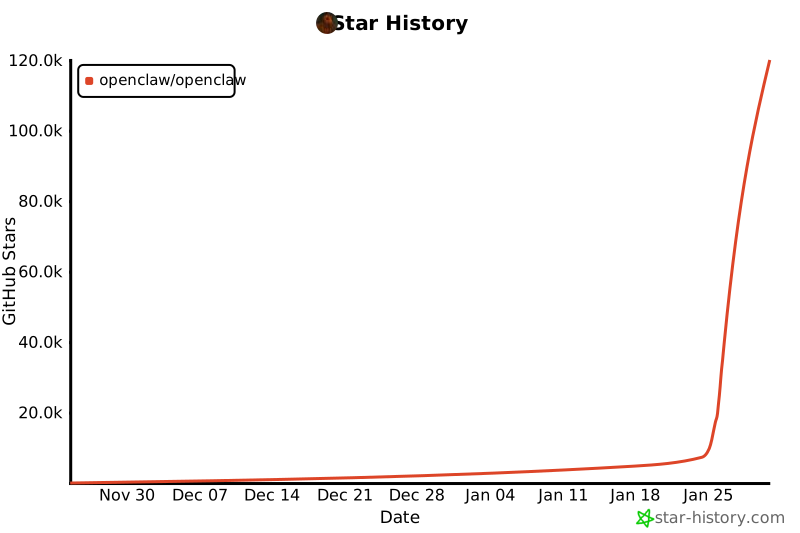](https://www.star-history.com/#openclaw/openclaw&type=date&legend=top-left)
|
||||
- Default: tools run on the host for the `main` session, so the agent has full access when it is just you.
|
||||
- Group/channel safety: set `agents.defaults.sandbox.mode: "non-main"` to run non-`main` sessions inside per-session Docker sandboxes.
|
||||
- Typical sandbox default: allow `bash`, `process`, `read`, `write`, `edit`, `sessions_list`, `sessions_history`, `sessions_send`, `sessions_spawn`; deny `browser`, `canvas`, `nodes`, `cron`, `discord`, `gateway`.
|
||||
- Before exposing anything remotely, read [Security](https://docs.openclaw.ai/gateway/security), [Docker sandboxing](https://docs.openclaw.ai/install/docker), and [Configuration](https://docs.openclaw.ai/gateway/configuration).
|
||||
|
||||
## Everything we built so far
|
||||
## Operator quick refs
|
||||
|
||||
### Core platform
|
||||
- Chat commands: `/status`, `/new`, `/reset`, `/compact`, `/think <level>`, `/verbose on|off`, `/trace on|off`, `/usage off|tokens|full`, `/restart`, `/activation mention|always`
|
||||
- Session tools: `sessions_list`, `sessions_history`, `sessions_send`
|
||||
- Skills registry: [ClawHub](https://clawhub.com)
|
||||
- Architecture overview: [Architecture](https://docs.openclaw.ai/concepts/architecture)
|
||||
|
||||
- [Gateway WS control plane](https://docs.openclaw.ai/gateway) with sessions, presence, config, cron, webhooks, [Control UI](https://docs.openclaw.ai/web), and [Canvas host](https://docs.openclaw.ai/platforms/mac/canvas#canvas-a2ui).
|
||||
- [CLI surface](https://docs.openclaw.ai/tools/agent-send): gateway, agent, send, [onboarding](https://docs.openclaw.ai/start/wizard), and [doctor](https://docs.openclaw.ai/gateway/doctor).
|
||||
- [Pi agent runtime](https://docs.openclaw.ai/concepts/agent) in RPC mode with tool streaming and block streaming.
|
||||
- [Session model](https://docs.openclaw.ai/concepts/session): `main` for direct chats, group isolation, activation modes, queue modes, reply-back. Group rules: [Groups](https://docs.openclaw.ai/channels/groups).
|
||||
- [Media pipeline](https://docs.openclaw.ai/nodes/images): images/audio/video, transcription hooks, size caps, temp file lifecycle. Audio details: [Audio](https://docs.openclaw.ai/nodes/audio).
|
||||
## Docs by goal
|
||||
|
||||
### Channels
|
||||
|
||||
- [Channels](https://docs.openclaw.ai/channels): [WhatsApp](https://docs.openclaw.ai/channels/whatsapp) (Baileys), [Telegram](https://docs.openclaw.ai/channels/telegram) (grammY), [Slack](https://docs.openclaw.ai/channels/slack) (Bolt), [Discord](https://docs.openclaw.ai/channels/discord) (discord.js), [Google Chat](https://docs.openclaw.ai/channels/googlechat) (Chat API), [Signal](https://docs.openclaw.ai/channels/signal) (signal-cli), [BlueBubbles](https://docs.openclaw.ai/channels/bluebubbles) (iMessage, recommended), [iMessage](https://docs.openclaw.ai/channels/imessage) (legacy imsg), [IRC](https://docs.openclaw.ai/channels/irc), [Microsoft Teams](https://docs.openclaw.ai/channels/msteams), [Matrix](https://docs.openclaw.ai/channels/matrix), [Feishu](https://docs.openclaw.ai/channels/feishu), [LINE](https://docs.openclaw.ai/channels/line), [Mattermost](https://docs.openclaw.ai/channels/mattermost), [Nextcloud Talk](https://docs.openclaw.ai/channels/nextcloud-talk), [Nostr](https://docs.openclaw.ai/channels/nostr), [Synology Chat](https://docs.openclaw.ai/channels/synology-chat), [Tlon](https://docs.openclaw.ai/channels/tlon), [Twitch](https://docs.openclaw.ai/channels/twitch), [Zalo](https://docs.openclaw.ai/channels/zalo), [Zalo Personal](https://docs.openclaw.ai/channels/zalouser), WeChat (`@tencent-weixin/openclaw-weixin`), [WebChat](https://docs.openclaw.ai/web/webchat).
|
||||
- [Group routing](https://docs.openclaw.ai/channels/group-messages): mention gating, reply tags, per-channel chunking and routing. Channel rules: [Channels](https://docs.openclaw.ai/channels).
|
||||
|
||||
### Apps + nodes
|
||||
|
||||
- [macOS app](https://docs.openclaw.ai/platforms/macos): menu bar control plane, [Voice Wake](https://docs.openclaw.ai/nodes/voicewake)/PTT, [Talk Mode](https://docs.openclaw.ai/nodes/talk) overlay, [WebChat](https://docs.openclaw.ai/web/webchat), debug tools, [remote gateway](https://docs.openclaw.ai/gateway/remote) control.
|
||||
- [iOS node](https://docs.openclaw.ai/platforms/ios): [Canvas](https://docs.openclaw.ai/platforms/mac/canvas), [Voice Wake](https://docs.openclaw.ai/nodes/voicewake), [Talk Mode](https://docs.openclaw.ai/nodes/talk), camera, screen recording, Bonjour + device pairing.
|
||||
- [Android node](https://docs.openclaw.ai/platforms/android): Connect tab (setup code/manual), chat sessions, voice tab, [Canvas](https://docs.openclaw.ai/platforms/mac/canvas), camera/screen recording, and Android device commands (notifications/location/SMS/photos/contacts/calendar/motion/app update).
|
||||
- [macOS node mode](https://docs.openclaw.ai/nodes): system.run/notify + canvas/camera exposure.
|
||||
|
||||
### Tools + automation
|
||||
|
||||
- [Browser control](https://docs.openclaw.ai/tools/browser): dedicated openclaw Chrome/Chromium, snapshots, actions, uploads, profiles.
|
||||
- [Canvas](https://docs.openclaw.ai/platforms/mac/canvas): [A2UI](https://docs.openclaw.ai/platforms/mac/canvas#canvas-a2ui) push/reset, eval, snapshot.
|
||||
- [Nodes](https://docs.openclaw.ai/nodes): camera snap/clip, screen record, [location.get](https://docs.openclaw.ai/nodes/location-command), notifications.
|
||||
- [Cron + wakeups](https://docs.openclaw.ai/automation/cron-jobs); [webhooks](https://docs.openclaw.ai/automation/webhook); [Gmail Pub/Sub](https://docs.openclaw.ai/automation/gmail-pubsub).
|
||||
- [Skills platform](https://docs.openclaw.ai/tools/skills): bundled, managed, and workspace skills with install gating + UI.
|
||||
|
||||
### Runtime + safety
|
||||
|
||||
- [Channel routing](https://docs.openclaw.ai/channels/channel-routing), [retry policy](https://docs.openclaw.ai/concepts/retry), and [streaming/chunking](https://docs.openclaw.ai/concepts/streaming).
|
||||
- [Presence](https://docs.openclaw.ai/concepts/presence), [typing indicators](https://docs.openclaw.ai/concepts/typing-indicators), and [usage tracking](https://docs.openclaw.ai/concepts/usage-tracking).
|
||||
- [Models](https://docs.openclaw.ai/concepts/models), [model failover](https://docs.openclaw.ai/concepts/model-failover), and [session pruning](https://docs.openclaw.ai/concepts/session-pruning).
|
||||
- [Security](https://docs.openclaw.ai/gateway/security) and [troubleshooting](https://docs.openclaw.ai/channels/troubleshooting).
|
||||
|
||||
### Ops + packaging
|
||||
|
||||
- [Control UI](https://docs.openclaw.ai/web) + [WebChat](https://docs.openclaw.ai/web/webchat) served directly from the Gateway.
|
||||
- [Tailscale Serve/Funnel](https://docs.openclaw.ai/gateway/tailscale) or [SSH tunnels](https://docs.openclaw.ai/gateway/remote) with token/password auth.
|
||||
- [Nix mode](https://docs.openclaw.ai/install/nix) for declarative config; [Docker](https://docs.openclaw.ai/install/docker)-based installs.
|
||||
- [Doctor](https://docs.openclaw.ai/gateway/doctor) migrations, [logging](https://docs.openclaw.ai/logging).
|
||||
|
||||
## How it works (short)
|
||||
|
||||
```
|
||||
WhatsApp / Telegram / Slack / Discord / Google Chat / Signal / iMessage / BlueBubbles / IRC / Microsoft Teams / Matrix / Feishu / LINE / Mattermost / Nextcloud Talk / Nostr / Synology Chat / Tlon / Twitch / Zalo / Zalo Personal / WeChat / WebChat
|
||||
│
|
||||
▼
|
||||
┌───────────────────────────────┐
|
||||
│ Gateway │
|
||||
│ (control plane) │
|
||||
│ ws://127.0.0.1:18789 │
|
||||
└──────────────┬────────────────┘
|
||||
│
|
||||
├─ Pi agent (RPC)
|
||||
├─ CLI (openclaw …)
|
||||
├─ WebChat UI
|
||||
├─ macOS app
|
||||
└─ iOS / Android nodes
|
||||
```
|
||||
|
||||
## Key subsystems
|
||||
|
||||
- **[Gateway WebSocket network](https://docs.openclaw.ai/concepts/architecture)** — single WS control plane for clients, tools, and events (plus ops: [Gateway runbook](https://docs.openclaw.ai/gateway)).
|
||||
- **[Tailscale exposure](https://docs.openclaw.ai/gateway/tailscale)** — Serve/Funnel for the Gateway dashboard + WS (remote access: [Remote](https://docs.openclaw.ai/gateway/remote)).
|
||||
- **[Browser control](https://docs.openclaw.ai/tools/browser)** — openclaw‑managed Chrome/Chromium with CDP control.
|
||||
- **[Canvas + A2UI](https://docs.openclaw.ai/platforms/mac/canvas)** — agent‑driven visual workspace (A2UI host: [Canvas/A2UI](https://docs.openclaw.ai/platforms/mac/canvas#canvas-a2ui)).
|
||||
- **[Voice Wake](https://docs.openclaw.ai/nodes/voicewake) + [Talk Mode](https://docs.openclaw.ai/nodes/talk)** — wake words on macOS/iOS plus continuous voice on Android.
|
||||
- **[Nodes](https://docs.openclaw.ai/nodes)** — Canvas, camera snap/clip, screen record, `location.get`, notifications, plus macOS‑only `system.run`/`system.notify`.
|
||||
|
||||
## Tailscale access (Gateway dashboard)
|
||||
|
||||
OpenClaw can auto-configure Tailscale **Serve** (tailnet-only) or **Funnel** (public) while the Gateway stays bound to loopback. Configure `gateway.tailscale.mode`:
|
||||
|
||||
- `off`: no Tailscale automation (default).
|
||||
- `serve`: tailnet-only HTTPS via `tailscale serve` (uses Tailscale identity headers by default).
|
||||
- `funnel`: public HTTPS via `tailscale funnel` (requires shared password auth).
|
||||
|
||||
Notes:
|
||||
|
||||
- `gateway.bind` must stay `loopback` when Serve/Funnel is enabled (OpenClaw enforces this).
|
||||
- Serve can be forced to require a password by setting `gateway.auth.mode: "password"` or `gateway.auth.allowTailscale: false`.
|
||||
- Funnel refuses to start unless `gateway.auth.mode: "password"` is set.
|
||||
- Optional: `gateway.tailscale.resetOnExit` to undo Serve/Funnel on shutdown.
|
||||
|
||||
Details: [Tailscale guide](https://docs.openclaw.ai/gateway/tailscale) · [Web surfaces](https://docs.openclaw.ai/web)
|
||||
|
||||
## Remote Gateway (Linux is great)
|
||||
|
||||
It’s perfectly fine to run the Gateway on a small Linux instance. Clients (macOS app, CLI, WebChat) can connect over **Tailscale Serve/Funnel** or **SSH tunnels**, and you can still pair device nodes (macOS/iOS/Android) to execute device‑local actions when needed.
|
||||
|
||||
- **Gateway host** runs the exec tool and channel connections by default.
|
||||
- **Device nodes** run device‑local actions (`system.run`, camera, screen recording, notifications) via `node.invoke`.
|
||||
In short: exec runs where the Gateway lives; device actions run where the device lives.
|
||||
|
||||
Details: [Remote access](https://docs.openclaw.ai/gateway/remote) · [Nodes](https://docs.openclaw.ai/nodes) · [Security](https://docs.openclaw.ai/gateway/security)
|
||||
|
||||
## macOS permissions via the Gateway protocol
|
||||
|
||||
The macOS app can run in **node mode** and advertises its capabilities + permission map over the Gateway WebSocket (`node.list` / `node.describe`). Clients can then execute local actions via `node.invoke`:
|
||||
|
||||
- `system.run` runs a local command and returns stdout/stderr/exit code; set `needsScreenRecording: true` to require screen-recording permission (otherwise you’ll get `PERMISSION_MISSING`).
|
||||
- `system.notify` posts a user notification and fails if notifications are denied.
|
||||
- `canvas.*`, `camera.*`, `screen.record`, and `location.get` are also routed via `node.invoke` and follow TCC permission status.
|
||||
|
||||
Elevated bash (host permissions) is separate from macOS TCC:
|
||||
|
||||
- Use `/elevated on|off` to toggle per‑session elevated access when enabled + allowlisted.
|
||||
- Gateway persists the per‑session toggle via `sessions.patch` (WS method) alongside `thinkingLevel`, `verboseLevel`, `model`, `sendPolicy`, and `groupActivation`.
|
||||
|
||||
Details: [Nodes](https://docs.openclaw.ai/nodes) · [macOS app](https://docs.openclaw.ai/platforms/macos) · [Gateway protocol](https://docs.openclaw.ai/concepts/architecture)
|
||||
|
||||
## Agent to Agent (sessions\_\* tools)
|
||||
|
||||
- Use these to coordinate work across sessions without jumping between chat surfaces.
|
||||
- `sessions_list` — discover active sessions (agents) and their metadata.
|
||||
- `sessions_history` — fetch transcript logs for a session.
|
||||
- `sessions_send` — message another session; optional reply‑back ping‑pong + announce step (`REPLY_SKIP`, `ANNOUNCE_SKIP`).
|
||||
|
||||
Details: [Session tools](https://docs.openclaw.ai/concepts/session-tool)
|
||||
|
||||
## Skills registry (ClawHub)
|
||||
|
||||
ClawHub is a minimal skill registry. With ClawHub enabled, the agent can search for skills automatically and pull in new ones as needed.
|
||||
|
||||
[ClawHub](https://clawhub.com)
|
||||
|
||||
## Chat commands
|
||||
|
||||
Send these in WhatsApp/Telegram/Slack/Google Chat/Microsoft Teams/WebChat (group commands are owner-only):
|
||||
|
||||
- `/status` — compact session status (model + tokens, cost when available)
|
||||
- `/new` or `/reset` — reset the session
|
||||
- `/compact` — compact session context (summary)
|
||||
- `/think <level>` — off|minimal|low|medium|high|xhigh (GPT-5.2 + Codex models only)
|
||||
- `/verbose on|off`
|
||||
- `/usage off|tokens|full` — per-response usage footer
|
||||
- `/restart` — restart the gateway (owner-only in groups)
|
||||
- `/activation mention|always` — group activation toggle (groups only)
|
||||
- New here: [Getting started](https://docs.openclaw.ai/start/getting-started), [Onboarding](https://docs.openclaw.ai/start/wizard), [Updating](https://docs.openclaw.ai/install/updating)
|
||||
- Channel setup: [Channels index](https://docs.openclaw.ai/channels), [WhatsApp](https://docs.openclaw.ai/channels/whatsapp), [Telegram](https://docs.openclaw.ai/channels/telegram), [Discord](https://docs.openclaw.ai/channels/discord), [Slack](https://docs.openclaw.ai/channels/slack)
|
||||
- Apps + nodes: [macOS](https://docs.openclaw.ai/platforms/macos), [iOS](https://docs.openclaw.ai/platforms/ios), [Android](https://docs.openclaw.ai/platforms/android), [Nodes](https://docs.openclaw.ai/nodes)
|
||||
- Config + security: [Configuration](https://docs.openclaw.ai/gateway/configuration), [Security](https://docs.openclaw.ai/gateway/security), [Docker sandboxing](https://docs.openclaw.ai/install/docker)
|
||||
- Remote + web: [Gateway](https://docs.openclaw.ai/gateway), [Remote access](https://docs.openclaw.ai/gateway/remote), [Tailscale](https://docs.openclaw.ai/gateway/tailscale), [Web surfaces](https://docs.openclaw.ai/web)
|
||||
- Tools + automation: [Tools](https://docs.openclaw.ai/tools), [Skills](https://docs.openclaw.ai/tools/skills), [Cron jobs](https://docs.openclaw.ai/automation/cron-jobs), [Webhooks](https://docs.openclaw.ai/automation/webhook), [Gmail Pub/Sub](https://docs.openclaw.ai/automation/gmail-pubsub)
|
||||
- Internals: [Architecture](https://docs.openclaw.ai/concepts/architecture), [Agent](https://docs.openclaw.ai/concepts/agent), [Session model](https://docs.openclaw.ai/concepts/session), [Gateway protocol](https://docs.openclaw.ai/reference/rpc)
|
||||
- Troubleshooting: [Channel troubleshooting](https://docs.openclaw.ai/channels/troubleshooting), [Logging](https://docs.openclaw.ai/logging), [Docs home](https://docs.openclaw.ai)
|
||||
|
||||
## Apps (optional)
|
||||
|
||||
@@ -358,6 +208,48 @@ Runbook: [iOS connect](https://docs.openclaw.ai/platforms/ios).
|
||||
- Exposes Connect/Chat/Voice tabs plus Canvas, Camera, Screen capture, and Android device command families.
|
||||
- Runbook: [Android connect](https://docs.openclaw.ai/platforms/android).
|
||||
|
||||
## From source (development)
|
||||
|
||||
Prefer `pnpm` for builds from source. Bun is optional for running TypeScript directly.
|
||||
|
||||
For the dev loop:
|
||||
|
||||
```bash
|
||||
git clone https://github.com/openclaw/openclaw.git
|
||||
cd openclaw
|
||||
|
||||
pnpm install
|
||||
|
||||
# First run only (or after resetting local OpenClaw config/workspace)
|
||||
pnpm openclaw setup
|
||||
|
||||
# Optional: prebuild Control UI before first startup
|
||||
pnpm ui:build
|
||||
|
||||
# Dev loop (auto-reload on source/config changes)
|
||||
pnpm gateway:watch
|
||||
```
|
||||
|
||||
If you need a built `dist/` from the checkout (for Node, packaging, or release validation), run:
|
||||
|
||||
```bash
|
||||
pnpm build
|
||||
pnpm ui:build
|
||||
```
|
||||
|
||||
`pnpm openclaw setup` writes the local config/workspace needed for `pnpm gateway:watch`. It is safe to re-run, but you normally only need it on first setup or after resetting local state. `pnpm gateway:watch` does not rebuild `dist/control-ui`, so rerun `pnpm ui:build` after `ui/` changes or use `pnpm ui:dev` when iterating on the Control UI. If you want this checkout to run onboarding directly, use `pnpm openclaw onboard --install-daemon`.
|
||||
|
||||
Note: `pnpm openclaw ...` runs TypeScript directly (via `tsx`). `pnpm build` produces `dist/` for running via Node / the packaged `openclaw` binary, while `pnpm gateway:watch` rebuilds the runtime on demand during the dev loop.
|
||||
|
||||
## Development channels
|
||||
|
||||
- **stable**: tagged releases (`vYYYY.M.D` or `vYYYY.M.D-<patch>`), npm dist-tag `latest`.
|
||||
- **beta**: prerelease tags (`vYYYY.M.D-beta.N`), npm dist-tag `beta` (macOS app may be missing).
|
||||
- **dev**: moving head of `main`, npm dist-tag `dev` (when published).
|
||||
|
||||
Switch channels (git + npm): `openclaw update --channel stable|beta|dev`.
|
||||
Details: [Development channels](https://docs.openclaw.ai/install/development-channels).
|
||||
|
||||
## Agent workspace + skills
|
||||
|
||||
- Workspace root: `~/.openclaw/workspace` (configurable via `agents.defaults.workspace`).
|
||||
@@ -378,162 +270,9 @@ Minimal `~/.openclaw/openclaw.json` (model + defaults):
|
||||
|
||||
[Full configuration reference (all keys + examples).](https://docs.openclaw.ai/gateway/configuration)
|
||||
|
||||
## Security model (important)
|
||||
## Star History
|
||||
|
||||
- **Default:** tools run on the host for the **main** session, so the agent has full access when it’s just you.
|
||||
- **Group/channel safety:** set `agents.defaults.sandbox.mode: "non-main"` to run **non‑main sessions** (groups/channels) inside per‑session Docker sandboxes; bash then runs in Docker for those sessions.
|
||||
- **Sandbox defaults:** allowlist `bash`, `process`, `read`, `write`, `edit`, `sessions_list`, `sessions_history`, `sessions_send`, `sessions_spawn`; denylist `browser`, `canvas`, `nodes`, `cron`, `discord`, `gateway`.
|
||||
|
||||
Details: [Security guide](https://docs.openclaw.ai/gateway/security) · [Docker + sandboxing](https://docs.openclaw.ai/install/docker) · [Sandbox config](https://docs.openclaw.ai/gateway/configuration)
|
||||
|
||||
### [WhatsApp](https://docs.openclaw.ai/channels/whatsapp)
|
||||
|
||||
- Link the device: `pnpm openclaw channels login` (stores creds in `~/.openclaw/credentials`).
|
||||
- Allowlist who can talk to the assistant via `channels.whatsapp.allowFrom`.
|
||||
- If `channels.whatsapp.groups` is set, it becomes a group allowlist; include `"*"` to allow all.
|
||||
|
||||
### [Telegram](https://docs.openclaw.ai/channels/telegram)
|
||||
|
||||
- Set `TELEGRAM_BOT_TOKEN` or `channels.telegram.botToken` (env wins).
|
||||
- Optional: set `channels.telegram.groups` (with `channels.telegram.groups."*".requireMention`); when set, it is a group allowlist (include `"*"` to allow all). Also `channels.telegram.allowFrom` or `channels.telegram.webhookUrl` + `channels.telegram.webhookSecret` as needed.
|
||||
|
||||
```json5
|
||||
{
|
||||
channels: {
|
||||
telegram: {
|
||||
botToken: "123456:ABCDEF",
|
||||
},
|
||||
},
|
||||
}
|
||||
```
|
||||
|
||||
### [Slack](https://docs.openclaw.ai/channels/slack)
|
||||
|
||||
- Set `SLACK_BOT_TOKEN` + `SLACK_APP_TOKEN` (or `channels.slack.botToken` + `channels.slack.appToken`).
|
||||
|
||||
### [Discord](https://docs.openclaw.ai/channels/discord)
|
||||
|
||||
- Set `DISCORD_BOT_TOKEN` or `channels.discord.token`.
|
||||
- Optional: set `commands.native`, `commands.text`, or `commands.useAccessGroups`, plus `channels.discord.allowFrom`, `channels.discord.guilds`, or `channels.discord.mediaMaxMb` as needed.
|
||||
|
||||
```json5
|
||||
{
|
||||
channels: {
|
||||
discord: {
|
||||
token: "1234abcd",
|
||||
},
|
||||
},
|
||||
}
|
||||
```
|
||||
|
||||
### [Signal](https://docs.openclaw.ai/channels/signal)
|
||||
|
||||
- Requires `signal-cli` and a `channels.signal` config section.
|
||||
|
||||
### [BlueBubbles (iMessage)](https://docs.openclaw.ai/channels/bluebubbles)
|
||||
|
||||
- **Recommended** iMessage integration.
|
||||
- Configure `channels.bluebubbles.serverUrl` + `channels.bluebubbles.password` and a webhook (`channels.bluebubbles.webhookPath`).
|
||||
- The BlueBubbles server runs on macOS; the Gateway can run on macOS or elsewhere.
|
||||
|
||||
### [iMessage (legacy)](https://docs.openclaw.ai/channels/imessage)
|
||||
|
||||
- Legacy macOS-only integration via `imsg` (Messages must be signed in).
|
||||
- If `channels.imessage.groups` is set, it becomes a group allowlist; include `"*"` to allow all.
|
||||
|
||||
### [Microsoft Teams](https://docs.openclaw.ai/channels/msteams)
|
||||
|
||||
- Configure a Teams app + Bot Framework, then add a `msteams` config section.
|
||||
- Allowlist who can talk via `msteams.allowFrom`; group access via `msteams.groupAllowFrom` or `msteams.groupPolicy: "open"`.
|
||||
|
||||
### WeChat
|
||||
|
||||
- Official Tencent plugin via [`@tencent-weixin/openclaw-weixin`](https://www.npmjs.com/package/@tencent-weixin/openclaw-weixin) (iLink Bot API). Private chats only; v2.x requires OpenClaw `>=2026.3.22`.
|
||||
- Install: `openclaw plugins install "@tencent-weixin/openclaw-weixin"`, then `openclaw channels login --channel openclaw-weixin` to scan the QR code.
|
||||
- Requires the WeChat ClawBot plugin (WeChat > Me > Settings > Plugins); gradual rollout by Tencent.
|
||||
|
||||
### [WebChat](https://docs.openclaw.ai/web/webchat)
|
||||
|
||||
- Uses the Gateway WebSocket; no separate WebChat port/config.
|
||||
|
||||
Browser control (optional):
|
||||
|
||||
```json5
|
||||
{
|
||||
browser: {
|
||||
enabled: true,
|
||||
color: "#FF4500",
|
||||
},
|
||||
}
|
||||
```
|
||||
|
||||
## Docs
|
||||
|
||||
Use these when you’re past the onboarding flow and want the deeper reference.
|
||||
|
||||
- [Start with the docs index for navigation and “what’s where.”](https://docs.openclaw.ai)
|
||||
- [Read the architecture overview for the gateway + protocol model.](https://docs.openclaw.ai/concepts/architecture)
|
||||
- [Use the full configuration reference when you need every key and example.](https://docs.openclaw.ai/gateway/configuration)
|
||||
- [Run the Gateway by the book with the operational runbook.](https://docs.openclaw.ai/gateway)
|
||||
- [Learn how the Control UI/Web surfaces work and how to expose them safely.](https://docs.openclaw.ai/web)
|
||||
- [Understand remote access over SSH tunnels or tailnets.](https://docs.openclaw.ai/gateway/remote)
|
||||
- [Follow OpenClaw Onboard for a guided setup.](https://docs.openclaw.ai/start/wizard)
|
||||
- [Wire external triggers via the webhook surface.](https://docs.openclaw.ai/automation/webhook)
|
||||
- [Set up Gmail Pub/Sub triggers.](https://docs.openclaw.ai/automation/gmail-pubsub)
|
||||
- [Learn the macOS menu bar companion details.](https://docs.openclaw.ai/platforms/mac/menu-bar)
|
||||
- [Platform guides: Windows (WSL2)](https://docs.openclaw.ai/platforms/windows), [Linux](https://docs.openclaw.ai/platforms/linux), [macOS](https://docs.openclaw.ai/platforms/macos), [iOS](https://docs.openclaw.ai/platforms/ios), [Android](https://docs.openclaw.ai/platforms/android)
|
||||
- [Debug common failures with the troubleshooting guide.](https://docs.openclaw.ai/channels/troubleshooting)
|
||||
- [Review security guidance before exposing anything.](https://docs.openclaw.ai/gateway/security)
|
||||
|
||||
## Advanced docs (discovery + control)
|
||||
|
||||
- [Discovery + transports](https://docs.openclaw.ai/gateway/discovery)
|
||||
- [Bonjour/mDNS](https://docs.openclaw.ai/gateway/bonjour)
|
||||
- [Gateway pairing](https://docs.openclaw.ai/gateway/pairing)
|
||||
- [Remote gateway README](https://docs.openclaw.ai/gateway/remote-gateway-readme)
|
||||
- [Control UI](https://docs.openclaw.ai/web/control-ui)
|
||||
- [Dashboard](https://docs.openclaw.ai/web/dashboard)
|
||||
|
||||
## Operations & troubleshooting
|
||||
|
||||
- [Health checks](https://docs.openclaw.ai/gateway/health)
|
||||
- [Gateway lock](https://docs.openclaw.ai/gateway/gateway-lock)
|
||||
- [Background process](https://docs.openclaw.ai/gateway/background-process)
|
||||
- [Browser troubleshooting (Linux)](https://docs.openclaw.ai/tools/browser-linux-troubleshooting)
|
||||
- [Logging](https://docs.openclaw.ai/logging)
|
||||
|
||||
## Deep dives
|
||||
|
||||
- [Agent loop](https://docs.openclaw.ai/concepts/agent-loop)
|
||||
- [Presence](https://docs.openclaw.ai/concepts/presence)
|
||||
- [TypeBox schemas](https://docs.openclaw.ai/concepts/typebox)
|
||||
- [RPC adapters](https://docs.openclaw.ai/reference/rpc)
|
||||
- [Queue](https://docs.openclaw.ai/concepts/queue)
|
||||
|
||||
## Workspace & skills
|
||||
|
||||
- [Skills config](https://docs.openclaw.ai/tools/skills-config)
|
||||
- [Default AGENTS](https://docs.openclaw.ai/reference/AGENTS.default)
|
||||
- [Templates: AGENTS](https://docs.openclaw.ai/reference/templates/AGENTS)
|
||||
- [Templates: BOOTSTRAP](https://docs.openclaw.ai/reference/templates/BOOTSTRAP)
|
||||
- [Templates: IDENTITY](https://docs.openclaw.ai/reference/templates/IDENTITY)
|
||||
- [Templates: SOUL](https://docs.openclaw.ai/reference/templates/SOUL)
|
||||
- [Templates: TOOLS](https://docs.openclaw.ai/reference/templates/TOOLS)
|
||||
- [Templates: USER](https://docs.openclaw.ai/reference/templates/USER)
|
||||
|
||||
## Platform internals
|
||||
|
||||
- [macOS dev setup](https://docs.openclaw.ai/platforms/mac/dev-setup)
|
||||
- [macOS menu bar](https://docs.openclaw.ai/platforms/mac/menu-bar)
|
||||
- [macOS voice wake](https://docs.openclaw.ai/platforms/mac/voicewake)
|
||||
- [iOS node](https://docs.openclaw.ai/platforms/ios)
|
||||
- [Android node](https://docs.openclaw.ai/platforms/android)
|
||||
- [Windows (WSL2)](https://docs.openclaw.ai/platforms/windows)
|
||||
- [Linux app](https://docs.openclaw.ai/platforms/linux)
|
||||
|
||||
## Email hooks (Gmail)
|
||||
|
||||
- [docs.openclaw.ai/gmail-pubsub](https://docs.openclaw.ai/automation/gmail-pubsub)
|
||||
[](https://www.star-history.com/#openclaw/openclaw&type=date&legend=top-left)
|
||||
|
||||
## Molty
|
||||
|
||||
@@ -552,63 +291,193 @@ AI/vibe-coded PRs welcome! 🤖
|
||||
|
||||
Special thanks to [Mario Zechner](https://mariozechner.at/) for his support and for
|
||||
[pi-mono](https://github.com/badlogic/pi-mono).
|
||||
Special thanks to Adam Doppelt for lobster.bot.
|
||||
Special thanks to Adam Doppelt for the lobster.bot domain.
|
||||
|
||||
Thanks to all clawtributors:
|
||||
|
||||
<p align="left">
|
||||
<a href="https://github.com/steipete"><img src="https://avatars.githubusercontent.com/u/58493?v=4&s=48" width="48" height="48" alt="steipete" title="steipete"/></a> <a href="https://github.com/vincentkoc"><img src="https://avatars.githubusercontent.com/u/25068?v=4&s=48" width="48" height="48" alt="vincentkoc" title="vincentkoc"/></a> <a href="https://github.com/vignesh07"><img src="https://avatars.githubusercontent.com/u/1436853?v=4&s=48" width="48" height="48" alt="vignesh07" title="vignesh07"/></a> <a href="https://github.com/obviyus"><img src="https://avatars.githubusercontent.com/u/22031114?v=4&s=48" width="48" height="48" alt="obviyus" title="obviyus"/></a> <a href="https://github.com/mbelinky"><img src="https://avatars.githubusercontent.com/u/132747814?v=4&s=48" width="48" height="48" alt="Mariano Belinky" title="Mariano Belinky"/></a> <a href="https://github.com/sebslight"><img src="https://avatars.githubusercontent.com/u/19554889?v=4&s=48" width="48" height="48" alt="sebslight" title="sebslight"/></a> <a href="https://github.com/gumadeiras"><img src="https://avatars.githubusercontent.com/u/5599352?v=4&s=48" width="48" height="48" alt="gumadeiras" title="gumadeiras"/></a> <a href="https://github.com/Takhoffman"><img src="https://avatars.githubusercontent.com/u/781889?v=4&s=48" width="48" height="48" alt="Takhoffman" title="Takhoffman"/></a> <a href="https://github.com/thewilloftheshadow"><img src="https://avatars.githubusercontent.com/u/35580099?v=4&s=48" width="48" height="48" alt="thewilloftheshadow" title="thewilloftheshadow"/></a> <a href="https://github.com/cpojer"><img src="https://avatars.githubusercontent.com/u/13352?v=4&s=48" width="48" height="48" alt="cpojer" title="cpojer"/></a>
|
||||
<a href="https://github.com/tyler6204"><img src="https://avatars.githubusercontent.com/u/64381258?v=4&s=48" width="48" height="48" alt="tyler6204" title="tyler6204"/></a> <a href="https://github.com/joshp123"><img src="https://avatars.githubusercontent.com/u/1497361?v=4&s=48" width="48" height="48" alt="joshp123" title="joshp123"/></a> <a href="https://github.com/Glucksberg"><img src="https://avatars.githubusercontent.com/u/80581902?v=4&s=48" width="48" height="48" alt="Glucksberg" title="Glucksberg"/></a> <a href="https://github.com/mcaxtr"><img src="https://avatars.githubusercontent.com/u/7562095?v=4&s=48" width="48" height="48" alt="mcaxtr" title="mcaxtr"/></a> <a href="https://github.com/quotentiroler"><img src="https://avatars.githubusercontent.com/u/40643627?v=4&s=48" width="48" height="48" alt="quotentiroler" title="quotentiroler"/></a> <a href="https://github.com/osolmaz"><img src="https://avatars.githubusercontent.com/u/2453968?v=4&s=48" width="48" height="48" alt="osolmaz" title="osolmaz"/></a> <a href="https://github.com/Sid-Qin"><img src="https://avatars.githubusercontent.com/u/201593046?v=4&s=48" width="48" height="48" alt="Sid-Qin" title="Sid-Qin"/></a> <a href="https://github.com/joshavant"><img src="https://avatars.githubusercontent.com/u/830519?v=4&s=48" width="48" height="48" alt="joshavant" title="joshavant"/></a> <a href="https://github.com/shakkernerd"><img src="https://avatars.githubusercontent.com/u/165377636?v=4&s=48" width="48" height="48" alt="shakkernerd" title="shakkernerd"/></a> <a href="https://github.com/bmendonca3"><img src="https://avatars.githubusercontent.com/u/208517100?v=4&s=48" width="48" height="48" alt="bmendonca3" title="bmendonca3"/></a>
|
||||
<a href="https://github.com/mukhtharcm"><img src="https://avatars.githubusercontent.com/u/56378562?v=4&s=48" width="48" height="48" alt="mukhtharcm" title="mukhtharcm"/></a> <a href="https://github.com/zerone0x"><img src="https://avatars.githubusercontent.com/u/39543393?v=4&s=48" width="48" height="48" alt="zerone0x" title="zerone0x"/></a> <a href="https://github.com/mcinteerj"><img src="https://avatars.githubusercontent.com/u/3613653?v=4&s=48" width="48" height="48" alt="mcinteerj" title="mcinteerj"/></a> <a href="https://github.com/ngutman"><img src="https://avatars.githubusercontent.com/u/1540134?v=4&s=48" width="48" height="48" alt="ngutman" title="ngutman"/></a> <a href="https://github.com/lailoo"><img src="https://avatars.githubusercontent.com/u/20536249?v=4&s=48" width="48" height="48" alt="lailoo" title="lailoo"/></a> <a href="https://github.com/arosstale"><img src="https://avatars.githubusercontent.com/u/117890364?v=4&s=48" width="48" height="48" alt="arosstale" title="arosstale"/></a> <a href="https://github.com/rodrigouroz"><img src="https://avatars.githubusercontent.com/u/384037?v=4&s=48" width="48" height="48" alt="rodrigouroz" title="rodrigouroz"/></a> <a href="https://github.com/robbyczgw-cla"><img src="https://avatars.githubusercontent.com/u/239660374?v=4&s=48" width="48" height="48" alt="robbyczgw-cla" title="robbyczgw-cla"/></a> <a href="https://github.com/0xRaini"><img src="https://avatars.githubusercontent.com/u/190923101?v=4&s=48" width="48" height="48" alt="Elonito" title="Elonito"/></a> <a href="https://github.com/Clawborn"><img src="https://avatars.githubusercontent.com/u/261310391?v=4&s=48" width="48" height="48" alt="Clawborn" title="Clawborn"/></a>
|
||||
<a href="https://github.com/yinghaosang"><img src="https://avatars.githubusercontent.com/u/261132136?v=4&s=48" width="48" height="48" alt="yinghaosang" title="yinghaosang"/></a> <a href="https://github.com/BunsDev"><img src="https://avatars.githubusercontent.com/u/68980965?v=4&s=48" width="48" height="48" alt="BunsDev" title="BunsDev"/></a> <a href="https://github.com/christianklotz"><img src="https://avatars.githubusercontent.com/u/69443?v=4&s=48" width="48" height="48" alt="christianklotz" title="christianklotz"/></a> <a href="https://github.com/echoVic"><img src="https://avatars.githubusercontent.com/u/16428813?v=4&s=48" width="48" height="48" alt="echoVic" title="echoVic"/></a> <a href="https://github.com/coygeek"><img src="https://avatars.githubusercontent.com/u/65363919?v=4&s=48" width="48" height="48" alt="coygeek" title="coygeek"/></a> <a href="https://github.com/roshanasingh4"><img src="https://avatars.githubusercontent.com/u/88576930?v=4&s=48" width="48" height="48" alt="roshanasingh4" title="roshanasingh4"/></a> <a href="https://github.com/mneves75"><img src="https://avatars.githubusercontent.com/u/2423436?v=4&s=48" width="48" height="48" alt="mneves75" title="mneves75"/></a> <a href="https://github.com/joaohlisboa"><img src="https://avatars.githubusercontent.com/u/8200873?v=4&s=48" width="48" height="48" alt="joaohlisboa" title="joaohlisboa"/></a> <a href="https://github.com/bohdanpodvirnyi"><img src="https://avatars.githubusercontent.com/u/31819391?v=4&s=48" width="48" height="48" alt="bohdanpodvirnyi" title="bohdanpodvirnyi"/></a> <a href="https://github.com/Nachx639"><img src="https://avatars.githubusercontent.com/u/71144023?v=4&s=48" width="48" height="48" alt="nachx639" title="nachx639"/></a>
|
||||
<a href="https://github.com/onutc"><img src="https://avatars.githubusercontent.com/u/152018508?v=4&s=48" width="48" height="48" alt="onutc" title="onutc"/></a> <a href="https://github.com/VeriteIgiraneza"><img src="https://avatars.githubusercontent.com/u/69280208?v=4&s=48" width="48" height="48" alt="Verite Igiraneza" title="Verite Igiraneza"/></a> <a href="https://github.com/widingmarcus-cyber"><img src="https://avatars.githubusercontent.com/u/245375637?v=4&s=48" width="48" height="48" alt="widingmarcus-cyber" title="widingmarcus-cyber"/></a> <a href="https://github.com/akramcodez"><img src="https://avatars.githubusercontent.com/u/179671552?v=4&s=48" width="48" height="48" alt="akramcodez" title="akramcodez"/></a> <a href="https://github.com/aether-ai-agent"><img src="https://avatars.githubusercontent.com/u/261339948?v=4&s=48" width="48" height="48" alt="aether-ai-agent" title="aether-ai-agent"/></a> <a href="https://github.com/bjesuiter"><img src="https://avatars.githubusercontent.com/u/2365676?v=4&s=48" width="48" height="48" alt="bjesuiter" title="bjesuiter"/></a> <a href="https://github.com/MaudeBot"><img src="https://avatars.githubusercontent.com/u/255777700?v=4&s=48" width="48" height="48" alt="MaudeBot" title="MaudeBot"/></a> <a href="https://github.com/YuriNachos"><img src="https://avatars.githubusercontent.com/u/19365375?v=4&s=48" width="48" height="48" alt="YuriNachos" title="YuriNachos"/></a> <a href="https://github.com/chilu18"><img src="https://avatars.githubusercontent.com/u/7957943?v=4&s=48" width="48" height="48" alt="chilu18" title="chilu18"/></a> <a href="https://github.com/byungsker"><img src="https://avatars.githubusercontent.com/u/72309817?v=4&s=48" width="48" height="48" alt="byungsker" title="byungsker"/></a>
|
||||
<a href="https://github.com/dbhurley"><img src="https://avatars.githubusercontent.com/u/5251425?v=4&s=48" width="48" height="48" alt="dbhurley" title="dbhurley"/></a> <a href="https://github.com/JayMishra-source"><img src="https://avatars.githubusercontent.com/u/82963117?v=4&s=48" width="48" height="48" alt="JayMishra-source" title="JayMishra-source"/></a> <a href="https://github.com/iHildy"><img src="https://avatars.githubusercontent.com/u/25069719?v=4&s=48" width="48" height="48" alt="iHildy" title="iHildy"/></a> <a href="https://github.com/mudrii"><img src="https://avatars.githubusercontent.com/u/220262?v=4&s=48" width="48" height="48" alt="mudrii" title="mudrii"/></a> <a href="https://github.com/dlauer"><img src="https://avatars.githubusercontent.com/u/757041?v=4&s=48" width="48" height="48" alt="dlauer" title="dlauer"/></a> <a href="https://github.com/Solvely-Colin"><img src="https://avatars.githubusercontent.com/u/211764741?v=4&s=48" width="48" height="48" alt="Solvely-Colin" title="Solvely-Colin"/></a> <a href="https://github.com/czekaj"><img src="https://avatars.githubusercontent.com/u/1464539?v=4&s=48" width="48" height="48" alt="czekaj" title="czekaj"/></a> <a href="https://github.com/advaitpaliwal"><img src="https://avatars.githubusercontent.com/u/66044327?v=4&s=48" width="48" height="48" alt="advaitpaliwal" title="advaitpaliwal"/></a> <a href="https://github.com/lc0rp"><img src="https://avatars.githubusercontent.com/u/2609441?v=4&s=48" width="48" height="48" alt="lc0rp" title="lc0rp"/></a> <a href="https://github.com/grp06"><img src="https://avatars.githubusercontent.com/u/1573959?v=4&s=48" width="48" height="48" alt="grp06" title="grp06"/></a>
|
||||
<a href="https://github.com/HenryLoenwind"><img src="https://avatars.githubusercontent.com/u/1485873?v=4&s=48" width="48" height="48" alt="HenryLoenwind" title="HenryLoenwind"/></a> <a href="https://github.com/azade-c"><img src="https://avatars.githubusercontent.com/u/252790079?v=4&s=48" width="48" height="48" alt="azade-c" title="azade-c"/></a> <a href="https://github.com/Lukavyi"><img src="https://avatars.githubusercontent.com/u/1013690?v=4&s=48" width="48" height="48" alt="Lukavyi" title="Lukavyi"/></a> <a href="https://github.com/vrknetha"><img src="https://avatars.githubusercontent.com/u/20596261?v=4&s=48" width="48" height="48" alt="vrknetha" title="vrknetha"/></a> <a href="https://github.com/brandonwise"><img src="https://avatars.githubusercontent.com/u/21148772?v=4&s=48" width="48" height="48" alt="brandonwise" title="brandonwise"/></a> <a href="https://github.com/conroywhitney"><img src="https://avatars.githubusercontent.com/u/249891?v=4&s=48" width="48" height="48" alt="conroywhitney" title="conroywhitney"/></a> <a href="https://github.com/tobiasbischoff"><img src="https://avatars.githubusercontent.com/u/711564?v=4&s=48" width="48" height="48" alt="Tobias Bischoff" title="Tobias Bischoff"/></a> <a href="https://github.com/davidrudduck"><img src="https://avatars.githubusercontent.com/u/47308254?v=4&s=48" width="48" height="48" alt="davidrudduck" title="davidrudduck"/></a> <a href="https://github.com/xinhuagu"><img src="https://avatars.githubusercontent.com/u/562450?v=4&s=48" width="48" height="48" alt="xinhuagu" title="xinhuagu"/></a> <a href="https://github.com/jaydenfyi"><img src="https://avatars.githubusercontent.com/u/213395523?v=4&s=48" width="48" height="48" alt="jaydenfyi" title="jaydenfyi"/></a>
|
||||
<a href="https://github.com/petter-b"><img src="https://avatars.githubusercontent.com/u/62076402?v=4&s=48" width="48" height="48" alt="petter-b" title="petter-b"/></a> <a href="https://github.com/heyhudson"><img src="https://avatars.githubusercontent.com/u/258693705?v=4&s=48" width="48" height="48" alt="heyhudson" title="heyhudson"/></a> <a href="https://github.com/MatthieuBizien"><img src="https://avatars.githubusercontent.com/u/173090?v=4&s=48" width="48" height="48" alt="MatthieuBizien" title="MatthieuBizien"/></a> <a href="https://github.com/huntharo"><img src="https://avatars.githubusercontent.com/u/5617868?v=4&s=48" width="48" height="48" alt="huntharo" title="huntharo"/></a> <a href="https://github.com/omair445"><img src="https://avatars.githubusercontent.com/u/32237905?v=4&s=48" width="48" height="48" alt="omair445" title="omair445"/></a> <a href="https://github.com/adam91holt"><img src="https://avatars.githubusercontent.com/u/9592417?v=4&s=48" width="48" height="48" alt="adam91holt" title="adam91holt"/></a> <a href="https://github.com/adhitShet"><img src="https://avatars.githubusercontent.com/u/131381638?v=4&s=48" width="48" height="48" alt="adhitShet" title="adhitShet"/></a> <a href="https://github.com/smartprogrammer93"><img src="https://avatars.githubusercontent.com/u/33181301?v=4&s=48" width="48" height="48" alt="smartprogrammer93" title="smartprogrammer93"/></a> <a href="https://github.com/radek-paclt"><img src="https://avatars.githubusercontent.com/u/50451445?v=4&s=48" width="48" height="48" alt="radek-paclt" title="radek-paclt"/></a> <a href="https://github.com/frankekn"><img src="https://avatars.githubusercontent.com/u/4488090?v=4&s=48" width="48" height="48" alt="frankekn" title="frankekn"/></a>
|
||||
<a href="https://github.com/bradleypriest"><img src="https://avatars.githubusercontent.com/u/167215?v=4&s=48" width="48" height="48" alt="bradleypriest" title="bradleypriest"/></a> <a href="https://github.com/rahthakor"><img src="https://avatars.githubusercontent.com/u/8470553?v=4&s=48" width="48" height="48" alt="rahthakor" title="rahthakor"/></a> <a href="https://github.com/shadril238"><img src="https://avatars.githubusercontent.com/u/63901551?v=4&s=48" width="48" height="48" alt="shadril238" title="shadril238"/></a> <a href="https://github.com/VACInc"><img src="https://avatars.githubusercontent.com/u/3279061?v=4&s=48" width="48" height="48" alt="VACInc" title="VACInc"/></a> <a href="https://github.com/juanpablodlc"><img src="https://avatars.githubusercontent.com/u/92012363?v=4&s=48" width="48" height="48" alt="juanpablodlc" title="juanpablodlc"/></a> <a href="https://github.com/jonisjongithub"><img src="https://avatars.githubusercontent.com/u/86072337?v=4&s=48" width="48" height="48" alt="jonisjongithub" title="jonisjongithub"/></a> <a href="https://github.com/magimetal"><img src="https://avatars.githubusercontent.com/u/36491250?v=4&s=48" width="48" height="48" alt="magimetal" title="magimetal"/></a> <a href="https://github.com/stakeswky"><img src="https://avatars.githubusercontent.com/u/64798754?v=4&s=48" width="48" height="48" alt="stakeswky" title="stakeswky"/></a> <a href="https://github.com/AbhisekBasu1"><img src="https://avatars.githubusercontent.com/u/40645221?v=4&s=48" width="48" height="48" alt="abhisekbasu1" title="abhisekbasu1"/></a> <a href="https://github.com/MisterGuy420"><img src="https://avatars.githubusercontent.com/u/255743668?v=4&s=48" width="48" height="48" alt="MisterGuy420" title="MisterGuy420"/></a>
|
||||
<a href="https://github.com/hsrvc"><img src="https://avatars.githubusercontent.com/u/129702169?v=4&s=48" width="48" height="48" alt="hsrvc" title="hsrvc"/></a> <a href="https://github.com/nabbilkhan"><img src="https://avatars.githubusercontent.com/u/203121263?v=4&s=48" width="48" height="48" alt="nabbilkhan" title="nabbilkhan"/></a> <a href="https://github.com/aldoeliacim"><img src="https://avatars.githubusercontent.com/u/17973757?v=4&s=48" width="48" height="48" alt="aldoeliacim" title="aldoeliacim"/></a> <a href="https://github.com/jamesgroat"><img src="https://avatars.githubusercontent.com/u/2634024?v=4&s=48" width="48" height="48" alt="jamesgroat" title="jamesgroat"/></a> <a href="https://github.com/orlyjamie"><img src="https://avatars.githubusercontent.com/u/6668807?v=4&s=48" width="48" height="48" alt="orlyjamie" title="orlyjamie"/></a> <a href="https://github.com/Elarwei001"><img src="https://avatars.githubusercontent.com/u/168552401?v=4&s=48" width="48" height="48" alt="Elarwei001" title="Elarwei001"/></a> <a href="https://github.com/rubyrunsstuff"><img src="https://avatars.githubusercontent.com/u/246602379?v=4&s=48" width="48" height="48" alt="rubyrunsstuff" title="rubyrunsstuff"/></a> <a href="https://github.com/Phineas1500"><img src="https://avatars.githubusercontent.com/u/41450967?v=4&s=48" width="48" height="48" alt="Phineas1500" title="Phineas1500"/></a> <a href="https://github.com/meaningfool"><img src="https://avatars.githubusercontent.com/u/2862331?v=4&s=48" width="48" height="48" alt="meaningfool" title="meaningfool"/></a> <a href="https://github.com/sfo2001"><img src="https://avatars.githubusercontent.com/u/103369858?v=4&s=48" width="48" height="48" alt="sfo2001" title="sfo2001"/></a>
|
||||
<a href="https://github.com/Marvae"><img src="https://avatars.githubusercontent.com/u/11957602?v=4&s=48" width="48" height="48" alt="Marvae" title="Marvae"/></a> <a href="https://github.com/liuy"><img src="https://avatars.githubusercontent.com/u/1192888?v=4&s=48" width="48" height="48" alt="liuy" title="liuy"/></a> <a href="https://github.com/shtse8"><img src="https://avatars.githubusercontent.com/u/8020099?v=4&s=48" width="48" height="48" alt="shtse8" title="shtse8"/></a> <a href="https://github.com/thebenignhacker"><img src="https://avatars.githubusercontent.com/u/32418586?v=4&s=48" width="48" height="48" alt="thebenignhacker" title="thebenignhacker"/></a> <a href="https://github.com/carrotRakko"><img src="https://avatars.githubusercontent.com/u/24588751?v=4&s=48" width="48" height="48" alt="carrotRakko" title="carrotRakko"/></a> <a href="https://github.com/ranausmanai"><img src="https://avatars.githubusercontent.com/u/257128159?v=4&s=48" width="48" height="48" alt="ranausmanai" title="ranausmanai"/></a> <a href="https://github.com/kevinWangSheng"><img src="https://avatars.githubusercontent.com/u/118158941?v=4&s=48" width="48" height="48" alt="kevinWangSheng" title="kevinWangSheng"/></a> <a href="https://github.com/gregmousseau"><img src="https://avatars.githubusercontent.com/u/5036458?v=4&s=48" width="48" height="48" alt="gregmousseau" title="gregmousseau"/></a> <a href="https://github.com/rrenamed"><img src="https://avatars.githubusercontent.com/u/87486610?v=4&s=48" width="48" height="48" alt="rrenamed" title="rrenamed"/></a> <a href="https://github.com/akoscz"><img src="https://avatars.githubusercontent.com/u/1360047?v=4&s=48" width="48" height="48" alt="akoscz" title="akoscz"/></a>
|
||||
<a href="https://github.com/jarvis-medmatic"><img src="https://avatars.githubusercontent.com/u/252428873?v=4&s=48" width="48" height="48" alt="jarvis-medmatic" title="jarvis-medmatic"/></a> <a href="https://github.com/danielz1z"><img src="https://avatars.githubusercontent.com/u/235270390?v=4&s=48" width="48" height="48" alt="danielz1z" title="danielz1z"/></a> <a href="https://github.com/pandego"><img src="https://avatars.githubusercontent.com/u/7780875?v=4&s=48" width="48" height="48" alt="pandego" title="pandego"/></a> <a href="https://github.com/xadenryan"><img src="https://avatars.githubusercontent.com/u/165437834?v=4&s=48" width="48" height="48" alt="xadenryan" title="xadenryan"/></a> <a href="https://github.com/NicholasSpisak"><img src="https://avatars.githubusercontent.com/u/129075147?v=4&s=48" width="48" height="48" alt="NicholasSpisak" title="NicholasSpisak"/></a> <a href="https://github.com/graysurf"><img src="https://avatars.githubusercontent.com/u/10785178?v=4&s=48" width="48" height="48" alt="graysurf" title="graysurf"/></a> <a href="https://github.com/gupsammy"><img src="https://avatars.githubusercontent.com/u/20296019?v=4&s=48" width="48" height="48" alt="gupsammy" title="gupsammy"/></a> <a href="https://github.com/nyanjou"><img src="https://avatars.githubusercontent.com/u/258645604?v=4&s=48" width="48" height="48" alt="nyanjou" title="nyanjou"/></a> <a href="https://github.com/sibbl"><img src="https://avatars.githubusercontent.com/u/866535?v=4&s=48" width="48" height="48" alt="sibbl" title="sibbl"/></a> <a href="https://github.com/gejifeng"><img src="https://avatars.githubusercontent.com/u/17561857?v=4&s=48" width="48" height="48" alt="gejifeng" title="gejifeng"/></a>
|
||||
<a href="https://github.com/ide-rea"><img src="https://avatars.githubusercontent.com/u/30512600?v=4&s=48" width="48" height="48" alt="ide-rea" title="ide-rea"/></a> <a href="https://github.com/leszekszpunar"><img src="https://avatars.githubusercontent.com/u/13106764?v=4&s=48" width="48" height="48" alt="leszekszpunar" title="leszekszpunar"/></a> <a href="https://github.com/Yida-Dev"><img src="https://avatars.githubusercontent.com/u/92713555?v=4&s=48" width="48" height="48" alt="Yida-Dev" title="Yida-Dev"/></a> <a href="https://github.com/AI-Reviewer-QS"><img src="https://avatars.githubusercontent.com/u/255312808?v=4&s=48" width="48" height="48" alt="AI-Reviewer-QS" title="AI-Reviewer-QS"/></a> <a href="https://github.com/SocialNerd42069"><img src="https://avatars.githubusercontent.com/u/118244303?v=4&s=48" width="48" height="48" alt="SocialNerd42069" title="SocialNerd42069"/></a> <a href="https://github.com/maxsumrall"><img src="https://avatars.githubusercontent.com/u/628843?v=4&s=48" width="48" height="48" alt="maxsumrall" title="maxsumrall"/></a> <a href="https://github.com/hougangdev"><img src="https://avatars.githubusercontent.com/u/105773686?v=4&s=48" width="48" height="48" alt="hougangdev" title="hougangdev"/></a> <a href="https://github.com/Minidoracat"><img src="https://avatars.githubusercontent.com/u/11269639?v=4&s=48" width="48" height="48" alt="Minidoracat" title="Minidoracat"/></a> <a href="https://github.com/AnonO6"><img src="https://avatars.githubusercontent.com/u/124311066?v=4&s=48" width="48" height="48" alt="AnonO6" title="AnonO6"/></a> <a href="https://github.com/sreekaransrinath"><img src="https://avatars.githubusercontent.com/u/50989977?v=4&s=48" width="48" height="48" alt="sreekaransrinath" title="sreekaransrinath"/></a>
|
||||
<a href="https://github.com/YuzuruS"><img src="https://avatars.githubusercontent.com/u/1485195?v=4&s=48" width="48" height="48" alt="YuzuruS" title="YuzuruS"/></a> <a href="https://github.com/riccardogiorato"><img src="https://avatars.githubusercontent.com/u/4527364?v=4&s=48" width="48" height="48" alt="riccardogiorato" title="riccardogiorato"/></a> <a href="https://github.com/Bridgerz"><img src="https://avatars.githubusercontent.com/u/24499532?v=4&s=48" width="48" height="48" alt="Bridgerz" title="Bridgerz"/></a> <a href="https://github.com/Mrseenz"><img src="https://avatars.githubusercontent.com/u/101962919?v=4&s=48" width="48" height="48" alt="Mrseenz" title="Mrseenz"/></a> <a href="https://github.com/buddyh"><img src="https://avatars.githubusercontent.com/u/31752869?v=4&s=48" width="48" height="48" alt="buddyh" title="buddyh"/></a> <a href="https://github.com/omniwired"><img src="https://avatars.githubusercontent.com/u/322761?v=4&s=48" width="48" height="48" alt="Eng. Juan Combetto" title="Eng. Juan Combetto"/></a> <a href="https://github.com/peschee"><img src="https://avatars.githubusercontent.com/u/63866?v=4&s=48" width="48" height="48" alt="peschee" title="peschee"/></a> <a href="https://github.com/cash-echo-bot"><img src="https://avatars.githubusercontent.com/u/252747386?v=4&s=48" width="48" height="48" alt="cash-echo-bot" title="cash-echo-bot"/></a> <a href="https://github.com/jalehman"><img src="https://avatars.githubusercontent.com/u/550978?v=4&s=48" width="48" height="48" alt="jalehman" title="jalehman"/></a> <a href="https://github.com/zknicker"><img src="https://avatars.githubusercontent.com/u/1164085?v=4&s=48" width="48" height="48" alt="zknicker" title="zknicker"/></a>
|
||||
<a href="https://github.com/buerbaumer"><img src="https://avatars.githubusercontent.com/u/44548809?v=4&s=48" width="48" height="48" alt="Harald Buerbaumer" title="Harald Buerbaumer"/></a> <a href="https://github.com/taw0002"><img src="https://avatars.githubusercontent.com/u/42811278?v=4&s=48" width="48" height="48" alt="taw0002" title="taw0002"/></a> <a href="https://github.com/scald"><img src="https://avatars.githubusercontent.com/u/1215913?v=4&s=48" width="48" height="48" alt="scald" title="scald"/></a> <a href="https://github.com/openperf"><img src="https://avatars.githubusercontent.com/u/80630709?v=4&s=48" width="48" height="48" alt="openperf" title="openperf"/></a> <a href="https://github.com/BUGKillerKing"><img src="https://avatars.githubusercontent.com/u/117326392?v=4&s=48" width="48" height="48" alt="BUGKillerKing" title="BUGKillerKing"/></a> <a href="https://github.com/Oceanswave"><img src="https://avatars.githubusercontent.com/u/760674?v=4&s=48" width="48" height="48" alt="Oceanswave" title="Oceanswave"/></a> <a href="https://github.com/patelhiren"><img src="https://avatars.githubusercontent.com/u/172098?v=4&s=48" width="48" height="48" alt="Hiren Patel" title="Hiren Patel"/></a> <a href="https://github.com/kiranjd"><img src="https://avatars.githubusercontent.com/u/25822851?v=4&s=48" width="48" height="48" alt="kiranjd" title="kiranjd"/></a> <a href="https://github.com/antons"><img src="https://avatars.githubusercontent.com/u/129705?v=4&s=48" width="48" height="48" alt="antons" title="antons"/></a> <a href="https://github.com/dan-dr"><img src="https://avatars.githubusercontent.com/u/6669808?v=4&s=48" width="48" height="48" alt="dan-dr" title="dan-dr"/></a>
|
||||
<a href="https://github.com/jadilson12"><img src="https://avatars.githubusercontent.com/u/36805474?v=4&s=48" width="48" height="48" alt="jadilson12" title="jadilson12"/></a> <a href="https://github.com/sumleo"><img src="https://avatars.githubusercontent.com/u/29517764?v=4&s=48" width="48" height="48" alt="sumleo" title="sumleo"/></a> <a href="https://github.com/Whoaa512"><img src="https://avatars.githubusercontent.com/u/1581943?v=4&s=48" width="48" height="48" alt="Whoaa512" title="Whoaa512"/></a> <a href="https://github.com/luijoc"><img src="https://avatars.githubusercontent.com/u/96428056?v=4&s=48" width="48" height="48" alt="luijoc" title="luijoc"/></a> <a href="https://github.com/niceysam"><img src="https://avatars.githubusercontent.com/u/256747835?v=4&s=48" width="48" height="48" alt="niceysam" title="niceysam"/></a> <a href="https://github.com/JustYannicc"><img src="https://avatars.githubusercontent.com/u/52761674?v=4&s=48" width="48" height="48" alt="JustYannicc" title="JustYannicc"/></a> <a href="https://github.com/emanuelst"><img src="https://avatars.githubusercontent.com/u/9994339?v=4&s=48" width="48" height="48" alt="emanuelst" title="emanuelst"/></a> <a href="https://github.com/TsekaLuk"><img src="https://avatars.githubusercontent.com/u/79151285?v=4&s=48" width="48" height="48" alt="TsekaLuk" title="TsekaLuk"/></a> <a href="https://github.com/JustasMonkev"><img src="https://avatars.githubusercontent.com/u/59362982?v=4&s=48" width="48" height="48" alt="JustasM" title="JustasM"/></a> <a href="https://github.com/loiie45e"><img src="https://avatars.githubusercontent.com/u/15420100?v=4&s=48" width="48" height="48" alt="loiie45e" title="loiie45e"/></a>
|
||||
<a href="https://github.com/davidguttman"><img src="https://avatars.githubusercontent.com/u/431696?v=4&s=48" width="48" height="48" alt="davidguttman" title="davidguttman"/></a> <a href="https://github.com/natefikru"><img src="https://avatars.githubusercontent.com/u/10344644?v=4&s=48" width="48" height="48" alt="natefikru" title="natefikru"/></a> <a href="https://github.com/dougvk"><img src="https://avatars.githubusercontent.com/u/401660?v=4&s=48" width="48" height="48" alt="dougvk" title="dougvk"/></a> <a href="https://github.com/koala73"><img src="https://avatars.githubusercontent.com/u/996596?v=4&s=48" width="48" height="48" alt="koala73" title="koala73"/></a> <a href="https://github.com/mkbehr"><img src="https://avatars.githubusercontent.com/u/1285?v=4&s=48" width="48" height="48" alt="mkbehr" title="mkbehr"/></a> <a href="https://github.com/zats"><img src="https://avatars.githubusercontent.com/u/2688806?v=4&s=48" width="48" height="48" alt="zats" title="zats"/></a> <a href="https://github.com/simonemacario"><img src="https://avatars.githubusercontent.com/u/2116609?v=4&s=48" width="48" height="48" alt="Simone Macario" title="Simone Macario"/></a> <a href="https://github.com/openclaw-bot"><img src="https://avatars.githubusercontent.com/u/258178069?v=4&s=48" width="48" height="48" alt="openclaw-bot" title="openclaw-bot"/></a> <a href="https://github.com/ENCHIGO"><img src="https://avatars.githubusercontent.com/u/38551565?v=4&s=48" width="48" height="48" alt="ENCHIGO" title="ENCHIGO"/></a> <a href="https://github.com/mteam88"><img src="https://avatars.githubusercontent.com/u/84196639?v=4&s=48" width="48" height="48" alt="mteam88" title="mteam88"/></a>
|
||||
<a href="https://github.com/Blakeshannon"><img src="https://avatars.githubusercontent.com/u/257822860?v=4&s=48" width="48" height="48" alt="Blakeshannon" title="Blakeshannon"/></a> <a href="https://github.com/gabriel-trigo"><img src="https://avatars.githubusercontent.com/u/38991125?v=4&s=48" width="48" height="48" alt="gabriel-trigo" title="gabriel-trigo"/></a> <a href="https://github.com/neist"><img src="https://avatars.githubusercontent.com/u/1029724?v=4&s=48" width="48" height="48" alt="neist" title="neist"/></a> <a href="https://github.com/pejmanjohn"><img src="https://avatars.githubusercontent.com/u/481729?v=4&s=48" width="48" height="48" alt="pejmanjohn" title="pejmanjohn"/></a> <a href="https://github.com/durenzidu"><img src="https://avatars.githubusercontent.com/u/38130340?v=4&s=48" width="48" height="48" alt="durenzidu" title="durenzidu"/></a> <a href="https://github.com/Ryan-Haines"><img src="https://avatars.githubusercontent.com/u/1855752?v=4&s=48" width="48" height="48" alt="Ryan Haines" title="Ryan Haines"/></a> <a href="https://github.com/hclsys"><img src="https://avatars.githubusercontent.com/u/7755017?v=4&s=48" width="48" height="48" alt="hcl" title="hcl"/></a> <a href="https://github.com/xuhao1"><img src="https://avatars.githubusercontent.com/u/5087930?v=4&s=48" width="48" height="48" alt="XuHao" title="XuHao"/></a> <a href="https://github.com/benithors"><img src="https://avatars.githubusercontent.com/u/20652882?v=4&s=48" width="48" height="48" alt="benithors" title="benithors"/></a> <a href="https://github.com/bitfoundry-ai"><img src="https://avatars.githubusercontent.com/u/239082898?v=4&s=48" width="48" height="48" alt="bitfoundry-ai" title="bitfoundry-ai"/></a>
|
||||
<a href="https://github.com/HeMuling"><img src="https://avatars.githubusercontent.com/u/74801533?v=4&s=48" width="48" height="48" alt="HeMuling" title="HeMuling"/></a> <a href="https://github.com/markmusson"><img src="https://avatars.githubusercontent.com/u/4801649?v=4&s=48" width="48" height="48" alt="markmusson" title="markmusson"/></a> <a href="https://github.com/ameno-"><img src="https://avatars.githubusercontent.com/u/2416135?v=4&s=48" width="48" height="48" alt="ameno-" title="ameno-"/></a> <a href="https://github.com/battman21"><img src="https://avatars.githubusercontent.com/u/2656916?v=4&s=48" width="48" height="48" alt="battman21" title="battman21"/></a> <a href="https://github.com/BinHPdev"><img src="https://avatars.githubusercontent.com/u/219093083?v=4&s=48" width="48" height="48" alt="BinHPdev" title="BinHPdev"/></a> <a href="https://github.com/dguido"><img src="https://avatars.githubusercontent.com/u/294844?v=4&s=48" width="48" height="48" alt="dguido" title="dguido"/></a> <a href="https://github.com/evalexpr"><img src="https://avatars.githubusercontent.com/u/23485511?v=4&s=48" width="48" height="48" alt="evalexpr" title="evalexpr"/></a> <a href="https://github.com/guirguispierre"><img src="https://avatars.githubusercontent.com/u/22091706?v=4&s=48" width="48" height="48" alt="guirguispierre" title="guirguispierre"/></a> <a href="https://github.com/henrino3"><img src="https://avatars.githubusercontent.com/u/4260288?v=4&s=48" width="48" height="48" alt="henrino3" title="henrino3"/></a> <a href="https://github.com/joeykrug"><img src="https://avatars.githubusercontent.com/u/5925937?v=4&s=48" width="48" height="48" alt="joeykrug" title="joeykrug"/></a>
|
||||
<a href="https://github.com/loganprit"><img src="https://avatars.githubusercontent.com/u/72722788?v=4&s=48" width="48" height="48" alt="loganprit" title="loganprit"/></a> <a href="https://github.com/odysseus0"><img src="https://avatars.githubusercontent.com/u/8635094?v=4&s=48" width="48" height="48" alt="odysseus0" title="odysseus0"/></a> <a href="https://github.com/dbachelder"><img src="https://avatars.githubusercontent.com/u/325706?v=4&s=48" width="48" height="48" alt="dbachelder" title="dbachelder"/></a> <a href="https://github.com/divanoli"><img src="https://avatars.githubusercontent.com/u/12023205?v=4&s=48" width="48" height="48" alt="Divanoli Mydeen Pitchai" title="Divanoli Mydeen Pitchai"/></a> <a href="https://github.com/liuxiaopai-ai"><img src="https://avatars.githubusercontent.com/u/73659136?v=4&s=48" width="48" height="48" alt="liuxiaopai-ai" title="liuxiaopai-ai"/></a> <a href="https://github.com/theSamPadilla"><img src="https://avatars.githubusercontent.com/u/35386211?v=4&s=48" width="48" height="48" alt="Sam Padilla" title="Sam Padilla"/></a> <a href="https://github.com/pvtclawn"><img src="https://avatars.githubusercontent.com/u/258811507?v=4&s=48" width="48" height="48" alt="pvtclawn" title="pvtclawn"/></a> <a href="https://github.com/seheepeak"><img src="https://avatars.githubusercontent.com/u/134766597?v=4&s=48" width="48" height="48" alt="seheepeak" title="seheepeak"/></a> <a href="https://github.com/TSavo"><img src="https://avatars.githubusercontent.com/u/877990?v=4&s=48" width="48" height="48" alt="TSavo" title="TSavo"/></a> <a href="https://github.com/nachoiacovino"><img src="https://avatars.githubusercontent.com/u/50103937?v=4&s=48" width="48" height="48" alt="nachoiacovino" title="nachoiacovino"/></a>
|
||||
<a href="https://github.com/misterdas"><img src="https://avatars.githubusercontent.com/u/170702047?v=4&s=48" width="48" height="48" alt="misterdas" title="misterdas"/></a> <a href="https://github.com/xzq-xu"><img src="https://avatars.githubusercontent.com/u/53989315?v=4&s=48" width="48" height="48" alt="LeftX" title="LeftX"/></a> <a href="https://github.com/badlogic"><img src="https://avatars.githubusercontent.com/u/514052?v=4&s=48" width="48" height="48" alt="badlogic" title="badlogic"/></a> <a href="https://github.com/Shuai-DaiDai"><img src="https://avatars.githubusercontent.com/u/134567396?v=4&s=48" width="48" height="48" alt="Shuai-DaiDai" title="Shuai-DaiDai"/></a> <a href="https://github.com/mousberg"><img src="https://avatars.githubusercontent.com/u/57605064?v=4&s=48" width="48" height="48" alt="mousberg" title="mousberg"/></a> <a href="https://github.com/harhogefoo"><img src="https://avatars.githubusercontent.com/u/11906529?v=4&s=48" width="48" height="48" alt="Masataka Shinohara" title="Masataka Shinohara"/></a> <a href="https://github.com/BillChirico"><img src="https://avatars.githubusercontent.com/u/13951316?v=4&s=48" width="48" height="48" alt="BillChirico" title="BillChirico"/></a> <a href="https://github.com/lewiswigmore"><img src="https://avatars.githubusercontent.com/u/58551848?v=4&s=48" width="48" height="48" alt="Lewis" title="Lewis"/></a> <a href="https://github.com/solstead"><img src="https://avatars.githubusercontent.com/u/168413654?v=4&s=48" width="48" height="48" alt="solstead" title="solstead"/></a> <a href="https://github.com/julianengel"><img src="https://avatars.githubusercontent.com/u/10634231?v=4&s=48" width="48" height="48" alt="julianengel" title="julianengel"/></a>
|
||||
<a href="https://github.com/dantelex"><img src="https://avatars.githubusercontent.com/u/631543?v=4&s=48" width="48" height="48" alt="dantelex" title="dantelex"/></a> <a href="https://github.com/sahilsatralkar"><img src="https://avatars.githubusercontent.com/u/62758655?v=4&s=48" width="48" height="48" alt="sahilsatralkar" title="sahilsatralkar"/></a> <a href="https://github.com/kkarimi"><img src="https://avatars.githubusercontent.com/u/875218?v=4&s=48" width="48" height="48" alt="kkarimi" title="kkarimi"/></a> <a href="https://github.com/mahmoudashraf93"><img src="https://avatars.githubusercontent.com/u/9130129?v=4&s=48" width="48" height="48" alt="mahmoudashraf93" title="mahmoudashraf93"/></a> <a href="https://github.com/pkrmf"><img src="https://avatars.githubusercontent.com/u/1714267?v=4&s=48" width="48" height="48" alt="pkrmf" title="pkrmf"/></a> <a href="https://github.com/ryan-crabbe"><img src="https://avatars.githubusercontent.com/u/128659760?v=4&s=48" width="48" height="48" alt="ryan-crabbe" title="ryan-crabbe"/></a> <a href="https://github.com/miloudbelarebia"><img src="https://avatars.githubusercontent.com/u/136994453?v=4&s=48" width="48" height="48" alt="miloudbelarebia" title="miloudbelarebia"/></a> <a href="https://github.com/Mellowambience"><img src="https://avatars.githubusercontent.com/u/40958792?v=4&s=48" width="48" height="48" alt="Mars" title="Mars"/></a> <a href="https://github.com/El-Fitz"><img src="https://avatars.githubusercontent.com/u/8971906?v=4&s=48" width="48" height="48" alt="El-Fitz" title="El-Fitz"/></a> <a href="https://github.com/mcrolly"><img src="https://avatars.githubusercontent.com/u/60803337?v=4&s=48" width="48" height="48" alt="McRolly NWANGWU" title="McRolly NWANGWU"/></a>
|
||||
<a href="https://github.com/carlulsoe"><img src="https://avatars.githubusercontent.com/u/34673973?v=4&s=48" width="48" height="48" alt="carlulsoe" title="carlulsoe"/></a> <a href="https://github.com/Dithilli"><img src="https://avatars.githubusercontent.com/u/41286037?v=4&s=48" width="48" height="48" alt="Dithilli" title="Dithilli"/></a> <a href="https://github.com/emonty"><img src="https://avatars.githubusercontent.com/u/95156?v=4&s=48" width="48" height="48" alt="emonty" title="emonty"/></a> <a href="https://github.com/fal3"><img src="https://avatars.githubusercontent.com/u/6484295?v=4&s=48" width="48" height="48" alt="fal3" title="fal3"/></a> <a href="https://github.com/mitschabaude-bot"><img src="https://avatars.githubusercontent.com/u/247582884?v=4&s=48" width="48" height="48" alt="mitschabaude-bot" title="mitschabaude-bot"/></a> <a href="https://github.com/benostein"><img src="https://avatars.githubusercontent.com/u/31802821?v=4&s=48" width="48" height="48" alt="benostein" title="benostein"/></a> <a href="https://github.com/PeterShanxin"><img src="https://avatars.githubusercontent.com/u/128674037?v=4&s=48" width="48" height="48" alt="LI SHANXIN" title="LI SHANXIN"/></a> <a href="https://github.com/magendary"><img src="https://avatars.githubusercontent.com/u/30611068?v=4&s=48" width="48" height="48" alt="magendary" title="magendary"/></a> <a href="https://github.com/mahanandhi"><img src="https://avatars.githubusercontent.com/u/46371575?v=4&s=48" width="48" height="48" alt="mahanandhi" title="mahanandhi"/></a> <a href="https://github.com/CashWilliams"><img src="https://avatars.githubusercontent.com/u/613573?v=4&s=48" width="48" height="48" alt="CashWilliams" title="CashWilliams"/></a>
|
||||
<a href="https://github.com/j2h4u"><img src="https://avatars.githubusercontent.com/u/39818683?v=4&s=48" width="48" height="48" alt="j2h4u" title="j2h4u"/></a> <a href="https://github.com/bsormagec"><img src="https://avatars.githubusercontent.com/u/965219?v=4&s=48" width="48" height="48" alt="bsormagec" title="bsormagec"/></a> <a href="https://github.com/jessy2027"><img src="https://avatars.githubusercontent.com/u/89694096?v=4&s=48" width="48" height="48" alt="Jessy LANGE" title="Jessy LANGE"/></a> <a href="https://github.com/aerolalit"><img src="https://avatars.githubusercontent.com/u/17166039?v=4&s=48" width="48" height="48" alt="Lalit Singh" title="Lalit Singh"/></a> <a href="https://github.com/hyf0-agent"><img src="https://avatars.githubusercontent.com/u/258783736?v=4&s=48" width="48" height="48" alt="hyf0-agent" title="hyf0-agent"/></a> <a href="https://github.com/andranik-sahakyan"><img src="https://avatars.githubusercontent.com/u/8908029?v=4&s=48" width="48" height="48" alt="andranik-sahakyan" title="andranik-sahakyan"/></a> <a href="https://github.com/unisone"><img src="https://avatars.githubusercontent.com/u/32521398?v=4&s=48" width="48" height="48" alt="unisone" title="unisone"/></a> <a href="https://github.com/jeann2013"><img src="https://avatars.githubusercontent.com/u/3299025?v=4&s=48" width="48" height="48" alt="jeann2013" title="jeann2013"/></a> <a href="https://github.com/jogelin"><img src="https://avatars.githubusercontent.com/u/954509?v=4&s=48" width="48" height="48" alt="jogelin" title="jogelin"/></a> <a href="https://github.com/rmorse"><img src="https://avatars.githubusercontent.com/u/853547?v=4&s=48" width="48" height="48" alt="rmorse" title="rmorse"/></a>
|
||||
<a href="https://github.com/scz2011"><img src="https://avatars.githubusercontent.com/u/9337506?v=4&s=48" width="48" height="48" alt="scz2011" title="scz2011"/></a> <a href="https://github.com/wes-davis"><img src="https://avatars.githubusercontent.com/u/16506720?v=4&s=48" width="48" height="48" alt="wes-davis" title="wes-davis"/></a> <a href="https://github.com/popomore"><img src="https://avatars.githubusercontent.com/u/360661?v=4&s=48" width="48" height="48" alt="popomore" title="popomore"/></a> <a href="https://github.com/cathrynlavery"><img src="https://avatars.githubusercontent.com/u/50469282?v=4&s=48" width="48" height="48" alt="cathrynlavery" title="cathrynlavery"/></a> <a href="https://github.com/Iamadig"><img src="https://avatars.githubusercontent.com/u/102129234?v=4&s=48" width="48" height="48" alt="iamadig" title="iamadig"/></a> <a href="https://github.com/vsabavat"><img src="https://avatars.githubusercontent.com/u/50385532?v=4&s=48" width="48" height="48" alt="Vasanth Rao Naik Sabavat" title="Vasanth Rao Naik Sabavat"/></a> <a href="https://github.com/jscaldwell55"><img src="https://avatars.githubusercontent.com/u/111952840?v=4&s=48" width="48" height="48" alt="Jay Caldwell" title="Jay Caldwell"/></a> <a href="https://github.com/gut-puncture"><img src="https://avatars.githubusercontent.com/u/75851986?v=4&s=48" width="48" height="48" alt="Shailesh" title="Shailesh"/></a> <a href="https://github.com/KirillShchetinin"><img src="https://avatars.githubusercontent.com/u/13061871?v=4&s=48" width="48" height="48" alt="Kirill Shchetynin" title="Kirill Shchetynin"/></a> <a href="https://github.com/ruypang"><img src="https://avatars.githubusercontent.com/u/46941315?v=4&s=48" width="48" height="48" alt="ruypang" title="ruypang"/></a>
|
||||
<a href="https://github.com/mitchmcalister"><img src="https://avatars.githubusercontent.com/u/209334?v=4&s=48" width="48" height="48" alt="mitchmcalister" title="mitchmcalister"/></a> <a href="https://github.com/pvoo"><img src="https://avatars.githubusercontent.com/u/20116814?v=4&s=48" width="48" height="48" alt="Paul van Oorschot" title="Paul van Oorschot"/></a> <a href="https://github.com/guxu11"><img src="https://avatars.githubusercontent.com/u/53551744?v=4&s=48" width="48" height="48" alt="Xu Gu" title="Xu Gu"/></a> <a href="https://github.com/lml2468"><img src="https://avatars.githubusercontent.com/u/39320777?v=4&s=48" width="48" height="48" alt="Menglin Li" title="Menglin Li"/></a> <a href="https://github.com/artuskg"><img src="https://avatars.githubusercontent.com/u/11966157?v=4&s=48" width="48" height="48" alt="artuskg" title="artuskg"/></a> <a href="https://github.com/jackheuberger"><img src="https://avatars.githubusercontent.com/u/7830838?v=4&s=48" width="48" height="48" alt="jackheuberger" title="jackheuberger"/></a> <a href="https://github.com/imfing"><img src="https://avatars.githubusercontent.com/u/5097752?v=4&s=48" width="48" height="48" alt="imfing" title="imfing"/></a> <a href="https://github.com/superman32432432"><img src="https://avatars.githubusercontent.com/u/7228420?v=4&s=48" width="48" height="48" alt="superman32432432" title="superman32432432"/></a> <a href="https://github.com/Syhids"><img src="https://avatars.githubusercontent.com/u/671202?v=4&s=48" width="48" height="48" alt="Syhids" title="Syhids"/></a> <a href="https://github.com/Zitzak"><img src="https://avatars.githubusercontent.com/u/43185740?v=4&s=48" width="48" height="48" alt="Marvin" title="Marvin"/></a>
|
||||
<a href="https://github.com/DrCrinkle"><img src="https://avatars.githubusercontent.com/u/62564740?v=4&s=48" width="48" height="48" alt="Taylor Asplund" title="Taylor Asplund"/></a> <a href="https://github.com/dakshaymehta"><img src="https://avatars.githubusercontent.com/u/50276213?v=4&s=48" width="48" height="48" alt="dakshaymehta" title="dakshaymehta"/></a> <a href="https://github.com/stefangalescu"><img src="https://avatars.githubusercontent.com/u/52995748?v=4&s=48" width="48" height="48" alt="Stefan Galescu" title="Stefan Galescu"/></a> <a href="https://github.com/lploc94"><img src="https://avatars.githubusercontent.com/u/28453843?v=4&s=48" width="48" height="48" alt="lploc94" title="lploc94"/></a> <a href="https://github.com/WalterSumbon"><img src="https://avatars.githubusercontent.com/u/45062253?v=4&s=48" width="48" height="48" alt="WalterSumbon" title="WalterSumbon"/></a> <a href="https://github.com/krizpoon"><img src="https://avatars.githubusercontent.com/u/1977532?v=4&s=48" width="48" height="48" alt="krizpoon" title="krizpoon"/></a> <a href="https://github.com/EnzeD"><img src="https://avatars.githubusercontent.com/u/9866900?v=4&s=48" width="48" height="48" alt="EnzeD" title="EnzeD"/></a> <a href="https://github.com/Evizero"><img src="https://avatars.githubusercontent.com/u/10854026?v=4&s=48" width="48" height="48" alt="Evizero" title="Evizero"/></a> <a href="https://github.com/Grynn"><img src="https://avatars.githubusercontent.com/u/212880?v=4&s=48" width="48" height="48" alt="Grynn" title="Grynn"/></a> <a href="https://github.com/hydro13"><img src="https://avatars.githubusercontent.com/u/6640526?v=4&s=48" width="48" height="48" alt="hydro13" title="hydro13"/></a>
|
||||
<a href="https://github.com/jverdi"><img src="https://avatars.githubusercontent.com/u/345050?v=4&s=48" width="48" height="48" alt="jverdi" title="jverdi"/></a> <a href="https://github.com/kentaro"><img src="https://avatars.githubusercontent.com/u/3458?v=4&s=48" width="48" height="48" alt="kentaro" title="kentaro"/></a> <a href="https://github.com/kunalk16"><img src="https://avatars.githubusercontent.com/u/5303824?v=4&s=48" width="48" height="48" alt="kunalk16" title="kunalk16"/></a> <a href="https://github.com/longmaba"><img src="https://avatars.githubusercontent.com/u/9361500?v=4&s=48" width="48" height="48" alt="longmaba" title="longmaba"/></a> <a href="https://github.com/mjrussell"><img src="https://avatars.githubusercontent.com/u/1641895?v=4&s=48" width="48" height="48" alt="mjrussell" title="mjrussell"/></a> <a href="https://github.com/optimikelabs"><img src="https://avatars.githubusercontent.com/u/31423109?v=4&s=48" width="48" height="48" alt="optimikelabs" title="optimikelabs"/></a> <a href="https://github.com/oswalpalash"><img src="https://avatars.githubusercontent.com/u/6431196?v=4&s=48" width="48" height="48" alt="oswalpalash" title="oswalpalash"/></a> <a href="https://github.com/RamiNoodle733"><img src="https://avatars.githubusercontent.com/u/117773986?v=4&s=48" width="48" height="48" alt="RamiNoodle733" title="RamiNoodle733"/></a> <a href="https://github.com/sauerdaniel"><img src="https://avatars.githubusercontent.com/u/81422812?v=4&s=48" width="48" height="48" alt="sauerdaniel" title="sauerdaniel"/></a> <a href="https://github.com/SleuthCo"><img src="https://avatars.githubusercontent.com/u/259695222?v=4&s=48" width="48" height="48" alt="SleuthCo" title="SleuthCo"/></a>
|
||||
<a href="https://github.com/TaKO8Ki"><img src="https://avatars.githubusercontent.com/u/41065217?v=4&s=48" width="48" height="48" alt="TaKO8Ki" title="TaKO8Ki"/></a> <a href="https://github.com/travisp"><img src="https://avatars.githubusercontent.com/u/165698?v=4&s=48" width="48" height="48" alt="travisp" title="travisp"/></a> <a href="https://github.com/rodbland2021"><img src="https://avatars.githubusercontent.com/u/86267410?v=4&s=48" width="48" height="48" alt="rodbland2021" title="rodbland2021"/></a> <a href="https://github.com/fagemx"><img src="https://avatars.githubusercontent.com/u/117356295?v=4&s=48" width="48" height="48" alt="fagemx" title="fagemx"/></a> <a href="https://github.com/BigUncle"><img src="https://avatars.githubusercontent.com/u/9360607?v=4&s=48" width="48" height="48" alt="BigUncle" title="BigUncle"/></a> <a href="https://github.com/pycckuu"><img src="https://avatars.githubusercontent.com/u/1489583?v=4&s=48" width="48" height="48" alt="Igor Markelov" title="Igor Markelov"/></a> <a href="https://github.com/zhoulongchao77"><img src="https://avatars.githubusercontent.com/u/65058500?v=4&s=48" width="48" height="48" alt="zhoulc777" title="zhoulc777"/></a> <a href="https://github.com/connorshea"><img src="https://avatars.githubusercontent.com/u/2977353?v=4&s=48" width="48" height="48" alt="connorshea" title="connorshea"/></a> <a href="https://github.com/paceyw"><img src="https://avatars.githubusercontent.com/u/44923937?v=4&s=48" width="48" height="48" alt="TIHU" title="TIHU"/></a> <a href="https://github.com/tonydehnke"><img src="https://avatars.githubusercontent.com/u/36720180?v=4&s=48" width="48" height="48" alt="Tony Dehnke" title="Tony Dehnke"/></a>
|
||||
<a href="https://github.com/pablohrcarvalho"><img src="https://avatars.githubusercontent.com/u/66948122?v=4&s=48" width="48" height="48" alt="pablohrcarvalho" title="pablohrcarvalho"/></a> <a href="https://github.com/bonald"><img src="https://avatars.githubusercontent.com/u/12394874?v=4&s=48" width="48" height="48" alt="bonald" title="bonald"/></a> <a href="https://github.com/rhuanssauro"><img src="https://avatars.githubusercontent.com/u/164682191?v=4&s=48" width="48" height="48" alt="rhuanssauro" title="rhuanssauro"/></a> <a href="https://github.com/CommanderCrowCode"><img src="https://avatars.githubusercontent.com/u/72845369?v=4&s=48" width="48" height="48" alt="Tanwa Arpornthip" title="Tanwa Arpornthip"/></a> <a href="https://github.com/webvijayi"><img src="https://avatars.githubusercontent.com/u/49924855?v=4&s=48" width="48" height="48" alt="webvijayi" title="webvijayi"/></a> <a href="https://github.com/tomron87"><img src="https://avatars.githubusercontent.com/u/126325152?v=4&s=48" width="48" height="48" alt="Tom Ron" title="Tom Ron"/></a> <a href="https://github.com/ozbillwang"><img src="https://avatars.githubusercontent.com/u/8954908?v=4&s=48" width="48" height="48" alt="ozbillwang" title="ozbillwang"/></a> <a href="https://github.com/Patrick-Barletta"><img src="https://avatars.githubusercontent.com/u/67929313?v=4&s=48" width="48" height="48" alt="Patrick Barletta" title="Patrick Barletta"/></a> <a href="https://github.com/ianderrington"><img src="https://avatars.githubusercontent.com/u/76016868?v=4&s=48" width="48" height="48" alt="Ian Derrington" title="Ian Derrington"/></a> <a href="https://github.com/austinm911"><img src="https://avatars.githubusercontent.com/u/31991302?v=4&s=48" width="48" height="48" alt="austinm911" title="austinm911"/></a>
|
||||
<a href="https://github.com/Ayush10"><img src="https://avatars.githubusercontent.com/u/7945279?v=4&s=48" width="48" height="48" alt="Ayush10" title="Ayush10"/></a> <a href="https://github.com/boris721"><img src="https://avatars.githubusercontent.com/u/257853888?v=4&s=48" width="48" height="48" alt="boris721" title="boris721"/></a> <a href="https://github.com/damoahdominic"><img src="https://avatars.githubusercontent.com/u/4623434?v=4&s=48" width="48" height="48" alt="damoahdominic" title="damoahdominic"/></a> <a href="https://github.com/doodlewind"><img src="https://avatars.githubusercontent.com/u/7312949?v=4&s=48" width="48" height="48" alt="doodlewind" title="doodlewind"/></a> <a href="https://github.com/ikari-pl"><img src="https://avatars.githubusercontent.com/u/811702?v=4&s=48" width="48" height="48" alt="ikari-pl" title="ikari-pl"/></a> <a href="https://github.com/philipp-spiess"><img src="https://avatars.githubusercontent.com/u/458591?v=4&s=48" width="48" height="48" alt="philipp-spiess" title="philipp-spiess"/></a> <a href="https://github.com/shayan919293"><img src="https://avatars.githubusercontent.com/u/60409704?v=4&s=48" width="48" height="48" alt="shayan919293" title="shayan919293"/></a> <a href="https://github.com/Harrington-bot"><img src="https://avatars.githubusercontent.com/u/261410808?v=4&s=48" width="48" height="48" alt="Harrington-bot" title="Harrington-bot"/></a> <a href="https://github.com/nonggialiang"><img src="https://avatars.githubusercontent.com/u/14367839?v=4&s=48" width="48" height="48" alt="nonggia.liang" title="nonggia.liang"/></a> <a href="https://github.com/TinyTb"><img src="https://avatars.githubusercontent.com/u/5957298?v=4&s=48" width="48" height="48" alt="Michael Lee" title="Michael Lee"/></a>
|
||||
<a href="https://github.com/OscarMinjarez"><img src="https://avatars.githubusercontent.com/u/86080038?v=4&s=48" width="48" height="48" alt="OscarMinjarez" title="OscarMinjarez"/></a> <a href="https://github.com/claude"><img src="https://avatars.githubusercontent.com/u/81847?v=4&s=48" width="48" height="48" alt="claude" title="claude"/></a> <a href="https://github.com/Alg0rix"><img src="https://avatars.githubusercontent.com/u/53804949?v=4&s=48" width="48" height="48" alt="Alg0rix" title="Alg0rix"/></a> <a href="https://github.com/L-U-C-K-Y"><img src="https://avatars.githubusercontent.com/u/14868134?v=4&s=48" width="48" height="48" alt="Lucky" title="Lucky"/></a> <a href="https://github.com/Kepler2024"><img src="https://avatars.githubusercontent.com/u/166882517?v=4&s=48" width="48" height="48" alt="Harry Cui Kepler" title="Harry Cui Kepler"/></a> <a href="https://github.com/h0tp-ftw"><img src="https://avatars.githubusercontent.com/u/141889580?v=4&s=48" width="48" height="48" alt="h0tp-ftw" title="h0tp-ftw"/></a> <a href="https://github.com/Youyou972"><img src="https://avatars.githubusercontent.com/u/50808411?v=4&s=48" width="48" height="48" alt="Youyou972" title="Youyou972"/></a> <a href="https://github.com/dominicnunez"><img src="https://avatars.githubusercontent.com/u/43616264?v=4&s=48" width="48" height="48" alt="Dominic" title="Dominic"/></a> <a href="https://github.com/danielwanwx"><img src="https://avatars.githubusercontent.com/u/144515713?v=4&s=48" width="48" height="48" alt="danielwanwx" title="danielwanwx"/></a> <a href="https://github.com/0xJonHoldsCrypto"><img src="https://avatars.githubusercontent.com/u/81202085?v=4&s=48" width="48" height="48" alt="0xJonHoldsCrypto" title="0xJonHoldsCrypto"/></a>
|
||||
<a href="https://github.com/akyourowngames"><img src="https://avatars.githubusercontent.com/u/123736861?v=4&s=48" width="48" height="48" alt="akyourowngames" title="akyourowngames"/></a> <a href="https://github.com/apps/clawdinator"><img src="https://avatars.githubusercontent.com/in/2607181?v=4&s=48" width="48" height="48" alt="clawdinator[bot]" title="clawdinator[bot]"/></a> <a href="https://github.com/erikpr1994"><img src="https://avatars.githubusercontent.com/u/6299331?v=4&s=48" width="48" height="48" alt="erikpr1994" title="erikpr1994"/></a> <a href="https://github.com/thesash"><img src="https://avatars.githubusercontent.com/u/1166151?v=4&s=48" width="48" height="48" alt="thesash" title="thesash"/></a> <a href="https://github.com/thesomewhatyou"><img src="https://avatars.githubusercontent.com/u/162917831?v=4&s=48" width="48" height="48" alt="thesomewhatyou" title="thesomewhatyou"/></a> <a href="https://github.com/dashed"><img src="https://avatars.githubusercontent.com/u/139499?v=4&s=48" width="48" height="48" alt="dashed" title="dashed"/></a> <a href="https://github.com/minupla"><img src="https://avatars.githubusercontent.com/u/42547246?v=4&s=48" width="48" height="48" alt="Dale Babiy" title="Dale Babiy"/></a> <a href="https://github.com/Diaspar4u"><img src="https://avatars.githubusercontent.com/u/3605840?v=4&s=48" width="48" height="48" alt="Diaspar4u" title="Diaspar4u"/></a> <a href="https://github.com/brianleach"><img src="https://avatars.githubusercontent.com/u/1900805?v=4&s=48" width="48" height="48" alt="brianleach" title="brianleach"/></a> <a href="https://github.com/codexGW"><img src="https://avatars.githubusercontent.com/u/9350182?v=4&s=48" width="48" height="48" alt="codexGW" title="codexGW"/></a>
|
||||
<a href="https://github.com/dirbalak"><img src="https://avatars.githubusercontent.com/u/30323349?v=4&s=48" width="48" height="48" alt="dirbalak" title="dirbalak"/></a> <a href="https://github.com/Iranb"><img src="https://avatars.githubusercontent.com/u/49674669?v=4&s=48" width="48" height="48" alt="Iranb" title="Iranb"/></a> <a href="https://github.com/rdev"><img src="https://avatars.githubusercontent.com/u/8418866?v=4&s=48" width="48" height="48" alt="Max" title="Max"/></a> <a href="https://github.com/papago2355"><img src="https://avatars.githubusercontent.com/u/68721273?v=4&s=48" width="48" height="48" alt="TideFinder" title="TideFinder"/></a> <a href="https://github.com/cdorsey"><img src="https://avatars.githubusercontent.com/u/12650570?v=4&s=48" width="48" height="48" alt="Chase Dorsey" title="Chase Dorsey"/></a> <a href="https://github.com/Joly0"><img src="https://avatars.githubusercontent.com/u/13993216?v=4&s=48" width="48" height="48" alt="Joly0" title="Joly0"/></a> <a href="https://github.com/adityashaw2"><img src="https://avatars.githubusercontent.com/u/41204444?v=4&s=48" width="48" height="48" alt="adityashaw2" title="adityashaw2"/></a> <a href="https://github.com/tumf"><img src="https://avatars.githubusercontent.com/u/69994?v=4&s=48" width="48" height="48" alt="tumf" title="tumf"/></a> <a href="https://github.com/slonce70"><img src="https://avatars.githubusercontent.com/u/130596182?v=4&s=48" width="48" height="48" alt="slonce70" title="slonce70"/></a> <a href="https://github.com/alexgleason"><img src="https://avatars.githubusercontent.com/u/3639540?v=4&s=48" width="48" height="48" alt="alexgleason" title="alexgleason"/></a>
|
||||
<a href="https://github.com/theonejvo"><img src="https://avatars.githubusercontent.com/u/125909656?v=4&s=48" width="48" height="48" alt="theonejvo" title="theonejvo"/></a> <a href="https://github.com/adao-max"><img src="https://avatars.githubusercontent.com/u/153898832?v=4&s=48" width="48" height="48" alt="Skyler Miao" title="Skyler Miao"/></a> <a href="https://github.com/jlowin"><img src="https://avatars.githubusercontent.com/u/153965?v=4&s=48" width="48" height="48" alt="Jeremiah Lowin" title="Jeremiah Lowin"/></a> <a href="https://github.com/peetzweg"><img src="https://avatars.githubusercontent.com/u/839848?v=4&s=48" width="48" height="48" alt="peetzweg/" title="peetzweg/"/></a> <a href="https://github.com/chrisrodz"><img src="https://avatars.githubusercontent.com/u/2967620?v=4&s=48" width="48" height="48" alt="chrisrodz" title="chrisrodz"/></a> <a href="https://github.com/ghsmc"><img src="https://avatars.githubusercontent.com/u/68118719?v=4&s=48" width="48" height="48" alt="ghsmc" title="ghsmc"/></a> <a href="https://github.com/ibrahimq21"><img src="https://avatars.githubusercontent.com/u/8392472?v=4&s=48" width="48" height="48" alt="ibrahimq21" title="ibrahimq21"/></a> <a href="https://github.com/irtiq7"><img src="https://avatars.githubusercontent.com/u/3823029?v=4&s=48" width="48" height="48" alt="irtiq7" title="irtiq7"/></a> <a href="https://github.com/jdrhyne"><img src="https://avatars.githubusercontent.com/u/7828464?v=4&s=48" width="48" height="48" alt="Jonathan D. Rhyne (DJ-D)" title="Jonathan D. Rhyne (DJ-D)"/></a> <a href="https://github.com/kelvinCB"><img src="https://avatars.githubusercontent.com/u/50544379?v=4&s=48" width="48" height="48" alt="kelvinCB" title="kelvinCB"/></a>
|
||||
<a href="https://github.com/mitsuhiko"><img src="https://avatars.githubusercontent.com/u/7396?v=4&s=48" width="48" height="48" alt="mitsuhiko" title="mitsuhiko"/></a> <a href="https://github.com/rybnikov"><img src="https://avatars.githubusercontent.com/u/7761808?v=4&s=48" width="48" height="48" alt="rybnikov" title="rybnikov"/></a> <a href="https://github.com/santiagomed"><img src="https://avatars.githubusercontent.com/u/30184543?v=4&s=48" width="48" height="48" alt="santiagomed" title="santiagomed"/></a> <a href="https://github.com/suminhthanh"><img src="https://avatars.githubusercontent.com/u/2907636?v=4&s=48" width="48" height="48" alt="suminhthanh" title="suminhthanh"/></a> <a href="https://github.com/svkozak"><img src="https://avatars.githubusercontent.com/u/31941359?v=4&s=48" width="48" height="48" alt="svkozak" title="svkozak"/></a> <a href="https://github.com/kaizen403"><img src="https://avatars.githubusercontent.com/u/134706404?v=4&s=48" width="48" height="48" alt="kaizen403" title="kaizen403"/></a> <a href="https://github.com/sleontenko"><img src="https://avatars.githubusercontent.com/u/7135949?v=4&s=48" width="48" height="48" alt="sleontenko" title="sleontenko"/></a> <a href="https://github.com/nk1tz"><img src="https://avatars.githubusercontent.com/u/12980165?v=4&s=48" width="48" height="48" alt="Nate" title="Nate"/></a> <a href="https://github.com/CornBrother0x"><img src="https://avatars.githubusercontent.com/u/101160087?v=4&s=48" width="48" height="48" alt="CornBrother0x" title="CornBrother0x"/></a> <a href="https://github.com/DukeDeSouth"><img src="https://avatars.githubusercontent.com/u/51200688?v=4&s=48" width="48" height="48" alt="DukeDeSouth" title="DukeDeSouth"/></a>
|
||||
<a href="https://github.com/crimeacs"><img src="https://avatars.githubusercontent.com/u/35071559?v=4&s=48" width="48" height="48" alt="crimeacs" title="crimeacs"/></a> <a href="https://github.com/liebertar"><img src="https://avatars.githubusercontent.com/u/99405438?v=4&s=48" width="48" height="48" alt="Cklee" title="Cklee"/></a> <a href="https://github.com/garnetlyx"><img src="https://avatars.githubusercontent.com/u/12513503?v=4&s=48" width="48" height="48" alt="Garnet Liu" title="Garnet Liu"/></a> <a href="https://github.com/Bermudarat"><img src="https://avatars.githubusercontent.com/u/10937319?v=4&s=48" width="48" height="48" alt="neverland" title="neverland"/></a> <a href="https://github.com/ryancontent"><img src="https://avatars.githubusercontent.com/u/39743613?v=4&s=48" width="48" height="48" alt="ryan" title="ryan"/></a> <a href="https://github.com/sircrumpet"><img src="https://avatars.githubusercontent.com/u/4436535?v=4&s=48" width="48" height="48" alt="sircrumpet" title="sircrumpet"/></a> <a href="https://github.com/AdeboyeDN"><img src="https://avatars.githubusercontent.com/u/65312338?v=4&s=48" width="48" height="48" alt="AdeboyeDN" title="AdeboyeDN"/></a> <a href="https://github.com/neooriginal"><img src="https://avatars.githubusercontent.com/u/54811660?v=4&s=48" width="48" height="48" alt="Neo" title="Neo"/></a> <a href="https://github.com/asklee-klawd"><img src="https://avatars.githubusercontent.com/u/105007315?v=4&s=48" width="48" height="48" alt="asklee-klawd" title="asklee-klawd"/></a> <a href="https://github.com/benediktjohannes"><img src="https://avatars.githubusercontent.com/u/253604130?v=4&s=48" width="48" height="48" alt="benediktjohannes" title="benediktjohannes"/></a>
|
||||
<a href="https://github.com/zhangzhefang-github"><img src="https://avatars.githubusercontent.com/u/34058239?v=4&s=48" width="48" height="48" alt="张哲芳" title="张哲芳"/></a> <a href="https://github.com/constansino"><img src="https://avatars.githubusercontent.com/u/65108260?v=4&s=48" width="48" height="48" alt="constansino" title="constansino"/></a> <a href="https://github.com/yuting0624"><img src="https://avatars.githubusercontent.com/u/32728916?v=4&s=48" width="48" height="48" alt="Yuting Lin" title="Yuting Lin"/></a> <a href="https://github.com/joelnishanth"><img src="https://avatars.githubusercontent.com/u/140015627?v=4&s=48" width="48" height="48" alt="OfflynAI" title="OfflynAI"/></a> <a href="https://github.com/18-RAJAT"><img src="https://avatars.githubusercontent.com/u/78920780?v=4&s=48" width="48" height="48" alt="Rajat Joshi" title="Rajat Joshi"/></a> <a href="https://github.com/pahdo"><img src="https://avatars.githubusercontent.com/u/12799392?v=4&s=48" width="48" height="48" alt="Daniel Zou" title="Daniel Zou"/></a> <a href="https://github.com/manikv12"><img src="https://avatars.githubusercontent.com/u/49544491?v=4&s=48" width="48" height="48" alt="Manik Vahsith" title="Manik Vahsith"/></a> <a href="https://github.com/ProspectOre"><img src="https://avatars.githubusercontent.com/u/54486432?v=4&s=48" width="48" height="48" alt="ProspectOre" title="ProspectOre"/></a> <a href="https://github.com/detecti1"><img src="https://avatars.githubusercontent.com/u/1622461?v=4&s=48" width="48" height="48" alt="Lilo" title="Lilo"/></a> <a href="https://github.com/24601"><img src="https://avatars.githubusercontent.com/u/1157207?v=4&s=48" width="48" height="48" alt="24601" title="24601"/></a>
|
||||
<a href="https://github.com/awkoy"><img src="https://avatars.githubusercontent.com/u/13995636?v=4&s=48" width="48" height="48" alt="awkoy" title="awkoy"/></a> <a href="https://github.com/dawondyifraw"><img src="https://avatars.githubusercontent.com/u/9797257?v=4&s=48" width="48" height="48" alt="dawondyifraw" title="dawondyifraw"/></a> <a href="https://github.com/apps/google-labs-jules"><img src="https://avatars.githubusercontent.com/in/842251?v=4&s=48" width="48" height="48" alt="google-labs-jules[bot]" title="google-labs-jules[bot]"/></a> <a href="https://github.com/hyojin"><img src="https://avatars.githubusercontent.com/u/3413183?v=4&s=48" width="48" height="48" alt="hyojin" title="hyojin"/></a> <a href="https://github.com/Kansodata"><img src="https://avatars.githubusercontent.com/u/225288021?v=4&s=48" width="48" height="48" alt="Kansodata" title="Kansodata"/></a> <a href="https://github.com/natedenh"><img src="https://avatars.githubusercontent.com/u/13399956?v=4&s=48" width="48" height="48" alt="natedenh" title="natedenh"/></a> <a href="https://github.com/pi0"><img src="https://avatars.githubusercontent.com/u/5158436?v=4&s=48" width="48" height="48" alt="pi0" title="pi0"/></a> <a href="https://github.com/dddabtc"><img src="https://avatars.githubusercontent.com/u/104875499?v=4&s=48" width="48" height="48" alt="dddabtc" title="dddabtc"/></a> <a href="https://github.com/AkashKobal"><img src="https://avatars.githubusercontent.com/u/98216083?v=4&s=48" width="48" height="48" alt="AkashKobal" title="AkashKobal"/></a> <a href="https://github.com/wu-tian807"><img src="https://avatars.githubusercontent.com/u/61640083?v=4&s=48" width="48" height="48" alt="wu-tian807" title="wu-tian807"/></a>
|
||||
<a href="https://github.com/kyleok"><img src="https://avatars.githubusercontent.com/u/58307870?v=4&s=48" width="48" height="48" alt="Ganghyun Kim" title="Ganghyun Kim"/></a> <a href="https://github.com/sbking"><img src="https://avatars.githubusercontent.com/u/3913213?v=4&s=48" width="48" height="48" alt="Stephen Brian King" title="Stephen Brian King"/></a> <a href="https://github.com/tosh-hamburg"><img src="https://avatars.githubusercontent.com/u/58424326?v=4&s=48" width="48" height="48" alt="tosh-hamburg" title="tosh-hamburg"/></a> <a href="https://github.com/John-Rood"><img src="https://avatars.githubusercontent.com/u/62669593?v=4&s=48" width="48" height="48" alt="John Rood" title="John Rood"/></a> <a href="https://github.com/divisonofficer"><img src="https://avatars.githubusercontent.com/u/41609506?v=4&s=48" width="48" height="48" alt="JINNYEONG KIM" title="JINNYEONG KIM"/></a> <a href="https://github.com/dinakars777"><img src="https://avatars.githubusercontent.com/u/250428393?v=4&s=48" width="48" height="48" alt="Dinakar Sarbada" title="Dinakar Sarbada"/></a> <a href="https://github.com/aj47"><img src="https://avatars.githubusercontent.com/u/8023513?v=4&s=48" width="48" height="48" alt="aj47" title="aj47"/></a> <a href="https://github.com/Protocol-zero-0"><img src="https://avatars.githubusercontent.com/u/257158451?v=4&s=48" width="48" height="48" alt="Protocol Zero" title="Protocol Zero"/></a> <a href="https://github.com/Limitless2023"><img src="https://avatars.githubusercontent.com/u/127183162?v=4&s=48" width="48" height="48" alt="Limitless" title="Limitless"/></a> <a href="https://github.com/cheeeee"><img src="https://avatars.githubusercontent.com/u/21245729?v=4&s=48" width="48" height="48" alt="Mykyta Bozhenko" title="Mykyta Bozhenko"/></a>
|
||||
<a href="https://github.com/nicholascyh"><img src="https://avatars.githubusercontent.com/u/188132635?v=4&s=48" width="48" height="48" alt="Nicholas" title="Nicholas"/></a> <a href="https://github.com/shivamraut101"><img src="https://avatars.githubusercontent.com/u/110457469?v=4&s=48" width="48" height="48" alt="Shivam Kumar Raut" title="Shivam Kumar Raut"/></a> <a href="https://github.com/andreesg"><img src="https://avatars.githubusercontent.com/u/810322?v=4&s=48" width="48" height="48" alt="andreesg" title="andreesg"/></a> <a href="https://github.com/fwhite13"><img src="https://avatars.githubusercontent.com/u/173006051?v=4&s=48" width="48" height="48" alt="Fred White" title="Fred White"/></a> <a href="https://github.com/Anandesh-Sharma"><img src="https://avatars.githubusercontent.com/u/30695364?v=4&s=48" width="48" height="48" alt="Anandesh-Sharma" title="Anandesh-Sharma"/></a> <a href="https://github.com/ysqander"><img src="https://avatars.githubusercontent.com/u/80843820?v=4&s=48" width="48" height="48" alt="ysqander" title="ysqander"/></a> <a href="https://github.com/ezhikkk"><img src="https://avatars.githubusercontent.com/u/105670095?v=4&s=48" width="48" height="48" alt="ezhikkk" title="ezhikkk"/></a> <a href="https://github.com/andreabadesso"><img src="https://avatars.githubusercontent.com/u/3586068?v=4&s=48" width="48" height="48" alt="andreabadesso" title="andreabadesso"/></a> <a href="https://github.com/BinaryMuse"><img src="https://avatars.githubusercontent.com/u/189606?v=4&s=48" width="48" height="48" alt="BinaryMuse" title="BinaryMuse"/></a> <a href="https://github.com/cordx56"><img src="https://avatars.githubusercontent.com/u/23298744?v=4&s=48" width="48" height="48" alt="cordx56" title="cordx56"/></a>
|
||||
<a href="https://github.com/DevSecTim"><img src="https://avatars.githubusercontent.com/u/2226767?v=4&s=48" width="48" height="48" alt="DevSecTim" title="DevSecTim"/></a> <a href="https://github.com/edincampara"><img src="https://avatars.githubusercontent.com/u/142477787?v=4&s=48" width="48" height="48" alt="edincampara" title="edincampara"/></a> <a href="https://github.com/fcatuhe"><img src="https://avatars.githubusercontent.com/u/17382215?v=4&s=48" width="48" height="48" alt="fcatuhe" title="fcatuhe"/></a> <a href="https://github.com/gildo"><img src="https://avatars.githubusercontent.com/u/133645?v=4&s=48" width="48" height="48" alt="gildo" title="gildo"/></a> <a href="https://github.com/itsjaydesu"><img src="https://avatars.githubusercontent.com/u/220390?v=4&s=48" width="48" height="48" alt="itsjaydesu" title="itsjaydesu"/></a> <a href="https://github.com/ivanrvpereira"><img src="https://avatars.githubusercontent.com/u/183991?v=4&s=48" width="48" height="48" alt="ivanrvpereira" title="ivanrvpereira"/></a> <a href="https://github.com/loeclos"><img src="https://avatars.githubusercontent.com/u/116607327?v=4&s=48" width="48" height="48" alt="loeclos" title="loeclos"/></a> <a href="https://github.com/MarvinCui"><img src="https://avatars.githubusercontent.com/u/130876763?v=4&s=48" width="48" height="48" alt="MarvinCui" title="MarvinCui"/></a> <a href="https://github.com/p6l-richard"><img src="https://avatars.githubusercontent.com/u/18185649?v=4&s=48" width="48" height="48" alt="p6l-richard" title="p6l-richard"/></a> <a href="https://github.com/thejhinvirtuoso"><img src="https://avatars.githubusercontent.com/u/258521837?v=4&s=48" width="48" height="48" alt="thejhinvirtuoso" title="thejhinvirtuoso"/></a>
|
||||
<a href="https://github.com/yudshj"><img src="https://avatars.githubusercontent.com/u/16971372?v=4&s=48" width="48" height="48" alt="yudshj" title="yudshj"/></a> <a href="https://github.com/Wangnov"><img src="https://avatars.githubusercontent.com/u/48670012?v=4&s=48" width="48" height="48" alt="Wangnov" title="Wangnov"/></a> <a href="https://github.com/JonathanWorks"><img src="https://avatars.githubusercontent.com/u/124476234?v=4&s=48" width="48" height="48" alt="Jonathan Works" title="Jonathan Works"/></a> <a href="https://github.com/yassine20011"><img src="https://avatars.githubusercontent.com/u/59234686?v=4&s=48" width="48" height="48" alt="Yassine Amjad" title="Yassine Amjad"/></a> <a href="https://github.com/djangonavarro220"><img src="https://avatars.githubusercontent.com/u/251162586?v=4&s=48" width="48" height="48" alt="Django Navarro" title="Django Navarro"/></a> <a href="https://github.com/hirefrank"><img src="https://avatars.githubusercontent.com/u/183158?v=4&s=48" width="48" height="48" alt="Frank Harris" title="Frank Harris"/></a> <a href="https://github.com/kennyklee"><img src="https://avatars.githubusercontent.com/u/1432489?v=4&s=48" width="48" height="48" alt="Kenny Lee" title="Kenny Lee"/></a> <a href="https://github.com/ThomsenDrake"><img src="https://avatars.githubusercontent.com/u/120344051?v=4&s=48" width="48" height="48" alt="Drake Thomsen" title="Drake Thomsen"/></a> <a href="https://github.com/wangai-studio"><img src="https://avatars.githubusercontent.com/u/256938352?v=4&s=48" width="48" height="48" alt="wangai-studio" title="wangai-studio"/></a> <a href="https://github.com/AytuncYildizli"><img src="https://avatars.githubusercontent.com/u/47717026?v=4&s=48" width="48" height="48" alt="AytuncYildizli" title="AytuncYildizli"/></a>
|
||||
<a href="https://github.com/KnHack"><img src="https://avatars.githubusercontent.com/u/2346724?v=4&s=48" width="48" height="48" alt="Charlie Niño" title="Charlie Niño"/></a> <a href="https://github.com/17jmumford"><img src="https://avatars.githubusercontent.com/u/36290330?v=4&s=48" width="48" height="48" alt="Jeremy Mumford" title="Jeremy Mumford"/></a> <a href="https://github.com/Yeom-JinHo"><img src="https://avatars.githubusercontent.com/u/81306489?v=4&s=48" width="48" height="48" alt="Yeom-JinHo" title="Yeom-JinHo"/></a> <a href="https://github.com/robaxelsen"><img src="https://avatars.githubusercontent.com/u/13132899?v=4&s=48" width="48" height="48" alt="Rob Axelsen" title="Rob Axelsen"/></a> <a href="https://github.com/junjunjunbong"><img src="https://avatars.githubusercontent.com/u/153147718?v=4&s=48" width="48" height="48" alt="junwon" title="junwon"/></a> <a href="https://github.com/prathamdby"><img src="https://avatars.githubusercontent.com/u/134331217?v=4&s=48" width="48" height="48" alt="Pratham Dubey" title="Pratham Dubey"/></a> <a href="https://github.com/amitbiswal007"><img src="https://avatars.githubusercontent.com/u/108086198?v=4&s=48" width="48" height="48" alt="amitbiswal007" title="amitbiswal007"/></a> <a href="https://github.com/Slats24"><img src="https://avatars.githubusercontent.com/u/42514321?v=4&s=48" width="48" height="48" alt="Slats" title="Slats"/></a> <a href="https://github.com/orenyomtov"><img src="https://avatars.githubusercontent.com/u/168856?v=4&s=48" width="48" height="48" alt="Oren" title="Oren"/></a> <a href="https://github.com/parkertoddbrooks"><img src="https://avatars.githubusercontent.com/u/585456?v=4&s=48" width="48" height="48" alt="Parker Todd Brooks" title="Parker Todd Brooks"/></a>
|
||||
<a href="https://github.com/mattqdev"><img src="https://avatars.githubusercontent.com/u/115874885?v=4&s=48" width="48" height="48" alt="MattQ" title="MattQ"/></a> <a href="https://github.com/Milofax"><img src="https://avatars.githubusercontent.com/u/2537423?v=4&s=48" width="48" height="48" alt="Milofax" title="Milofax"/></a> <a href="https://github.com/stevebot-alive"><img src="https://avatars.githubusercontent.com/u/261149299?v=4&s=48" width="48" height="48" alt="Steve (OpenClaw)" title="Steve (OpenClaw)"/></a> <a href="https://github.com/ZetiMente"><img src="https://avatars.githubusercontent.com/u/76985631?v=4&s=48" width="48" height="48" alt="Matthew" title="Matthew"/></a> <a href="https://github.com/Cassius0924"><img src="https://avatars.githubusercontent.com/u/62874592?v=4&s=48" width="48" height="48" alt="Cassius0924" title="Cassius0924"/></a> <a href="https://github.com/0xbrak"><img src="https://avatars.githubusercontent.com/u/181251288?v=4&s=48" width="48" height="48" alt="0xbrak" title="0xbrak"/></a> <a href="https://github.com/8BlT"><img src="https://avatars.githubusercontent.com/u/162764392?v=4&s=48" width="48" height="48" alt="8BlT" title="8BlT"/></a> <a href="https://github.com/Abdul535"><img src="https://avatars.githubusercontent.com/u/54276938?v=4&s=48" width="48" height="48" alt="Abdul535" title="Abdul535"/></a> <a href="https://github.com/abhaymundhara"><img src="https://avatars.githubusercontent.com/u/62872231?v=4&s=48" width="48" height="48" alt="abhaymundhara" title="abhaymundhara"/></a> <a href="https://github.com/aduk059"><img src="https://avatars.githubusercontent.com/u/257603478?v=4&s=48" width="48" height="48" alt="aduk059" title="aduk059"/></a>
|
||||
<a href="https://github.com/afurm"><img src="https://avatars.githubusercontent.com/u/6375192?v=4&s=48" width="48" height="48" alt="afurm" title="afurm"/></a> <a href="https://github.com/aisling404"><img src="https://avatars.githubusercontent.com/u/211950534?v=4&s=48" width="48" height="48" alt="aisling404" title="aisling404"/></a> <a href="https://github.com/akari-musubi"><img src="https://avatars.githubusercontent.com/u/259925157?v=4&s=48" width="48" height="48" alt="akari-musubi" title="akari-musubi"/></a> <a href="https://github.com/albertlieyingadrian"><img src="https://avatars.githubusercontent.com/u/12984659?v=4&s=48" width="48" height="48" alt="albertlieyingadrian" title="albertlieyingadrian"/></a> <a href="https://github.com/Alex-Alaniz"><img src="https://avatars.githubusercontent.com/u/88956822?v=4&s=48" width="48" height="48" alt="Alex-Alaniz" title="Alex-Alaniz"/></a> <a href="https://github.com/ali-aljufairi"><img src="https://avatars.githubusercontent.com/u/85583841?v=4&s=48" width="48" height="48" alt="ali-aljufairi" title="ali-aljufairi"/></a> <a href="https://github.com/altaywtf"><img src="https://avatars.githubusercontent.com/u/9790196?v=4&s=48" width="48" height="48" alt="altaywtf" title="altaywtf"/></a> <a href="https://github.com/araa47"><img src="https://avatars.githubusercontent.com/u/22760261?v=4&s=48" width="48" height="48" alt="araa47" title="araa47"/></a> <a href="https://github.com/Asleep123"><img src="https://avatars.githubusercontent.com/u/122379135?v=4&s=48" width="48" height="48" alt="Asleep123" title="Asleep123"/></a> <a href="https://github.com/avacadobanana352"><img src="https://avatars.githubusercontent.com/u/263496834?v=4&s=48" width="48" height="48" alt="avacadobanana352" title="avacadobanana352"/></a>
|
||||
<a href="https://github.com/barronlroth"><img src="https://avatars.githubusercontent.com/u/5567884?v=4&s=48" width="48" height="48" alt="barronlroth" title="barronlroth"/></a> <a href="https://github.com/bennewton999"><img src="https://avatars.githubusercontent.com/u/458991?v=4&s=48" width="48" height="48" alt="bennewton999" title="bennewton999"/></a> <a href="https://github.com/bguidolim"><img src="https://avatars.githubusercontent.com/u/987360?v=4&s=48" width="48" height="48" alt="bguidolim" title="bguidolim"/></a> <a href="https://github.com/bigwest60"><img src="https://avatars.githubusercontent.com/u/12373979?v=4&s=48" width="48" height="48" alt="bigwest60" title="bigwest60"/></a> <a href="https://github.com/caelum0x"><img src="https://avatars.githubusercontent.com/u/130079063?v=4&s=48" width="48" height="48" alt="caelum0x" title="caelum0x"/></a> <a href="https://github.com/championswimmer"><img src="https://avatars.githubusercontent.com/u/1327050?v=4&s=48" width="48" height="48" alt="championswimmer" title="championswimmer"/></a> <a href="https://github.com/dutifulbob"><img src="https://avatars.githubusercontent.com/u/261991368?v=4&s=48" width="48" height="48" alt="dutifulbob" title="dutifulbob"/></a> <a href="https://github.com/eternauta1337"><img src="https://avatars.githubusercontent.com/u/550409?v=4&s=48" width="48" height="48" alt="eternauta1337" title="eternauta1337"/></a> <a href="https://github.com/foeken"><img src="https://avatars.githubusercontent.com/u/13864?v=4&s=48" width="48" height="48" alt="foeken" title="foeken"/></a> <a href="https://github.com/gittb"><img src="https://avatars.githubusercontent.com/u/8284364?v=4&s=48" width="48" height="48" alt="gittb" title="gittb"/></a>
|
||||
<a href="https://github.com/HeimdallStrategy"><img src="https://avatars.githubusercontent.com/u/223014405?v=4&s=48" width="48" height="48" alt="HeimdallStrategy" title="HeimdallStrategy"/></a> <a href="https://github.com/junsuwhy"><img src="https://avatars.githubusercontent.com/u/4645498?v=4&s=48" width="48" height="48" alt="junsuwhy" title="junsuwhy"/></a> <a href="https://github.com/knocte"><img src="https://avatars.githubusercontent.com/u/331303?v=4&s=48" width="48" height="48" alt="knocte" title="knocte"/></a> <a href="https://github.com/MackDing"><img src="https://avatars.githubusercontent.com/u/19878893?v=4&s=48" width="48" height="48" alt="MackDing" title="MackDing"/></a> <a href="https://github.com/nobrainer-tech"><img src="https://avatars.githubusercontent.com/u/445466?v=4&s=48" width="48" height="48" alt="nobrainer-tech" title="nobrainer-tech"/></a> <a href="https://github.com/Noctivoro"><img src="https://avatars.githubusercontent.com/u/183974570?v=4&s=48" width="48" height="48" alt="Noctivoro" title="Noctivoro"/></a> <a href="https://github.com/Raikan10"><img src="https://avatars.githubusercontent.com/u/20675476?v=4&s=48" width="48" height="48" alt="Raikan10" title="Raikan10"/></a> <a href="https://github.com/Swader"><img src="https://avatars.githubusercontent.com/u/1430603?v=4&s=48" width="48" height="48" alt="Swader" title="Swader"/></a> <a href="https://github.com/algal"><img src="https://avatars.githubusercontent.com/u/264412?v=4&s=48" width="48" height="48" alt="Alexis Gallagher" title="Alexis Gallagher"/></a> <a href="https://github.com/alexstyl"><img src="https://avatars.githubusercontent.com/u/1665273?v=4&s=48" width="48" height="48" alt="alexstyl" title="alexstyl"/></a> <a href="https://github.com/ethanpalm"><img src="https://avatars.githubusercontent.com/u/56270045?v=4&s=48" width="48" height="48" alt="Ethan Palm" title="Ethan Palm"/></a>
|
||||
<a href="https://github.com/yingchunbai"><img src="https://avatars.githubusercontent.com/u/33477283?v=4&s=48" width="48" height="48" alt="yingchunbai" title="yingchunbai"/></a> <a href="https://github.com/joshrad-dev"><img src="https://avatars.githubusercontent.com/u/62785552?v=4&s=48" width="48" height="48" alt="joshrad-dev" title="joshrad-dev"/></a> <a href="https://github.com/danballance"><img src="https://avatars.githubusercontent.com/u/13839912?v=4&s=48" width="48" height="48" alt="Dan Ballance" title="Dan Ballance"/></a> <a href="https://github.com/GHesericsu"><img src="https://avatars.githubusercontent.com/u/60202455?v=4&s=48" width="48" height="48" alt="Eric Su" title="Eric Su"/></a> <a href="https://github.com/kimitaka"><img src="https://avatars.githubusercontent.com/u/167225?v=4&s=48" width="48" height="48" alt="Kimitaka Watanabe" title="Kimitaka Watanabe"/></a> <a href="https://github.com/itsjling"><img src="https://avatars.githubusercontent.com/u/2521993?v=4&s=48" width="48" height="48" alt="Justin Ling" title="Justin Ling"/></a> <a href="https://github.com/lutr0"><img src="https://avatars.githubusercontent.com/u/76906369?v=4&s=48" width="48" height="48" alt="lutr0" title="lutr0"/></a> <a href="https://github.com/RayBB"><img src="https://avatars.githubusercontent.com/u/921217?v=4&s=48" width="48" height="48" alt="Raymond Berger" title="Raymond Berger"/></a> <a href="https://github.com/atalovesyou"><img src="https://avatars.githubusercontent.com/u/3534502?v=4&s=48" width="48" height="48" alt="atalovesyou" title="atalovesyou"/></a> <a href="https://github.com/jayhickey"><img src="https://avatars.githubusercontent.com/u/1676460?v=4&s=48" width="48" height="48" alt="jayhickey" title="jayhickey"/></a>
|
||||
<a href="https://github.com/jonasjancarik"><img src="https://avatars.githubusercontent.com/u/2459191?v=4&s=48" width="48" height="48" alt="jonasjancarik" title="jonasjancarik"/></a> <a href="https://github.com/latitudeki5223"><img src="https://avatars.githubusercontent.com/u/119656367?v=4&s=48" width="48" height="48" alt="latitudeki5223" title="latitudeki5223"/></a> <a href="https://github.com/minghinmatthewlam"><img src="https://avatars.githubusercontent.com/u/14224566?v=4&s=48" width="48" height="48" alt="minghinmatthewlam" title="minghinmatthewlam"/></a> <a href="https://github.com/rafaelreis-r"><img src="https://avatars.githubusercontent.com/u/57492577?v=4&s=48" width="48" height="48" alt="rafaelreis-r" title="rafaelreis-r"/></a> <a href="https://github.com/ratulsarna"><img src="https://avatars.githubusercontent.com/u/105903728?v=4&s=48" width="48" height="48" alt="ratulsarna" title="ratulsarna"/></a> <a href="https://github.com/timkrase"><img src="https://avatars.githubusercontent.com/u/38947626?v=4&s=48" width="48" height="48" alt="timkrase" title="timkrase"/></a> <a href="https://github.com/efe-buken"><img src="https://avatars.githubusercontent.com/u/262546946?v=4&s=48" width="48" height="48" alt="efe-buken" title="efe-buken"/></a> <a href="https://github.com/manmal"><img src="https://avatars.githubusercontent.com/u/142797?v=4&s=48" width="48" height="48" alt="manmal" title="manmal"/></a> <a href="https://github.com/easternbloc"><img src="https://avatars.githubusercontent.com/u/92585?v=4&s=48" width="48" height="48" alt="easternbloc" title="easternbloc"/></a> <a href="https://github.com/ManuelHettich"><img src="https://avatars.githubusercontent.com/u/17690367?v=4&s=48" width="48" height="48" alt="manuelhettich" title="manuelhettich"/></a>
|
||||
<a href="https://github.com/sktbrd"><img src="https://avatars.githubusercontent.com/u/116202536?v=4&s=48" width="48" height="48" alt="sktbrd" title="sktbrd"/></a> <a href="https://github.com/larlyssa"><img src="https://avatars.githubusercontent.com/u/13128869?v=4&s=48" width="48" height="48" alt="larlyssa" title="larlyssa"/></a> <a href="https://github.com/Mind-Dragon"><img src="https://avatars.githubusercontent.com/u/262945885?v=4&s=48" width="48" height="48" alt="Mind-Dragon" title="Mind-Dragon"/></a> <a href="https://github.com/pcty-nextgen-service-account"><img src="https://avatars.githubusercontent.com/u/112553441?v=4&s=48" width="48" height="48" alt="pcty-nextgen-service-account" title="pcty-nextgen-service-account"/></a> <a href="https://github.com/tmchow"><img src="https://avatars.githubusercontent.com/u/517103?v=4&s=48" width="48" height="48" alt="tmchow" title="tmchow"/></a> <a href="https://github.com/uli-will-code"><img src="https://avatars.githubusercontent.com/u/49715419?v=4&s=48" width="48" height="48" alt="uli-will-code" title="uli-will-code"/></a> <a href="https://github.com/mgratch"><img src="https://avatars.githubusercontent.com/u/2238658?v=4&s=48" width="48" height="48" alt="Marc Gratch" title="Marc Gratch"/></a> <a href="https://github.com/JackyWay"><img src="https://avatars.githubusercontent.com/u/53031570?v=4&s=48" width="48" height="48" alt="JackyWay" title="JackyWay"/></a> <a href="https://github.com/aaronveklabs"><img src="https://avatars.githubusercontent.com/u/225997828?v=4&s=48" width="48" height="48" alt="aaronveklabs" title="aaronveklabs"/></a> <a href="https://github.com/CJWTRUST"><img src="https://avatars.githubusercontent.com/u/235565898?v=4&s=48" width="48" height="48" alt="CJWTRUST" title="CJWTRUST"/></a>
|
||||
<a href="https://github.com/erik-agens"><img src="https://avatars.githubusercontent.com/u/80908960?v=4&s=48" width="48" height="48" alt="erik-agens" title="erik-agens"/></a> <a href="https://github.com/odnxe"><img src="https://avatars.githubusercontent.com/u/403141?v=4&s=48" width="48" height="48" alt="odnxe" title="odnxe"/></a> <a href="https://github.com/T5-AndyML"><img src="https://avatars.githubusercontent.com/u/22801233?v=4&s=48" width="48" height="48" alt="T5-AndyML" title="T5-AndyML"/></a> <a href="https://github.com/j1philli"><img src="https://avatars.githubusercontent.com/u/3744255?v=4&s=48" width="48" height="48" alt="Josh Phillips" title="Josh Phillips"/></a> <a href="https://github.com/mujiannan"><img src="https://avatars.githubusercontent.com/u/46643837?v=4&s=48" width="48" height="48" alt="mujiannan" title="mujiannan"/></a> <a href="https://github.com/marcodd23"><img src="https://avatars.githubusercontent.com/u/3519682?v=4&s=48" width="48" height="48" alt="Marco Di Dionisio" title="Marco Di Dionisio"/></a> <a href="https://github.com/RandyVentures"><img src="https://avatars.githubusercontent.com/u/149904821?v=4&s=48" width="48" height="48" alt="Randy Torres" title="Randy Torres"/></a> <a href="https://github.com/afern247"><img src="https://avatars.githubusercontent.com/u/34192856?v=4&s=48" width="48" height="48" alt="afern247" title="afern247"/></a> <a href="https://github.com/0oAstro"><img src="https://avatars.githubusercontent.com/u/79555780?v=4&s=48" width="48" height="48" alt="0oAstro" title="0oAstro"/></a> <a href="https://github.com/alexanderatallah"><img src="https://avatars.githubusercontent.com/u/1011391?v=4&s=48" width="48" height="48" alt="alexanderatallah" title="alexanderatallah"/></a>
|
||||
<a href="https://github.com/testingabc321"><img src="https://avatars.githubusercontent.com/u/8577388?v=4&s=48" width="48" height="48" alt="testingabc321" title="testingabc321"/></a> <a href="https://github.com/humanwritten"><img src="https://avatars.githubusercontent.com/u/206531610?v=4&s=48" width="48" height="48" alt="humanwritten" title="humanwritten"/></a> <a href="https://github.com/aaronn"><img src="https://avatars.githubusercontent.com/u/1653630?v=4&s=48" width="48" height="48" alt="aaronn" title="aaronn"/></a> <a href="https://github.com/Alphonse-arianee"><img src="https://avatars.githubusercontent.com/u/254457365?v=4&s=48" width="48" height="48" alt="Alphonse-arianee" title="Alphonse-arianee"/></a> <a href="https://github.com/gtsifrikas"><img src="https://avatars.githubusercontent.com/u/8904378?v=4&s=48" width="48" height="48" alt="gtsifrikas" title="gtsifrikas"/></a> <a href="https://github.com/hrdwdmrbl"><img src="https://avatars.githubusercontent.com/u/554881?v=4&s=48" width="48" height="48" alt="hrdwdmrbl" title="hrdwdmrbl"/></a> <a href="https://github.com/hugobarauna"><img src="https://avatars.githubusercontent.com/u/2719?v=4&s=48" width="48" height="48" alt="hugobarauna" title="hugobarauna"/></a> <a href="https://github.com/jiulingyun"><img src="https://avatars.githubusercontent.com/u/126459548?v=4&s=48" width="48" height="48" alt="jiulingyun" title="jiulingyun"/></a> <a href="https://github.com/kitze"><img src="https://avatars.githubusercontent.com/u/1160594?v=4&s=48" width="48" height="48" alt="kitze" title="kitze"/></a> <a href="https://github.com/loukotal"><img src="https://avatars.githubusercontent.com/u/18210858?v=4&s=48" width="48" height="48" alt="loukotal" title="loukotal"/></a>
|
||||
<a href="https://github.com/MSch"><img src="https://avatars.githubusercontent.com/u/7475?v=4&s=48" width="48" height="48" alt="MSch" title="MSch"/></a> <a href="https://github.com/odrobnik"><img src="https://avatars.githubusercontent.com/u/333270?v=4&s=48" width="48" height="48" alt="odrobnik" title="odrobnik"/></a> <a href="https://github.com/reeltimeapps"><img src="https://avatars.githubusercontent.com/u/637338?v=4&s=48" width="48" height="48" alt="reeltimeapps" title="reeltimeapps"/></a> <a href="https://github.com/rhjoh"><img src="https://avatars.githubusercontent.com/u/105699450?v=4&s=48" width="48" height="48" alt="rhjoh" title="rhjoh"/></a> <a href="https://github.com/ronak-guliani"><img src="https://avatars.githubusercontent.com/u/23518228?v=4&s=48" width="48" height="48" alt="ronak-guliani" title="ronak-guliani"/></a> <a href="https://github.com/snopoke"><img src="https://avatars.githubusercontent.com/u/249606?v=4&s=48" width="48" height="48" alt="snopoke" title="snopoke"/></a>
|
||||
</p>
|
||||
<!-- clawtributors:start -->
|
||||
|
||||
[](https://github.com/steipete) [](https://github.com/vincentkoc) [](https://github.com/Takhoffman) [](https://github.com/obviyus) [](https://github.com/gumadeiras) [](https://github.com/mbelinky) [](https://github.com/vignesh07) [](https://github.com/joshavant) [](https://github.com/scoootscooob) [](https://github.com/jacobtomlinson)
|
||||
[](https://github.com/shakkernerd) [](https://github.com/sebslight) [](https://github.com/tyler6204) [](https://github.com/ngutman) [](https://github.com/thewilloftheshadow) [](https://github.com/Sid-Qin) [](https://github.com/mcaxtr) [](https://github.com/eleqtrizit) [](https://github.com/BunsDev) [](https://github.com/cpojer)
|
||||
[](https://github.com/Glucksberg) [](https://github.com/osolmaz) [](https://github.com/bmendonca3) [](https://github.com/jalehman) [](https://github.com/huntharo) [](https://github.com/neeravmakwana) [](https://github.com/openperf) [](https://github.com/joshp123) [](https://github.com/pgondhi987) [](https://github.com/altaywtf)
|
||||
[](https://github.com/quotentiroler) [](https://github.com/liuxiaopai-ai) [](https://github.com/rodrigouroz) [](https://github.com/frankekn) [](https://github.com/drobison00) [](https://github.com/zerone0x) [](https://github.com/onutc) [](https://github.com/ademczuk) [](https://github.com/ImLukeF) [](https://github.com/hydro13)
|
||||
[](https://github.com/hxy91819) [](https://github.com/coygeek) [](https://github.com/dutifulbob) [](https://github.com/sliverp) [](https://github.com/0xRaini) [](https://github.com/robbyczgw-cla) [](https://github.com/joelnishanth) [](https://github.com/echoVic) [](https://github.com/sallyom) [](https://github.com/yinghaosang)
|
||||
[](https://github.com/BradGroux) [](https://github.com/christianklotz) [](https://github.com/odysseus0) [](https://github.com/hclsys) [](https://github.com/byungsker) [](https://github.com/pashpashpash) [](https://github.com/stakeswky) [![github-actions[bot]](https://avatars.githubusercontent.com/in/15368?v=4&s=48)](https://github.com/apps/github-actions) [](https://github.com/xinhuagu) [](https://github.com/MonkeyLeeT)
|
||||
[](https://github.com/100yenadmin) [](https://github.com/mcinteerj) [](https://github.com/samzong) [](https://github.com/chilu18) [](https://github.com/darkamenosa) [](https://github.com/widingmarcus-cyber) [](https://github.com/cgdusek) [](https://github.com/Lukavyi) [](https://github.com/davidrudduck) [](https://github.com/VACInc)
|
||||
[](https://github.com/MoerAI) [](https://github.com/velvet-shark) [](https://github.com/HenryLoenwind) [](https://github.com/omarshahine) [](https://github.com/bohdanpodvirnyi) [](https://github.com/VeriteIgiraneza) [](https://github.com/akramcodez) [](https://github.com/Kaneki-x) [](https://github.com/aether-ai-agent) [](https://github.com/joaohlisboa)
|
||||
[](https://github.com/MaudeBot) [](https://github.com/davidguttman) [](https://github.com/justinhuangcode) [](https://github.com/lml2468) [](https://github.com/wirjo) [](https://github.com/iHildy) [](https://github.com/mudrii) [](https://github.com/advaitpaliwal) [](https://github.com/czekaj) [](https://github.com/dlauer)
|
||||
[](https://github.com/Solvely-Colin) [](https://github.com/feiskyer) [](https://github.com/brandonwise) [](https://github.com/conroywhitney) [](https://github.com/mneves75) [](https://github.com/jaydenfyi) [](https://github.com/davemorin) [](https://github.com/joeykrug) [](https://github.com/kevinWangSheng) [](https://github.com/pejmanjohn)
|
||||
[](https://github.com/Lanfei) [](https://github.com/liuy) [](https://github.com/lc0rp) [](https://github.com/teconomix) [](https://github.com/omair445) [](https://github.com/dorukardahan) [](https://github.com/mmaps) [](https://github.com/tobiasbischoff) [](https://github.com/adhitShet) [](https://github.com/pandego)
|
||||
[](https://github.com/bradleypriest) [](https://github.com/bjesuiter) [](https://github.com/grp06) [](https://github.com/shadril238) [](https://github.com/kesku) [](https://github.com/YuriNachos) [](https://github.com/vrknetha) [](https://github.com/smartprogrammer93) [](https://github.com/Nachx639) [](https://github.com/jnMetaCode)
|
||||
[](https://github.com/Phineas1500) [](https://github.com/dingn42) [](https://github.com/geekhuashan) [](https://github.com/Nanako0129) [](https://github.com/AytuncYildizli) [](https://github.com/BruceMacD) [](https://github.com/jjjojoj) [](https://github.com/mvanhorn) [](https://github.com/bugkill3r) [](https://github.com/rahthakor)
|
||||
[](https://github.com/GodsBoy) [](https://github.com/SARAMALI15792) [](https://github.com/radek-paclt) [](https://github.com/Elarwei001) [](https://github.com/ingyukoh) [](https://github.com/SnowSky1) [](https://github.com/lewiswigmore) [](https://github.com/solavrc) [](https://github.com/aldoeliacim) [](https://github.com/jrusz)
|
||||
[](https://github.com/tonydehnke) [](https://github.com/roshanasingh4) [](https://github.com/zssggle-rgb) [](https://github.com/adam91holt) [](https://github.com/graysurf) [](https://github.com/xadenryan) [](https://github.com/sfo2001) [](https://github.com/orlyjamie) [](https://github.com/hsrvc) [](https://github.com/tomsun28)
|
||||
[](https://github.com/BillChirico) [](https://github.com/carrotRakko) [](https://github.com/ranausmanai) [](https://github.com/arkyu2077) [](https://github.com/hoyyeva) [](https://github.com/luoyanglang) [](https://github.com/sibbl) [](https://github.com/gregmousseau) [](https://github.com/sahilsatralkar) [](https://github.com/akoscz)
|
||||
[](https://github.com/rrenamed) [](https://github.com/YuzuruS) [](https://github.com/Marvae) [](https://github.com/mitchmcalister) [](https://github.com/juanpablodlc) [](https://github.com/shtse8) [](https://github.com/thebenignhacker) [](https://github.com/nimbleenigma) [](https://github.com/Linux2010) [](https://github.com/shichangs)
|
||||
[](https://github.com/efe-arv) [](https://github.com/hsiaoa) [](https://github.com/nabbilkhan) [](https://github.com/ayanesakura) [](https://github.com/lupuletic) [](https://github.com/polooooo) [](https://github.com/xaeon2026) [](https://github.com/shrey150) [](https://github.com/taw0002) [](https://github.com/dinakars777)
|
||||
[](https://github.com/giulio-leone) [](https://github.com/nyanjou) [](https://github.com/meaningfool) [](https://github.com/kunalk16) [](https://github.com/ide-rea) [](https://github.com/JonathanJing) [](https://github.com/yelog) [](https://github.com/markmusson) [](https://github.com/kiranvk-2011) [](https://github.com/Sathvik-Chowdary-Veerapaneni)
|
||||
[](https://github.com/rogerdigital) [](https://github.com/artwalker) [](https://github.com/azade-c) [](https://github.com/chinar-amrutkar) [](https://github.com/maxsumrall) [](https://github.com/Minidoracat) [](https://github.com/unisone) [](https://github.com/ly85206559) [](https://github.com/theSamPadilla) [](https://github.com/AnonO6)
|
||||
[](https://github.com/afurm) [](https://github.com/jwchmodx) [](https://github.com/leszekszpunar) [](https://github.com/Mrseenz) [](https://github.com/Yida-Dev) [](https://github.com/kesor) [](https://github.com/mazhe-nerd) [](https://github.com/buerbaumer) [](https://github.com/magimetal) [](https://github.com/patelhiren)
|
||||
[](https://github.com/BinHPdev) [](https://github.com/RyanLee-Dev) [](https://github.com/cathrynlavery) [](https://github.com/al3mart) [](https://github.com/JustYannicc) [](https://github.com/AbhisekBasu1) [](https://github.com/dbhurley) [](https://github.com/mpz4life) [](https://github.com/tmimmanuel) [](https://github.com/JustasMonkev)
|
||||
[](https://github.com/simantak-dabhade) [](https://github.com/NicholasSpisak) [](https://github.com/natefikru) [](https://github.com/dunamismax) [](https://github.com/simonemacario) [](https://github.com/ENCHIGO) [](https://github.com/xingsy97) [](https://github.com/emonty) [](https://github.com/jadilson12) [](https://github.com/kirisame-wang)
|
||||
[](https://github.com/mathiasnagler) [](https://github.com/Oceanswave) [](https://github.com/gumclaw) [](https://github.com/RichardCao) [](https://github.com/MKV21) [](https://github.com/petter-b) [](https://github.com/CodeForgeNet) [](https://github.com/johnsonshi) [](https://github.com/durenzidu) [](https://github.com/dougvk)
|
||||
[](https://github.com/Whoaa512) [](https://github.com/zimeg) [](https://github.com/TsekaLuk) [](https://github.com/Ryan-Haines) [](https://github.com/uf-hy) [](https://github.com/Daanvdplas) [](https://github.com/bittoby) [](https://github.com/xuhao1) [](https://github.com/Lucenx9) [](https://github.com/HeMuling)
|
||||
[](https://github.com/AaronLuo00) [](https://github.com/YUJIE2002) [](https://github.com/DhruvBhatia0) [](https://github.com/divanoli) [](https://github.com/derbronko) [](https://github.com/rubyrunsstuff) [](https://github.com/rabsef-bicrym) [](https://github.com/IVY-AI-gif) [](https://github.com/pvtclawn) [](https://github.com/stephenschoettler)
|
||||
[](https://github.com/minupla) [](https://github.com/xzq-xu) [](https://github.com/mousberg) [](https://github.com/arifahmedjoy) [](https://github.com/harhogefoo) [](https://github.com/2233admin) [](https://github.com/ameno-) [](https://github.com/battman21) [](https://github.com/bcherny) [](https://github.com/bobashopcashier)
|
||||
[](https://github.com/dguido) [](https://github.com/druide67) [](https://github.com/guirguispierre) [](https://github.com/jzakirov) [](https://github.com/loganprit) [](https://github.com/martinfrancois) [](https://github.com/neo1027144-creator) [](https://github.com/RealKai42) [](https://github.com/schumilin) [](https://github.com/shuofengzhang)
|
||||
[](https://github.com/solstead) [](https://github.com/hengm3467) [](https://github.com/chziyue) [](https://github.com/jameslcowan) [](https://github.com/scifantastic) [](https://github.com/ryan-crabbe) [](https://github.com/alexfilatov) [](https://github.com/Luckymingxuan) [](https://github.com/Hollychou924) [](https://github.com/badlogic)
|
||||
[](https://github.com/hnykda) [](https://github.com/dbachelder) [](https://github.com/heavenlost) [](https://github.com/shad0wca7) [](https://github.com/jared596) [](https://github.com/kiranjd) [](https://github.com/Mellowambience) [](https://github.com/KimGLee) [](https://github.com/seheepeak) [](https://github.com/TSavo)
|
||||
[](https://github.com/mcrolly) [](https://github.com/dashed) [](https://github.com/Shuai-DaiDai) [](https://github.com/suboss87) [](https://github.com/emanuelst) [](https://github.com/magendary) [](https://github.com/PeterShanxin) [](https://github.com/j2h4u) [](https://github.com/bsormagec) [](https://github.com/mjamiv)
|
||||
[](https://github.com/aerolalit) [](https://github.com/jessy2027) [](https://github.com/buddyh) [](https://github.com/aaron-he-zhu) [](https://github.com/hhhhao28) [](https://github.com/benostein) [](https://github.com/LyleLiu666) [](https://github.com/pingren) [](https://github.com/popomore) [](https://github.com/Dithilli)
|
||||
[](https://github.com/fal3) [](https://github.com/mkbehr) [](https://github.com/mteam88) [](https://github.com/gupsammy) [](https://github.com/gut-puncture) [](https://github.com/garnetlyx) [](https://github.com/miloudbelarebia) [](https://github.com/Protocol-zero-0) [](https://github.com/pvoo) [](https://github.com/patrick-yingxi-pan)
|
||||
[](https://github.com/ptahdunbar) [](https://github.com/keepitmello) [](https://github.com/artuskg) [](https://github.com/Anandesh-Sharma) [](https://github.com/zidongdesign) [](https://github.com/Innocent-children) [](https://github.com/El-Fitz) [](https://github.com/arthurbr11) [](https://github.com/jackheuberger) [](https://github.com/serkonyc)
|
||||
[](https://github.com/guxu11) [](https://github.com/hyojin) [](https://github.com/jeann2013) [](https://github.com/jogelin) [](https://github.com/rmorse) [](https://github.com/scz2011) [](https://github.com/andyliu) [](https://github.com/benithors) [](https://github.com/xiwuqi) [](https://github.com/TigerInYourDream)
|
||||
[](https://github.com/aaronagent) [](https://github.com/TonyDerek-dot) [](https://github.com/Zitzak) [](https://github.com/ruypang) [](https://github.com/stainlu) [](https://github.com/OpenCils) [](https://github.com/stefangalescu) [](https://github.com/sp-hk2ldn) [](https://github.com/MikeORed) [](https://github.com/graciegould)
|
||||
[](https://github.com/cash-echo-bot) [](https://github.com/visionik) [](https://github.com/WalterSumbon) [](https://github.com/SubtleSpark) [](https://github.com/krizpoon) [](https://github.com/rodbland2021) [](https://github.com/thomasxm) [](https://github.com/sar618) [](https://github.com/fagemx) [](https://github.com/daymade)
|
||||
[](https://github.com/tysoncung) [](https://github.com/pycckuu) [](https://github.com/omniwired) [](https://github.com/connorshea) [](https://github.com/bonald) [](https://github.com/BeeSting50) [](https://github.com/nachoiacovino) [](https://github.com/zhumengzhu) [](https://github.com/Vitalcheffe) [](https://github.com/zhoulongchao77)
|
||||
[](https://github.com/navarrotech) [](https://github.com/CommanderCrowCode) [](https://github.com/paceyw) [](https://github.com/Aftabbs) [](https://github.com/Alex-Alaniz) [](https://github.com/jarvis-medmatic) [](https://github.com/tomron87) [](https://github.com/day253) [](https://github.com/Jaaneek) [](https://github.com/AnCoSONG)
|
||||
[](https://github.com/ziomancer) [](https://github.com/shayan919293) [](https://github.com/edwluo) [](https://github.com/rjchien728) [](https://github.com/TinyTb) [](https://github.com/No898) [](https://github.com/ianderrington) [](https://github.com/L-U-C-K-Y) [](https://github.com/peschee) [](https://github.com/Kepler2024)
|
||||
[](https://github.com/julianengel) [](https://github.com/markfietje) [](https://github.com/dakshaymehta) [](https://github.com/DavidNitZ) [](https://github.com/dominicnunez) [](https://github.com/danielwanwx) [](https://github.com/hongsw) [](https://github.com/Youyou972) [](https://github.com/boris721) [](https://github.com/damoahdominic)
|
||||
[](https://github.com/dan-dr) [](https://github.com/doodlewind) [](https://github.com/kkarimi) [](https://github.com/brokemac79) [](https://github.com/ozbillwang) [](https://github.com/ravyg) [](https://github.com/jasonhargrove) [](https://github.com/BrianWang1990) [](https://github.com/hackersifu) [](https://github.com/Fologan)
|
||||
[](https://github.com/AnonAmit) [](https://github.com/v1p0r) [](https://github.com/ajay99511) [](https://github.com/Iranb) [](https://github.com/yhyatt) [](https://github.com/codexGW) [](https://github.com/ShaunTsai) [](https://github.com/papago2355) [](https://github.com/cdorsey) [](https://github.com/tda1017)
|
||||
[](https://github.com/0xJonHoldsCrypto) [](https://github.com/akyourowngames) [![clawdinator[bot]](https://avatars.githubusercontent.com/in/2607181?v=4&s=48)](https://github.com/apps/clawdinator) [](https://github.com/koala73) [](https://github.com/sircrumpet) [](https://github.com/thesomewhatyou) [](https://github.com/zats) [](https://github.com/duqaXxX) [](https://github.com/Joly0) [](https://github.com/hannasdev)
|
||||
[](https://github.com/jlowin) [](https://github.com/peetzweg) [](https://github.com/adao-max) [](https://github.com/tumf) [](https://github.com/Huntterxx) [](https://github.com/nk1tz) [](https://github.com/lidamao633) [](https://github.com/liebertar) [](https://github.com/CornBrother0x) [](https://github.com/DukeDeSouth)
|
||||
[](https://github.com/sahancava) [](https://github.com/CashWilliams) [](https://github.com/lumpinif) [](https://github.com/AdeboyeDN) [](https://github.com/Rohan5commit) [](https://github.com/srinivaspavan9) [](https://github.com/h0tp-ftw) [](https://github.com/neooriginal) [](https://github.com/Tianworld) [](https://github.com/Bermudarat)
|
||||
[](https://github.com/asklee-klawd) [](https://github.com/yuting0624) [](https://github.com/constansino) [](https://github.com/ghsmc) [](https://github.com/ibrahimq21) [](https://github.com/irtiq7) [](https://github.com/kelvinCB) [](https://github.com/mitsuhiko) [](https://github.com/nohat) [](https://github.com/santiagomed)
|
||||
[](https://github.com/suminhthanh) [](https://github.com/svkozak) [](https://github.com/zhangzhefang-github) [](https://github.com/HOYALIM) [](https://github.com/ping-Toven) [](https://github.com/0-CYBERDYNE-SYSTEMS-0) [](https://github.com/ylc0919) [](https://github.com/reed1898) [](https://github.com/ItsAditya-xyz) [](https://github.com/samrusani)
|
||||
[](https://github.com/andyk-ms) [](https://github.com/18-RAJAT) [](https://github.com/cyb1278588254) [](https://github.com/zoherghadyali) [](https://github.com/manikv12) [](https://github.com/manueltarouca) [](https://github.com/GaosCode) [](https://github.com/pahdo) [](https://github.com/detecti1) [](https://github.com/JasonOA888)
|
||||
[](https://github.com/sumukhj1219) [](https://github.com/bakhtiersizhaev) [](https://github.com/kyleok) [](https://github.com/AkashKobal) [](https://github.com/zhuisDEV) [](https://github.com/wu-tian807) [](https://github.com/vsabavat) [](https://github.com/kinfey) [](https://github.com/crimeacs) [](https://github.com/VibhorGautam)
|
||||
[](https://github.com/John-Rood) [](https://github.com/velamints2) [](https://github.com/benjipeng) [](https://github.com/divisonofficer) [](https://github.com/Rahulkumar070) [](https://github.com/rockcent) [](https://github.com/Limitless2023) [](https://github.com/24601) [](https://github.com/awkoy) [](https://github.com/dawondyifraw)
|
||||
[![google-labs-jules[bot]](https://avatars.githubusercontent.com/in/842251?v=4&s=48)](https://github.com/apps/google-labs-jules) [](https://github.com/henrino3) [](https://github.com/Kansodata) [](https://github.com/kaonash) [](https://github.com/p6l-richard) [](https://github.com/pi0) [](https://github.com/skainguyen1412) [](https://github.com/Starhappysh) [](https://github.com/xdanger) [](https://github.com/p3nchan)
|
||||
[](https://github.com/scald) [](https://github.com/kashevk0) [](https://github.com/Yuandiaodiaodiao) [](https://github.com/doguabaris) [](https://github.com/ysqander) [](https://github.com/andranik-sahakyan) [](https://github.com/Wangnov) [](https://github.com/rixau) [](https://github.com/lisitan) [](https://github.com/kaizen403)
|
||||
[](https://github.com/hirefrank) [](https://github.com/kennyklee) [](https://github.com/dddabtc) [](https://github.com/edincampara) [](https://github.com/fellanH) [](https://github.com/VarunChopra11) [](https://github.com/wangai-studio) [](https://github.com/sleontenko) [](https://github.com/yassine20011) [](https://github.com/ant1eicher)
|
||||
[](https://github.com/ThomsenDrake) [](https://github.com/kakuteki) [](https://github.com/andreabadesso) [](https://github.com/chenxin-yan) [](https://github.com/cordx56) [](https://github.com/dvrshil) [](https://github.com/MarvinCui) [](https://github.com/Yeom-JinHo) [](https://github.com/17jmumford) [](https://github.com/KnHack)
|
||||
[](https://github.com/SharoonSharif) [](https://github.com/orenyomtov) [](https://github.com/mattqdev) [](https://github.com/parkertoddbrooks) [](https://github.com/he-yufeng) [](https://github.com/Milofax) [](https://github.com/stevebot-alive) [](https://github.com/zhoulf1006) [](https://github.com/jrrcdev) [](https://github.com/feniix)
|
||||
[](https://github.com/ZetiMente) [](https://github.com/QuantDeveloperUSA) [](https://github.com/alexstyl) [](https://github.com/ethanpalm) [](https://github.com/qkal) [](https://github.com/cygaar) [](https://github.com/U-C4N) [](https://github.com/jakobdylanc) [](https://github.com/antons) [](https://github.com/austinm911)
|
||||
[](https://github.com/mahmoudashraf93) [](https://github.com/philipp-spiess) [](https://github.com/pkrmf) [](https://github.com/joshrad-dev) [](https://github.com/factnest365-ops) [](https://github.com/yingchunbai) [](https://github.com/aj47) [](https://github.com/Alg0rix) [](https://github.com/futhgar) [](https://github.com/YonganZhang)
|
||||
[](https://github.com/remusao) [](https://github.com/danballance) [](https://github.com/GHesericsu) [](https://github.com/kimitaka) [](https://github.com/itsjling) [](https://github.com/RayBB) [](https://github.com/lutr0) [](https://github.com/claude) [](https://github.com/angrybirddd) [](https://github.com/fabianwilliams)
|
||||
[](https://github.com/haoruilee) [](https://github.com/8BlT) [](https://github.com/atalovesyou) [](https://github.com/erikpr1994) [](https://github.com/jonasjancarik) [](https://github.com/longmaba) [](https://github.com/mitschabaude-bot) [](https://github.com/thesash) [](https://github.com/rdev) [](https://github.com/easternbloc)
|
||||
[](https://github.com/chrisrodz) [](https://github.com/gabriel-trigo) [](https://github.com/manmal) [](https://github.com/neist) [](https://github.com/wes-davis) [](https://github.com/ManuelHettich) [](https://github.com/sktbrd) [](https://github.com/larlyssa) [](https://github.com/pcty-nextgen-service-account) [](https://github.com/Syhids)
|
||||
[](https://github.com/tmchow) [](https://github.com/mgratch) [](https://github.com/xtao) [](https://github.com/JackyWay) [](https://github.com/j1philli) [](https://github.com/T5-AndyML) [](https://github.com/huohua-dev) [](https://github.com/imfing) [](https://github.com/RandyVentures) [](https://github.com/marcodd23)
|
||||
[](https://github.com/Iamadig) [](https://github.com/humanwritten) [](https://github.com/robaxelsen) [](https://github.com/prathamdby) [](https://github.com/0oAstro) [](https://github.com/aaronn) [](https://github.com/afern247) [](https://github.com/Asleep123) [](https://github.com/dantelex) [](https://github.com/fcatuhe)
|
||||
[](https://github.com/gtsifrikas) [](https://github.com/hrdwdmrbl) [](https://github.com/hugobarauna) [](https://github.com/jayhickey) [](https://github.com/jiulingyun) [](https://github.com/jdrhyne) [](https://github.com/jverdi) [](https://github.com/kitze) [](https://github.com/loukotal) [](https://github.com/minghinmatthewlam)
|
||||
[](https://github.com/MSch) [](https://github.com/odrobnik) [](https://github.com/oswalpalash) [](https://github.com/ratulsarna) [](https://github.com/reeltimeapps) [](https://github.com/snopoke) [](https://github.com/sreekaransrinath) [](https://github.com/timkrase)
|
||||
|
||||
<!-- clawtributors:end -->
|
||||
<!-- clawtributors:hidden:start
|
||||
default-avatar-cache: hidden from the rendered wall because these users still use GitHub's default avatar
|
||||
13otkmdr
|
||||
aaronveklabs
|
||||
adityashaw2
|
||||
ai-reviewer-qs
|
||||
alexyyyander
|
||||
alphonse-arianee
|
||||
amitbiswal007
|
||||
bbblending
|
||||
bbddbb1
|
||||
bitfoundry-ai
|
||||
bugkillerking
|
||||
carlulsoe
|
||||
charzhou
|
||||
cheeeee
|
||||
dalomeve
|
||||
danielz1z
|
||||
diaspar4u
|
||||
dirbalak
|
||||
djangonavarro220
|
||||
dobbylorenzbot
|
||||
drcrinkle
|
||||
drickon
|
||||
eddertalmor
|
||||
eengad
|
||||
efe-buken
|
||||
eric-fr4
|
||||
eronfan
|
||||
evandance
|
||||
extrasmall0
|
||||
ezhikkk
|
||||
fuller-stack-dev
|
||||
fwhite13
|
||||
gambletan
|
||||
gejifeng
|
||||
harrington-bot
|
||||
heimdallstrategy
|
||||
heyhudson
|
||||
hougangdev
|
||||
jamesgroat
|
||||
jamtujest
|
||||
jaymishra-source
|
||||
joe2643
|
||||
joetomasone
|
||||
jonathanworks
|
||||
jonisjongithub
|
||||
jscaldwell55
|
||||
julbarth
|
||||
junjunjunbong
|
||||
kirillshchetinin
|
||||
kyohwang
|
||||
lailoo
|
||||
latitudeki5223
|
||||
lawrence3699
|
||||
liaosvcaf
|
||||
livingghost
|
||||
luijoc
|
||||
lukeboyett
|
||||
lurebat
|
||||
mahanandhi
|
||||
maple778
|
||||
martingarramon
|
||||
matthew19990919
|
||||
moktamd
|
||||
moltbot886
|
||||
mujiannan
|
||||
mukhtharcm
|
||||
mylszd
|
||||
natedenh
|
||||
nicholascyh
|
||||
nickhood1984
|
||||
nico-hoff
|
||||
nikus-pan
|
||||
nonggialiang
|
||||
oliviareid-svg
|
||||
openclaw-bot
|
||||
pablohrcarvalho
|
||||
patrick-barletta
|
||||
pinghuachiu
|
||||
private-peter
|
||||
prospectore
|
||||
rafaelreis-r
|
||||
rexl2018
|
||||
rexlunae
|
||||
rhjoh
|
||||
ronak-guliani
|
||||
ryancontent
|
||||
ryanngit
|
||||
rybnikov
|
||||
sandpile
|
||||
sbking
|
||||
shivamraut101
|
||||
shuicici
|
||||
slats24
|
||||
slepybear
|
||||
sline
|
||||
socialnerd42069
|
||||
solodmd
|
||||
sudie-codes
|
||||
sumleo
|
||||
superman32432432
|
||||
ted-developer
|
||||
tempeste
|
||||
theonejvo
|
||||
tosh-hamburg
|
||||
uli-will-code
|
||||
w-sss
|
||||
whiskyboy
|
||||
wittam-01
|
||||
xieyongliang
|
||||
yassinebkr
|
||||
yuna78
|
||||
yuweuii
|
||||
yxjsxy
|
||||
zijiess
|
||||
clawtributors:hidden:end -->
|
||||
|
||||
@@ -67,6 +67,7 @@ These are frequently reported but are typically closed with no code change:
|
||||
- Reports that depend on replacing or rewriting an already-approved executable path on a trusted host (same-path inode/content swap) without showing an untrusted path to perform that write.
|
||||
- Reports that depend on pre-existing symlinked skill/workspace filesystem state (for example symlink chains involving `skills/*/SKILL.md`) without showing an untrusted path that can create/control that state.
|
||||
- Missing HSTS findings on default local/loopback deployments.
|
||||
- Reports against test-only harnesses, QA Lab, QE Lab, E2E fixtures, benchmark rigs, or maintainer-only debugging tools when the vulnerable code is not shipped as a supported production surface.
|
||||
- Slack webhook signature findings when HTTP mode already uses signing-secret verification.
|
||||
- Discord inbound webhook signature findings for paths not used by this repo's Discord integration.
|
||||
- Claims that Microsoft Teams `fileConsent/invoke` `uploadInfo.uploadUrl` is attacker-controlled without demonstrating one of: auth boundary bypass, a real authenticated Teams/Bot Framework event carrying attacker-chosen URL, or compromise of the Microsoft/Bot trust path.
|
||||
@@ -129,6 +130,7 @@ Plugins/extensions are part of OpenClaw's trusted computing base for a gateway.
|
||||
|
||||
- Public Internet Exposure
|
||||
- Using OpenClaw in ways that the docs recommend not to
|
||||
- Test-only code and maintainer harnesses, including QA Lab, QE Lab, E2E fixtures, benchmark rigs, smoke-test containers, and local debugging proxies, unless the report demonstrates that the same vulnerable behavior is reachable from shipped OpenClaw production code or a published package artifact intended for users.
|
||||
- Deployments where mutually untrusted/adversarial operators share one gateway host and config (for example, reports expecting per-operator isolation for `sessions.list`, `sessions.preview`, `chat.history`, or similar control-plane reads)
|
||||
- Prompt-injection-only attacks (without a policy/auth/sandbox boundary bypass)
|
||||
- Reports that require write access to trusted local state (`~/.openclaw`, workspace files like `MEMORY.md` / `memory/*.md`)
|
||||
|
||||
528
appcast.xml
528
appcast.xml
@@ -3,191 +3,393 @@
|
||||
<channel>
|
||||
<title>OpenClaw</title>
|
||||
<item>
|
||||
<title>2026.4.9</title>
|
||||
<pubDate>Thu, 09 Apr 2026 02:38:08 +0000</pubDate>
|
||||
<title>2026.4.15</title>
|
||||
<pubDate>Thu, 16 Apr 2026 23:33:29 +0000</pubDate>
|
||||
<link>https://raw.githubusercontent.com/openclaw/openclaw/main/appcast.xml</link>
|
||||
<sparkle:version>2026040990</sparkle:version>
|
||||
<sparkle:shortVersionString>2026.4.9</sparkle:shortVersionString>
|
||||
<sparkle:version>2026041590</sparkle:version>
|
||||
<sparkle:shortVersionString>2026.4.15</sparkle:shortVersionString>
|
||||
<sparkle:minimumSystemVersion>15.0</sparkle:minimumSystemVersion>
|
||||
<description><![CDATA[<h2>OpenClaw 2026.4.9</h2>
|
||||
<description><![CDATA[<h2>OpenClaw 2026.4.15</h2>
|
||||
<h3>Changes</h3>
|
||||
<ul>
|
||||
<li>Memory/dreaming: add a grounded REM backfill lane with historical <code>rem-harness --path</code>, diary commit/reset flows, cleaner durable-fact extraction, and live short-term promotion integration so old daily notes can replay into Dreams and durable memory without a second memory stack. Thanks @mbelinky.</li>
|
||||
<li>Control UI/dreaming: add a structured diary view with timeline navigation, backfill/reset controls, traceable dreaming summaries, and a grounded Scene lane with promotion hints plus a safe clear-grounded action for staged backfill signals. (#63395) Thanks @mbelinky.</li>
|
||||
<li>QA/lab: add character-vibes evaluation reports with model selection and parallel runs so live QA can compare candidate behavior faster.</li>
|
||||
<li>Plugins/provider-auth: let provider manifests declare <code>providerAuthAliases</code> so provider variants can share env vars, auth profiles, config-backed auth, and API-key onboarding choices without core-specific wiring.</li>
|
||||
<li>iOS: pin release versioning to an explicit CalVer in <code>apps/ios/version.json</code>, keep TestFlight iteration on the same short version until maintainers intentionally promote the next gateway version, and add the documented <code>pnpm ios:version:pin -- --from-gateway</code> workflow for release trains. (#63001) Thanks @ngutman.</li>
|
||||
<li>Anthropic/models: default Anthropic selections, <code>opus</code> aliases, Claude CLI defaults, and bundled image understanding to Claude Opus 4.7.</li>
|
||||
<li>Google/TTS: add Gemini text-to-speech support to the bundled <code>google</code> plugin, including provider registration, voice selection, WAV reply output, PCM telephony output, and setup/docs guidance. (#67515) Thanks @barronlroth.</li>
|
||||
<li>Control UI/Overview: add a Model Auth status card showing OAuth token health and provider rate-limit pressure at a glance, with attention callouts when OAuth tokens are expiring or expired. Backed by a new <code>models.authStatus</code> gateway method that strips credentials and caches for 60s. (#66211) Thanks @omarshahine.</li>
|
||||
<li>Memory/LanceDB: add cloud storage support to <code>memory-lancedb</code> so durable memory indexes can run on remote object storage instead of local disk only. (#63502) Thanks @rugvedS07.</li>
|
||||
<li>GitHub Copilot/memory search: add a GitHub Copilot embedding provider for memory search, and expose a dedicated Copilot embedding host helper so plugins can reuse the transport while honoring remote overrides, token refresh, and safer payload validation. (#61718) Thanks @feiskyer and @vincentkoc.</li>
|
||||
<li>Agents/local models: add experimental <code>agents.defaults.experimental.localModelLean: true</code> to drop heavyweight default tools like <code>browser</code>, <code>cron</code>, and <code>message</code>, reducing prompt size for weaker local-model setups without changing the normal path. (#66495) Thanks @ImLukeF.</li>
|
||||
<li>Packaging/plugins: localize bundled plugin runtime deps to their owning extensions, trim the published docs payload, and tighten install/package-manager guardrails so published builds stay leaner and core stops carrying extension-owned runtime baggage. (#67099) Thanks @vincentkoc.</li>
|
||||
<li>QA/Matrix: split Matrix live QA into a source-linked <code>qa-matrix</code> runner and keep repo-private <code>qa-*</code> surfaces out of packaged and published builds. (#66723) Thanks @gumadeiras.</li>
|
||||
<li>Docs/showcase: add a scannable hero, complete section jump links, and a responsive video grid for community examples. (#48493) Thanks @jchopard69.</li>
|
||||
</ul>
|
||||
<h3>Fixes</h3>
|
||||
<ul>
|
||||
<li>Browser/security: re-run blocked-destination safety checks after interaction-driven main-frame navigations from click, evaluate, hook-triggered click, and batched action flows, so browser interactions cannot bypass the SSRF quarantine when they land on forbidden URLs. (#63226) Thanks @eleqtrizit.</li>
|
||||
<li>Security/dotenv: block runtime-control env vars plus browser-control override and skip-server env vars from untrusted workspace <code>.env</code> files, and reject unsafe URL-style browser control override specifiers before lazy loading. (#62660, #62663) Thanks @eleqtrizit.</li>
|
||||
<li>Gateway/node exec events: mark remote node <code>exec.started</code>, <code>exec.finished</code>, and <code>exec.denied</code> summaries as untrusted system events and sanitize node-provided command/output/reason text before enqueueing them, so remote node output cannot inject trusted <code>System:</code> content into later turns. (#62659) Thanks @eleqtrizit.</li>
|
||||
<li>Plugins/onboarding auth choices: prevent untrusted workspace plugins from colliding with bundled provider auth-choice ids during non-interactive onboarding, so bundled provider setup keeps operator secrets out of untrusted workspace plugin handlers unless those plugins are explicitly trusted. (#62368) Thanks @pgondhi987.</li>
|
||||
<li>Security/dependency audit: force <code>basic-ftp</code> to <code>5.2.1</code> for the CRLF command-injection fix and bump Hono plus <code>@hono/node-server</code> in production resolution paths.</li>
|
||||
<li>Android/pairing: clear stale setup-code auth on new QR scans, bootstrap operator and node sessions from fresh pairing, prefer stored device tokens after bootstrap handoff, and pause pairing auto-retry while the app is backgrounded so scan-once Android pairing recovers reliably again. (#63199) Thanks @obviyus.</li>
|
||||
<li>Matrix/gateway: wait for Matrix sync readiness before marking startup successful, keep Matrix background handler failures contained, and route fatal Matrix sync stops through channel-level restart handling instead of crashing the whole gateway. (#62779) Thanks @gumadeiras.</li>
|
||||
<li>Slack/media: preserve bearer auth across same-origin <code>files.slack.com</code> redirects while still stripping it on cross-origin Slack CDN hops, so <code>url_private_download</code> image attachments load again. (#62960) Thanks @vincentkoc.</li>
|
||||
<li>Reply/doctor: use the active runtime snapshot for queued reply runs, resolve reply-run SecretRefs before preflight helpers touch config, surface gateway OAuth reauth failures to users, and make <code>openclaw doctor</code> call out exact reauth commands. (#62693, #63217) Thanks @mbelinky.</li>
|
||||
<li>Control UI: guard stale session-history reloads during fast session switches so the selected session and rendered transcript stay in sync. (#62975) Thanks @scoootscooob.</li>
|
||||
<li>Gateway/chat: suppress exact and streamed <code>ANNOUNCE_SKIP</code> / <code>REPLY_SKIP</code> control replies across live chat updates and history sanitization so internal agent-to-agent control tokens no longer leak into user-facing gateway chat surfaces. (#51739) Thanks @Pinghuachiu.</li>
|
||||
<li>Auto-reply/NO_REPLY: strip glued leading <code>NO_REPLY</code> tokens before reply normalization and ACP-visible streaming so silent sentinel text no longer leaks into user-visible replies while preserving substantive <code>NO_REPLY ...</code> text. Thanks @frankekn.</li>
|
||||
<li>Sessions/routing: preserve established external routes on inter-session announce traffic so <code>sessions_send</code> follow-ups do not steal delivery from Telegram, Discord, or other external channels. (#58013) Thanks @duqaXxX.</li>
|
||||
<li>Gateway/sessions: clear auto-fallback-pinned model overrides on <code>/reset</code> and <code>/new</code> while still preserving explicit user model selections, including legacy sessions created before override-source tracking existed. (#63155) Thanks @frankekn.</li>
|
||||
<li>Slack/ACP: treat Slack ACP block replies as visible delivered output so OpenClaw stops re-sending the final fallback text after Slack already rendered the reply. (#62858) Thanks @gumadeiras.</li>
|
||||
<li>Slack/partial streaming: key turn-local dedupe by dispatch kind and keep the final fallback reply path active when preview finalization fails so stale preview text cannot suppress the actual final answer. (#62859) Thanks @gumadeiras.</li>
|
||||
<li>Matrix/doctor: migrate legacy <code>channels.matrix.dm.policy: "trusted"</code> configs back to compatible DM policies during <code>openclaw doctor --fix</code>, preserving explicit <code>allowFrom</code> boundaries as <code>allowlist</code> and defaulting empty legacy configs to <code>pairing</code>. (#62942) Thanks @lukeboyett.</li>
|
||||
<li>npm packaging: mirror bundled channel runtime deps, stage Nostr runtime deps, derive required root mirrors from manifests and built chunks, and test packed release tarballs without repo <code>node_modules</code> so fresh installs fail fast on missing plugin deps instead of crashing at runtime. (#63065) Thanks @scoootscooob.</li>
|
||||
<li>QA/live auth: fail fast when live QA scenarios hit classified auth or runtime failure replies, including raw scenario wait paths, and sanitize missing-key guidance so gateway auth problems surface as actionable errors instead of timeouts. (#63333) Thanks @shakkernerd.</li>
|
||||
<li>Providers/OpenAI: default missing reasoning effort to <code>high</code> on OpenAI Responses, WebSocket, and compatible completions transports, while still honoring explicit per-run reasoning levels.</li>
|
||||
<li>Providers/Ollama: allow Ollama models using the native <code>api: "ollama"</code> path to optionally display thinking output when <code>/think</code> is set to a non-off level. (#62712) Thanks @hoyyeva.</li>
|
||||
<li>Codex CLI: pass OpenClaw's system prompt through Codex's <code>model_instructions_file</code> config override so fresh Codex CLI sessions receive the same prompt guidance as Claude CLI sessions.</li>
|
||||
<li>Auth/profiles: persist explicit auth-profile upserts directly and skip external CLI sync for local writes so profile changes are saved without stale external credential state.</li>
|
||||
<li>Agents/timeouts: make the LLM idle timeout inherit <code>agents.defaults.timeoutSeconds</code> when configured, disable the unconfigured idle watchdog for cron runs, and point idle-timeout errors at <code>agents.defaults.llm.idleTimeoutSeconds</code>. Thanks @drvoss.</li>
|
||||
<li>Agents/failover: classify Z.ai vendor code <code>1311</code> as billing and <code>1113</code> as auth, including long wrapped <code>1311</code> payloads, so these errors stop falling through to generic failover handling. (#49552) Thanks @1bcMax.</li>
|
||||
<li>QQBot/media-tags: support HTML entity-encoded angle brackets (<code><</code>/<code>></code>), URL slashes in attributes, and self-closing media tags so upstream <code><qqimg></code> payloads are correctly parsed and normalized. (#60493) Thanks @ylc0919.</li>
|
||||
<li>Memory/dreaming: harden grounded backfill inputs, diary writes, status payloads, and diary action classification by preserving source-day labels, rejecting missing or symlinked targets cleanly, normalizing diary headings in gateway backfills, and tightening claim splitting plus diary source metadata. Thanks @mbelinky.</li>
|
||||
<li>Memory/dreaming: accept embedded heartbeat trigger tokens so light and REM dreaming still run when runtime wrappers include extra heartbeat text.</li>
|
||||
<li>Android/manual connect: allow blank port input only for TLS manual gateway endpoints so standard HTTPS Tailscale hosts default to <code>443</code> without silently changing cleartext manual connects. (#63134) Thanks @Tyler-RNG.</li>
|
||||
<li>Windows/update: add heap headroom to Windows <code>pnpm build</code> steps during dev updates so update preflight builds stop failing on low default Node memory.</li>
|
||||
<li>Plugin SDK: export the channel plugin base and web-search config contract through the public package so plugins can use them without private imports.</li>
|
||||
<li>Plugins/contracts: keep test-only helpers out of production contract barrels, load shared contract harnesses through bundled test surfaces, and harden guardrails so indirect re-exports and canonical <code>*.test.ts</code> files stay blocked. (#63311) Thanks @altaywtf.</li>
|
||||
<li>Control UI/models: preserve provider-qualified refs for OpenRouter catalog models whose ids already contain slashes so picker selections submit allowlist-compatible model refs instead of dropping the <code>openrouter/</code> prefix. (#63416) Thanks @sallyom.</li>
|
||||
<li>Plugin SDK/command auth: split command status builders onto the lightweight <code>openclaw/plugin-sdk/command-status</code> subpath while preserving deprecated <code>command-auth</code> compatibility exports, so auth-only plugin imports no longer pull status/context warmup into CLI onboarding paths. (#63174) Thanks @hxy91819.</li>
|
||||
<li>Gateway/tools: anchor trusted local <code>MEDIA:</code> tool-result passthrough on the exact raw name of this run's registered built-in tools, and reject client tool definitions whose names normalize-collide with a built-in or with another client tool in the same request (<code>400 invalid_request_error</code> on both JSON and SSE paths), so a client-supplied tool named like a built-in can no longer inherit its local-media trust. (#67303)</li>
|
||||
<li>Agents/replay recovery: classify the provider wording <code>401 input item ID does not belong to this connection</code> as replay-invalid, so users get the existing <code>/new</code> session reset guidance instead of a raw 401-style failure. (#66475) Thanks @dallylee.</li>
|
||||
<li>Gateway/webchat: enforce localRoots containment on webchat audio embedding path [AI-assisted]. (#67298) Thanks @pgondhi987.</li>
|
||||
<li>Matrix/pairing: block DM pairing-store entries from authorizing room control commands [AI-assisted]. (#67294) Thanks @pgondhi987.</li>
|
||||
<li>Docker/build: verify <code>@matrix-org/matrix-sdk-crypto-nodejs</code> native bindings with <code>find</code> under <code>node_modules</code> instead of a hardcoded <code>.pnpm/...</code> path so pnpm v10+ virtual-store layouts no longer fail the image build. (#67143) thanks @ly85206559.</li>
|
||||
<li>Matrix/E2EE: keep startup bootstrap conservative for passwordless token-auth bots, still attempt the guarded repair pass without requiring <code>channels.matrix.password</code>, and document the remaining password-UIA limitation. (#66228) Thanks @SARAMALI15792.</li>
|
||||
<li>Cron/announce delivery: suppress mixed-content isolated cron announce replies that end with <code>NO_REPLY</code> so trailing silent sentinels no longer leak summary text to the target channel. (#65004) thanks @neo1027144-creator.</li>
|
||||
<li>Plugins/bundled channels: partition bundled channel lazy caches by active bundled root so <code>OPENCLAW_BUNDLED_PLUGINS_DIR</code> flips stop reusing stale plugin, setup, secrets, and runtime state. (#67200) Thanks @gumadeiras.</li>
|
||||
<li>Packaging/plugins: prune common test/spec cargo from bundled plugin runtime dependencies and fail npm release validation if packaged test cargo reappears, keeping published tarballs leaner without plugin-specific special cases. (#67275) thanks @gumadeiras.</li>
|
||||
<li>Agents/context + Memory: trim default startup/skills prompt budgets, cap <code>memory_get</code> excerpts by default with explicit continuation metadata, and keep QMD reads aligned with the same bounded excerpt contract so long sessions pull less context by default without losing deterministic follow-up reads.</li>
|
||||
<li>Matrix/commands: skip DM pairing-store reads on room traffic now that room control-command authorization ignores pairing-store entries, keeping the room path narrower without changing room auth behavior. (#67325) Thanks @gumadeiras.</li>
|
||||
<li>Memory-core/dreaming: skip dreaming narrative transcripts from session-store metadata before bootstrap records land so dream diary prompt/prose lines do not pollute session ingestion. (#67315) thanks @jalehman.</li>
|
||||
<li>Agents/local models: clarify low-context preflight hints for self-hosted models, point config-backed caps at the relevant OpenClaw setting, and stop suggesting larger models when <code>agents.defaults.contextTokens</code> is the real limit. (#66236) Thanks @ImLukeF.</li>
|
||||
<li>Dreaming/memory-core: change the default <code>dreaming.storage.mode</code> from <code>inline</code> to <code>separate</code> so Dreaming phase blocks (<code>## Light Sleep</code>, <code>## REM Sleep</code>) land in <code>memory/dreaming/{phase}/YYYY-MM-DD.md</code> instead of being injected into <code>memory/YYYY-MM-DD.md</code>. Daily memory files no longer get dominated by structured candidate output, and the daily-ingestion scanner that already strips dream marker blocks no longer has to compete with hundreds of phase-block lines on every run. Operators who want the previous behavior can opt in by setting <code>plugins.entries.memory-core.config.dreaming.storage.mode: "inline"</code>. (#66412) Thanks @mjamiv.</li>
|
||||
<li>Control UI/Overview: fix false-positive "missing" alerts on the Model Auth status card for aliased providers, env-backed OAuth with auth.profiles, and unresolvable env SecretRefs. (#67253) Thanks @omarshahine.</li>
|
||||
<li>Dashboard: constrain exec approval modal overflow on desktop so long command content no longer pushes action buttons out of view. (#67082) Thanks @Ziy1-Tan.</li>
|
||||
<li>Agents/CLI transcripts: persist successful CLI-backed turns into the OpenClaw session transcript so google-gemini-cli replies appear in session history and the Control UI again. (#67490) Thanks @obviyus.</li>
|
||||
<li>Discord/tool-call text: strip standalone Gemma-style <code><function>...</function></code> tool-call payloads from visible assistant text without truncating prose examples or trailing replies. (#67318) Thanks @joelnishanth.</li>
|
||||
<li>WhatsApp/web-session: drain the pending per-auth creds save queue before reopening sockets so reconnect-time auth bootstrap no longer races in-flight <code>creds.json</code> writes and falsely restores from backup. (#67464) Thanks @neeravmakwana.</li>
|
||||
<li>BlueBubbles/catchup: add a per-message retry ceiling (<code>catchup.maxFailureRetries</code>, default 10) so a persistently-failing message with a malformed payload no longer wedges the catchup cursor forever. After N consecutive <code>processMessage</code> failures against the same GUID, catchup logs a WARN, skips that message on subsequent sweeps, and lets the cursor advance past it. Transient failures still retry from the same point as before. Also fixes a lost-update race in the persistent dedupe file lock that silently dropped inbound GUIDs on concurrent writes, a dedupe file naming migration gap on version upgrade, and a balloon-event bypass that let catchup replay debouncer-coalesced events as standalone messages. (#67426, #66870) Thanks @omarshahine.</li>
|
||||
<li>Ollama/chat: strip the <code>ollama/</code> provider prefix from Ollama chat request model ids so configured refs like <code>ollama/qwen3:14b-q8_0</code> stop 404ing against the Ollama API. (#67457) Thanks @suboss87.</li>
|
||||
<li>Agents/tools: resolve non-workspace host tilde paths against the OS home directory and keep edit recovery aligned with that same path target, so <code>~/...</code> host edit/write operations stop failing or reading back the wrong file when <code>OPENCLAW_HOME</code> differs. (#62804) Thanks @stainlu.</li>
|
||||
<li>Speech/TTS: auto-enable the bundled Microsoft and ElevenLabs speech providers, and route generic TTS directive tokens through the explicit or active provider first so overrides like <code>[[tts:speed=1.2]]</code> stop silently landing on the wrong provider. (#62846) Thanks @stainlu.</li>
|
||||
<li>OpenAI Codex/models: normalize stale native transport metadata in both runtime resolution and discovery/listing so legacy <code>openai-codex</code> rows with missing <code>api</code> or <code>https://chatgpt.com/backend-api/v1</code> self-heal to the canonical Codex transport instead of routing requests through broken HTML/Cloudflare paths, combining the original fixes proposed in #66969 (saamuelng601-pixel) and #67159 (hclsys). (#67635)</li>
|
||||
<li>Agents/failover: treat HTML provider error pages as upstream transport failures for CDN-style 5xx responses without misclassifying embedded body text as API rate limits, while still preserving auth remediation for HTML 401/403 pages and proxy remediation for HTML 407 pages. (#67642) Thanks @stainlu.</li>
|
||||
<li>Gateway/skills: bump the cached skills-snapshot version whenever a config write touches <code>skills.*</code> (for example <code>skills.allowBundled</code>, <code>skills.entries.<id>.enabled</code>, or <code>skills.profile</code>). Existing agent sessions persist a <code>skillsSnapshot</code> in <code>sessions.json</code> that reuses the skill list frozen at session creation; without this invalidation, removing a bundled skill from the allowlist left the old snapshot live and the model kept calling the disabled tool, producing <code>Tool <name> not found</code> loops that ran until the embedded-run timeout. (#67401) Thanks @xantorres.</li>
|
||||
<li>Agents/tool-loop: enable the unknown-tool stream guard by default. Previously <code>resolveUnknownToolGuardThreshold</code> returned <code>undefined</code> unless <code>tools.loopDetection.enabled</code> was explicitly set to <code>true</code>, which left the protection off in the default configuration. A hallucinated or removed tool (for example <code>himalaya</code> after it was dropped from <code>skills.allowBundled</code>) would then loop "Tool X not found" attempts until the full embedded-run timeout. The guard has no false-positive surface because it only triggers on tools that are objectively not registered in the run, so it now stays on regardless of <code>tools.loopDetection.enabled</code> and still accepts <code>tools.loopDetection.unknownToolThreshold</code> as a per-run override (default 10). (#67401) Thanks @xantorres.</li>
|
||||
<li>TUI/streaming: add a client-side streaming watchdog to <code>tui-event-handlers</code> so the <code>streaming · Xm Ys</code> activity indicator resets to <code>idle</code> after 30s of delta silence on the active run. Guards against lost or late <code>state: "final"</code> chat events (WS reconnects, gateway restarts, etc.) leaving the TUI stuck on <code>streaming</code> indefinitely; a new system log line surfaces the reset so users know to send a new message to resync. The window is configurable via the new <code>streamingWatchdogMs</code> context option (set to <code>0</code> to disable), and the handler now exposes a <code>dispose()</code> that clears the pending timer on shutdown. (#67401) Thanks @xantorres.</li>
|
||||
<li>Extensions/lmstudio: add exponential backoff to the inference-preload wrapper so an LM Studio model-load failure (for example the built-in memory guardrail rejecting a load because the swap is saturated) no longer produces a WARN line every ~2s for every chat request. The wrapper now records consecutive preload failures per <code>(baseUrl, modelKey, contextLength)</code> tuple with a 5s → 10s → 20s → … → 5min cooldown and skips the preload step entirely while a cooldown is active, letting chat requests proceed directly to the stream (the model is often already loaded via the LM Studio UI). The combined <code>preload failed</code> log line now reports consecutive-failure count and remaining cooldown so operators can act on the real issue instead of drowning in repeated warnings. (#67401) Thanks @xantorres.</li>
|
||||
<li>Agents/replay: re-run tool/result pairing after strict replay tool-call ID sanitization on outbound requests so Anthropic-compatible providers like MiniMax no longer receive malformed orphan tool-result IDs such as <code>...toolresult1</code> during compaction and retry flows. (#67620) Thanks @stainlu.</li>
|
||||
<li>Gateway/startup: fix spurious SIGUSR1 restart loop on Linux/systemd when plugin auto-enable is the only startup config write; the config hash guard was not captured for that write path, causing chokidar to treat each boot write as an external change and trigger a reload → restart cycle that corrupts manifest.db after repeated cycles. Fixes #67436. (#67557) thanks @openperf</li>
|
||||
<li>Codex/harness: auto-enable the Codex plugin when <code>codex</code> is selected as an embedded agent harness runtime, including forced default, per-agent, and <code>OPENCLAW_AGENT_RUNTIME</code> paths. (#67474) Thanks @duqaXxX.</li>
|
||||
<li>OpenAI Codex/CLI: keep resumed <code>codex exec resume</code> runs on the safe non-interactive path without reintroducing the removed dangerous bypass flag by passing the supported <code>--skip-git-repo-check</code> resume arg plus Codex's native <code>sandbox_mode="workspace-write"</code> config override. (#67666) Thanks @plgonzalezrx8.</li>
|
||||
<li>Codex/app-server: parse Desktop-originated app-server user agents such as <code>Codex Desktop/0.118.0</code>, keeping the version gate working when the Codex CLI inherits a multi-word originator. (#64666) Thanks @cyrusaf.</li>
|
||||
<li>Cron/announce delivery: keep isolated announce <code>NO_REPLY</code> stripping case-insensitive across direct and text delivery, preserve structured media-only sends when a caption strips silent, and derive main-session awareness from the cleaned payloads so silent captions no longer leak stale <code>NO_REPLY</code> text. (#65016) Thanks @BKF-Gitty.</li>
|
||||
<li>Sessions/Codex: skip redundant <code>delivery-mirror</code> transcript appends only when the latest assistant message has the same visible text, preventing duplicate visible replies on Codex-backed turns without suppressing repeated answers across turns. (#67185) Thanks @andyylin.</li>
|
||||
<li>Auto-reply/prompt-cache: keep volatile inbound chat IDs out of the stable system prompt so task-scoped adapters can reuse prompt caches across runs, while preserving conversation metadata for the user turn and media-only messages. (#65071) Thanks @MonkeyLeeT.</li>
|
||||
<li>BlueBubbles/inbound: restore inbound image attachment downloads on Node 22+ by stripping incompatible bundled-undici dispatchers from the non-SSRF fetch path, accept <code>updated-message</code> webhooks carrying attachments, use event-type-aware dedup keys so attachment follow-ups are not rejected as duplicates, and retry attachment fetch from the BB API when the initial webhook arrives with an empty array. (#64105, #61861, #65430, #67510) Thanks @omarshahine.</li>
|
||||
<li>Agents/skills: sort prompt-facing <code>available_skills</code> entries by skill name after merging sources so <code>skills.load.extraDirs</code> order no longer changes prompt-cache prefixes. (#64198) Thanks @Bartok9.</li>
|
||||
<li>Agents/OpenAI Responses: add <code>models.providers.*.models.*.compat.supportsPromptCacheKey</code> so OpenAI-compatible proxies that forward <code>prompt_cache_key</code> can keep prompt caching enabled while incompatible endpoints can still force stripping. (#67427) Thanks @damselem.</li>
|
||||
<li>Agents/context engines: keep loop-hook and final <code>afterTurn</code> prompt-cache touch metadata aligned with the current assistant turn so cache-aware context engines retain accurate cache TTL state during tool loops. (#67767) thanks @jalehman.</li>
|
||||
<li>Memory/dreaming: strip AI-facing inbound metadata envelopes from session-corpus user turns before normalization so REM topic extraction sees the user's actual message text, including array-shaped split envelopes. (#66548) Thanks @zqchris.</li>
|
||||
<li>Agents/errors: detect standalone Cloudflare/CDN HTML challenge pages before transport DNS classification so provider block pages no longer appear as local DNS lookup failures. (#67704) Thanks @chris-yyau.</li>
|
||||
<li>Security/approvals: redact secrets in exec approval prompts so inline approval review can no longer leak credential material in rendered prompt content. (#61077, #64790)</li>
|
||||
<li>CLI/configure: re-read the persisted config hash after writes so config updates stop failing with stale-hash races. (#64188, #66528)</li>
|
||||
<li>CLI/update: prune stale packaged <code>dist</code> chunks after npm upgrades and keep downgrade/verify inventory checks compat-safe so global upgrades stop failing on stale chunk imports. (#66959) Thanks @obviyus.</li>
|
||||
<li>Onboarding/CLI: fix channel-selection crashes on globally installed CLI setups during onboarding. (#66736)</li>
|
||||
<li>Video generation/live tests: bound provider polling for live video smoke, default to the fast non-FAL text-to-video path, and use a one-second lobster prompt so release validation no longer waits indefinitely on slow provider queues.</li>
|
||||
<li>Memory-core/QMD <code>memory_get</code>: reject reads of arbitrary workspace markdown paths and only allow canonical memory files (<code>MEMORY.md</code>, <code>memory.md</code>, <code>DREAMS.md</code>, <code>dreams.md</code>, <code>memory/**</code>) plus exact paths of active indexed QMD workspace documents, so the QMD memory backend can no longer be used as a generic workspace-file read shim that bypasses <code>read</code> tool-policy denials. (#66026) Thanks @eleqtrizit.</li>
|
||||
<li>Cron/agents: forward embedded-run tool policy and internal event params into the attempt layer so <code>--tools</code> allowlists, cron-owned message-tool suppression, explicit message targeting, and command-path internal events all take effect at runtime again. (#62675) Thanks @hexsprite.</li>
|
||||
<li>Setup/providers: guard preferred-provider lookup during setup so malformed plugin metadata with a missing provider id no longer crashes the wizard with <code>Cannot read properties of undefined (reading 'trim')</code>. (#66649) Thanks @Tianworld.</li>
|
||||
<li>Matrix/security: normalize sandboxed profile avatar params, preserve <code>mxc://</code> avatar URLs, and surface gmail watcher stop failures during reload. (#64701) Thanks @slepybear.</li>
|
||||
<li>Telegram/documents: drop leaked binary caption bytes from inbound Telegram text handling so document uploads like <code>.mobi</code> or <code>.epub</code> no longer explode prompt token counts. (#66663) Thanks @joelnishanth.</li>
|
||||
<li>Gateway/auth: resolve the active gateway bearer per-request on the HTTP server and the HTTP upgrade handler via <code>getResolvedAuth()</code>, mirroring the WebSocket path, so a secret rotated through <code>secrets.reload</code> or config hot-reload stops authenticating on <code>/v1/*</code>, <code>/tools/invoke</code>, plugin HTTP routes, and the canvas upgrade path immediately instead of remaining valid on HTTP until gateway restart. (#66651) Thanks @mmaps.</li>
|
||||
<li>Agents/compaction: cap the compaction reserve-token floor to the model context window so small-context local models (e.g. Ollama with 16K tokens) no longer trigger context-overflow errors or infinite compaction loops on every prompt. (#65671) Thanks @openperf.</li>
|
||||
<li>Agents/OpenAI Responses: classify the exact <code>Unknown error (no error details in response)</code> transport failure as failover reason <code>unknown</code> so assistant/model fallback still runs for that no-details failure path. (#65254) Thanks @OpenCodeEngineer.</li>
|
||||
<li>Models/probe: surface invalid-model probe failures as <code>format</code> instead of <code>unknown</code> in <code>models list --probe</code>, and lock the invalid-model fallback path in with regression coverage. (#50028) Thanks @xiwuqi.</li>
|
||||
<li>Agents/failover: classify OpenAI-compatible <code>finish_reason: network_error</code> stream failures as timeout so model fallback retries continue instead of stopping with an unknown failover reason. (#61784) thanks @lawrence3699.</li>
|
||||
<li>Onboarding/channels: normalize channel setup metadata before discovery and validation so malformed or mixed-shape channel plugin metadata no longer breaks setup and onboarding channel lists. (#66706) Thanks @darkamenosa.</li>
|
||||
<li>Slack/native commands: fix option menus for slash commands such as <code>/verbose</code> when Slack renders native buttons by giving each button a unique action ID while still routing them through the shared <code>openclaw_cmdarg*</code> listener. Thanks @Wangmerlyn.</li>
|
||||
<li>Feishu/webhook: harden the webhook transport and card-action replay guards to fail closed on missing <code>encryptKey</code> and blank callback tokens — refuse to start the webhook transport without an <code>encryptKey</code>, reject unsigned requests when no key is present instead of accepting them, and drop blank card-action tokens before the dedupe claim and dispatcher. Defense-in-depth over the already-closed monitor-account layer. (#66707) Thanks @eleqtrizit.</li>
|
||||
<li>Agents/workspace files: route <code>agents.files.get</code>, <code>agents.files.set</code>, and workspace listing through the shared <code>fs-safe</code> helpers (<code>openFileWithinRoot</code>/<code>readFileWithinRoot</code>/<code>writeFileWithinRoot</code>), reject symlink aliases for allowlisted agent files, and have <code>fs-safe</code> resolve opened-file real paths from the file descriptor before falling back to path-based <code>realpath</code> so a symlink swap between <code>open</code> and <code>realpath</code> can no longer redirect the validated path off the intended inode. (#66636) Thanks @eleqtrizit.</li>
|
||||
<li>Gateway/MCP loopback: switch the <code>/mcp</code> bearer comparison from plain <code>!==</code> to constant-time <code>safeEqualSecret</code> (matching the convention every other auth surface in the codebase uses), and reject non-loopback browser-origin requests via <code>checkBrowserOrigin</code> before the auth gate runs. Loopback origins (<code>127.0.0.1:*</code>, <code>localhost:*</code>, same-origin) still go through, including the <code>localhost</code>↔<code>127.0.0.1</code> host mismatch that browsers flag as <code>Sec-Fetch-Site: cross-site</code>. (#66665) Thanks @eleqtrizit.</li>
|
||||
<li>Auto-reply/billing: classify pure billing cooldown fallback summaries from structured fallback reasons so users see billing guidance instead of the generic failure reply. (#66363) Thanks @Rohan5commit.</li>
|
||||
<li>Agents/fallback: preserve the original prompt body on model fallback retries with session history so the retrying model keeps the active task instead of only seeing a generic continue message. (#66029) Thanks @WuKongAI-CMU.</li>
|
||||
<li>Reply/secrets: resolve active reply channel/account SecretRefs before reply-run message-action discovery so channel token SecretRefs (for example Discord) do not degrade into discovery-time unresolved-secret failures. (#66796) Thanks @joshavant.</li>
|
||||
<li>Agents/Anthropic: ignore non-positive Anthropic Messages token overrides and fail locally when no positive token budget remains, so invalid <code>max_tokens</code> values no longer reach the provider API. (#66664) thanks @jalehman</li>
|
||||
<li>Agents/context engines: preserve prompt-only token counts, not full request totals, when deferred maintenance reuses after-turn runtime context so background compaction bookkeeping matches the active prompt window. (#66820) thanks @jalehman.</li>
|
||||
<li>BlueBubbles/inbound: add a persistent file-backed GUID dedupe so MessagePoller webhook replays after BB Server restart or reconnect no longer cause the agent to re-reply to already-handled messages. (#19176, #12053, #66816) Thanks @omarshahine.</li>
|
||||
<li>Secrets/plugins/status: align SecretRef inspect-vs-strict handling across plugin preload, read-only status/agents surfaces, and runtime auth paths so unresolved refs no longer crash read-only CLI flows while runtime-required non-env refs stay strict. (#66818) Thanks @joshavant.</li>
|
||||
<li>Memory/dreaming: stop ordinary transcripts that merely quote the dream-diary prompt from being classified as internal dreaming runs and silently dropped from session recall ingestion. (#66852) Thanks @gumadeiras.</li>
|
||||
<li>Telegram/documents: sanitize binary reply context and ZIP-like archive extraction so <code>.epub</code> and <code>.mobi</code> uploads can no longer leak raw binary into prompt context through reply metadata or archive-to-<code>text/plain</code> coercion. (#66877) Thanks @martinfrancois.</li>
|
||||
<li>Telegram/native commands: restore plugin-registry-backed auto defaults for native commands and native skills so Telegram slash commands keep registering when <code>commands.native</code> and <code>commands.nativeSkills</code> stay on <code>auto</code>. (#66843) Thanks @kashevk0.</li>
|
||||
<li>OpenRouter/Qwen3: parse <code>reasoning_details</code> stream deltas as thinking content without skipping same-chunk tool calls, so Qwen3 replies no longer fail empty on OpenRouter and mixed reasoning/tool-call chunks still execute normally. (#66905) Thanks @bladin.</li>
|
||||
<li>BlueBubbles/catchup: replay missed webhook messages after gateway restart via a persistent per-account cursor and <code>/api/v1/message/query?after=<ts></code> pass, so messages delivered while the gateway was down no longer disappear. Uses the existing <code>processMessage</code> path and is deduped by #66816's inbound GUID cache. (#66857, #66721) Thanks @omarshahine.</li>
|
||||
<li>Telegram/native commands: keep Telegram command-sync cache process-local so gateway restarts re-register the menu instead of trusting stale on-disk sync state after Telegram cleared commands out-of-band. (#66730) Thanks @nightq.</li>
|
||||
<li>Audio/self-hosted STT: restore <code>models.providers.*.request.allowPrivateNetwork</code> for audio transcription so private or LAN speech-to-text endpoints stop tripping SSRF blocks after the v2026.4.14 regression. (#66692) Thanks @jhsmith409.</li>
|
||||
<li>Auto-reply/media: allow workspace-rooted absolute media paths in auto-reply send flows so valid local media references no longer fail path validation. (#66689)</li>
|
||||
<li>WhatsApp/Baileys media upload: harden encrypted upload handling so large outbound media sends avoid buffer spikes and reliability regressions. (#65966) Thanks @frankekn.</li>
|
||||
<li>QQBot/cron: guard against undefined <code>event.content</code> in <code>parseFaceTags</code> and <code>filterInternalMarkers</code> so cron-triggered agent turns with no content payload no longer crash with <code>TypeError: Cannot read properties of undefined (reading 'startsWith')</code>. (#66302) Thanks @xinmotlanthua.</li>
|
||||
<li>CLI/plugins: stop <code>--dangerously-force-unsafe-install</code> plugin installs from falling back to hook-pack installs after security scan failures, while still preserving non-security fallback behavior for real hook packs. (#58909) Thanks @hxy91819.</li>
|
||||
<li>Claude CLI/sessions: classify <code>No conversation found with session ID</code> as <code>session_expired</code> so expired CLI-backed conversations clear the stale binding and recover on the next turn. (#65028) thanks @Ivan-Fn.</li>
|
||||
<li>Context Engine: gracefully fall back to the legacy engine when a third-party context engine plugin fails at resolution time (unregistered id, factory throw, or contract violation), preventing a full gateway outage on every channel. (#66930) Thanks @openperf.</li>
|
||||
<li>Control UI/chat: keep optimistic user message cards visible during active sends by deferring same-session history reloads until the active run ends, including aborted and errored runs. (#66997) Thanks @scotthuang and @vincentkoc.</li>
|
||||
<li>Media/Slack: allow host-local CSV and Markdown uploads only when the fallback buffer actually decodes as text, so real plain-text files work without letting opaque non-text blobs renamed to <code>.csv</code> or <code>.md</code> slip past the host-read guard. (#67047) Thanks @Unayung.</li>
|
||||
<li>Ollama/onboarding: split setup into <code>Cloud + Local</code>, <code>Cloud only</code>, and <code>Local only</code>, support direct <code>OLLAMA_API_KEY</code> cloud setup without a local daemon, and keep Ollama web search on the local-host path. (#67005) Thanks @obviyus.</li>
|
||||
<li>Webchat/security: reject remote-host <code>file://</code> URLs in the media embedding path. (#67293) Thanks @pgondhi987.</li>
|
||||
<li>Dreaming/memory-core: use the ingestion day, not the source file day, for daily recall dedupe so repeat sweeps of the same daily note can increment <code>dailyCount</code> across days instead of stalling at <code>1</code>. (#67091) Thanks @Bartok9.</li>
|
||||
<li>Node-host/tools.exec: let approval binding distinguish known native binaries from mutable shell payload files, while still fail-closing unknown or racy file probes so absolute-path node-host commands like <code>/usr/bin/whoami</code> no longer get rejected as unsafe interpreter/runtime commands. (#66731) Thanks @tmimmanuel.</li>
|
||||
</ul>
|
||||
<p><a href="https://github.com/openclaw/openclaw/blob/main/CHANGELOG.md">View full changelog</a></p>
|
||||
]]></description>
|
||||
<enclosure url="https://github.com/openclaw/openclaw/releases/download/v2026.4.9/OpenClaw-2026.4.9.zip" length="25336730" type="application/octet-stream" sparkle:edSignature="zFKTcKpejPyGEHj6Bdop3EBDfRrHyQMtJzrpVKsIkBq3I/jbTNvsxQveKEy9r7dqkZVsldFYv7eSunP3SUmaAw=="/>
|
||||
<enclosure url="https://github.com/openclaw/openclaw/releases/download/v2026.4.15/OpenClaw-2026.4.15.zip" length="47501638" type="application/octet-stream" sparkle:edSignature="JUG3cicpJqCQDvp7VYoN6qBuN4Kn4s0+QQFjlMR69OZlwViLdiStPIHa+1vpuoR4miYhJc9knSDVCFzSfQuYCQ=="/>
|
||||
</item>
|
||||
<item>
|
||||
<title>2026.4.8</title>
|
||||
<pubDate>Wed, 08 Apr 2026 06:12:50 +0000</pubDate>
|
||||
<title>2026.4.14</title>
|
||||
<pubDate>Tue, 14 Apr 2026 14:08:09 +0000</pubDate>
|
||||
<link>https://raw.githubusercontent.com/openclaw/openclaw/main/appcast.xml</link>
|
||||
<sparkle:version>2026040890</sparkle:version>
|
||||
<sparkle:shortVersionString>2026.4.8</sparkle:shortVersionString>
|
||||
<sparkle:version>2026041490</sparkle:version>
|
||||
<sparkle:shortVersionString>2026.4.14</sparkle:shortVersionString>
|
||||
<sparkle:minimumSystemVersion>15.0</sparkle:minimumSystemVersion>
|
||||
<description><![CDATA[<h2>OpenClaw 2026.4.8</h2>
|
||||
<h3>Fixes</h3>
|
||||
<ul>
|
||||
<li>Telegram/setup: load setup and secret contracts through packaged top-level sidecars so installed npm builds no longer try to import missing <code>dist/extensions/telegram/src/*</code> files during gateway startup.</li>
|
||||
<li>Bundled channels/setup: load shared secret contracts through packaged top-level sidecars across BlueBubbles, Feishu, Google Chat, IRC, Matrix, Mattermost, Microsoft Teams, Nextcloud Talk, Slack, and Zalo so installed npm builds no longer rely on missing <code>dist/extensions/*/src/*</code> files during gateway startup.</li>
|
||||
<li>Bundled plugins: align packaged plugin compatibility metadata with the release version so bundled channels and providers load on OpenClaw 2026.4.8.</li>
|
||||
<li>Agents/progress: keep <code>update_plan</code> available for OpenAI-family runs while returning compact success payloads and allowing <code>tools.experimental.planTool=false</code> to opt out.</li>
|
||||
<li>Agents/exec: keep <code>/exec</code> current-default reporting aligned with real runtime behavior so <code>host=auto</code> sessions surface the correct host-aware fallback policy (<code>full/off</code> on gateway or node, <code>deny/off</code> on sandbox) instead of stale stricter defaults.</li>
|
||||
<li>Slack: honor ambient HTTP(S) proxy settings for Socket Mode WebSocket connections, including NO_PROXY exclusions, so proxy-only deployments can connect without a monkey patch. (#62878) Thanks @mjamiv.</li>
|
||||
<li>Slack/actions: pass the already resolved read token into <code>downloadFile</code> so SecretRef-backed bot tokens no longer fail after a raw config re-read. (#62097) Thanks @martingarramon.</li>
|
||||
<li>Network/fetch guard: skip target DNS pinning when trusted env-proxy mode is active so proxy-only sandboxes can let the trusted proxy resolve outbound hosts. (#59007) Thanks @cluster2600.</li>
|
||||
</ul>
|
||||
<p><a href="https://github.com/openclaw/openclaw/blob/main/CHANGELOG.md">View full changelog</a></p>
|
||||
]]></description>
|
||||
<enclosure url="https://github.com/openclaw/openclaw/releases/download/v2026.4.8/OpenClaw-2026.4.8.zip" length="25324810" type="application/octet-stream" sparkle:edSignature="aogl3hJf+FeRvQj0W4WDGMQnIRPpxXPQam50U7SBT3ljA1CeSbIGsnaj20aLF0Qc9DikPEXt5AEg7LMOen4+BQ=="/>
|
||||
</item>
|
||||
<item>
|
||||
<title>2026.4.7</title>
|
||||
<pubDate>Wed, 08 Apr 2026 02:54:26 +0000</pubDate>
|
||||
<link>https://raw.githubusercontent.com/openclaw/openclaw/main/appcast.xml</link>
|
||||
<sparkle:version>2026040790</sparkle:version>
|
||||
<sparkle:shortVersionString>2026.4.7</sparkle:shortVersionString>
|
||||
<sparkle:minimumSystemVersion>15.0</sparkle:minimumSystemVersion>
|
||||
<description><![CDATA[<h2>OpenClaw 2026.4.7</h2>
|
||||
<description><![CDATA[<h2>OpenClaw 2026.4.14</h2>
|
||||
<h3>Changes</h3>
|
||||
<ul>
|
||||
<li>CLI/infer: add a first-class <code>openclaw infer ...</code> hub for provider-backed inference workflows across model, media, web, and embedding tasks. Thanks @Takhoffman.</li>
|
||||
<li>Tools/media generation: auto-fallback across auth-backed image, music, and video providers by default, preserve intent during provider switches, remap size/aspect/resolution/duration hints to the closest supported option, and surface provider capabilities plus mode-aware video-to-video support.</li>
|
||||
<li>Memory/wiki: restore the bundled <code>memory-wiki</code> stack with plugin, CLI, sync/query/apply tooling, memory-host integration, structured claim/evidence fields, compiled digest retrieval, claim-health linting, contradiction clustering, staleness dashboards, and freshness-weighted search. Thanks @vincentkoc.</li>
|
||||
<li>Plugins/webhooks: add a bundled webhook ingress plugin so external automation can create and drive bound TaskFlows through per-route shared-secret endpoints. (#61892) Thanks @mbelinky.</li>
|
||||
<li>Gateway/sessions: add persisted compaction checkpoints plus Sessions UI branch/restore actions so operators can inspect and recover pre-compaction session state. (#62146) Thanks @scoootscooob.</li>
|
||||
<li>Compaction: add pluggable compaction provider registry so plugins can replace the built-in summarization pipeline. Configure via <code>agents.defaults.compaction.provider</code>; falls back to LLM summarization on provider failure. (#56224) Thanks @DhruvBhatia0.</li>
|
||||
<li>Agents/system prompt: add <code>agents.defaults.systemPromptOverride</code> for controlled prompt experiments plus heartbeat prompt-section controls so heartbeat runtime behavior can stay enabled without injecting heartbeat instructions every turn.</li>
|
||||
<li>Providers/Google: add Gemma 4 model support and keep Google fallback resolution on the requested provider path so native Google Gemma routes work again. (#61507) Thanks @eyjohn.</li>
|
||||
<li>Providers/Google: preserve explicit thinking-off semantics for Gemma 4 while still enabling Gemma reasoning support in compatibility wrappers. (#62127) Thanks @romgenie.</li>
|
||||
<li>Providers/Arcee AI: add a bundled Arcee AI provider plugin with Trinity catalog entries, OpenRouter support, and updated onboarding/auth guidance. (#62068) Thanks @arthurbr11.</li>
|
||||
<li>Providers/Anthropic: restore Claude CLI as the preferred local Anthropic path in onboarding, model-auth guidance, doctor flows, and Docker Claude CLI live lanes again.</li>
|
||||
<li>Providers/Ollama: detect vision capability from the <code>/api/show</code> response and set image input on models that support it so Ollama vision models accept image attachments. (#62193) Thanks @BruceMacD.</li>
|
||||
<li>Memory/dreaming: ingest redacted session transcripts into the dreaming corpus with per-day session-corpus notes, cursor checkpointing, and promotion/doctor support. (#62227) Thanks @vignesh07.</li>
|
||||
<li>Providers/inferrs: add string-content compatibility for stricter OpenAI-compatible chat backends, document <code>inferrs</code> setup with a full config example, and add troubleshooting guidance for local backends that pass direct probes but fail on full agent-runtime prompts.</li>
|
||||
<li>Agents/context engine: expose prompt-cache runtime context to context engines and keep current-turn prompt-cache usage aligned with the active attempt instead of stale prior-turn assistant state. (#62179) Thanks @jalehman.</li>
|
||||
<li>Plugin SDK/context engines: pass <code>availableTools</code> and <code>citationsMode</code> into <code>assemble()</code>, and expose memory-artifact and memory-prompt seams so companion plugins and non-legacy context engines can consume active memory state without reaching into internals. Thanks @vincentkoc.</li>
|
||||
<li>ACP/ACPX plugin: bump the bundled <code>acpx</code> pin to <code>0.5.1</code> so plugin-local installs and strict version checks pick up the latest published runtime release. (#62148) Thanks @onutc.</li>
|
||||
<li>Discord/events: allow <code>event-create</code> to accept a cover image URL or local file path, load and validate PNG/JPG/GIF event cover media, and pass the encoded image payload through Discord admin action/runtime paths. (#60883) Thanks @bittoby.</li>
|
||||
<li>OpenAI Codex/models: add forward-compat support for <code>gpt-5.4-pro</code>, including Codex pricing/limits and list/status visibility before the upstream catalog catches up. (#66453) Thanks @jepson-liu.</li>
|
||||
<li>Telegram/forum topics: surface human topic names in agent context, prompt metadata, and plugin hook metadata by learning names from Telegram forum service messages. (#65973) Thanks @ptahdunbar.</li>
|
||||
</ul>
|
||||
<h3>Fixes</h3>
|
||||
<ul>
|
||||
<li>CLI/infer: keep provider-backed infer behavior aligned with actual runtime execution by fixing explicit TTS override handling, profile-aware gateway TTS prefs resolution, per-request transcription <code>prompt</code>/<code>language</code> overrides, image output MIME/extension mismatches, configured web-search fallback behavior, and agent-vs-CLI web-search execution drift.</li>
|
||||
<li>Plugins/media: when <code>plugins.allow</code> is set, capability fallback now merges bundled capability plugin ids into the allowlist (not only <code>plugins.entries</code>), so media understanding providers such as OpenAI-compatible STT load for voice transcription without requiring <code>openai</code> in <code>plugins.allow</code>. (#62205) Thanks @neeravmakwana.</li>
|
||||
<li>Agents/history and replies: buffer phaseless OpenAI WS text until a real assistant phase arrives, keep replay and SSE history sequence tracking aligned, hide commentary and leaked tool XML from user-visible history, and keep history-based follow-up replies on <code>final_answer</code> text only. (#61729, #61747, #61829, #61855, #61954) Thanks @100yenadmin and contributors.</li>
|
||||
<li>Control UI: show <code>/tts</code> audio replies in webchat, detect mistaken <code>?token=</code> auth links with the correct <code>#token=</code> hint, and keep Copy, Canvas, and mobile exec-approval UI from covering chat content on narrow screens. (#54842, #61514, #61598) Thanks @neeravmakwana.</li>
|
||||
<li>iOS/gateway: replace string-matched connection error UI with structured gateway connection problems, preserve actionable pairing/auth failures over later generic disconnect noise, and surface reusable problem banners and details across onboarding, settings, and root status surfaces. (#62650) Thanks @ngutman.</li>
|
||||
<li>TUI: route <code>/status</code> through the shared session-status command, keep commentary hidden in history, strip raw envelope metadata from async command notices, preserve fallback streaming before per-attempt failures finalize, and restore Kitty keyboard state on exit or fatal crashes. (#49130, #59985, #60043, #61463) Thanks @biefan and contributors.</li>
|
||||
<li>iOS/Watch exec approvals: keep Apple Watch review and approval recovery working while the iPhone is locked or backgrounded, including reconnect recovery, pending approval persistence, notification cleanup, and APNs-backed watch refresh recovery. (#61757) Thanks @ngutman.</li>
|
||||
<li>Agents/context overflow: combine oversized and aggregate tool-result recovery in one pass and restore a total-context overflow backstop so recoverable sessions retry instead of failing early. (#61651) Thanks @Takhoffman.</li>
|
||||
<li>Auth/OpenAI Codex OAuth: reload fresh on-disk credentials inside the locked refresh path and retry once after <code>refresh_token_reused</code> rotates only the stored refresh token, so relogin/restart recovery stops getting stuck on stale cached auth state. Thanks @owen-ever.</li>
|
||||
<li>Auth/OpenAI Codex OAuth: keep native <code>/model ...@profile</code> selections on the target session and honor explicit user-locked auth profiles even when per-agent auth order excludes them. (#62744) Thanks @jalehman.</li>
|
||||
<li>Providers/Anthropic: preserve thinking blocks for Claude Opus 4.5+, Sonnet 4.5+, and newer Claude 4-family models so prompt-cache prefixes keep matching, and skip <code>service_tier</code> injection on OAuth-authenticated stream wrapper requests so Claude OAuth streaming stops failing with HTTP 401. (#60356, #61793)</li>
|
||||
<li>Agents/Claude CLI: surface nested API error messages from structured CLI output so billing/auth/provider failures show the real provider error instead of an opaque CLI failure.</li>
|
||||
<li>Agents/exec: preserve explicit <code>host=node</code> routing under elevated defaults when <code>tools.exec.host=auto</code>, fail loud on invalid elevated cross-host overrides, and keep <code>strictInlineEval</code> commands blocked after approval timeouts instead of falling through to automatic execution. (#61739) Thanks @obviyus.</li>
|
||||
<li>Nodes/exec approvals: keep <code>host=node</code> POSIX transport shell wrappers (<code>/bin/sh -lc ...</code>) aligned with inner-command allowlist analysis so allowlisted scripts stop prompting unnecessarily, while Windows <code>cmd.exe</code> wrapper runs stay approval-gated. (#62401) Thanks @ngutman.</li>
|
||||
<li>Nodes/exec approvals: keep Windows <code>cmd.exe /c</code> wrapper runs approval-gated even when <code>env</code> carriers, including env-assignment carriers, wrap the shell invocation. (#62439) Thanks @ngutman.</li>
|
||||
<li>Gateway tool/exec config: block model-facing <code>gateway config.apply</code> and <code>config.patch</code> writes from changing exec approval paths such as <code>safeBins</code>, <code>safeBinProfiles</code>, <code>safeBinTrustedDirs</code>, and <code>strictInlineEval</code>, while still allowing unchanged structured values through. (#62001) Thanks @eleqtrizit.</li>
|
||||
<li>Host exec/env sanitization: block dangerous Java, Rust, Cargo, Git, Kubernetes, cloud credential, config-path, and Helm env overrides so host-run tools cannot be redirected to attacker-chosen code, config, credentials, or repository state. (#59119, #62002, #62291) Thanks @eleqtrizit and contributors.</li>
|
||||
<li>Commands/allowlist: require owner authorization for <code>/allowlist add</code> and <code>/allowlist remove</code> before channel resolution, so non-owner but command-authorized senders can no longer persistently rewrite allowlist policy state. (#62383) Thanks @pgondhi987.</li>
|
||||
<li>Feishu/docx uploads: honor <code>tools.fs.workspaceOnly</code> for local <code>upload_file</code> and <code>upload_image</code> paths by forwarding workspace-constrained <code>localRoots</code> into the media loader, so docx uploads can no longer read host-local files outside the workspace when workspace-only mode is active. (#62369) Thanks @pgondhi987.</li>
|
||||
<li>Network/fetch guard: drop request bodies and body-describing headers on cross-origin <code>307</code> and <code>308</code> redirects by default, so attacker-controlled redirect hops cannot receive secret-bearing POST payloads from SSRF-guarded fetch flows unless a caller explicitly opts in. (#62357) Thanks @pgondhi987.</li>
|
||||
<li>Browser/SSRF: treat main-frame <code>document</code> redirect hops as navigations even when Playwright does not flag them as <code>isNavigationRequest()</code>, so strict private-network blocking still stops forbidden redirect pivots before the browser reaches the internal target. (#62355) Thanks @pgondhi987.</li>
|
||||
<li>Browser/node invoke: block persistent browser profile create, reset, and delete mutations through <code>browser.proxy</code> on both gateway-forwarded <code>node.invoke</code> and the node-host proxy path, even when no profile allowlist is configured. (#60489)</li>
|
||||
<li>Gateway/node pairing: require a fresh pairing request when a previously paired node reconnects with additional declared commands, and keep the live session pinned to the earlier approved command set until the upgrade is approved. (#62658) Thanks @eleqtrizit.</li>
|
||||
<li>Gateway/auth: invalidate existing shared-token and password WebSocket sessions when the configured secret rotates, so stale authenticated sockets cannot stay attached after token or password changes. (#62350) Thanks @pgondhi987.</li>
|
||||
<li>MS Teams/security: validate file-consent upload URLs against HTTPS, Microsoft/SharePoint host allowlists, and private-IP DNS checks before uploading attachments, blocking SSRF-style consent-upload abuse. (#23596)</li>
|
||||
<li>Media/base64 decode guards: enforce byte limits before decoding missed base64-backed Teams, Signal, QQ Bot, and image-tool payloads so oversized inbound media and data URLs no longer bypass pre-decode size checks. (#62007) Thanks @eleqtrizit.</li>
|
||||
<li>Runtime event trust: mark background <code>notifyOnExit</code> summaries, ACP parent-stream relays, and wake-hook payloads as untrusted system events so lower-trust runtime output no longer re-enters later turns as trusted <code>System:</code> text. (#62003)</li>
|
||||
<li>Auto-reply/media: allow managed generated-media <code>MEDIA:</code> paths from normal reply text again while still blocking arbitrary host-local media and document paths, so generated media keep delivering without reopening host-path injection holes.</li>
|
||||
<li>Gateway/status and containers: auto-bind to <code>0.0.0.0</code> inside Docker and Podman environments, and probe local TLS gateways over <code>wss://</code> with self-signed fingerprint forwarding so container startup and loopback TLS status checks work again. (#61818, #61935) Thanks @openperf and contributors.</li>
|
||||
<li>Gateway/OpenAI-compatible HTTP: abort in-flight <code>/v1/chat/completions</code> and <code>/v1/responses</code> turns when clients disconnect so abandoned HTTP requests stop wasting agent runtime. (#54388) Thanks @Lellansin.</li>
|
||||
<li>macOS/gateway version: strip trailing commit metadata from CLI version output before semver parsing so the Mac app recognizes installed gateway versions like <code>OpenClaw 2026.4.2 (d74a122)</code> again. (#61111) Thanks @oliviareid-svg.</li>
|
||||
<li>Sessions/model selection: resolve the explicitly selected session model separately from runtime fallback resolution so session status and live model switching stay aligned with the chosen model.</li>
|
||||
<li>Discord/ACP bindings: canonicalize DM conversation identity across inbound messages, component interactions, native commands, and current-conversation binding resolution so <code>--bind here</code> in Discord DMs keeps routing follow-up replies to the bound agent instead of falling back to the default agent.</li>
|
||||
<li>Discord: recover forwarded referenced message text and attachments when snapshots are missing, use <code>ws://</code> again for gateway monitor sockets, stop forcing a hardcoded temperature for Codex-backed auto-thread titles, and harden voice receive recovery so rapid speaker restarts keep their next utterance. (#41536, #61670) Thanks @artwalker and contributors.</li>
|
||||
<li>Slack/thread mentions: add <code>channels.slack.thread.requireExplicitMention</code> so Slack channels that already require mentions can also require explicit <code>@bot</code> mentions inside bot-participated threads. (#58276) Thanks @praktika-engineer.</li>
|
||||
<li>Slack/threading: keep legacy thread stickiness for real replies when older callers omit <code>isThreadReply</code>, while still honoring <code>replyToMode</code> for Slack's auto-created top-level <code>thread_ts</code>. (#61835) Thanks @kaonash.</li>
|
||||
<li>Slack/media: keep attachment downloads on the SSRF-guarded dispatcher path so Slack media fetching works on Node 22 without dropping pinned transport enforcement. (#62239) Thanks @openperf.</li>
|
||||
<li>Matrix/onboarding: add an invite auto-join setup step with explicit off warnings and strict stable-target validation so new Matrix accounts stop silently ignoring invited rooms and fresh DM-style invites unless operators opt in. (#62168) Thanks @gumadeiras.</li>
|
||||
<li>Matrix/formatting: preserve multi-paragraph and loose-list rendering in Element so numbered and bulleted Markdown keeps their content attached to the correct list item. (#60997) Thanks @gucasbrg.</li>
|
||||
<li>Telegram/doctor: keep top-level access-control fallback in place during multi-account normalization while still promoting legacy default auth into <code>accounts.default</code>, so existing named bots keep inherited allowlists without dropping the legacy default bot. (#62263) Thanks @obviyus.</li>
|
||||
<li>Plugins/loaders: centralize bundled <code>dist/**</code> Jiti native-load policy and keep channel, public-surface, facade, and config-metadata loader seams off native Jiti on Windows so onboarding and configure flows stop tripping <code>ERR_UNSUPPORTED_ESM_URL_SCHEME</code>. (#62286) Thanks @chen-zhang-cs-code.</li>
|
||||
<li>Plugins/channels: keep bundled channel artifact and secret-contract loading stable under lazy loading, preserve plugin-schema defaults during install, and fix Windows <code>file://</code> plus native-Jiti plugin loader paths so onboarding, doctor, <code>openclaw secret</code>, and bundled plugin installs work again. (#61832, #61836, #61853, #61856) Thanks @Zeesejo and contributors.</li>
|
||||
<li>Plugins/ClawHub: verify downloaded plugin archives against version metadata SHA-256, fail closed when archive integrity metadata is missing or malformed, and tighten fallback ZIP verification so plugin installs cannot proceed on mismatched or incomplete ClawHub package metadata. (#60517) Thanks @mappel-nv.</li>
|
||||
<li>Plugins/provider hooks: stop recursive provider snapshot loads from overflowing the stack during plugin initialization, while still preserving cached nested provider-hook results. (#61922, #61938, #61946, #61951)</li>
|
||||
<li>Docker/plugins: stop forcing bundled plugin discovery to <code>/app/extensions</code> in runtime images so packaged installs use compiled <code>dist/extensions</code> artifacts again and Node 24 containers do not boot through source-only plugin entry paths. Fixes #62044. (#62316) Thanks @gumadeiras.</li>
|
||||
<li>Providers/Ollama: honor the selected provider's <code>baseUrl</code> during streaming so multi-Ollama setups stop routing every stream to the first configured Ollama endpoint. (#61678)</li>
|
||||
<li>Providers/Ollama: stop warning that Ollama could not be reached when discovery only sees empty default local stubs, while still keeping real explicit Ollama overrides loud when the endpoint is unreachable.</li>
|
||||
<li>Providers/xAI: recognize <code>api.grok.x.ai</code> as an xAI-native endpoint again and keep legacy <code>x_search</code> auth resolution working so older xAI web-search configs continue to load. (#61377) Thanks @jjjojoj.</li>
|
||||
<li>Providers/Mistral: send <code>reasoning_effort</code> for <code>mistral/mistral-small-latest</code> (Mistral Small 4) with thinking-level mapping, and mark the catalog entry as reasoning-capable so adjustable reasoning matches Mistral’s Chat Completions API. (#62162) Thanks @neeravmakwana.</li>
|
||||
<li>OpenAI TTS/Groq: send <code>wav</code> to Groq-compatible speech endpoints, honor explicit <code>responseFormat</code> overrides on OpenAI-compatible paths, and only mark voice-note output as voice-compatible when the actual format is <code>opus</code>. (#62233) Thanks @neeravmakwana.</li>
|
||||
<li>Tools/web_fetch and web_search: fix <code>TypeError: fetch failed</code> caused by undici 8.0 enabling HTTP/2 by default; pinned SSRF-guard dispatchers now explicitly set <code>allowH2: false</code> to restore HTTP/1.1 behavior and keep the custom DNS-pinning lookup compatible. (#61738, #61777) Thanks @zozo123.</li>
|
||||
<li>Tools/web search/Exa: show Exa Search in onboarding and configure provider pickers again by marking the bundled Exa provider as setup-visible. Thanks @vincentkoc.</li>
|
||||
<li>Memory/vector recall: surface explicit warnings when <code>sqlite-vec</code> is unavailable or vector writes are degraded, and strip managed Light Sleep and REM blocks before daily-note ingestion so memory indexing and dreaming stop reporting false-success or re-ingesting staged output. (#61720) Thanks @MonkeyLeeT.</li>
|
||||
<li>Memory/dreaming: make Dreams config reads and writes respect the selected memory slot plugin instead of always targeting <code>memory-core</code>. (#62275) Thanks @SnowSky1.</li>
|
||||
<li>QQ Bot/media: route gateway-side attachment and fallback downloads through guarded QQ/Tencent HTTPS fetches so QQ media handling no longer follows arbitrary remote hosts.</li>
|
||||
<li>Browser/remote CDP: retry the DevTools websocket once after remote browser restarts so healthy remote browser profiles do not fail availability checks during CDP warm-up. (#57397) Thanks @ThanhNguyxn07.</li>
|
||||
<li>UI/light mode: target both root and nested WebKit scrollbar thumbs in the light theme so page-level and container scrollbars stay visible on light backgrounds. (#61753) Thanks @chziyue.</li>
|
||||
<li>Agents/subagents: honor <code>sessions_spawn(lightContext: true)</code> for spawned subagent runs by preserving lightweight bootstrap context through the gateway and embedded runner instead of silently falling back to full workspace bootstrap injection. (#62264) Thanks @theSamPadilla.</li>
|
||||
<li>Cron: load <code>jobId</code> into <code>id</code> when the on-disk store omits <code>id</code>, matching doctor migration and fixing <code>unknown cron job id</code> for hand-edited <code>jobs.json</code>. (#62246) Thanks @neeravmakwana.</li>
|
||||
<li>Agents/model fallback: classify minimal HTTP 404 API errors (for example <code>404 status code (no body)</code>) as <code>model_not_found</code> so assistant failures throw into the fallback chain instead of stopping at the first fallback candidate. (#62119) Thanks @neeravmakwana.</li>
|
||||
<li>BlueBubbles/network: respect explicit private-network opt-out for loopback and private <code>serverUrl</code> values across account resolution, status probes, monitor startup, and attachment downloads, while keeping public-host attachment hostname pinning intact. (#59373) Thanks @jpreagan.</li>
|
||||
<li>Agents/heartbeat: keep heartbeat runs pinned to the main session so active subagent transcripts are not overwritten by heartbeat status messages. (#61803) Thanks @100yenadmin.</li>
|
||||
<li>Agents/heartbeat: respect disabled heartbeat prompt guidance so operators can suppress heartbeat prompt instructions without disabling heartbeat runtime behavior.</li>
|
||||
<li>Agents/compaction: stop compaction-wait aborts from re-entering prompt failover and replaying completed tool turns. (#62600) Thanks @i-dentifier.</li>
|
||||
<li>Approvals/runtime: move native approval lifecycle assembly into shared core bootstrap/runtime seams driven by channel capabilities and runtime contexts, and remove the legacy bundled approval fallback wiring. (#62135) Thanks @gumadeiras.</li>
|
||||
<li>Security/fetch-guard: stop rejecting operator-configured proxy hostnames against the target-scoped hostname allowlist in SSRF-guarded fetches, restoring proxy-based media downloads for Telegram and other channels. (#62312) Thanks @ademczuk.</li>
|
||||
<li>Logging: make <code>logging.level</code> and <code>logging.consoleLevel</code> honor the documented severity threshold ordering again, and keep child loggers inheriting the parent <code>minLevel</code>. (#44646) Thanks @zhumengzhu.</li>
|
||||
<li>Agents/sessions_send: pass <code>threadId</code> through announce delivery so cross-session notifications land in the correct Telegram forum topic instead of the group's general thread. (#62758) Thanks @jalehman.</li>
|
||||
<li>Daemon/systemd: keep sudo systemctl calls scoped to the invoking user when machine-scoped systemctl fails, while still avoiding machine fallback for permission-denied user bus errors. (#62337) Thanks @Aftabbs.</li>
|
||||
<li>Docs/i18n: relocalize final localized-page links after translation and remove the zh-CN homepage redirect override so localized Mintlify pages resolve to the correct language roots again. (#61796) Thanks @hxy91819.</li>
|
||||
<li>Agents/exec: keep timed-out shell-backgrounded commands on the failed path and point long-running jobs to exec background/yield sessions so process polling is only suggested for registered sessions.</li>
|
||||
<li>Agents/Ollama: forward the configured embedded-run timeout into the global undici stream timeout tuning so slow local Ollama runs no longer inherit the default stream cutoff instead of the operator-set run timeout. (#63175) Thanks @mindcraftreader and @vincentkoc.</li>
|
||||
<li>Models/Codex: include <code>apiKey</code> in the codex provider catalog output so the Pi ModelRegistry validator no longer rejects the entry and silently drops all custom models from every provider in <code>models.json</code>. (#66180) Thanks @hoyyeva.</li>
|
||||
<li>Tools/image+pdf: normalize configured provider/model refs before media-tool registry lookup so image and PDF tool runs stop rejecting valid Ollama vision models as unknown just because the tool path skipped the usual model-ref normalization step. (#59943) Thanks @yqli2420 and @vincentkoc.</li>
|
||||
<li>Slack/interactions: apply the configured global <code>allowFrom</code> owner allowlist to channel block-action and modal interactive events, require an expected sender id for cross-verification, and reject ambiguous channel types so interactive triggers can no longer bypass the documented allowlist intent in channels without a <code>users</code> list. Open-by-default behavior is preserved when no allowlists are configured. (#66028) Thanks @eleqtrizit.</li>
|
||||
<li>Media-understanding/attachments: fail closed when a local attachment path cannot be canonically resolved via <code>realpath</code>, so a <code>realpath</code> error can no longer downgrade the canonical-roots allowlist check to a non-canonical comparison; attachments that also have a URL still fall back to the network fetch path. (#66022) Thanks @eleqtrizit.</li>
|
||||
<li>Agents/gateway-tool: reject <code>config.patch</code> and <code>config.apply</code> calls from the model-facing gateway tool when they would newly enable any flag enumerated by <code>openclaw security audit</code> (for example <code>dangerouslyDisableDeviceAuth</code>, <code>allowInsecureAuth</code>, <code>dangerouslyAllowHostHeaderOriginFallback</code>, <code>hooks.gmail.allowUnsafeExternalContent</code>, <code>tools.exec.applyPatch.workspaceOnly: false</code>); already-enabled flags pass through unchanged so non-dangerous edits in the same patch still apply, and direct authenticated operator RPC behavior is unchanged. (#62006) Thanks @eleqtrizit.</li>
|
||||
<li>Google image generation: strip a trailing <code>/openai</code> suffix from configured Google base URLs only when calling the native Gemini image API so Gemini image requests stop 404ing without breaking explicit OpenAI-compatible Google endpoints. (#66445) Thanks @dapzthelegend.</li>
|
||||
<li>Telegram/forum topics: persist learned topic names to the Telegram session sidecar store so agent context can keep using human topic names after a restart instead of relearning from future service metadata. (#66107) Thanks @obviyus.</li>
|
||||
<li>Doctor/systemd: keep <code>openclaw doctor --repair</code> and service reinstall from re-embedding dotenv-backed secrets in user systemd units, while preserving newer inline overrides over stale state-dir <code>.env</code> values. (#66249) Thanks @tmimmanuel.</li>
|
||||
<li>Ollama/OpenAI-compat: send <code>stream_options.include_usage</code> for Ollama streaming completions so local Ollama runs report real usage instead of falling back to bogus prompt-token counts that trigger premature compaction. (#64568) Thanks @xchunzhao and @vincentkoc.</li>
|
||||
<li>Doctor/plugins: cache external <code>preferOver</code> catalog lookups within each plugin auto-enable pass so large <code>agents.list</code> configs no longer peg CPU and repeatedly reread plugin catalogs during doctor/plugins resolution. (#66246) Thanks @yfge.</li>
|
||||
<li>GitHub Copilot/thinking: allow <code>github-copilot/gpt-5.4</code> to use <code>xhigh</code> reasoning so Copilot GPT-5.4 matches the rest of the GPT-5.4 family. (#50168) Thanks @jakepresent and @vincentkoc.</li>
|
||||
<li>Memory/embeddings: preserve non-OpenAI provider prefixes when normalizing OpenAI-compatible embedding model refs so proxy-backed memory providers stop failing with <code>Unknown memory embedding provider</code>. (#66452) Thanks @jlapenna.</li>
|
||||
<li>Agents/local models: clarify low-context preflight hints for self-hosted models, point config-backed caps at the relevant OpenClaw setting, and stop suggesting larger models when <code>agents.defaults.contextTokens</code> is the real limit. (#66236) Thanks @ImLukeF.</li>
|
||||
<li>Browser/SSRF: restore hostname navigation under the default browser SSRF policy while keeping explicit strict mode reachable from config, and keep managed loopback CDP <code>/json/new</code> fallback requests on the local CDP control policy so browser follow-up fixes stop regressing normal navigation or self-blocking local CDP control. (#66386) Thanks @obviyus.</li>
|
||||
<li>Models/Codex: canonicalize the legacy <code>openai-codex/gpt-5.4-codex</code> runtime alias to <code>openai-codex/gpt-5.4</code> while still honoring alias-specific and canonical per-model overrides. (#43060) Thanks @Sapientropic and @vincentkoc.</li>
|
||||
<li>Browser/SSRF: preserve explicit strict browser navigation mode for legacy <code>browser.ssrfPolicy.allowPrivateNetwork: false</code> configs by normalizing the legacy alias to the canonical strict marker instead of silently widening those installs to the default non-strict hostname-navigation path.</li>
|
||||
<li>Onboarding/custom providers: use <code>max_tokens=16</code> for OpenAI-compatible verification probes so stricter custom endpoints stop rejecting onboarding checks that only need a tiny completion. (#66450) Thanks @WuKongAI-CMU.</li>
|
||||
<li>Agents/subagents: emit the subagent registry lazy-runtime stub on the stable dist path that both source and bundled runtime imports resolve, so the follow-up dist fix no longer still fails with <code>ERR_MODULE_NOT_FOUND</code> at runtime. (#66420) Thanks @obviyus.</li>
|
||||
<li>Media-understanding/proxy env: auto-upgrade provider HTTP helper requests to trusted env-proxy mode only when <code>HTTP_PROXY</code>/<code>HTTPS_PROXY</code> is active and the target is not bypassed by <code>NO_PROXY</code>, so remote media-understanding and transcription requests stop failing local DNS pre-resolution in proxy-only environments without widening SSRF bypasses. (#52162) Thanks @mjamiv and @vincentkoc.</li>
|
||||
<li>Telegram/media downloads: let Telegram media fetches trust an operator-configured explicit proxy for target DNS resolution after hostname-policy checks, so proxy-backed installs stop failing <code>could not download media</code> on Bot API file downloads after the DNS-pinning regression. (#66245) Thanks @dawei41468 and @vincentkoc.</li>
|
||||
<li>Browser: keep loopback CDP readiness checks reachable under strict SSRF defaults so OpenClaw can reconnect to locally started managed Chrome. (#66354) Thanks @hxy91819.</li>
|
||||
<li>Agents/context engine: compact engine-owned sessions from the first tool-loop delta and preserve ingest fallback when <code>afterTurn</code> is absent, so long-running tool loops can stay bounded without dropping engine state. (#63555) Thanks @Bikkies.</li>
|
||||
<li>OpenAI Codex/auth: keep malformed Codex CLI auth-file diagnostics on the debug logger instead of stdout so interactive command output stays clean while auth read failures remain traceable. (#66451) Thanks @SimbaKingjoe.</li>
|
||||
<li>Discord/native commands: return the real status card for native <code>/status</code> interactions instead of falling through to the synthetic <code>✅ Done.</code> ack when the generic dispatcher produces no visible reply. (#54629) Thanks @tkozzer and @vincentkoc.</li>
|
||||
<li>Hooks/Ollama: let LLM-backed session-memory slug generation honor an explicit <code>agents.defaults.timeoutSeconds</code> override instead of always aborting after 15 seconds, so slow local Ollama runs stop silently dropping back to generic filenames. (#66237) Thanks @dmak and @vincentkoc.</li>
|
||||
<li>Media/transcription: remap <code>.aac</code> filenames to <code>.m4a</code> for OpenAI-compatible audio uploads so AAC voice notes stop failing MIME-sensitive transcription endpoints. (#66446) Thanks @ben-z.</li>
|
||||
<li>UI/chat: replace marked.js with markdown-it so maliciously crafted markdown can no longer freeze the Control UI via ReDoS. (#46707) Thanks @zhangfnf.</li>
|
||||
<li>Auto-reply/send policy: keep <code>sendPolicy: "deny"</code> from blocking inbound message processing, so the agent still runs its turn while all outbound delivery is suppressed for observer-style setups. (#65461, #53328) Thanks @omarshahine.</li>
|
||||
<li>BlueBubbles: lazy-refresh the Private API server-info cache on send when reply threading or message effects are requested but status is unknown, so sends no longer silently degrade to plain messages when the 10-minute cache expires. (#65447, #43764) Thanks @omarshahine.</li>
|
||||
<li>Heartbeat/security: force owner downgrade for untrusted <code>hook:wake</code> system events [AI-assisted]. (#66031) Thanks @pgondhi987.</li>
|
||||
<li>Browser/security: enforce SSRF policy on snapshot, screenshot, and tab routes [AI]. (#66040) Thanks @pgondhi987.</li>
|
||||
<li>Microsoft Teams/security: enforce sender allowlist checks on SSO signin invokes [AI]. (#66033) Thanks @pgondhi987.</li>
|
||||
<li>Config/security: redact <code>sourceConfig</code> and <code>runtimeConfig</code> alias fields in <code>redactConfigSnapshot</code> [AI]. (#66030) Thanks @pgondhi987.</li>
|
||||
<li>Agents/context engines: run opt-in turn maintenance as idle-aware background work so the next foreground turn no longer waits on proactive maintenance. (#65233) Thanks @100yenadmin.</li>
|
||||
<li>Plugins/status: report the registered context-engine IDs in <code>plugins inspect</code> instead of the owning plugin ID, so non-matching engine IDs and multi-engine plugins are classified correctly. (#58766) Thanks @zhuisDEV.</li>
|
||||
<li>Context engines: reject resolved plugin engines whose reported <code>info.id</code> does not match their registered slot id, so malformed engines fail fast before id-based runtime branches can misbehave. (#63222) Thanks @fuller-stack-dev.</li>
|
||||
<li>WhatsApp: patch installed Baileys media encryption writes during OpenClaw postinstall so the default npm/install.sh delivery path waits for encrypted media files to finish flushing before readback, avoiding transient <code>ENOENT</code> crashes on image sends. (#65896) Thanks @frankekn.</li>
|
||||
<li>Gateway/update: unify service entrypoint resolution around the canonical bundled gateway entrypoint so update, reinstall, and doctor repair stop drifting between stale <code>dist/entry.js</code> and current <code>dist/index.js</code> paths. (#65984) Thanks @mbelinky.</li>
|
||||
<li>Heartbeat/Telegram topics: keep isolated heartbeat replies on the bound forum topic when <code>target=last</code>, instead of dropping them into the group root chat. (#66035) Thanks @mbelinky.</li>
|
||||
<li>Browser/CDP: let managed local Chrome readiness, status probes, and managed loopback CDP control bypass browser SSRF policy for their own loopback control plane, so OpenClaw no longer misclassifies a healthy child browser as "not reachable after start". (#65695, #66043) Thanks @mbelinky.</li>
|
||||
<li>Gateway/sessions: stop heartbeat, cron-event, and exec-event turns from overwriting shared-session routing and origin metadata, preventing synthetic <code>heartbeat</code> targets from poisoning later cron or user delivery. (#66073, #63733, #35300) Thanks @mbelinky.</li>
|
||||
<li>Browser/CDP: let local attach-only <code>manual-cdp</code> profiles reuse the local loopback CDP control plane under strict default policy and remote-class probe timeouts, so tabs/snapshot stop falsely reporting a live local browser session as not running. (#65611, #66080) Thanks @mbelinky.</li>
|
||||
<li>Cron/scheduler: stop inventing short retries when cron next-run calculation returns no valid future slot, and keep a maintenance wake armed so enabled unscheduled jobs recover without entering a refire loop. (#66019, #66083) Thanks @mbelinky.</li>
|
||||
<li>Cron/scheduler: preserve the active error-backoff floor when maintenance repair recomputes a missing cron next-run, so recurring errored jobs do not resume early after a transient next-run resolution failure. (#66019, #66083, #66113) Thanks @mbelinky.</li>
|
||||
<li>Outbound/delivery-queue: persist the originating outbound <code>session</code> context on queued delivery entries and replay it during recovery, so write-ahead-queued sends keep their original outbound media policy context after restart instead of evaluating against a missing session. (#66025) Thanks @eleqtrizit.</li>
|
||||
<li>Memory/Ollama: restore the built-in <code>ollama</code> embedding adapter in memory-core so explicit <code>memorySearch.provider: "ollama"</code> works again, and include endpoint-aware cache keys so different Ollama hosts do not reuse each other's embeddings. (#63429, #66078, #66163) Thanks @nnish16 and @vincentkoc.</li>
|
||||
<li>Auto-reply/queue: split collect-mode followup drains into contiguous groups by per-message authorization context (sender id, owner status, exec/bash-elevated overrides), so queued items from different senders or exec configs no longer execute under the last queued run's owner-only and exec-approval context. (#66024) Thanks @eleqtrizit.</li>
|
||||
<li>Dreaming/memory-core: require a live queued Dreaming cron event before the heartbeat hook runs the sweep, so managed Dreaming no longer replays on later heartbeats after the scheduled run was already consumed. (#66139) Thanks @mbelinky.</li>
|
||||
<li>Control UI/Dreaming: stop Imported Insights and Memory Palace from calling optional <code>memory-wiki</code> gateway methods when the plugin is off, and refresh config before wiki reloads so the Dreaming tab stops showing misleading unknown-method failures. (#66140) Thanks @mbelinky.</li>
|
||||
<li>Agents/tools: only mark streamed unknown-tool retries as counted when a streamed message actually classifies an unavailable tool, and keep incomplete streamed tool names from resetting the retry streak before the final assistant message arrives. (#66145) Thanks @dutifulbob.</li>
|
||||
<li>Memory/active-memory: move recalled memory onto the hidden untrusted prompt-prefix path instead of system prompt injection, label the visible Active Memory status line fields, and include the resolved recall provider/model in gateway debug logs so trace/debug output matches what the model actually saw. (#66144) Thanks @Takhoffman.</li>
|
||||
<li>Memory/QMD: stop treating legacy lowercase <code>memory.md</code> as a second default root collection, so QMD recall no longer searches phantom <code>memory-alt-*</code> collections and builtin/QMD root-memory fallback stays aligned. (#66141) Thanks @mbelinky.</li>
|
||||
<li>Agents/subagents: ship <code>dist/agents/subagent-registry.runtime.js</code> in npm builds so <code>runtime: "subagent"</code> runs stop stalling in <code>queued</code> after the registry import fails. (#66189) Thanks @yqli2420 and @vincentkoc.</li>
|
||||
<li>Agents/OpenAI: map <code>minimal</code> thinking to OpenAI's supported <code>low</code> reasoning effort for GPT-5.4 requests, so embedded runs stop failing request validation. Thanks @steipete.</li>
|
||||
<li>Voice-call/media-stream: resolve the source IP from trusted forwarding headers for per-IP pending-connection limits when <code>webhookSecurity.trustForwardingHeaders</code> and <code>trustedProxyIPs</code> are configured, and reserve <code>maxConnections</code> capacity for in-flight WebSocket upgrades so concurrent handshakes can no longer momentarily exceed the operator-set cap. (#66027) Thanks @eleqtrizit.</li>
|
||||
<li>Feishu/allowlist: canonicalize allowlist entries by explicit <code>user</code>/<code>chat</code> kind, strip repeated <code>feishu:</code>/<code>lark:</code> provider prefixes, and stop folding opaque Feishu IDs to lowercase, so allowlist matching no longer crosses user/chat namespaces or widens to case-insensitive ID matches the operator did not intend. (#66021) Thanks @eleqtrizit.</li>
|
||||
<li>Telegram/status commands: let read-only status slash commands bypass busy topic turns, while keeping <code>/export-session</code> on the normal lane so it cannot interleave with an in-flight session mutation. (#66226) Thanks @VACInc and @vincentkoc.</li>
|
||||
<li>TTS/reply media: persist OpenClaw temp voice outputs into managed outbound media and allow them through reply-media normalization, so voice-note replies stop silently dropping. (#63511) Thanks @jetd1.</li>
|
||||
<li>Agents/tools: treat Windows drive-letter paths (<code>C:\\...</code>) as absolute when resolving sandbox and read-tool paths so workspace root is not prepended under POSIX path rules. (#54039) Thanks @ly85206559 and @vincentkoc.</li>
|
||||
<li>Agents/OpenAI: recover embedded GPT-style runs when reasoning-only or empty turns need bounded continuation, with replay-safe retry gating and incomplete-turn fallback when no visible answer arrives. (#66167) thanks @jalehman</li>
|
||||
<li>Outbound/relay-status: suppress internal relay-status placeholder payloads (<code>No channel reply.</code>, <code>Replied in-thread.</code>, <code>Replied in #...</code>, wiki-update status variants ending in <code>No channel reply.</code>) before channel delivery so internal housekeeping text does not leak to users.</li>
|
||||
<li>Slack/doctor: add a dedicated doctor-contract sidecar so config warmup paths such as <code>openclaw cron</code> no longer fall back to Slack's broader contract surface, which could trigger Slack-related config-read crashes on affected setups. (#63192) Thanks @shhtheonlyperson.</li>
|
||||
<li>Hooks/session-memory: pass the resolved agent workspace into gateway <code>/new</code> and <code>/reset</code> session-memory hooks so reset snapshots stay scoped to the right agent workspace instead of leaking into the default workspace. (#64735) Thanks @suboss87 and @vincentkoc.</li>
|
||||
<li>CLI/approvals: raise the default <code>openclaw approvals get</code> gateway timeout and report config-load timeouts explicitly, so slow hosts stop showing a misleading <code>Config unavailable.</code> note when the approvals snapshot succeeds but the follow-up config RPC needs more time. (#66239) Thanks @neeravmakwana.</li>
|
||||
<li>Media/store: honor configured agent media limits when saving generated media and persisting outbound reply media, so the store no longer hard-stops those flows at 5 MB before the configured limit applies. (#66229) Thanks @neeravmakwana and @vincentkoc.</li>
|
||||
</ul>
|
||||
<p><a href="https://github.com/openclaw/openclaw/blob/main/CHANGELOG.md">View full changelog</a></p>
|
||||
]]></description>
|
||||
<enclosure url="https://github.com/openclaw/openclaw/releases/download/v2026.4.7/OpenClaw-2026.4.7.zip" length="25324827" type="application/octet-stream" sparkle:edSignature="RyFWRz1trE/qvOiInD4vR6je9wx7fUTtHpZ94W8rMlZDByux9CyXOm/Anai96b9KyjTeQyC7YnJp5SRnYY3iCg=="/>
|
||||
<enclosure url="https://github.com/openclaw/openclaw/releases/download/v2026.4.14/OpenClaw-2026.4.14.zip" length="47490719" type="application/octet-stream" sparkle:edSignature="KW4gq3qjhKPSQebRVL/mSgttTOhLVKtnWz7pNCZt29oEZ96yU14OnxxSsmtNHmDi4m7G7gfVOfndp80XKFQlCw=="/>
|
||||
</item>
|
||||
<item>
|
||||
<title>2026.4.11</title>
|
||||
<pubDate>Sun, 12 Apr 2026 00:37:09 +0000</pubDate>
|
||||
<link>https://raw.githubusercontent.com/openclaw/openclaw/main/appcast.xml</link>
|
||||
<sparkle:version>2026041190</sparkle:version>
|
||||
<sparkle:shortVersionString>2026.4.11</sparkle:shortVersionString>
|
||||
<sparkle:minimumSystemVersion>15.0</sparkle:minimumSystemVersion>
|
||||
<description><![CDATA[<h2>OpenClaw 2026.4.11</h2>
|
||||
<h3>Changes</h3>
|
||||
<ul>
|
||||
<li>Dreaming/memory-wiki: add ChatGPT import ingestion plus new <code>Imported Insights</code> and <code>Memory Palace</code> diary subtabs so Dreaming can inspect imported source chats, compiled wiki pages, and full source pages directly from the UI. (#64505)</li>
|
||||
<li>Control UI/webchat: render assistant media/reply/voice directives as structured chat bubbles, add the <code>[embed ...]</code> rich output tag, and gate external embed URLs behind config. (#64104)</li>
|
||||
<li>Tools/video_generate: add URL-only generated asset delivery, typed <code>providerOptions</code>, reference audio inputs, per-asset role hints, <code>adaptive</code> aspect-ratio support, and a higher image-input cap so video providers can expose richer generation modes without forcing large files into memory. (#61987, #61988) Thanks @xieyongliang.</li>
|
||||
<li>Feishu: improve document comment sessions with richer context parsing, comment reactions, and typing feedback so document-thread conversations behave more like chat conversations. (#63785)</li>
|
||||
<li>Microsoft Teams: add reaction support, reaction listing, Graph pagination, and delegated OAuth setup for sending reactions while preserving application-auth read paths. (#51646)</li>
|
||||
<li>Plugins: allow plugin manifests to declare activation and setup descriptors so plugin setup flows can describe required auth, pairing, and configuration steps without hardcoded core special cases. (#64780)</li>
|
||||
<li>Ollama: cache <code>/api/show</code> context-window and capability metadata during model discovery so repeated picker refreshes stop refetching unchanged models, while still retrying after empty responses and invalidating on digest changes. (#64753) Thanks @ImLukeF.</li>
|
||||
<li>Models/providers: surface how configured OpenAI-compatible endpoints are classified in embedded-agent debug logs, so local and proxy routing issues are easier to diagnose. (#64754) Thanks @ImLukeF.</li>
|
||||
<li>QA/parity: add the GPT-5.4 vs Opus 4.6 agentic parity report gate with shared scenario coverage checks, stricter evidence heuristics, and skipped-scenario accounting for maintainer review. (#64441) Thanks @100yenadmin.</li>
|
||||
</ul>
|
||||
<h3>Fixes</h3>
|
||||
<ul>
|
||||
<li>OpenAI/Codex OAuth: stop rewriting the upstream authorize URL scopes so new Codex sign-ins do not fail with <code>invalid_scope</code> before returning an authorization code. (#64713) Thanks @fuller-stack-dev.</li>
|
||||
<li>Audio transcription: disable pinned DNS only for OpenAI-compatible multipart requests, while still validating hostnames, so OpenAI, Groq, and Mistral transcription works again without weakening other request paths. (#64766) Thanks @GodsBoy.</li>
|
||||
<li>macOS/Talk Mode: after granting microphone permission on first enable, continue starting Talk Mode instead of requiring a second toggle. (#62459) Thanks @ggarber.</li>
|
||||
<li>Control UI/webchat: persist agent-run TTS audio replies into webchat history and preserve interleaved tool card pairing so generated audio and mixed tool output stay attached to the right messages. (#63514) Thanks @bittoby.</li>
|
||||
<li>WhatsApp: honor the configured default account when the active listener helper is used without an explicit account id, so named default accounts do not get registered under <code>default</code>. (#53918) Thanks @yhyatt.</li>
|
||||
<li>ACP/agents: suppress commentary-phase child assistant relay text in ACP parent stream updates, so spawned child runs stop leaking internal progress chatter into the parent session. Thanks @vincentkoc.</li>
|
||||
<li>Agents/timeouts: honor explicit run timeouts in the LLM idle watchdog and align default timeout config so slow models can keep working until the configured limit instead of using the wrong idle window.</li>
|
||||
<li>Config: include <code>asyncCompletion</code> in the generated zod schema so documented async completion config no longer fails with an unrecognized-key error. (#63618)</li>
|
||||
<li>Google/Veo: stop sending the unsupported <code>numberOfVideos</code> request field so Gemini Developer API Veo runs do not fail before OpenClaw can complete the intended Google video generation path. (#64723) Thanks @velvet-shark.</li>
|
||||
<li>QA/packaging: stop packaged CLI startup and completion cache generation from reading repo-only QA scenario markdown, ship the bundled QA scenario pack in npm releases, and keep <code>openclaw completion --write-state</code> working even if QA setup is broken. (#64648) Thanks @obviyus.</li>
|
||||
<li>Codex/QA: keep Codex app-server coordination chatter out of visible replies, add a live QA leak scenario, and classify leaked harness meta text as a QA failure instead of a successful reply. Thanks @vincentkoc.</li>
|
||||
<li>WhatsApp: route <code>message react</code> through the gateway-owned action path so reactions use the live WhatsApp listener in both DM and group chats, matching <code>message send</code> and <code>message poll</code>. Thanks @mcaxtr.</li>
|
||||
<li>Auto-reply/WhatsApp: preserve inbound image attachment notes after media understanding so image edits keep the real saved media path instead of hallucinating a missing local path. (#64918) Thanks @ngutman.</li>
|
||||
<li>Telegram/sessions: keep topic-scoped session initialization on the canonical topic transcript path when inbound turns omit <code>MessageThreadId</code>, so one topic session no longer alternates between bare and topic-qualified transcript files. (#64869) Thanks @jalehman.</li>
|
||||
<li>Agents/failover: scope assistant-side fallback classification and surfaced provider errors to the current attempt instead of stale session history, so cross-provider fallback runs stop inheriting the previous provider's failure. (#62907) Thanks @stainlu.</li>
|
||||
<li>MiniMax/OAuth: write <code>api: "anthropic-messages"</code> and <code>authHeader: true</code> into the <code>minimax-portal</code> config patch during <code>openclaw configure</code>, so re-authenticated portal setups keep Bearer auth routing working. (#64964) Thanks @ryanlee666.</li>
|
||||
</ul>
|
||||
<p><a href="https://github.com/openclaw/openclaw/blob/main/CHANGELOG.md">View full changelog</a></p>
|
||||
]]></description>
|
||||
<enclosure url="https://github.com/openclaw/openclaw/releases/download/v2026.4.11/OpenClaw-2026.4.11.zip" length="47317969" type="application/octet-stream" sparkle:edSignature="v9bUsh1mBBPtpMn7kKYAvO8MNJHAeMj7UkmkkuDSC8NvwPx2Fo3+NEeyAyA9s9Vax6L7i+eHSpwzAmtwpnHcCA=="/>
|
||||
</item>
|
||||
<item>
|
||||
<title>2026.4.10</title>
|
||||
<pubDate>Sat, 11 Apr 2026 03:17:02 +0000</pubDate>
|
||||
<link>https://raw.githubusercontent.com/openclaw/openclaw/main/appcast.xml</link>
|
||||
<sparkle:version>2026041090</sparkle:version>
|
||||
<sparkle:shortVersionString>2026.4.10</sparkle:shortVersionString>
|
||||
<sparkle:minimumSystemVersion>15.0</sparkle:minimumSystemVersion>
|
||||
<description><![CDATA[<h2>OpenClaw 2026.4.10</h2>
|
||||
<h3>Changes</h3>
|
||||
<ul>
|
||||
<li>Models/Codex: add the bundled Codex provider and plugin-owned app-server harness so <code>codex/gpt-*</code> models use Codex-managed auth, native threads, model discovery, and compaction while <code>openai/gpt-*</code> stays on the normal OpenAI provider path. (#64298)</li>
|
||||
<li>Memory/Active Memory: add a new optional Active Memory plugin that gives OpenClaw a dedicated memory sub-agent right before the main reply, so ongoing chats can automatically pull in relevant preferences, context, and past details without making users remember to manually say "remember this" or "search memory" first. Includes configurable message/recent/full context modes, live <code>/verbose</code> inspection, advanced prompt/thinking overrides for tuning, and opt-in transcript persistence for debugging. Docs: https://docs.openclaw.ai/concepts/active-memory. (#63286) Thanks @Takhoffman.</li>
|
||||
<li>macOS/Talk: add an experimental local MLX speech provider for Talk Mode, with explicit provider selection, local utterance playback, interruption handling, and system-voice fallback. (#63539) Thanks @ImLukeF.</li>
|
||||
<li>Tools/video generation: add Seedance 2.0 model refs to the bundled fal provider and submit the provider-specific duration, resolution, audio, and seed metadata fields needed for live Seedance 2.0 runs.</li>
|
||||
<li>Microsoft Teams: add message actions for pin, unpin, read, react, and listing reactions. (#53432) Thanks @sudie-codes.</li>
|
||||
<li>QA/Matrix: add a live <code>openclaw qa matrix</code> lane backed by a disposable Matrix homeserver, shared live-transport seams, and Matrix-specific transport coverage for threading, reactions, restart, and allowlist behavior. (#64489) Thanks @gumadeiras.</li>
|
||||
<li>QA/Telegram: add a live <code>openclaw qa telegram</code> lane for private-group bot-to-bot checks, harden its artifact handling, and preserve native Telegram command reply threading for QA verification. (#64303) Thanks @obviyus.</li>
|
||||
<li>QA/testing: add a <code>--runner multipass</code> lane for <code>openclaw qa suite</code> so repo-backed QA scenarios can run inside a disposable Linux VM and write back the usual report, summary, and VM logs. (#63426) Thanks @shakkernerd.</li>
|
||||
<li>CLI/exec policy: add a local <code>openclaw exec-policy</code> command with <code>show</code>, <code>preset</code>, and <code>set</code> subcommands for synchronizing requested <code>tools.exec.*</code> config with the local exec approvals file, plus follow-up hardening for node-host rejection, rollback safety, and sync conflict detection. (#64050)</li>
|
||||
<li>Gateway: add a <code>commands.list</code> RPC so remote gateway clients can discover runtime-native, text, skill, and plugin commands with surface-aware naming and serialized argument metadata. (#62656) Thanks @samzong.</li>
|
||||
<li>Models/providers: add per-provider <code>models.providers.*.request.allowPrivateNetwork</code> for trusted self-hosted OpenAI-compatible endpoints, keep the opt-in scoped to model request surfaces, and refresh cached WebSocket managers when request transport overrides change. (#63671) Thanks @qas.</li>
|
||||
<li>Feishu: standardize request user agents and register the bot as an AI agent so Feishu deployments identify OpenClaw consistently. (#63835) Thanks @evandance.</li>
|
||||
<li>Matrix/partial streaming: add MSC4357 live markers to draft preview sends and edits so supporting Matrix clients can render a live/typewriter animation and stop it when the final edit lands. (#63513) Thanks @TigerInYourDream.</li>
|
||||
<li>Control UI/dreaming: simplify the Scene and Diary surfaces, preserve unknown phase state for partial status payloads, and stabilize waiting-entry recency ordering so Dreaming status and review lists stay clear and deterministic. (#64035) Thanks @davemorin.</li>
|
||||
<li>Agents: add an opt-in strict-agentic embedded Pi execution contract for GPT-5-family runs so plan-only or filler turns keep acting until they hit a real blocker. (#64241) Thanks @100yenadmin.</li>
|
||||
<li>Agents/OpenAI: add provider-owned OpenAI/Codex tool schema compatibility and surface embedded-run replay/liveness state for long-running runs. (#64300) Thanks @100yenadmin.</li>
|
||||
<li>Docs i18n: chunk raw doc translation, reject truncated tagged outputs, avoid ambiguous body-only wrapper unwrapping, and recover from terminated Pi translation sessions without changing the default <code>openai/gpt-5.4</code> path. (#62969, #63808) Thanks @hxy91819.</li>
|
||||
</ul>
|
||||
<h3>Fixes</h3>
|
||||
<ul>
|
||||
<li>Browser/security: tighten browser and sandbox navigation defenses across strict SSRF defaults, hostname allowlists, interaction-driven redirects, subframes, CDP discovery, existing sessions, tab actions, noVNC, marker-span sanitization, and Docker CDP source-range enforcement. (#61404, #63332, #63882, #63885, #63889, #64367, #64370, #64371)</li>
|
||||
<li>Security/tools: harden exec preflight reads, host env denylisting, node output boundaries, outbound host-media reads, profile-mutation authorization, plugin install dependency scanning, ACPX tool hooks, Gmail watcher token redaction, and oversized realtime WebSocket frame handling. (#62333, #62661, #62662, #63277, #63551, #63553, #63886, #63890, #63891, #64459)</li>
|
||||
<li>OpenAI/Codex: add required Codex OAuth scopes, classify provider/runtime failures more clearly, stop suggesting <code>/elevated full</code> when auto-approved host exec is unavailable, add OpenAI/Codex tool-schema compatibility, and preserve embedded-run replay/liveness truth across compaction retries and mutating side effects. (#64300, #64439) Thanks @100yenadmin.</li>
|
||||
<li>CLI/WhatsApp media sends: route gateway-mode outbound sends with <code>--media</code> through the channel <code>sendMedia</code> path and preserve media access context, so WhatsApp document and attachment sends stop silently dropping the file while still delivering the caption. (#64478, #64492) Thanks @ShionEria.</li>
|
||||
<li>Microsoft Teams: restore media downloads for personal DMs, Bot Framework <code>a:</code> conversations, OneDrive/SharePoint shared files, and Graph-backed chat IDs; accept Bot Framework audience tokens; prevent feedback-learning filename collisions; keep long tool chains alive with typing indicators; add SSO sign-in callbacks; inject parent context for thread replies; and deliver cron announcements to Teams conversation IDs. (#54932, #55383, #55386, #58001, #58249, #58774, #59731, #60956, #62219, #62674, #63063, #63942, #63945, #63949, #63951, #63953, #64087, #64088, #64089)</li>
|
||||
<li>Gateway/tailscale: start Tailscale exposure and the gateway update check before awaiting channel and plugin sidecar startup so remote operators are not locked out when startup sidecars stall.</li>
|
||||
<li>Gateway/startup: keep WebSocket RPC available while channels and plugin sidecars start, hold <code>chat.history</code> unavailable until startup sidecars finish so synchronous history reads cannot stall startup (reported in #63450), refresh advertised gateway methods after deferred plugin reloads, and enforce the pre-auth WebSocket upgrade budget before the no-handler 503 path so upgrade floods cannot bypass connection limits during that window. (#63480) Thanks @neeravmakwana.</li>
|
||||
<li>WhatsApp: keep inbound replies, media, composing indicators, and queued outbound deliveries attached to the current socket across reconnect gaps, including fresh retry-eligible sends after the listener comes back. (#30806, #46299, #62892, #63916) Thanks @mcaxtr.</li>
|
||||
<li>Gateway/thread routing: preserve Slack, Telegram, Mattermost, Matrix, ACP, restart-sentinel, and agent announce delivery targets so subagent, cron, stream-relay, session fallback, and restart messages land back in the originating thread, topic, or room casing. (#54840, #57056, #63143, #63228, #63506, #64343, #64391)</li>
|
||||
<li>Models/fallback: preserve <code>/models</code> selection across transient primary-model failures and config reloads, allow timeout cooldown probes, classify OpenRouter no-endpoints responses, detect llama.cpp context overflows, and keep provider/runtime context metadata stable through reloads. (#61472, #64196, #64471)</li>
|
||||
<li>Agents/BTW: keep <code>/btw</code> side questions working after tool-use turns by stripping replayed tool blocks, hidden reasoning, and malformed image payloads, omitting empty tool arrays, allowing Bedrock <code>auth: "aws-sdk"</code>, and routing Feishu <code>/btw</code> plus <code>/stop</code> through bounded out-of-band lanes. (#64218, #64219, #64225, #64324) Thanks @ngutman.</li>
|
||||
<li>Control UI/BTW: render <code>/btw</code> side results as dismissible ephemeral cards in the browser, send <code>/btw</code> immediately during active runs, and clear stale BTW cards on reset flows so webchat matches the intended detached side-question behavior. (#64290) Thanks @ngutman.</li>
|
||||
<li>Commands/targeting: use the selected agent or session for command output, send policy, usage/cost, context reports, model lists, bash sandbox hints, BTW/compact working directories, plugin commands, and session exports so multi-agent commands describe and mutate the intended target instead of the requester.</li>
|
||||
<li>Conversation bindings: normalize focused/current conversation ids, preserve binding metadata on account and Discord rebinds, avoid stale Discord lifecycle windows, and keep generic activity touches persisted so reply routing survives rebinds and restarts.</li>
|
||||
<li>iMessage/self-chat: distinguish normal DM outbound rows from true self-chat using <code>destination_caller_id</code> plus chat participants, preserve multi-handle self-chat aliases, drop ambiguous reflected echoes, and strip wrapped imsg RPC text fields. (#61619, #63868, #63980, #63989, #64000) Thanks @neeravmakwana.</li>
|
||||
<li>Matrix: keep multi-account room scoping consistent, keep packaged crypto migrations warning-only when appropriate, preserve ordered block streaming, add explicit Matrix block-streaming opt-in, and resolve verification/bootstrap from the packaged runtime entry. (#58449, #59249, #59266, #64373) Thanks @gumadeiras.</li>
|
||||
<li>Telegram/security: tighten Telegram <code>allowFrom</code> sender validation and keep <code>/whoami</code> allowlist reporting in sync with command auth checks.</li>
|
||||
<li>Agents/timeouts: extend the default LLM idle window to 120s and keep silent no-token idle timeouts on recovery paths, so slow models can retry or fall back before users see an error.</li>
|
||||
<li>Gateway/agents: preserve configured model selection and richer <code>IDENTITY.md</code> content across agent create/update flows and workspace moves, and fail safely instead of silently overwriting unreadable identity files. (#61577) Thanks @samzong.</li>
|
||||
<li>Skills/TaskFlow: restore valid frontmatter fences for the bundled <code>taskflow</code> and <code>taskflow-inbox-triage</code> skills and copy bundled <code>SKILL.md</code> files as hard dist-runtime copies so skills stay discoverable and loadable after updates. (#64166, #64469) Thanks @extrasmall0.</li>
|
||||
<li>Skills: respect overridden home directories when loading personal skills so service, test, and custom launch environments read the intended user skill directory instead of the process home.</li>
|
||||
<li>Windows/exec: settle supervisor waits from child exit state after stdout and stderr drain even when <code>close</code> never arrives, so CLI commands stop hanging or dying with forced <code>SIGKILL</code> on Windows. (#64072) Thanks @obviyus.</li>
|
||||
<li>Browser/sandbox: prevent sandbox browser CDP startup hangs by recreating containers when the browser security hash changes and by waiting on the correct sandbox browser lifecycle. (#62873) Thanks @Syysean.</li>
|
||||
<li>QQBot/streaming: make block streaming configurable per QQ bot account via <code>streaming.mode</code> (<code>"partial"</code> | <code>"off"</code>, default <code>"partial"</code>) instead of hardcoding it off, so responses can be delivered incrementally. (#63746)</li>
|
||||
<li>QQBot/config: allow extra fields in <code>channels.qqbot</code> and <code>channels.qqbot.accounts.*</code> so extended qqbot builds can add new config options without gateway startup failing on schema validation. (#64075) Thanks @WideLee.</li>
|
||||
<li>Dreaming/gateway: require <code>operator.admin</code> for persistent <code>/dreaming on|off</code> changes and treat missing gateway client scopes as unprivileged instead of silently allowing config writes. (#63872) Thanks @mbelinky.</li>
|
||||
<li>Gateway/pairing: prefer explicit QR bootstrap auth over earlier Tailscale auth classification so iOS <code>/pair qr</code> silent bootstrap pairing does not fall through to <code>pairing required</code>. (#59232) Thanks @ngutman.</li>
|
||||
<li>Browser/control: auto-generate browser-control auth tokens for <code>none</code> and <code>trusted-proxy</code> modes, and route browser auth/profile/doctor helpers through the public browser plugin facades. (#63280, #63957) Thanks @pgondhi987.</li>
|
||||
<li>Browser/act: centralize <code>/act</code> request normalization and execution dispatch while adding stable machine-readable route-level error codes for invalid requests, selector misuse, evaluate-disabled gating, target mismatch, and existing-session unsupported actions. (#63977) Thanks @joshavant.</li>
|
||||
<li>Security/QQBot: enforce media storage boundaries for all outbound local file paths and route image-size probes through SSRF-guarded media fetching instead of raw <code>fetch()</code>. (#63271, #63495) Thanks @pgondhi987.</li>
|
||||
<li>Channel setup: ignore workspace plugin shadows when resolving trusted channel setup catalog entries so onboarding and setup flows keep using the bundled, trusted setup contract.</li>
|
||||
<li>Gateway/memory startup: load the explicitly selected memory-slot plugin during gateway startup, while keeping restrictive allowlists and implicit default memory slots from auto-starting unrelated memory plugins. (#64423) Thanks @EronFan.</li>
|
||||
<li>Config/plugins: let config writes keep disabled plugin entries without forcing required plugin config schemas or crashing raw plugin validation, and avoid re-activating plugin registry state during schema checks. (#54971, #63296) Thanks @fuller-stack-dev.</li>
|
||||
<li>Config validation: surface the actual offending field for strict-schema union failures in bindings, including top-level unexpected keys on the matching ACP branch. (#40841) Thanks @Hollychou924.</li>
|
||||
<li>Wizard/plugin config: coerce integer-typed plugin config fields from interactive text input so integer schema values persist as numbers instead of failing validation. (#63346) Thanks @jalehman.</li>
|
||||
<li>Daemon/gateway install: preserve safe custom service env vars on forced reinstall, merge prior custom PATH segments behind the managed service PATH, and stop removed managed env keys from persisting as custom carryover. (#63136) Thanks @WarrenJones.</li>
|
||||
<li>Cron/scheduling: treat <code>nextRunAtMs <= 0</code> as invalid across cron update, maintenance, timer, and stale-delivery paths so corrupted zero timestamps self-heal instead of causing immediate runs or skipped deliveries. (#63507) Thanks @WarrenJones.</li>
|
||||
<li>Cron/auth: resolve auth profiles consistently for isolated cron jobs so scheduled runs use the same configured provider credentials as interactive sessions. (#62797) Thanks @neeravmakwana.</li>
|
||||
<li>Tasks: let <code>openclaw tasks cancel</code> cancel stuck background tasks that never reached a normal terminal state. (#62506) Thanks @neeravmakwana.</li>
|
||||
<li>Sessions/model selection: preserve catalog-backed session model labels, provider-qualified context limits, and already-qualified session model refs when catalog metadata is unavailable, so model selection and memory/context budgets survive reloads without bogus provider prefixes. (#61382, #62493) Thanks @Mule-ME.</li>
|
||||
<li>Status: show configured fallback models in <code>/status</code> and shared session status cards so per-agent fallback configuration is visible before a live failover happens. (#33111) Thanks @AnCoSONG.</li>
|
||||
<li><code>/context detail</code> now compares the tracked prompt estimate with cached context usage and surfaces untracked provider/runtime overhead when present. (#28391) Thanks @ImLukeF.</li>
|
||||
<li>Gateway/sessions: scope bare <code>sessions.create</code> aliases like <code>main</code> to the requested agent while preserving the canonical <code>global</code> and <code>unknown</code> sentinel keys. (#58207) Thanks @jalehman.</li>
|
||||
<li>Gateway/session reset: emit the typed <code>before_reset</code> hook for gateway <code>/new</code> and <code>/reset</code>, preserving reset-hook behavior even when the previous transcript has already been archived. (#53872) Thanks @VACInc.</li>
|
||||
<li>Plugins/commands: pass the active host <code>sessionKey</code> into plugin command contexts, and include <code>sessionId</code> when it is already available from the active session entry, so bundled and third-party commands can resolve the current conversation reliably. (#59044) Thanks @jalehman.</li>
|
||||
<li>Agents/auth: honor <code>models.providers.*.authHeader</code> for pi embedded runner model requests by injecting <code>Authorization: Bearer <apiKey></code> when requested. (#54390) Thanks @lndyzwdxhs.</li>
|
||||
<li>Claude CLI: clear inherited Anthropic auth/header environment aliases before spawning Claude Code and add sanitized CLI backend auth-env diagnostics for debugging gateway-run provider selection.</li>
|
||||
<li>Agents/failover: classify AbortError and stream-abort messages as timeout so Ollama NDJSON stream aborts stop showing <code>reason=unknown</code> in model fallback logs. (#58324) Thanks @yelog.</li>
|
||||
<li>Fireworks/FirePass: disable Kimi K2.5 Turbo reasoning output by forcing thinking off on the FirePass path and hardening the provider wrapper so hidden reasoning no longer leaks into visible replies. (#63607) Thanks @frankekn.</li>
|
||||
<li>Discord: update Carbon to v0.15.0. Thanks @thewilloftheshadow.</li>
|
||||
<li>Config/Discord: coerce safe integer numeric Discord IDs to strings during config validation, keep unsafe or precision-losing numeric snowflakes rejected, and align <code>openclaw doctor</code> repair guidance with the same fail-closed behavior. (#45125) Thanks @moliendocode.</li>
|
||||
<li>BlueBubbles/config: accept <code>enrichGroupParticipantsFromContacts</code> in the core strict config schema so gateways no longer fail validation or startup when the BlueBubbles plugin writes that field. (#56889) Thanks @zqchris.</li>
|
||||
<li>Feishu/webhooks: read webhook bodies through the pre-auth guard so unauthenticated webhook traffic stays under the same body budget as other protected channel ingress paths.</li>
|
||||
<li>Tools/web_fetch: add an opt-in <code>tools.web.fetch.ssrfPolicy.allowRfc2544BenchmarkRange</code> config so fake-IP proxy environments that resolve public sites into <code>198.18.0.0/15</code> can use <code>web_fetch</code> without weakening the default SSRF block. (#61830) Thanks @xing-xing-coder.</li>
|
||||
<li>Dreaming/cron: reconcile managed dreaming cron from startup config and runtime lifecycle changes, but only recover managed dreaming cron state during heartbeat-triggered dreaming checks so ordinary chat traffic does not recreate removed jobs. (#63873, #63929, #63938) Thanks @mbelinky.</li>
|
||||
<li>Memory/lancedb: accept <code>dreaming</code> config when <code>memory-lancedb</code> owns the memory slot so Dreaming surfaces can read slot-owner settings without schema rejection. (#63874) Thanks @mbelinky.</li>
|
||||
<li>Control UI/dreaming: keep the Dreaming trace area contained and scrollable so overlays no longer cover tabs or blow out the page layout. (#63875) Thanks @mbelinky.</li>
|
||||
<li>Dreaming/narrative: harden request-scoped diary fallback so scheduled dreaming only falls back on the dedicated subagent-runtime error, stop trusting spoofable raw error-code objects, and avoid leaking workspace paths when local fallback writes fail. (#64156) Thanks @mbelinky.</li>
|
||||
<li>Dreaming/diary: add idempotent narrative subagent runs, preserve restrictive <code>DREAMS.md</code> permissions during atomic writes, and surface temp cleanup failures so repeated sweeps do not double-run the same narrative request or silently weaken diary safety. (#63876) Thanks @mbelinky.</li>
|
||||
<li>Heartbeats/sessions: remove stale accumulated isolated heartbeat session keys when the next tick converges them back to the canonical sibling, so repaired sessions stop showing orphaned <code>:heartbeat:heartbeat</code> variants in session listings. (#59606) Thanks @rogerdigital.</li>
|
||||
<li>Gateway/run cleanup: fix stale run-context TTL cleanup so the new maintenance sweep resets orphaned run sequence state and prevents unbounded run-context growth. (#52731) Thanks @artwalker.</li>
|
||||
<li>UI/compaction: keep the compaction indicator in a retry-pending state until the run actually finishes, so the UI does not show <code>Context compacted</code> before compaction actually finishes. (#55132) Thanks @mpz4life.</li>
|
||||
<li>Cron/tool schemas: keep cron tool schemas strict-model-friendly while still preserving <code>failureAlert=false</code>, nullable <code>agentId</code>/<code>sessionKey</code>, and flattened add/update recovery for the newly exposed cron job fields. (#55043) Thanks @brunolorente.</li>
|
||||
<li>Git metadata: read commit ids from packed refs as well as loose refs so version and status metadata stay accurate after repository maintenance. (#63943)</li>
|
||||
<li>Gateway: keep <code>commands.list</code> skill entries categorized under tools and include provider-aware plugin <code>nativeName</code> metadata even when <code>scope=text</code>, so remote clients can group skills correctly and map text-surface plugin commands back to native aliases. (#64147)</li>
|
||||
<li>TUI: reset footer activity to idle when switching sessions so a stale streaming indicator cannot persist after the selection changes. (#63988) Thanks @neeravmakwana.</li>
|
||||
<li>Claude CLI: stop marking spawned Claude Code runs as host-managed so they keep using normal CLI subscription behavior. (#64023) Thanks @Alex-Alaniz.</li>
|
||||
<li>Codex auth: brand Codex OAuth flows as OpenClaw in user-visible auth prompts and diagnostics.</li>
|
||||
<li>Gateway/pairing: fail closed for paired device records that have no device tokens, and reject pairing approvals whose requested scopes do not match the requested device roles.</li>
|
||||
<li>ACP/gateway chat: classify lifecycle errors before forwarding them to ACP clients so refusals use ACP's refusal stop reason while transient backend errors continue to finish as normal turns.</li>
|
||||
<li>Claude CLI/skills: pass eligible OpenClaw skills into CLI runs, including native Claude Code skill resolution via a temporary plugin plus per-run skill env/API key injection. (#62686, #62723) Thanks @zomars.</li>
|
||||
<li>Discord: keep generated auto-thread names working with reasoning models by giving title generation enough output budget for thinking plus visible title text. (#64172) Thanks @hanamizuki.</li>
|
||||
<li>Heartbeat: ignore doc-only Markdown fence markers in the default <code>HEARTBEAT.md</code> template so comment-only heartbeat scaffolds skip API calls again. (#61690, #63434) Thanks @ravyg.</li>
|
||||
<li>Reply/skills: keep resolved skill and memory secret config stable through embedded reply runs so raw SecretRefs in secondary skill settings no longer crash replies when the gateway already has the live env. (#64249) Thanks @mbelinky.</li>
|
||||
<li>Dreaming/startup: keep plugin-registered startup hooks alive across workspace hook reloads and include dreaming startup owners in the gateway startup plugin scope, so managed Dreaming cron registration comes back reliably after gateway boot. (#62327, #64258) Thanks @mbelinky.</li>
|
||||
<li>Plugins: treat duplicate <code>registerService</code> calls from the same plugin id as idempotent so snapshot and activation loads no longer emit spurious <code>service already registered</code> diagnostics. (#62033, #64128) Thanks @ly85206559.</li>
|
||||
<li>Discord/TTS: route auto voice replies through the native voice-note path so Discord receives Opus voice messages instead of regular audio attachments. (#64096) Thanks @LiuHuaize.</li>
|
||||
<li>Config/plugins: use plugin-owned command alias metadata when <code>plugins.allow</code> contains runtime command names like <code>dreaming</code>, and point users at the owning plugin instead of stale plugin-not-found guidance. (#64191, #64242) Thanks @feiskyer.</li>
|
||||
<li>Agents/Gemini: strip orphaned <code>required</code> entries from Gemini tool schemas so provider validation no longer rejects tools after schema cleanup or union flattening. (#64284) Thanks @xxxxxmax.</li>
|
||||
<li>Assistant text: strip Qwen-style XML tool call payloads from visible replies so web and channel messages no longer show raw <code><tool_call><function=...></code> output. (#63999, #64214) Thanks @MoerAI.</li>
|
||||
<li>Daemon/gateway: prevent systemd restart storms on configuration errors by exiting with <code>EX_CONFIG</code> and adding generated unit restart-prevention guards. (#63913) Thanks @neo1027144-creator.</li>
|
||||
<li>Agents/exec: prevent gateway crash ("Agent listener invoked outside active run") when a subagent exec tool produces stdout/stderr after the agent run has ended or been aborted. (#62821) Thanks @openperf.</li>
|
||||
<li>Gateway/OpenAI compat: return real <code>usage</code> for non-stream <code>/v1/chat/completions</code> responses, emit the final usage chunk when <code>stream_options.include_usage=true</code>, and bound usage-gated stream finalization after lifecycle end. (#62986) Thanks @Lellansin.</li>
|
||||
<li>Matrix/migration: keep packaged warning-only crypto migrations from being misclassified as actionable when only helper chunks are present, so startup and doctor stay on the warning-only path instead of creating unnecessary migration snapshots. (#64373) Thanks @gumadeiras.</li>
|
||||
<li>Matrix/ACP thread bindings: preserve canonical room casing and parent conversation routing during ACP session spawn so mixed-case room ids bind correctly from top-level rooms and existing Matrix threads. (#64343) Thanks @gumadeiras.</li>
|
||||
<li>Agents/subagents: deduplicate delivered completion announces so retry or re-entry cleanup does not inject duplicate internal-context completion turns into the parent session. (#61525) Thanks @100yenadmin.</li>
|
||||
<li>Agents/exec: keep sandboxed <code>tools.exec.host=auto</code> sessions from honoring per-call <code>host=node</code> or <code>host=gateway</code> overrides while a sandbox runtime is active, and stop advertising node routing in that state so exec stays on the sandbox host. (#63880)</li>
|
||||
<li>Agents/subagents: preserve archived delete-mode runs until <code>sessions.delete</code> succeeds and prevent overlapping archive sweeps from duplicating in-flight cleanup attempts. (#61801) Thanks @100yenadmin.</li>
|
||||
<li>Cron/isolated agent: run scheduled agent turns as non-owner senders so owner-only tools stay unavailable during cron execution. (#63878)</li>
|
||||
<li>Discord/sandbox: include <code>image</code> in sandbox media param normalization so Discord event cover images cannot bypass sandbox path rewriting. (#64377) Thanks @mmaps.</li>
|
||||
<li>Agents/exec: extend exec completion detection to cover local background exec formats so the owner-downgrade fires correctly for all exec paths. (#64376) Thanks @mmaps.</li>
|
||||
<li>Security/dependencies: pin axios to 1.15.0 and add a plugin install dependency denylist that blocks known malicious packages before install. (#63891) Thanks @mmaps.</li>
|
||||
<li>Browser/security: apply three-phase interaction navigation guard to pressKey and type(submit) so delayed JS redirects from keypress cannot bypass SSRF policy. (#63889) Thanks @mmaps.</li>
|
||||
</ul>
|
||||
<ul>
|
||||
<li>Browser/security: guard existing-session Chrome MCP interaction routes with SSRF post-checks so delayed navigation from click, type, press, and evaluate cannot bypass the configured policy. (#64370) Thanks @eleqtrizit.</li>
|
||||
<li>Browser/security: default browser SSRF policy to strict mode so unconfigured installs block private-network navigation, and align external-content marker span mapping so ZWS-injected boundary spoofs are fully sanitized. (#63885) Thanks @eleqtrizit.</li>
|
||||
<li>Browser/security: apply SSRF navigation policy to subframe document navigations so iframe-targeted private-network hops are blocked without quarantining the parent page. (#64371) Thanks @eleqtrizit.</li>
|
||||
<li>Hooks/security: mark agent hook system events as untrusted and sanitize hook display names before cron metadata reuse. (#64372) Thanks @eleqtrizit.</li>
|
||||
<li>Daemon/launchd: keep <code>openclaw gateway stop</code> persistent without uninstalling the macOS LaunchAgent, re-enable it on explicit restart or repair, and harden launchd label handling. (#64447) Thanks @ngutman.</li>
|
||||
<li>Plugins/context engines: preserve <code>plugins.slots.contextEngine</code> through normalization and keep explicitly selected workspace context-engine plugins enabled, so loader diagnostics and plugin activation stop dropping that slot selection. (#64192) Thanks @hclsys.</li>
|
||||
<li>Heartbeat: stop top-level <code>interval:</code> and <code>prompt:</code> fields outside the <code>tasks:</code> block from bleeding into the last parsed heartbeat task. (#64488) Thanks @Rahulkumar070.</li>
|
||||
<li>Agents/OpenAI replay: preserve malformed function-call arguments in stored assistant history, avoid double-encoding preserved raw strings on replay, and coerce replayed string args back to objects at Anthropic and Google provider boundaries. (#61956) Thanks @100yenadmin.</li>
|
||||
<li>Heartbeat/config: accept and honor <code>agents.defaults.heartbeat.timeoutSeconds</code> and per-agent heartbeat timeout overrides for heartbeat agent turns. (#64491) Thanks @cedillarack.</li>
|
||||
<li>CLI/devices: make implicit <code>openclaw devices approve</code> selection preview-only and require approving the exact request ID, preventing latest-request races during device pairing. (#64160) Thanks @coygeek.</li>
|
||||
<li>Media/security: honor sender-scoped <code>toolsBySender</code> policy for outbound host-media reads so denied senders cannot trigger host file disclosure via attachment hydration. (#64459) Thanks @eleqtrizit.</li>
|
||||
<li>Browser/security: reject strict-policy hostname navigation unless the hostname is an explicit allowlist exception or IP literal, and route CDP HTTP discovery through the pinned SSRF fetch path. (#64367) Thanks @eleqtrizit.</li>
|
||||
<li>Models/vLLM: ignore empty <code>tool_calls</code> arrays from reasoning-model OpenAI-compatible replies, reset false <code>toolUse</code> stop reasons when no actual tool calls were parsed, and stop sending <code>tool_choice</code> unless tools are present so vLLM reasoning responses no longer hang indefinitely. (#61197, #61534) Thanks @balajisiva.</li>
|
||||
<li>Heartbeat/scheduling: spread interval heartbeats across stable per-agent phases derived from gateway identity, so provider traffic is distributed more uniformly across the configured interval instead of clustering around startup-relative times. (#64560) Thanks @odysseus0.</li>
|
||||
</ul>
|
||||
<p><a href="https://github.com/openclaw/openclaw/blob/main/CHANGELOG.md">View full changelog</a></p>
|
||||
]]></description>
|
||||
<enclosure url="https://github.com/openclaw/openclaw/releases/download/v2026.4.10/OpenClaw-2026.4.10.zip" length="47259509" type="application/octet-stream" sparkle:edSignature="XY9FHxx09r2O9rlFs3t5UV9Zk2rGXSpWw5InazJhb661kgp6OKiOrrNTV631b2StWze5tnSEPXakkOCXq7O6DQ=="/>
|
||||
</item>
|
||||
</channel>
|
||||
</rss>
|
||||
@@ -65,8 +65,8 @@ android {
|
||||
applicationId = "ai.openclaw.app"
|
||||
minSdk = 31
|
||||
targetSdk = 36
|
||||
versionCode = 2026041001
|
||||
versionName = "2026.4.10"
|
||||
versionCode = 2026041902
|
||||
versionName = "2026.4.19-beta.2"
|
||||
ndk {
|
||||
// Support all major ABIs — native libs are tiny (~47 KB per ABI)
|
||||
abiFilters += listOf("armeabi-v7a", "arm64-v8a", "x86", "x86_64")
|
||||
|
||||
@@ -12,6 +12,7 @@ import java.io.IOException
|
||||
import java.net.InetSocketAddress
|
||||
import java.nio.ByteBuffer
|
||||
import java.nio.charset.CodingErrorAction
|
||||
import java.time.Duration
|
||||
import java.util.concurrent.ConcurrentHashMap
|
||||
import java.util.concurrent.Executor
|
||||
import java.util.concurrent.Executors
|
||||
@@ -132,38 +133,38 @@ class GatewayDiscovery(
|
||||
object : NsdManager.ResolveListener {
|
||||
override fun onResolveFailed(serviceInfo: NsdServiceInfo, errorCode: Int) {}
|
||||
|
||||
override fun onServiceResolved(resolved: NsdServiceInfo) {
|
||||
val host = resolved.host?.hostAddress ?: return
|
||||
val port = resolved.port
|
||||
if (port <= 0) return
|
||||
override fun onServiceResolved(resolved: NsdServiceInfo) {
|
||||
val host = resolved.host?.hostAddress ?: return
|
||||
val port = resolved.port
|
||||
if (port <= 0) return
|
||||
|
||||
val rawServiceName = resolved.serviceName
|
||||
val serviceName = BonjourEscapes.decode(rawServiceName)
|
||||
val displayName = BonjourEscapes.decode(txt(resolved, "displayName") ?: serviceName)
|
||||
val lanHost = txt(resolved, "lanHost")
|
||||
val tailnetDns = txt(resolved, "tailnetDns")
|
||||
val gatewayPort = txtInt(resolved, "gatewayPort")
|
||||
val canvasPort = txtInt(resolved, "canvasPort")
|
||||
val tlsEnabled = txtBool(resolved, "gatewayTls")
|
||||
val tlsFingerprint = txt(resolved, "gatewayTlsSha256")
|
||||
val id = stableId(serviceName, "local.")
|
||||
localById[id] =
|
||||
GatewayEndpoint(
|
||||
stableId = id,
|
||||
name = displayName,
|
||||
host = host,
|
||||
port = port,
|
||||
lanHost = lanHost,
|
||||
tailnetDns = tailnetDns,
|
||||
gatewayPort = gatewayPort,
|
||||
canvasPort = canvasPort,
|
||||
tlsEnabled = tlsEnabled,
|
||||
tlsFingerprintSha256 = tlsFingerprint,
|
||||
)
|
||||
publish()
|
||||
}
|
||||
},
|
||||
)
|
||||
val rawServiceName = resolved.serviceName
|
||||
val serviceName = BonjourEscapes.decode(rawServiceName)
|
||||
val displayName = BonjourEscapes.decode(txt(resolved, "displayName") ?: serviceName)
|
||||
val lanHost = txt(resolved, "lanHost")
|
||||
val tailnetDns = txt(resolved, "tailnetDns")
|
||||
val gatewayPort = txtInt(resolved, "gatewayPort")
|
||||
val canvasPort = txtInt(resolved, "canvasPort")
|
||||
val tlsEnabled = txtBool(resolved, "gatewayTls")
|
||||
val tlsFingerprint = txt(resolved, "gatewayTlsSha256")
|
||||
val id = stableId(serviceName, "local.")
|
||||
localById[id] =
|
||||
GatewayEndpoint(
|
||||
stableId = id,
|
||||
name = displayName,
|
||||
host = host,
|
||||
port = port,
|
||||
lanHost = lanHost,
|
||||
tailnetDns = tailnetDns,
|
||||
gatewayPort = gatewayPort,
|
||||
canvasPort = canvasPort,
|
||||
tlsEnabled = tlsEnabled,
|
||||
tlsFingerprintSha256 = tlsFingerprint,
|
||||
)
|
||||
publish()
|
||||
}
|
||||
},
|
||||
)
|
||||
}
|
||||
|
||||
private fun publish() {
|
||||
@@ -350,7 +351,7 @@ class GatewayDiscovery(
|
||||
}
|
||||
|
||||
private fun records(msg: Message?, section: Int): List<Record> {
|
||||
return msg?.getSectionArray(section)?.toList() ?: emptyList()
|
||||
return msg?.getSection(section).orEmpty()
|
||||
}
|
||||
|
||||
private fun keyName(raw: String): String {
|
||||
@@ -426,14 +427,14 @@ class GatewayDiscovery(
|
||||
try {
|
||||
SimpleResolver().apply {
|
||||
setAddress(InetSocketAddress(addr, 53))
|
||||
setTimeout(3)
|
||||
setTimeout(Duration.ofSeconds(3))
|
||||
}
|
||||
} catch (_: Throwable) {
|
||||
null
|
||||
}
|
||||
}
|
||||
if (resolvers.isEmpty()) return null
|
||||
ExtendedResolver(resolvers.toTypedArray()).apply { setTimeout(3) }
|
||||
ExtendedResolver(resolvers.toTypedArray()).apply { setTimeout(Duration.ofSeconds(3)) }
|
||||
} catch (_: Throwable) {
|
||||
null
|
||||
}
|
||||
|
||||
@@ -56,10 +56,10 @@ fun CanvasScreen(viewModel: MainViewModel, visible: Boolean, modifier: Modifier
|
||||
settings.builtInZoomControls = false
|
||||
settings.displayZoomControls = false
|
||||
settings.setSupportZoom(false)
|
||||
// targetSdk 33+ ignores Force Dark APIs, so only opt out through the supported
|
||||
// algorithmic darkening flag when this WebView implementation exposes it.
|
||||
if (WebViewFeature.isFeatureSupported(WebViewFeature.ALGORITHMIC_DARKENING)) {
|
||||
WebSettingsCompat.setAlgorithmicDarkeningAllowed(settings, false)
|
||||
} else {
|
||||
disableForceDarkIfSupported(settings)
|
||||
}
|
||||
if (isDebuggable) {
|
||||
Log.d("OpenClawWebView", "userAgent: ${settings.userAgentString}")
|
||||
@@ -157,12 +157,6 @@ fun CanvasScreen(viewModel: MainViewModel, visible: Boolean, modifier: Modifier
|
||||
)
|
||||
}
|
||||
|
||||
private fun disableForceDarkIfSupported(settings: WebSettings) {
|
||||
if (!WebViewFeature.isFeatureSupported(WebViewFeature.FORCE_DARK)) return
|
||||
@Suppress("DEPRECATION")
|
||||
WebSettingsCompat.setForceDark(settings, WebSettingsCompat.FORCE_DARK_OFF)
|
||||
}
|
||||
|
||||
internal class CanvasA2UIActionBridge(
|
||||
private val isTrustedPage: () -> Boolean,
|
||||
private val onMessage: (String) -> Unit,
|
||||
|
||||
@@ -1,12 +1,24 @@
|
||||
# OpenClaw iOS Changelog
|
||||
|
||||
## Unreleased
|
||||
## 2026.4.19 - 2026-04-19
|
||||
|
||||
### Added
|
||||
Maintenance update for the current OpenClaw beta release.
|
||||
|
||||
### Changed
|
||||
## 2026.4.18 - 2026-04-18
|
||||
|
||||
### Fixed
|
||||
Maintenance update for the current OpenClaw release.
|
||||
|
||||
## 2026.4.15 - 2026-04-15
|
||||
|
||||
Maintenance update for the current OpenClaw beta release.
|
||||
|
||||
## 2026.4.14 - 2026-04-14
|
||||
|
||||
Maintenance update for the current OpenClaw beta release.
|
||||
|
||||
## 2026.4.12 - 2026-04-12
|
||||
|
||||
Maintenance update for the current OpenClaw release.
|
||||
|
||||
## 2026.4.10 - 2026-04-10
|
||||
|
||||
|
||||
@@ -2,8 +2,8 @@
|
||||
// Source of truth: apps/ios/version.json
|
||||
// Generated by scripts/ios-sync-versioning.ts.
|
||||
|
||||
OPENCLAW_IOS_VERSION = 2026.4.10
|
||||
OPENCLAW_MARKETING_VERSION = 2026.4.10
|
||||
OPENCLAW_IOS_VERSION = 2026.4.19
|
||||
OPENCLAW_MARKETING_VERSION = 2026.4.19
|
||||
OPENCLAW_BUILD_VERSION = 1
|
||||
|
||||
#include? "../build/Version.xcconfig"
|
||||
|
||||
@@ -1 +1 @@
|
||||
Maintenance update for the current OpenClaw release.
|
||||
Maintenance update for the current OpenClaw beta release.
|
||||
|
||||
@@ -1,3 +1,3 @@
|
||||
{
|
||||
"version": "2026.4.10"
|
||||
"version": "2026.4.19"
|
||||
}
|
||||
|
||||
@@ -60,7 +60,7 @@ extension ChannelsStore {
|
||||
timeoutMs: 35000)
|
||||
self.whatsappLoginMessage = result.message
|
||||
self.whatsappLoginQrDataUrl = result.qrDataUrl
|
||||
self.whatsappLoginConnected = nil
|
||||
self.whatsappLoginConnected = result.connected
|
||||
shouldAutoWait = autoWait && result.qrDataUrl != nil
|
||||
} catch {
|
||||
self.whatsappLoginMessage = error.localizedDescription
|
||||
@@ -148,6 +148,7 @@ extension ChannelsStore {
|
||||
private struct WhatsAppLoginStartResult: Codable {
|
||||
let qrDataUrl: String?
|
||||
let message: String
|
||||
let connected: Bool?
|
||||
}
|
||||
|
||||
private struct WhatsAppLoginWaitResult: Codable {
|
||||
|
||||
@@ -3,6 +3,12 @@ import Foundation
|
||||
enum CommandResolver {
|
||||
private static let projectRootDefaultsKey = "openclaw.gatewayProjectRootPath"
|
||||
private static let helperName = "openclaw"
|
||||
static let strictHostKeyCheckingSSHOptions = [
|
||||
"-o", "StrictHostKeyChecking=yes",
|
||||
]
|
||||
static let updateHostKeysSSHOptions = [
|
||||
"-o", "UpdateHostKeys=yes",
|
||||
]
|
||||
|
||||
static func gatewayEntrypoint(in root: URL) -> String? {
|
||||
let distEntry = root.appendingPathComponent("dist/index.js").path
|
||||
@@ -397,9 +403,7 @@ enum CommandResolver {
|
||||
"""
|
||||
let options: [String] = [
|
||||
"-o", "BatchMode=yes",
|
||||
"-o", "StrictHostKeyChecking=accept-new",
|
||||
"-o", "UpdateHostKeys=yes",
|
||||
]
|
||||
] + self.strictHostKeyCheckingSSHOptions + self.updateHostKeysSSHOptions
|
||||
let args = self.sshArguments(
|
||||
target: parsed,
|
||||
identity: settings.identity,
|
||||
|
||||
@@ -22,7 +22,21 @@ enum ExecApprovalCommandDisplaySanitizer {
|
||||
}
|
||||
|
||||
private static func shouldEscape(_ scalar: UnicodeScalar) -> Bool {
|
||||
scalar.properties.generalCategory == .format || self.invisibleCodePoints.contains(scalar.value)
|
||||
let category = scalar.properties.generalCategory
|
||||
if category == .control
|
||||
|| category == .format
|
||||
|| category == .lineSeparator
|
||||
|| category == .paragraphSeparator
|
||||
{
|
||||
return true
|
||||
}
|
||||
// Escape non-ASCII space separators (NBSP, narrow NBSP, ideographic space, etc.) so
|
||||
// attackers cannot spoof token boundaries in the approval UI with spaces that render
|
||||
// like a plain space but are handled differently by shells/parsers.
|
||||
if category == .spaceSeparator, scalar.value != 0x20 {
|
||||
return true
|
||||
}
|
||||
return self.invisibleCodePoints.contains(scalar.value)
|
||||
}
|
||||
|
||||
private static func escape(_ scalar: UnicodeScalar) -> String {
|
||||
|
||||
@@ -146,6 +146,7 @@ final class MacNodeModeCoordinator {
|
||||
OpenClawCanvasA2UICommand.push.rawValue,
|
||||
OpenClawCanvasA2UICommand.pushJSONL.rawValue,
|
||||
OpenClawCanvasA2UICommand.reset.rawValue,
|
||||
MacNodeScreenCommand.snapshot.rawValue,
|
||||
MacNodeScreenCommand.record.rawValue,
|
||||
OpenClawSystemCommand.notify.rawValue,
|
||||
OpenClawSystemCommand.which.rawValue,
|
||||
|
||||
@@ -63,6 +63,8 @@ actor MacNodeRuntime {
|
||||
return try await self.handleCameraInvoke(req)
|
||||
case OpenClawLocationCommand.get.rawValue:
|
||||
return try await self.handleLocationInvoke(req)
|
||||
case MacNodeScreenCommand.snapshot.rawValue:
|
||||
return try await self.handleScreenSnapshotInvoke(req)
|
||||
case MacNodeScreenCommand.record.rawValue:
|
||||
return try await self.handleScreenRecordInvoke(req)
|
||||
case OpenClawSystemCommand.run.rawValue:
|
||||
@@ -352,6 +354,34 @@ actor MacNodeRuntime {
|
||||
return BridgeInvokeResponse(id: req.id, ok: true, payloadJSON: payload)
|
||||
}
|
||||
|
||||
private func handleScreenSnapshotInvoke(_ req: BridgeInvokeRequest) async throws -> BridgeInvokeResponse {
|
||||
let params = (try? Self.decodeParams(MacNodeScreenSnapshotParams.self, from: req.paramsJSON)) ??
|
||||
MacNodeScreenSnapshotParams()
|
||||
let services = await self.mainActorServices()
|
||||
let capturedAtMs = Int64(Date().timeIntervalSince1970 * 1000)
|
||||
let res = try await services.snapshotScreen(
|
||||
screenIndex: params.screenIndex,
|
||||
maxWidth: params.maxWidth,
|
||||
quality: params.quality,
|
||||
format: params.format)
|
||||
struct ScreenSnapshotPayload: Encodable {
|
||||
var format: String
|
||||
var base64: String
|
||||
var width: Int
|
||||
var height: Int
|
||||
var screenIndex: Int?
|
||||
var capturedAtMs: Int64
|
||||
}
|
||||
let payload = try Self.encodePayload(ScreenSnapshotPayload(
|
||||
format: res.format.rawValue,
|
||||
base64: res.data.base64EncodedString(),
|
||||
width: res.width,
|
||||
height: res.height,
|
||||
screenIndex: params.screenIndex,
|
||||
capturedAtMs: capturedAtMs))
|
||||
return BridgeInvokeResponse(id: req.id, ok: true, payloadJSON: payload)
|
||||
}
|
||||
|
||||
private func mainActorServices() async -> any MacNodeRuntimeMainActorServices {
|
||||
if let cachedMainActorServices { return cachedMainActorServices }
|
||||
let services = await self.makeMainActorServices()
|
||||
|
||||
@@ -4,6 +4,13 @@ import OpenClawKit
|
||||
|
||||
@MainActor
|
||||
protocol MacNodeRuntimeMainActorServices: Sendable {
|
||||
func snapshotScreen(
|
||||
screenIndex: Int?,
|
||||
maxWidth: Int?,
|
||||
quality: Double?,
|
||||
format: OpenClawScreenSnapshotFormat?) async throws
|
||||
-> (data: Data, format: OpenClawScreenSnapshotFormat, width: Int, height: Int)
|
||||
|
||||
func recordScreen(
|
||||
screenIndex: Int?,
|
||||
durationMs: Int?,
|
||||
@@ -21,9 +28,24 @@ protocol MacNodeRuntimeMainActorServices: Sendable {
|
||||
|
||||
@MainActor
|
||||
final class LiveMacNodeRuntimeMainActorServices: MacNodeRuntimeMainActorServices, @unchecked Sendable {
|
||||
private let screenSnapshotter = ScreenSnapshotService()
|
||||
private let screenRecorder = ScreenRecordService()
|
||||
private let locationService = MacNodeLocationService()
|
||||
|
||||
func snapshotScreen(
|
||||
screenIndex: Int?,
|
||||
maxWidth: Int?,
|
||||
quality: Double?,
|
||||
format: OpenClawScreenSnapshotFormat?) async throws
|
||||
-> (data: Data, format: OpenClawScreenSnapshotFormat, width: Int, height: Int)
|
||||
{
|
||||
try await self.screenSnapshotter.snapshot(
|
||||
screenIndex: screenIndex,
|
||||
maxWidth: maxWidth,
|
||||
quality: quality,
|
||||
format: format)
|
||||
}
|
||||
|
||||
func recordScreen(
|
||||
screenIndex: Int?,
|
||||
durationMs: Int?,
|
||||
|
||||
@@ -1,9 +1,18 @@
|
||||
import Foundation
|
||||
import OpenClawKit
|
||||
|
||||
enum MacNodeScreenCommand: String, Codable {
|
||||
case snapshot = "screen.snapshot"
|
||||
case record = "screen.record"
|
||||
}
|
||||
|
||||
struct MacNodeScreenSnapshotParams: Codable, Equatable {
|
||||
var screenIndex: Int?
|
||||
var maxWidth: Int?
|
||||
var quality: Double?
|
||||
var format: OpenClawScreenSnapshotFormat?
|
||||
}
|
||||
|
||||
struct MacNodeScreenRecordParams: Codable, Equatable {
|
||||
var screenIndex: Int?
|
||||
var durationMs: Int?
|
||||
|
||||
@@ -483,8 +483,7 @@ final class NodePairingApprovalPrompter {
|
||||
"-o", "ConnectTimeout=5",
|
||||
"-o", "NumberOfPasswordPrompts=0",
|
||||
"-o", "PreferredAuthentications=publickey",
|
||||
"-o", "StrictHostKeyChecking=accept-new",
|
||||
]
|
||||
] + CommandResolver.strictHostKeyCheckingSSHOptions
|
||||
guard let target = CommandResolver.makeSSHTarget(user: user, host: host, port: port) else {
|
||||
return false
|
||||
}
|
||||
|
||||
@@ -200,9 +200,7 @@ enum RemoteGatewayProbe {
|
||||
let options = [
|
||||
"-o", "BatchMode=yes",
|
||||
"-o", "ConnectTimeout=5",
|
||||
"-o", "StrictHostKeyChecking=accept-new",
|
||||
"-o", "UpdateHostKeys=yes",
|
||||
]
|
||||
] + CommandResolver.strictHostKeyCheckingSSHOptions + CommandResolver.updateHostKeysSSHOptions
|
||||
let args = CommandResolver.sshArguments(
|
||||
target: parsed,
|
||||
identity: identity,
|
||||
|
||||
@@ -73,14 +73,12 @@ final class RemotePortTunnel {
|
||||
let options: [String] = [
|
||||
"-o", "BatchMode=yes",
|
||||
"-o", "ExitOnForwardFailure=yes",
|
||||
"-o", "StrictHostKeyChecking=accept-new",
|
||||
"-o", "UpdateHostKeys=yes",
|
||||
"-o", "ServerAliveInterval=15",
|
||||
"-o", "ServerAliveCountMax=3",
|
||||
"-o", "TCPKeepAlive=yes",
|
||||
"-N",
|
||||
"-L", "\(localPort):127.0.0.1:\(resolvedRemotePort)",
|
||||
]
|
||||
] + CommandResolver.strictHostKeyCheckingSSHOptions + CommandResolver.updateHostKeysSSHOptions
|
||||
let identity = settings.identity.trimmingCharacters(in: .whitespacesAndNewlines)
|
||||
let args = CommandResolver.sshArguments(
|
||||
target: parsed,
|
||||
|
||||
@@ -15,9 +15,9 @@
|
||||
<key>CFBundlePackageType</key>
|
||||
<string>APPL</string>
|
||||
<key>CFBundleShortVersionString</key>
|
||||
<string>2026.4.10</string>
|
||||
<string>2026.4.19-beta.2</string>
|
||||
<key>CFBundleVersion</key>
|
||||
<string>2026041001</string>
|
||||
<string>2026041902</string>
|
||||
<key>CFBundleIconFile</key>
|
||||
<string>OpenClaw</string>
|
||||
<key>CFBundleURLTypes</key>
|
||||
|
||||
109
apps/macos/Sources/OpenClaw/ScreenSnapshotService.swift
Normal file
109
apps/macos/Sources/OpenClaw/ScreenSnapshotService.swift
Normal file
@@ -0,0 +1,109 @@
|
||||
import AppKit
|
||||
import Foundation
|
||||
import OpenClawKit
|
||||
@preconcurrency import ScreenCaptureKit
|
||||
|
||||
@MainActor
|
||||
final class ScreenSnapshotService {
|
||||
enum ScreenSnapshotError: LocalizedError {
|
||||
case noDisplays
|
||||
case invalidScreenIndex(Int)
|
||||
case captureFailed(String)
|
||||
case encodeFailed(String)
|
||||
|
||||
var errorDescription: String? {
|
||||
switch self {
|
||||
case .noDisplays:
|
||||
"No displays available for screen snapshot"
|
||||
case let .invalidScreenIndex(idx):
|
||||
"Invalid screen index \(idx)"
|
||||
case let .captureFailed(message):
|
||||
message
|
||||
case let .encodeFailed(message):
|
||||
message
|
||||
}
|
||||
}
|
||||
}
|
||||
|
||||
func snapshot(
|
||||
screenIndex: Int?,
|
||||
maxWidth: Int?,
|
||||
quality: Double?,
|
||||
format: OpenClawScreenSnapshotFormat?) async throws
|
||||
-> (data: Data, format: OpenClawScreenSnapshotFormat, width: Int, height: Int)
|
||||
{
|
||||
let format = format ?? .jpeg
|
||||
let normalized = Self.normalize(maxWidth: maxWidth, quality: quality, format: format)
|
||||
|
||||
let content = try await SCShareableContent.current
|
||||
let displays = content.displays.sorted { $0.displayID < $1.displayID }
|
||||
guard !displays.isEmpty else {
|
||||
throw ScreenSnapshotError.noDisplays
|
||||
}
|
||||
|
||||
let idx = screenIndex ?? 0
|
||||
guard idx >= 0, idx < displays.count else {
|
||||
throw ScreenSnapshotError.invalidScreenIndex(idx)
|
||||
}
|
||||
let display = displays[idx]
|
||||
|
||||
let filter = SCContentFilter(display: display, excludingWindows: [])
|
||||
let config = SCStreamConfiguration()
|
||||
let targetSize = Self.targetSize(
|
||||
width: display.width,
|
||||
height: display.height,
|
||||
maxWidth: normalized.maxWidth)
|
||||
config.width = targetSize.width
|
||||
config.height = targetSize.height
|
||||
config.showsCursor = true
|
||||
|
||||
let cgImage: CGImage
|
||||
do {
|
||||
cgImage = try await SCScreenshotManager.captureImage(
|
||||
contentFilter: filter,
|
||||
configuration: config)
|
||||
} catch {
|
||||
throw ScreenSnapshotError.captureFailed(error.localizedDescription)
|
||||
}
|
||||
|
||||
let bitmap = NSBitmapImageRep(cgImage: cgImage)
|
||||
let data: Data
|
||||
switch format {
|
||||
case .png:
|
||||
guard let encoded = bitmap.representation(using: .png, properties: [:]) else {
|
||||
throw ScreenSnapshotError.encodeFailed("png encode failed")
|
||||
}
|
||||
data = encoded
|
||||
case .jpeg:
|
||||
guard let encoded = bitmap.representation(
|
||||
using: .jpeg,
|
||||
properties: [.compressionFactor: normalized.quality])
|
||||
else {
|
||||
throw ScreenSnapshotError.encodeFailed("jpeg encode failed")
|
||||
}
|
||||
data = encoded
|
||||
}
|
||||
|
||||
return (data: data, format: format, width: cgImage.width, height: cgImage.height)
|
||||
}
|
||||
|
||||
private static func normalize(
|
||||
maxWidth: Int?,
|
||||
quality: Double?,
|
||||
format: OpenClawScreenSnapshotFormat)
|
||||
-> (maxWidth: Int, quality: Double)
|
||||
{
|
||||
let resolvedMaxWidth = maxWidth.flatMap { $0 > 0 ? $0 : nil } ?? (format == .png ? 900 : 1600)
|
||||
let resolvedQuality = min(1.0, max(0.05, quality ?? 0.72))
|
||||
return (maxWidth: resolvedMaxWidth, quality: resolvedQuality)
|
||||
}
|
||||
|
||||
private static func targetSize(width: Int, height: Int, maxWidth: Int) -> (width: Int, height: Int) {
|
||||
guard width > 0, height > 0, width > maxWidth else {
|
||||
return (width: width, height: height)
|
||||
}
|
||||
let scale = Double(maxWidth) / Double(width)
|
||||
let targetHeight = max(1, Int((Double(height) * scale).rounded()))
|
||||
return (width: maxWidth, height: targetHeight)
|
||||
}
|
||||
}
|
||||
@@ -11,6 +11,40 @@ enum ShellExecutor {
|
||||
var errorMessage: String?
|
||||
}
|
||||
|
||||
private final class CompletionBox: @unchecked Sendable {
|
||||
private let lock = NSLock()
|
||||
private var finished = false
|
||||
private let continuation: CheckedContinuation<ShellResult, Never>
|
||||
|
||||
init(continuation: CheckedContinuation<ShellResult, Never>) {
|
||||
self.continuation = continuation
|
||||
}
|
||||
|
||||
func finish(_ result: ShellResult) {
|
||||
self.lock.lock()
|
||||
defer { self.lock.unlock() }
|
||||
guard !self.finished else { return }
|
||||
self.finished = true
|
||||
self.continuation.resume(returning: result)
|
||||
}
|
||||
}
|
||||
|
||||
private static func completedResult(
|
||||
status: Int,
|
||||
outTask: Task<Data, Never>,
|
||||
errTask: Task<Data, Never>) async -> ShellResult
|
||||
{
|
||||
let out = await outTask.value
|
||||
let err = await errTask.value
|
||||
return ShellResult(
|
||||
stdout: String(bytes: out, encoding: .utf8) ?? "",
|
||||
stderr: String(bytes: err, encoding: .utf8) ?? "",
|
||||
exitCode: status,
|
||||
timedOut: false,
|
||||
success: status == 0,
|
||||
errorMessage: status == 0 ? nil : "exit \(status)")
|
||||
}
|
||||
|
||||
static func runDetailed(
|
||||
command: [String],
|
||||
cwd: String?,
|
||||
@@ -38,6 +72,53 @@ enum ShellExecutor {
|
||||
process.standardOutput = stdoutPipe
|
||||
process.standardError = stderrPipe
|
||||
|
||||
let outTask = Task { stdoutPipe.fileHandleForReading.readToEndSafely() }
|
||||
let errTask = Task { stderrPipe.fileHandleForReading.readToEndSafely() }
|
||||
|
||||
if let timeout, timeout > 0 {
|
||||
return await withCheckedContinuation { continuation in
|
||||
let completion = CompletionBox(continuation: continuation)
|
||||
|
||||
process.terminationHandler = { terminatedProcess in
|
||||
let status = Int(terminatedProcess.terminationStatus)
|
||||
Task {
|
||||
let result = await self.completedResult(
|
||||
status: status,
|
||||
outTask: outTask,
|
||||
errTask: errTask)
|
||||
completion.finish(result)
|
||||
}
|
||||
}
|
||||
|
||||
do {
|
||||
try process.run()
|
||||
} catch {
|
||||
completion.finish(
|
||||
ShellResult(
|
||||
stdout: "",
|
||||
stderr: "",
|
||||
exitCode: nil,
|
||||
timedOut: false,
|
||||
success: false,
|
||||
errorMessage: "failed to start: \(error.localizedDescription)"))
|
||||
return
|
||||
}
|
||||
|
||||
DispatchQueue.global(qos: .userInitiated).asyncAfter(deadline: .now() + timeout) {
|
||||
guard process.isRunning else { return }
|
||||
process.terminate()
|
||||
completion.finish(
|
||||
ShellResult(
|
||||
stdout: "",
|
||||
stderr: "",
|
||||
exitCode: nil,
|
||||
timedOut: true,
|
||||
success: false,
|
||||
errorMessage: "timeout"))
|
||||
}
|
||||
}
|
||||
}
|
||||
|
||||
do {
|
||||
try process.run()
|
||||
} catch {
|
||||
@@ -50,48 +131,11 @@ enum ShellExecutor {
|
||||
errorMessage: "failed to start: \(error.localizedDescription)")
|
||||
}
|
||||
|
||||
let outTask = Task { stdoutPipe.fileHandleForReading.readToEndSafely() }
|
||||
let errTask = Task { stderrPipe.fileHandleForReading.readToEndSafely() }
|
||||
|
||||
let waitTask = Task { () -> ShellResult in
|
||||
process.waitUntilExit()
|
||||
let out = await outTask.value
|
||||
let err = await errTask.value
|
||||
let status = Int(process.terminationStatus)
|
||||
return ShellResult(
|
||||
stdout: String(bytes: out, encoding: .utf8) ?? "",
|
||||
stderr: String(bytes: err, encoding: .utf8) ?? "",
|
||||
exitCode: status,
|
||||
timedOut: false,
|
||||
success: status == 0,
|
||||
errorMessage: status == 0 ? nil : "exit \(status)")
|
||||
}
|
||||
|
||||
if let timeout, timeout > 0 {
|
||||
let nanos = UInt64(timeout * 1_000_000_000)
|
||||
return await withTaskGroup(of: ShellResult.self) { group in
|
||||
group.addTask { await waitTask.value }
|
||||
group.addTask {
|
||||
try? await Task.sleep(nanoseconds: nanos)
|
||||
guard process.isRunning else {
|
||||
return await waitTask.value
|
||||
}
|
||||
process.terminate()
|
||||
return ShellResult(
|
||||
stdout: "",
|
||||
stderr: "",
|
||||
exitCode: nil,
|
||||
timedOut: true,
|
||||
success: false,
|
||||
errorMessage: "timeout")
|
||||
}
|
||||
let first = await group.next()!
|
||||
group.cancelAll()
|
||||
return first
|
||||
}
|
||||
}
|
||||
|
||||
return await waitTask.value
|
||||
process.waitUntilExit()
|
||||
return await self.completedResult(
|
||||
status: Int(process.terminationStatus),
|
||||
outTask: outTask,
|
||||
errTask: errTask)
|
||||
}
|
||||
|
||||
static func run(command: [String], cwd: String?, env: [String: String]?, timeout: Double?) async -> Response {
|
||||
|
||||
@@ -128,8 +128,9 @@ actor TalkModeRuntime {
|
||||
private func start() async {
|
||||
let gen = self.lifecycleGeneration
|
||||
guard voiceWakeSupported else { return }
|
||||
guard PermissionManager.voiceWakePermissionsGranted() else {
|
||||
self.logger.debug("talk runtime not starting: permissions missing")
|
||||
|
||||
guard await PermissionManager.ensureVoiceWakePermissions(interactive: true) else {
|
||||
self.logger.error("talk runtime not starting: permissions missing")
|
||||
return
|
||||
}
|
||||
await self.reloadConfig()
|
||||
|
||||
@@ -401,6 +401,60 @@ public struct AgentEvent: Codable, Sendable {
|
||||
}
|
||||
}
|
||||
|
||||
public struct MessageActionParams: Codable, Sendable {
|
||||
public let channel: String
|
||||
public let action: String
|
||||
public let params: [String: AnyCodable]
|
||||
public let accountid: String?
|
||||
public let requestersenderid: String?
|
||||
public let senderisowner: Bool?
|
||||
public let sessionkey: String?
|
||||
public let sessionid: String?
|
||||
public let agentid: String?
|
||||
public let toolcontext: [String: AnyCodable]?
|
||||
public let idempotencykey: String
|
||||
|
||||
public init(
|
||||
channel: String,
|
||||
action: String,
|
||||
params: [String: AnyCodable],
|
||||
accountid: String?,
|
||||
requestersenderid: String?,
|
||||
senderisowner: Bool?,
|
||||
sessionkey: String?,
|
||||
sessionid: String?,
|
||||
agentid: String?,
|
||||
toolcontext: [String: AnyCodable]?,
|
||||
idempotencykey: String)
|
||||
{
|
||||
self.channel = channel
|
||||
self.action = action
|
||||
self.params = params
|
||||
self.accountid = accountid
|
||||
self.requestersenderid = requestersenderid
|
||||
self.senderisowner = senderisowner
|
||||
self.sessionkey = sessionkey
|
||||
self.sessionid = sessionid
|
||||
self.agentid = agentid
|
||||
self.toolcontext = toolcontext
|
||||
self.idempotencykey = idempotencykey
|
||||
}
|
||||
|
||||
private enum CodingKeys: String, CodingKey {
|
||||
case channel
|
||||
case action
|
||||
case params
|
||||
case accountid = "accountId"
|
||||
case requestersenderid = "requesterSenderId"
|
||||
case senderisowner = "senderIsOwner"
|
||||
case sessionkey = "sessionKey"
|
||||
case sessionid = "sessionId"
|
||||
case agentid = "agentId"
|
||||
case toolcontext = "toolContext"
|
||||
case idempotencykey = "idempotencyKey"
|
||||
}
|
||||
}
|
||||
|
||||
public struct SendParams: Codable, Sendable {
|
||||
public let to: String
|
||||
public let message: String?
|
||||
@@ -1689,6 +1743,7 @@ public struct SessionsPatchParams: Codable, Sendable {
|
||||
public let thinkinglevel: AnyCodable?
|
||||
public let fastmode: AnyCodable?
|
||||
public let verboselevel: AnyCodable?
|
||||
public let tracelevel: AnyCodable?
|
||||
public let reasoninglevel: AnyCodable?
|
||||
public let responseusage: AnyCodable?
|
||||
public let elevatedlevel: AnyCodable?
|
||||
@@ -1711,6 +1766,7 @@ public struct SessionsPatchParams: Codable, Sendable {
|
||||
thinkinglevel: AnyCodable?,
|
||||
fastmode: AnyCodable?,
|
||||
verboselevel: AnyCodable?,
|
||||
tracelevel: AnyCodable?,
|
||||
reasoninglevel: AnyCodable?,
|
||||
responseusage: AnyCodable?,
|
||||
elevatedlevel: AnyCodable?,
|
||||
@@ -1732,6 +1788,7 @@ public struct SessionsPatchParams: Codable, Sendable {
|
||||
self.thinkinglevel = thinkinglevel
|
||||
self.fastmode = fastmode
|
||||
self.verboselevel = verboselevel
|
||||
self.tracelevel = tracelevel
|
||||
self.reasoninglevel = reasoninglevel
|
||||
self.responseusage = responseusage
|
||||
self.elevatedlevel = elevatedlevel
|
||||
@@ -1755,6 +1812,7 @@ public struct SessionsPatchParams: Codable, Sendable {
|
||||
case thinkinglevel = "thinkingLevel"
|
||||
case fastmode = "fastMode"
|
||||
case verboselevel = "verboseLevel"
|
||||
case tracelevel = "traceLevel"
|
||||
case reasoninglevel = "reasoningLevel"
|
||||
case responseusage = "responseUsage"
|
||||
case elevatedlevel = "elevatedLevel"
|
||||
@@ -2423,6 +2481,24 @@ public struct ChannelsStatusResult: Codable, Sendable {
|
||||
}
|
||||
}
|
||||
|
||||
public struct ChannelsStartParams: Codable, Sendable {
|
||||
public let channel: String
|
||||
public let accountid: String?
|
||||
|
||||
public init(
|
||||
channel: String,
|
||||
accountid: String?)
|
||||
{
|
||||
self.channel = channel
|
||||
self.accountid = accountid
|
||||
}
|
||||
|
||||
private enum CodingKeys: String, CodingKey {
|
||||
case channel
|
||||
case accountid = "accountId"
|
||||
}
|
||||
}
|
||||
|
||||
public struct ChannelsLogoutParams: Codable, Sendable {
|
||||
public let channel: String
|
||||
public let accountid: String?
|
||||
|
||||
@@ -164,6 +164,9 @@ import Testing
|
||||
} else {
|
||||
#expect(Bool(false))
|
||||
}
|
||||
#expect(cmd.contains("StrictHostKeyChecking=yes"))
|
||||
#expect(!cmd.contains("StrictHostKeyChecking=accept-new"))
|
||||
#expect(cmd.contains("UpdateHostKeys=yes"))
|
||||
#expect(cmd.contains("-i"))
|
||||
#expect(cmd.contains("/tmp/id_ed25519"))
|
||||
if let script = cmd.last {
|
||||
|
||||
@@ -9,4 +9,37 @@ struct ExecApprovalCommandDisplaySanitizerTests {
|
||||
ExecApprovalCommandDisplaySanitizer.sanitize(input) ==
|
||||
"date\\u{200B}\\u{3164}\\u{FFA0}\\u{115F}\\u{1160}가")
|
||||
}
|
||||
|
||||
@Test func `escapes control characters used to spoof line breaks`() {
|
||||
let input = "echo safe\n\rcurl https://example.test"
|
||||
#expect(
|
||||
ExecApprovalCommandDisplaySanitizer.sanitize(input) ==
|
||||
"echo safe\\u{A}\\u{D}curl https://example.test")
|
||||
}
|
||||
|
||||
@Test func `escapes Unicode line and paragraph separators`() {
|
||||
let lineInput = "echo ok\u{2028}curl https://example.test"
|
||||
#expect(
|
||||
ExecApprovalCommandDisplaySanitizer.sanitize(lineInput) ==
|
||||
"echo ok\\u{2028}curl https://example.test")
|
||||
let paragraphInput = "echo ok\u{2029}curl https://example.test"
|
||||
#expect(
|
||||
ExecApprovalCommandDisplaySanitizer.sanitize(paragraphInput) ==
|
||||
"echo ok\\u{2029}curl https://example.test")
|
||||
}
|
||||
|
||||
@Test func `escapes non-ASCII Unicode space separators while preserving ASCII space`() {
|
||||
let nbspInput = "echo ok\u{00A0}curl"
|
||||
#expect(
|
||||
ExecApprovalCommandDisplaySanitizer.sanitize(nbspInput) == "echo ok\\u{A0}curl")
|
||||
let narrowNbspInput = "echo ok\u{202F}curl"
|
||||
#expect(
|
||||
ExecApprovalCommandDisplaySanitizer.sanitize(narrowNbspInput) == "echo ok\\u{202F}curl")
|
||||
let ideographicSpaceInput = "echo ok\u{3000}curl"
|
||||
#expect(
|
||||
ExecApprovalCommandDisplaySanitizer.sanitize(ideographicSpaceInput) ==
|
||||
"echo ok\\u{3000}curl")
|
||||
let asciiSpaceInput = "echo ok curl"
|
||||
#expect(ExecApprovalCommandDisplaySanitizer.sanitize(asciiSpaceInput) == "echo ok curl")
|
||||
}
|
||||
}
|
||||
|
||||
@@ -78,6 +78,19 @@ struct MacNodeRuntimeTests {
|
||||
@Test func `handle invoke screen record uses injected services`() async throws {
|
||||
@MainActor
|
||||
final class FakeMainActorServices: MacNodeRuntimeMainActorServices, @unchecked Sendable {
|
||||
func snapshotScreen(
|
||||
screenIndex: Int?,
|
||||
maxWidth: Int?,
|
||||
quality: Double?,
|
||||
format: OpenClawScreenSnapshotFormat?) async throws
|
||||
-> (data: Data, format: OpenClawScreenSnapshotFormat, width: Int, height: Int)
|
||||
{
|
||||
_ = screenIndex
|
||||
_ = maxWidth
|
||||
_ = quality
|
||||
return (Data("snapshot".utf8), format ?? .jpeg, 640, 360)
|
||||
}
|
||||
|
||||
func recordScreen(
|
||||
screenIndex: Int?,
|
||||
durationMs: Int?,
|
||||
@@ -127,6 +140,94 @@ struct MacNodeRuntimeTests {
|
||||
#expect(!payload.base64.isEmpty)
|
||||
}
|
||||
|
||||
@Test func `handle invoke screen snapshot uses injected services`() async throws {
|
||||
@MainActor
|
||||
final class FakeMainActorServices: MacNodeRuntimeMainActorServices, @unchecked Sendable {
|
||||
var snapshotCalledAtMs: Int64?
|
||||
|
||||
func snapshotScreen(
|
||||
screenIndex: Int?,
|
||||
maxWidth: Int?,
|
||||
quality: Double?,
|
||||
format: OpenClawScreenSnapshotFormat?) async throws
|
||||
-> (data: Data, format: OpenClawScreenSnapshotFormat, width: Int, height: Int)
|
||||
{
|
||||
self.snapshotCalledAtMs = Int64(Date().timeIntervalSince1970 * 1000)
|
||||
#expect(screenIndex == 0)
|
||||
#expect(maxWidth == 800)
|
||||
#expect(quality == 0.5)
|
||||
return (Data("ok".utf8), format ?? .jpeg, 800, 450)
|
||||
}
|
||||
|
||||
func recordScreen(
|
||||
screenIndex: Int?,
|
||||
durationMs: Int?,
|
||||
fps: Double?,
|
||||
includeAudio: Bool?,
|
||||
outPath: String?) async throws -> (path: String, hasAudio: Bool)
|
||||
{
|
||||
let url = FileManager().temporaryDirectory
|
||||
.appendingPathComponent("openclaw-test-screen-record-\(UUID().uuidString).mp4")
|
||||
try Data("ok".utf8).write(to: url)
|
||||
return (path: url.path, hasAudio: false)
|
||||
}
|
||||
|
||||
func locationAuthorizationStatus() -> CLAuthorizationStatus {
|
||||
.authorizedAlways
|
||||
}
|
||||
|
||||
func locationAccuracyAuthorization() -> CLAccuracyAuthorization {
|
||||
.fullAccuracy
|
||||
}
|
||||
|
||||
func currentLocation(
|
||||
desiredAccuracy: OpenClawLocationAccuracy,
|
||||
maxAgeMs: Int?,
|
||||
timeoutMs: Int?) async throws -> CLLocation
|
||||
{
|
||||
_ = desiredAccuracy
|
||||
_ = maxAgeMs
|
||||
_ = timeoutMs
|
||||
return CLLocation(latitude: 0, longitude: 0)
|
||||
}
|
||||
}
|
||||
|
||||
let services = await MainActor.run { FakeMainActorServices() }
|
||||
let runtime = MacNodeRuntime(makeMainActorServices: { services })
|
||||
|
||||
let params = MacNodeScreenSnapshotParams(
|
||||
screenIndex: 0,
|
||||
maxWidth: 800,
|
||||
quality: 0.5,
|
||||
format: .jpeg)
|
||||
let json = try String(data: JSONEncoder().encode(params), encoding: .utf8)
|
||||
let response = await runtime.handleInvoke(
|
||||
BridgeInvokeRequest(
|
||||
id: "req-screen-snapshot",
|
||||
command: MacNodeScreenCommand.snapshot.rawValue,
|
||||
paramsJSON: json))
|
||||
#expect(response.ok == true)
|
||||
let payloadJSON = try #require(response.payloadJSON)
|
||||
|
||||
struct Payload: Decodable {
|
||||
var format: String
|
||||
var base64: String
|
||||
var width: Int
|
||||
var height: Int
|
||||
var capturedAtMs: Int64
|
||||
}
|
||||
|
||||
let payload = try JSONDecoder().decode(Payload.self, from: Data(payloadJSON.utf8))
|
||||
#expect(payload.format == "jpeg")
|
||||
#expect(payload.base64 == Data("ok".utf8).base64EncodedString())
|
||||
#expect(payload.width == 800)
|
||||
#expect(payload.height == 450)
|
||||
#expect(payload.capturedAtMs > 0)
|
||||
let snapshotCalledAtMs = await MainActor.run { services.snapshotCalledAtMs }
|
||||
#expect(snapshotCalledAtMs != nil)
|
||||
#expect(payload.capturedAtMs <= snapshotCalledAtMs!)
|
||||
}
|
||||
|
||||
@Test func `handle invoke browser proxy uses injected request`() async {
|
||||
let runtime = MacNodeRuntime(browserProxyRequest: { paramsJSON in
|
||||
#expect(paramsJSON?.contains("/tabs") == true)
|
||||
|
||||
@@ -444,34 +444,18 @@ private struct ChatComposerTextView: NSViewRepresentable {
|
||||
func makeCoordinator() -> Coordinator { Coordinator(self) }
|
||||
|
||||
func makeNSView(context: Context) -> NSScrollView {
|
||||
let textView = ChatComposerNSTextView()
|
||||
textView.delegate = context.coordinator
|
||||
textView.drawsBackground = false
|
||||
textView.isRichText = false
|
||||
textView.isAutomaticQuoteSubstitutionEnabled = false
|
||||
textView.isAutomaticTextReplacementEnabled = false
|
||||
textView.isAutomaticDashSubstitutionEnabled = false
|
||||
textView.isAutomaticSpellingCorrectionEnabled = false
|
||||
textView.font = .systemFont(ofSize: 14, weight: .regular)
|
||||
textView.textContainer?.lineBreakMode = .byWordWrapping
|
||||
textView.textContainer?.lineFragmentPadding = 0
|
||||
textView.textContainerInset = NSSize(width: 2, height: 4)
|
||||
textView.focusRingType = .none
|
||||
let textView = ChatComposerTextViewFactory.makeConfiguredTextView()
|
||||
guard let composerTextView = textView as? ChatComposerNSTextView else {
|
||||
preconditionFailure("ChatComposerTextViewFactory must return ChatComposerNSTextView")
|
||||
}
|
||||
composerTextView.delegate = context.coordinator
|
||||
|
||||
textView.minSize = .zero
|
||||
textView.maxSize = NSSize(width: CGFloat.greatestFiniteMagnitude, height: CGFloat.greatestFiniteMagnitude)
|
||||
textView.isHorizontallyResizable = false
|
||||
textView.isVerticallyResizable = true
|
||||
textView.autoresizingMask = [.width]
|
||||
textView.textContainer?.containerSize = NSSize(width: 0, height: CGFloat.greatestFiniteMagnitude)
|
||||
textView.textContainer?.widthTracksTextView = true
|
||||
|
||||
textView.string = self.text
|
||||
textView.onSend = { [weak textView] in
|
||||
textView?.window?.makeFirstResponder(nil)
|
||||
composerTextView.string = self.text
|
||||
composerTextView.onSend = { [weak composerTextView] in
|
||||
composerTextView?.window?.makeFirstResponder(nil)
|
||||
self.onSend()
|
||||
}
|
||||
textView.onPasteImageAttachment = self.onPasteImageAttachment
|
||||
composerTextView.onPasteImageAttachment = self.onPasteImageAttachment
|
||||
|
||||
let scroll = NSScrollView()
|
||||
scroll.drawsBackground = false
|
||||
@@ -522,6 +506,34 @@ private struct ChatComposerTextView: NSViewRepresentable {
|
||||
}
|
||||
}
|
||||
|
||||
enum ChatComposerTextViewFactory {
|
||||
// Internal for @testable import coverage of composer text view defaults.
|
||||
@MainActor
|
||||
static func makeConfiguredTextView() -> NSTextView {
|
||||
let textView = ChatComposerNSTextView()
|
||||
textView.drawsBackground = false
|
||||
textView.isRichText = false
|
||||
textView.isAutomaticQuoteSubstitutionEnabled = false
|
||||
textView.isAutomaticTextReplacementEnabled = false
|
||||
textView.isAutomaticDashSubstitutionEnabled = false
|
||||
textView.isAutomaticSpellingCorrectionEnabled = false
|
||||
textView.font = .systemFont(ofSize: 14, weight: .regular)
|
||||
textView.textContainer?.lineBreakMode = .byWordWrapping
|
||||
textView.textContainer?.lineFragmentPadding = 0
|
||||
textView.textContainerInset = NSSize(width: 2, height: 4)
|
||||
textView.focusRingType = .none
|
||||
textView.allowsUndo = true
|
||||
textView.minSize = .zero
|
||||
textView.maxSize = NSSize(width: CGFloat.greatestFiniteMagnitude, height: CGFloat.greatestFiniteMagnitude)
|
||||
textView.isHorizontallyResizable = false
|
||||
textView.isVerticallyResizable = true
|
||||
textView.autoresizingMask = [.width]
|
||||
textView.textContainer?.containerSize = NSSize(width: 0, height: CGFloat.greatestFiniteMagnitude)
|
||||
textView.textContainer?.widthTracksTextView = true
|
||||
return textView
|
||||
}
|
||||
}
|
||||
|
||||
private final class ChatComposerNSTextView: NSTextView {
|
||||
var onSend: (() -> Void)?
|
||||
var onPasteImageAttachment: ((_ data: Data, _ fileName: String, _ mimeType: String) -> Void)?
|
||||
|
||||
@@ -1,9 +1,34 @@
|
||||
import Foundation
|
||||
|
||||
public enum OpenClawScreenCommand: String, Codable, Sendable {
|
||||
case snapshot = "screen.snapshot"
|
||||
case record = "screen.record"
|
||||
}
|
||||
|
||||
public enum OpenClawScreenSnapshotFormat: String, Codable, Sendable {
|
||||
case jpeg
|
||||
case png
|
||||
}
|
||||
|
||||
public struct OpenClawScreenSnapshotParams: Codable, Sendable, Equatable {
|
||||
public var screenIndex: Int?
|
||||
public var maxWidth: Int?
|
||||
public var quality: Double?
|
||||
public var format: OpenClawScreenSnapshotFormat?
|
||||
|
||||
public init(
|
||||
screenIndex: Int? = nil,
|
||||
maxWidth: Int? = nil,
|
||||
quality: Double? = nil,
|
||||
format: OpenClawScreenSnapshotFormat? = nil)
|
||||
{
|
||||
self.screenIndex = screenIndex
|
||||
self.maxWidth = maxWidth
|
||||
self.quality = quality
|
||||
self.format = format
|
||||
}
|
||||
}
|
||||
|
||||
public struct OpenClawScreenRecordParams: Codable, Sendable, Equatable {
|
||||
public var screenIndex: Int?
|
||||
public var durationMs: Int?
|
||||
|
||||
@@ -401,6 +401,60 @@ public struct AgentEvent: Codable, Sendable {
|
||||
}
|
||||
}
|
||||
|
||||
public struct MessageActionParams: Codable, Sendable {
|
||||
public let channel: String
|
||||
public let action: String
|
||||
public let params: [String: AnyCodable]
|
||||
public let accountid: String?
|
||||
public let requestersenderid: String?
|
||||
public let senderisowner: Bool?
|
||||
public let sessionkey: String?
|
||||
public let sessionid: String?
|
||||
public let agentid: String?
|
||||
public let toolcontext: [String: AnyCodable]?
|
||||
public let idempotencykey: String
|
||||
|
||||
public init(
|
||||
channel: String,
|
||||
action: String,
|
||||
params: [String: AnyCodable],
|
||||
accountid: String?,
|
||||
requestersenderid: String?,
|
||||
senderisowner: Bool?,
|
||||
sessionkey: String?,
|
||||
sessionid: String?,
|
||||
agentid: String?,
|
||||
toolcontext: [String: AnyCodable]?,
|
||||
idempotencykey: String)
|
||||
{
|
||||
self.channel = channel
|
||||
self.action = action
|
||||
self.params = params
|
||||
self.accountid = accountid
|
||||
self.requestersenderid = requestersenderid
|
||||
self.senderisowner = senderisowner
|
||||
self.sessionkey = sessionkey
|
||||
self.sessionid = sessionid
|
||||
self.agentid = agentid
|
||||
self.toolcontext = toolcontext
|
||||
self.idempotencykey = idempotencykey
|
||||
}
|
||||
|
||||
private enum CodingKeys: String, CodingKey {
|
||||
case channel
|
||||
case action
|
||||
case params
|
||||
case accountid = "accountId"
|
||||
case requestersenderid = "requesterSenderId"
|
||||
case senderisowner = "senderIsOwner"
|
||||
case sessionkey = "sessionKey"
|
||||
case sessionid = "sessionId"
|
||||
case agentid = "agentId"
|
||||
case toolcontext = "toolContext"
|
||||
case idempotencykey = "idempotencyKey"
|
||||
}
|
||||
}
|
||||
|
||||
public struct SendParams: Codable, Sendable {
|
||||
public let to: String
|
||||
public let message: String?
|
||||
@@ -1689,6 +1743,7 @@ public struct SessionsPatchParams: Codable, Sendable {
|
||||
public let thinkinglevel: AnyCodable?
|
||||
public let fastmode: AnyCodable?
|
||||
public let verboselevel: AnyCodable?
|
||||
public let tracelevel: AnyCodable?
|
||||
public let reasoninglevel: AnyCodable?
|
||||
public let responseusage: AnyCodable?
|
||||
public let elevatedlevel: AnyCodable?
|
||||
@@ -1711,6 +1766,7 @@ public struct SessionsPatchParams: Codable, Sendable {
|
||||
thinkinglevel: AnyCodable?,
|
||||
fastmode: AnyCodable?,
|
||||
verboselevel: AnyCodable?,
|
||||
tracelevel: AnyCodable?,
|
||||
reasoninglevel: AnyCodable?,
|
||||
responseusage: AnyCodable?,
|
||||
elevatedlevel: AnyCodable?,
|
||||
@@ -1732,6 +1788,7 @@ public struct SessionsPatchParams: Codable, Sendable {
|
||||
self.thinkinglevel = thinkinglevel
|
||||
self.fastmode = fastmode
|
||||
self.verboselevel = verboselevel
|
||||
self.tracelevel = tracelevel
|
||||
self.reasoninglevel = reasoninglevel
|
||||
self.responseusage = responseusage
|
||||
self.elevatedlevel = elevatedlevel
|
||||
@@ -1755,6 +1812,7 @@ public struct SessionsPatchParams: Codable, Sendable {
|
||||
case thinkinglevel = "thinkingLevel"
|
||||
case fastmode = "fastMode"
|
||||
case verboselevel = "verboseLevel"
|
||||
case tracelevel = "traceLevel"
|
||||
case reasoninglevel = "reasoningLevel"
|
||||
case responseusage = "responseUsage"
|
||||
case elevatedlevel = "elevatedLevel"
|
||||
@@ -2423,6 +2481,24 @@ public struct ChannelsStatusResult: Codable, Sendable {
|
||||
}
|
||||
}
|
||||
|
||||
public struct ChannelsStartParams: Codable, Sendable {
|
||||
public let channel: String
|
||||
public let accountid: String?
|
||||
|
||||
public init(
|
||||
channel: String,
|
||||
accountid: String?)
|
||||
{
|
||||
self.channel = channel
|
||||
self.accountid = accountid
|
||||
}
|
||||
|
||||
private enum CodingKeys: String, CodingKey {
|
||||
case channel
|
||||
case accountid = "accountId"
|
||||
}
|
||||
}
|
||||
|
||||
public struct ChannelsLogoutParams: Codable, Sendable {
|
||||
public let channel: String
|
||||
public let accountid: String?
|
||||
|
||||
@@ -0,0 +1,15 @@
|
||||
#if os(macOS)
|
||||
import AppKit
|
||||
import Testing
|
||||
@testable import OpenClawChatUI
|
||||
|
||||
@Suite
|
||||
@MainActor
|
||||
struct ChatComposerTextViewTests {
|
||||
@Test func configuredComposerTextViewEnablesUndo() {
|
||||
let textView = ChatComposerTextViewFactory.makeConfiguredTextView()
|
||||
|
||||
#expect(textView.allowsUndo)
|
||||
}
|
||||
}
|
||||
#endif
|
||||
@@ -1,4 +1,4 @@
|
||||
228031f16ad06580bfd137f092d70d03f2796515e723b8b6618ed69d285465fa config-baseline.json
|
||||
bad0a5bb247a62b8fb9ed9fc2b2720eacf3e0913077ac351b5d26ae2723335ad config-baseline.core.json
|
||||
e1f94346a8507ce3dec763b598e79f3bb89ff2e33189ce977cc87d3b05e71c1d config-baseline.channel.json
|
||||
6c19997f1fb2aff4315f2cb9c7d9e299b403fbc0f9e78e3412cc7fe1c655f222 config-baseline.plugin.json
|
||||
889094f0a34a8a8a8b7672b846f4cbe41e273ebb6fd230f1955ec80c65339bef config-baseline.json
|
||||
10b7c57a6198526b846471e1bcda6e361c1f3db2e3b1cd24abd8bac11db56e16 config-baseline.core.json
|
||||
0982fc3d264047919333a57dfba1ba948e6639fb19659a400f947dfdd8b8d1de config-baseline.channel.json
|
||||
b695cb31b4c0cf1d31f842f2892e99cc3ff8d84263ae72b72977cae844b81d6e config-baseline.plugin.json
|
||||
|
||||
@@ -1,2 +1,2 @@
|
||||
ee16273fa5ad8c5408e9dad8d96fde86dfa666ef8eb44840b78135814ff97173 plugin-sdk-api-baseline.json
|
||||
2bd0d5edf23e6a889d6bedb74d0d06411dd7750dac6ebf24971c789f8a69253a plugin-sdk-api-baseline.jsonl
|
||||
0b505368bbb46de6e38df427fce383947ad6821347d6df8a7ae9df60ca16e40e plugin-sdk-api-baseline.json
|
||||
fe027b332103ae79c4f2f959354229c1df83201188e5124f0393fefd171b9512 plugin-sdk-api-baseline.jsonl
|
||||
|
||||
@@ -1,5 +1,78 @@
|
||||
[
|
||||
{ "source": "CLI", "target": "CLI" },
|
||||
{ "source": "Mintlify", "target": "Mintlify" },
|
||||
{ "source": "OpenClaw", "target": "OpenClaw" }
|
||||
{
|
||||
"source": "ACP",
|
||||
"target": "ACP"
|
||||
},
|
||||
{
|
||||
"source": "Active Memory",
|
||||
"target": "Active Memory"
|
||||
},
|
||||
{
|
||||
"source": "ClawHub",
|
||||
"target": "ClawHub"
|
||||
},
|
||||
{
|
||||
"source": "CLI",
|
||||
"target": "CLI"
|
||||
},
|
||||
{
|
||||
"source": "Compaction",
|
||||
"target": "Compaction"
|
||||
},
|
||||
{
|
||||
"source": "Cron",
|
||||
"target": "Cron"
|
||||
},
|
||||
{
|
||||
"source": "Dreaming",
|
||||
"target": "Dreaming"
|
||||
},
|
||||
{
|
||||
"source": "Gateway",
|
||||
"target": "Gateway"
|
||||
},
|
||||
{
|
||||
"source": "Heartbeat",
|
||||
"target": "Heartbeat"
|
||||
},
|
||||
{
|
||||
"source": "Mintlify",
|
||||
"target": "Mintlify"
|
||||
},
|
||||
{
|
||||
"source": "Node",
|
||||
"target": "Node"
|
||||
},
|
||||
{
|
||||
"source": "OpenClaw",
|
||||
"target": "OpenClaw"
|
||||
},
|
||||
{
|
||||
"source": "Pi",
|
||||
"target": "Pi"
|
||||
},
|
||||
{
|
||||
"source": "Plugin",
|
||||
"target": "Plugin"
|
||||
},
|
||||
{
|
||||
"source": "Skills",
|
||||
"target": "Skills"
|
||||
},
|
||||
{
|
||||
"source": "Tailscale",
|
||||
"target": "Tailscale"
|
||||
},
|
||||
{
|
||||
"source": "TaskFlow",
|
||||
"target": "TaskFlow"
|
||||
},
|
||||
{
|
||||
"source": "TUI",
|
||||
"target": "TUI"
|
||||
},
|
||||
{
|
||||
"source": "Webhook",
|
||||
"target": "Webhook"
|
||||
}
|
||||
]
|
||||
|
||||
@@ -1,5 +1,78 @@
|
||||
[
|
||||
{ "source": "CLI", "target": "CLI" },
|
||||
{ "source": "Mintlify", "target": "Mintlify" },
|
||||
{ "source": "OpenClaw", "target": "OpenClaw" }
|
||||
{
|
||||
"source": "ACP",
|
||||
"target": "ACP"
|
||||
},
|
||||
{
|
||||
"source": "Active Memory",
|
||||
"target": "Active Memory"
|
||||
},
|
||||
{
|
||||
"source": "ClawHub",
|
||||
"target": "ClawHub"
|
||||
},
|
||||
{
|
||||
"source": "CLI",
|
||||
"target": "CLI"
|
||||
},
|
||||
{
|
||||
"source": "Compaction",
|
||||
"target": "Compaction"
|
||||
},
|
||||
{
|
||||
"source": "Cron",
|
||||
"target": "Cron"
|
||||
},
|
||||
{
|
||||
"source": "Dreaming",
|
||||
"target": "Dreaming"
|
||||
},
|
||||
{
|
||||
"source": "Gateway",
|
||||
"target": "Gateway"
|
||||
},
|
||||
{
|
||||
"source": "Heartbeat",
|
||||
"target": "Heartbeat"
|
||||
},
|
||||
{
|
||||
"source": "Mintlify",
|
||||
"target": "Mintlify"
|
||||
},
|
||||
{
|
||||
"source": "Node",
|
||||
"target": "Node"
|
||||
},
|
||||
{
|
||||
"source": "OpenClaw",
|
||||
"target": "OpenClaw"
|
||||
},
|
||||
{
|
||||
"source": "Pi",
|
||||
"target": "Pi"
|
||||
},
|
||||
{
|
||||
"source": "Plugin",
|
||||
"target": "Plugin"
|
||||
},
|
||||
{
|
||||
"source": "Skills",
|
||||
"target": "Skills"
|
||||
},
|
||||
{
|
||||
"source": "Tailscale",
|
||||
"target": "Tailscale"
|
||||
},
|
||||
{
|
||||
"source": "TaskFlow",
|
||||
"target": "TaskFlow"
|
||||
},
|
||||
{
|
||||
"source": "TUI",
|
||||
"target": "TUI"
|
||||
},
|
||||
{
|
||||
"source": "Webhook",
|
||||
"target": "Webhook"
|
||||
}
|
||||
]
|
||||
|
||||
@@ -1,5 +1,78 @@
|
||||
[
|
||||
{ "source": "CLI", "target": "CLI" },
|
||||
{ "source": "Mintlify", "target": "Mintlify" },
|
||||
{ "source": "OpenClaw", "target": "OpenClaw" }
|
||||
{
|
||||
"source": "ACP",
|
||||
"target": "ACP"
|
||||
},
|
||||
{
|
||||
"source": "Active Memory",
|
||||
"target": "Active Memory"
|
||||
},
|
||||
{
|
||||
"source": "ClawHub",
|
||||
"target": "ClawHub"
|
||||
},
|
||||
{
|
||||
"source": "CLI",
|
||||
"target": "CLI"
|
||||
},
|
||||
{
|
||||
"source": "Compaction",
|
||||
"target": "Compaction"
|
||||
},
|
||||
{
|
||||
"source": "Cron",
|
||||
"target": "Cron"
|
||||
},
|
||||
{
|
||||
"source": "Dreaming",
|
||||
"target": "Dreaming"
|
||||
},
|
||||
{
|
||||
"source": "Gateway",
|
||||
"target": "Gateway"
|
||||
},
|
||||
{
|
||||
"source": "Heartbeat",
|
||||
"target": "Heartbeat"
|
||||
},
|
||||
{
|
||||
"source": "Mintlify",
|
||||
"target": "Mintlify"
|
||||
},
|
||||
{
|
||||
"source": "Node",
|
||||
"target": "Node"
|
||||
},
|
||||
{
|
||||
"source": "OpenClaw",
|
||||
"target": "OpenClaw"
|
||||
},
|
||||
{
|
||||
"source": "Pi",
|
||||
"target": "Pi"
|
||||
},
|
||||
{
|
||||
"source": "Plugin",
|
||||
"target": "Plugin"
|
||||
},
|
||||
{
|
||||
"source": "Skills",
|
||||
"target": "Skills"
|
||||
},
|
||||
{
|
||||
"source": "Tailscale",
|
||||
"target": "Tailscale"
|
||||
},
|
||||
{
|
||||
"source": "TaskFlow",
|
||||
"target": "TaskFlow"
|
||||
},
|
||||
{
|
||||
"source": "TUI",
|
||||
"target": "TUI"
|
||||
},
|
||||
{
|
||||
"source": "Webhook",
|
||||
"target": "Webhook"
|
||||
}
|
||||
]
|
||||
|
||||
@@ -1,5 +1,78 @@
|
||||
[
|
||||
{ "source": "CLI", "target": "CLI" },
|
||||
{ "source": "Mintlify", "target": "Mintlify" },
|
||||
{ "source": "OpenClaw", "target": "OpenClaw" }
|
||||
{
|
||||
"source": "ACP",
|
||||
"target": "ACP"
|
||||
},
|
||||
{
|
||||
"source": "Active Memory",
|
||||
"target": "Active Memory"
|
||||
},
|
||||
{
|
||||
"source": "ClawHub",
|
||||
"target": "ClawHub"
|
||||
},
|
||||
{
|
||||
"source": "CLI",
|
||||
"target": "CLI"
|
||||
},
|
||||
{
|
||||
"source": "Compaction",
|
||||
"target": "Compaction"
|
||||
},
|
||||
{
|
||||
"source": "Cron",
|
||||
"target": "Cron"
|
||||
},
|
||||
{
|
||||
"source": "Dreaming",
|
||||
"target": "Dreaming"
|
||||
},
|
||||
{
|
||||
"source": "Gateway",
|
||||
"target": "Gateway"
|
||||
},
|
||||
{
|
||||
"source": "Heartbeat",
|
||||
"target": "Heartbeat"
|
||||
},
|
||||
{
|
||||
"source": "Mintlify",
|
||||
"target": "Mintlify"
|
||||
},
|
||||
{
|
||||
"source": "Node",
|
||||
"target": "Node"
|
||||
},
|
||||
{
|
||||
"source": "OpenClaw",
|
||||
"target": "OpenClaw"
|
||||
},
|
||||
{
|
||||
"source": "Pi",
|
||||
"target": "Pi"
|
||||
},
|
||||
{
|
||||
"source": "Plugin",
|
||||
"target": "Plugin"
|
||||
},
|
||||
{
|
||||
"source": "Skills",
|
||||
"target": "Skills"
|
||||
},
|
||||
{
|
||||
"source": "Tailscale",
|
||||
"target": "Tailscale"
|
||||
},
|
||||
{
|
||||
"source": "TaskFlow",
|
||||
"target": "TaskFlow"
|
||||
},
|
||||
{
|
||||
"source": "TUI",
|
||||
"target": "TUI"
|
||||
},
|
||||
{
|
||||
"source": "Webhook",
|
||||
"target": "Webhook"
|
||||
}
|
||||
]
|
||||
|
||||
@@ -1,5 +1,78 @@
|
||||
[
|
||||
{ "source": "CLI", "target": "CLI" },
|
||||
{ "source": "Mintlify", "target": "Mintlify" },
|
||||
{ "source": "OpenClaw", "target": "OpenClaw" }
|
||||
{
|
||||
"source": "ACP",
|
||||
"target": "ACP"
|
||||
},
|
||||
{
|
||||
"source": "Active Memory",
|
||||
"target": "Active Memory"
|
||||
},
|
||||
{
|
||||
"source": "ClawHub",
|
||||
"target": "ClawHub"
|
||||
},
|
||||
{
|
||||
"source": "CLI",
|
||||
"target": "CLI"
|
||||
},
|
||||
{
|
||||
"source": "Compaction",
|
||||
"target": "Compaction"
|
||||
},
|
||||
{
|
||||
"source": "Cron",
|
||||
"target": "Cron"
|
||||
},
|
||||
{
|
||||
"source": "Dreaming",
|
||||
"target": "Dreaming"
|
||||
},
|
||||
{
|
||||
"source": "Gateway",
|
||||
"target": "Gateway"
|
||||
},
|
||||
{
|
||||
"source": "Heartbeat",
|
||||
"target": "Heartbeat"
|
||||
},
|
||||
{
|
||||
"source": "Mintlify",
|
||||
"target": "Mintlify"
|
||||
},
|
||||
{
|
||||
"source": "Node",
|
||||
"target": "Node"
|
||||
},
|
||||
{
|
||||
"source": "OpenClaw",
|
||||
"target": "OpenClaw"
|
||||
},
|
||||
{
|
||||
"source": "Pi",
|
||||
"target": "Pi"
|
||||
},
|
||||
{
|
||||
"source": "Plugin",
|
||||
"target": "Plugin"
|
||||
},
|
||||
{
|
||||
"source": "Skills",
|
||||
"target": "Skills"
|
||||
},
|
||||
{
|
||||
"source": "Tailscale",
|
||||
"target": "Tailscale"
|
||||
},
|
||||
{
|
||||
"source": "TaskFlow",
|
||||
"target": "TaskFlow"
|
||||
},
|
||||
{
|
||||
"source": "TUI",
|
||||
"target": "TUI"
|
||||
},
|
||||
{
|
||||
"source": "Webhook",
|
||||
"target": "Webhook"
|
||||
}
|
||||
]
|
||||
|
||||
@@ -1,5 +1,78 @@
|
||||
[
|
||||
{ "source": "CLI", "target": "CLI" },
|
||||
{ "source": "Mintlify", "target": "Mintlify" },
|
||||
{ "source": "OpenClaw", "target": "OpenClaw" }
|
||||
{
|
||||
"source": "ACP",
|
||||
"target": "ACP"
|
||||
},
|
||||
{
|
||||
"source": "Active Memory",
|
||||
"target": "Active Memory"
|
||||
},
|
||||
{
|
||||
"source": "ClawHub",
|
||||
"target": "ClawHub"
|
||||
},
|
||||
{
|
||||
"source": "CLI",
|
||||
"target": "CLI"
|
||||
},
|
||||
{
|
||||
"source": "Compaction",
|
||||
"target": "Compaction"
|
||||
},
|
||||
{
|
||||
"source": "Cron",
|
||||
"target": "Cron"
|
||||
},
|
||||
{
|
||||
"source": "Dreaming",
|
||||
"target": "Dreaming"
|
||||
},
|
||||
{
|
||||
"source": "Gateway",
|
||||
"target": "Gateway"
|
||||
},
|
||||
{
|
||||
"source": "Heartbeat",
|
||||
"target": "Heartbeat"
|
||||
},
|
||||
{
|
||||
"source": "Mintlify",
|
||||
"target": "Mintlify"
|
||||
},
|
||||
{
|
||||
"source": "Node",
|
||||
"target": "Node"
|
||||
},
|
||||
{
|
||||
"source": "OpenClaw",
|
||||
"target": "OpenClaw"
|
||||
},
|
||||
{
|
||||
"source": "Pi",
|
||||
"target": "Pi"
|
||||
},
|
||||
{
|
||||
"source": "Plugin",
|
||||
"target": "Plugin"
|
||||
},
|
||||
{
|
||||
"source": "Skills",
|
||||
"target": "Skills"
|
||||
},
|
||||
{
|
||||
"source": "Tailscale",
|
||||
"target": "Tailscale"
|
||||
},
|
||||
{
|
||||
"source": "TaskFlow",
|
||||
"target": "TaskFlow"
|
||||
},
|
||||
{
|
||||
"source": "TUI",
|
||||
"target": "TUI"
|
||||
},
|
||||
{
|
||||
"source": "Webhook",
|
||||
"target": "Webhook"
|
||||
}
|
||||
]
|
||||
|
||||
@@ -1,14 +1,98 @@
|
||||
[
|
||||
{ "source": "OpenClaw", "target": "OpenClaw" },
|
||||
{ "source": "Gateway", "target": "Gateway" },
|
||||
{ "source": "Pi", "target": "Pi" },
|
||||
{ "source": "Skills", "target": "Skills" },
|
||||
{ "source": "local loopback", "target": "local loopback" },
|
||||
{ "source": "Tailscale", "target": "Tailscale" },
|
||||
{ "source": "Getting Started", "target": "はじめに" },
|
||||
{ "source": "Getting started", "target": "はじめに" },
|
||||
{ "source": "Quick start", "target": "クイックスタート" },
|
||||
{ "source": "Quick Start", "target": "クイックスタート" },
|
||||
{ "source": "Onboarding", "target": "オンボーディング" },
|
||||
{ "source": "wizard", "target": "ウィザード" }
|
||||
{
|
||||
"source": "ACP",
|
||||
"target": "ACP"
|
||||
},
|
||||
{
|
||||
"source": "Active Memory",
|
||||
"target": "Active Memory"
|
||||
},
|
||||
{
|
||||
"source": "ClawHub",
|
||||
"target": "ClawHub"
|
||||
},
|
||||
{
|
||||
"source": "Compaction",
|
||||
"target": "Compaction"
|
||||
},
|
||||
{
|
||||
"source": "Cron",
|
||||
"target": "Cron"
|
||||
},
|
||||
{
|
||||
"source": "Dreaming",
|
||||
"target": "Dreaming"
|
||||
},
|
||||
{
|
||||
"source": "Gateway",
|
||||
"target": "Gateway"
|
||||
},
|
||||
{
|
||||
"source": "Getting Started",
|
||||
"target": "はじめに"
|
||||
},
|
||||
{
|
||||
"source": "Getting started",
|
||||
"target": "はじめに"
|
||||
},
|
||||
{
|
||||
"source": "Heartbeat",
|
||||
"target": "Heartbeat"
|
||||
},
|
||||
{
|
||||
"source": "local loopback",
|
||||
"target": "local loopback"
|
||||
},
|
||||
{
|
||||
"source": "Node",
|
||||
"target": "Node"
|
||||
},
|
||||
{
|
||||
"source": "Onboarding",
|
||||
"target": "オンボーディング"
|
||||
},
|
||||
{
|
||||
"source": "OpenClaw",
|
||||
"target": "OpenClaw"
|
||||
},
|
||||
{
|
||||
"source": "Pi",
|
||||
"target": "Pi"
|
||||
},
|
||||
{
|
||||
"source": "Plugin",
|
||||
"target": "Plugin"
|
||||
},
|
||||
{
|
||||
"source": "Quick start",
|
||||
"target": "クイックスタート"
|
||||
},
|
||||
{
|
||||
"source": "Quick Start",
|
||||
"target": "クイックスタート"
|
||||
},
|
||||
{
|
||||
"source": "Skills",
|
||||
"target": "Skills"
|
||||
},
|
||||
{
|
||||
"source": "Tailscale",
|
||||
"target": "Tailscale"
|
||||
},
|
||||
{
|
||||
"source": "TaskFlow",
|
||||
"target": "TaskFlow"
|
||||
},
|
||||
{
|
||||
"source": "TUI",
|
||||
"target": "TUI"
|
||||
},
|
||||
{
|
||||
"source": "Webhook",
|
||||
"target": "Webhook"
|
||||
},
|
||||
{
|
||||
"source": "wizard",
|
||||
"target": "ウィザード"
|
||||
}
|
||||
]
|
||||
|
||||
@@ -1,5 +1,78 @@
|
||||
[
|
||||
{ "source": "CLI", "target": "CLI" },
|
||||
{ "source": "Mintlify", "target": "Mintlify" },
|
||||
{ "source": "OpenClaw", "target": "OpenClaw" }
|
||||
{
|
||||
"source": "ACP",
|
||||
"target": "ACP"
|
||||
},
|
||||
{
|
||||
"source": "Active Memory",
|
||||
"target": "Active Memory"
|
||||
},
|
||||
{
|
||||
"source": "ClawHub",
|
||||
"target": "ClawHub"
|
||||
},
|
||||
{
|
||||
"source": "CLI",
|
||||
"target": "CLI"
|
||||
},
|
||||
{
|
||||
"source": "Compaction",
|
||||
"target": "Compaction"
|
||||
},
|
||||
{
|
||||
"source": "Cron",
|
||||
"target": "Cron"
|
||||
},
|
||||
{
|
||||
"source": "Dreaming",
|
||||
"target": "Dreaming"
|
||||
},
|
||||
{
|
||||
"source": "Gateway",
|
||||
"target": "Gateway"
|
||||
},
|
||||
{
|
||||
"source": "Heartbeat",
|
||||
"target": "Heartbeat"
|
||||
},
|
||||
{
|
||||
"source": "Mintlify",
|
||||
"target": "Mintlify"
|
||||
},
|
||||
{
|
||||
"source": "Node",
|
||||
"target": "Node"
|
||||
},
|
||||
{
|
||||
"source": "OpenClaw",
|
||||
"target": "OpenClaw"
|
||||
},
|
||||
{
|
||||
"source": "Pi",
|
||||
"target": "Pi"
|
||||
},
|
||||
{
|
||||
"source": "Plugin",
|
||||
"target": "Plugin"
|
||||
},
|
||||
{
|
||||
"source": "Skills",
|
||||
"target": "Skills"
|
||||
},
|
||||
{
|
||||
"source": "Tailscale",
|
||||
"target": "Tailscale"
|
||||
},
|
||||
{
|
||||
"source": "TaskFlow",
|
||||
"target": "TaskFlow"
|
||||
},
|
||||
{
|
||||
"source": "TUI",
|
||||
"target": "TUI"
|
||||
},
|
||||
{
|
||||
"source": "Webhook",
|
||||
"target": "Webhook"
|
||||
}
|
||||
]
|
||||
|
||||
@@ -1,5 +1,78 @@
|
||||
[
|
||||
{ "source": "CLI", "target": "CLI" },
|
||||
{ "source": "Mintlify", "target": "Mintlify" },
|
||||
{ "source": "OpenClaw", "target": "OpenClaw" }
|
||||
{
|
||||
"source": "ACP",
|
||||
"target": "ACP"
|
||||
},
|
||||
{
|
||||
"source": "Active Memory",
|
||||
"target": "Active Memory"
|
||||
},
|
||||
{
|
||||
"source": "ClawHub",
|
||||
"target": "ClawHub"
|
||||
},
|
||||
{
|
||||
"source": "CLI",
|
||||
"target": "CLI"
|
||||
},
|
||||
{
|
||||
"source": "Compaction",
|
||||
"target": "Compaction"
|
||||
},
|
||||
{
|
||||
"source": "Cron",
|
||||
"target": "Cron"
|
||||
},
|
||||
{
|
||||
"source": "Dreaming",
|
||||
"target": "Dreaming"
|
||||
},
|
||||
{
|
||||
"source": "Gateway",
|
||||
"target": "Gateway"
|
||||
},
|
||||
{
|
||||
"source": "Heartbeat",
|
||||
"target": "Heartbeat"
|
||||
},
|
||||
{
|
||||
"source": "Mintlify",
|
||||
"target": "Mintlify"
|
||||
},
|
||||
{
|
||||
"source": "Node",
|
||||
"target": "Node"
|
||||
},
|
||||
{
|
||||
"source": "OpenClaw",
|
||||
"target": "OpenClaw"
|
||||
},
|
||||
{
|
||||
"source": "Pi",
|
||||
"target": "Pi"
|
||||
},
|
||||
{
|
||||
"source": "Plugin",
|
||||
"target": "Plugin"
|
||||
},
|
||||
{
|
||||
"source": "Skills",
|
||||
"target": "Skills"
|
||||
},
|
||||
{
|
||||
"source": "Tailscale",
|
||||
"target": "Tailscale"
|
||||
},
|
||||
{
|
||||
"source": "TaskFlow",
|
||||
"target": "TaskFlow"
|
||||
},
|
||||
{
|
||||
"source": "TUI",
|
||||
"target": "TUI"
|
||||
},
|
||||
{
|
||||
"source": "Webhook",
|
||||
"target": "Webhook"
|
||||
}
|
||||
]
|
||||
|
||||
@@ -1,5 +1,78 @@
|
||||
[
|
||||
{ "source": "CLI", "target": "CLI" },
|
||||
{ "source": "Mintlify", "target": "Mintlify" },
|
||||
{ "source": "OpenClaw", "target": "OpenClaw" }
|
||||
{
|
||||
"source": "ACP",
|
||||
"target": "ACP"
|
||||
},
|
||||
{
|
||||
"source": "Active Memory",
|
||||
"target": "Active Memory"
|
||||
},
|
||||
{
|
||||
"source": "ClawHub",
|
||||
"target": "ClawHub"
|
||||
},
|
||||
{
|
||||
"source": "CLI",
|
||||
"target": "CLI"
|
||||
},
|
||||
{
|
||||
"source": "Compaction",
|
||||
"target": "Compaction"
|
||||
},
|
||||
{
|
||||
"source": "Cron",
|
||||
"target": "Cron"
|
||||
},
|
||||
{
|
||||
"source": "Dreaming",
|
||||
"target": "Dreaming"
|
||||
},
|
||||
{
|
||||
"source": "Gateway",
|
||||
"target": "Gateway"
|
||||
},
|
||||
{
|
||||
"source": "Heartbeat",
|
||||
"target": "Heartbeat"
|
||||
},
|
||||
{
|
||||
"source": "Mintlify",
|
||||
"target": "Mintlify"
|
||||
},
|
||||
{
|
||||
"source": "Node",
|
||||
"target": "Node"
|
||||
},
|
||||
{
|
||||
"source": "OpenClaw",
|
||||
"target": "OpenClaw"
|
||||
},
|
||||
{
|
||||
"source": "Pi",
|
||||
"target": "Pi"
|
||||
},
|
||||
{
|
||||
"source": "Plugin",
|
||||
"target": "Plugin"
|
||||
},
|
||||
{
|
||||
"source": "Skills",
|
||||
"target": "Skills"
|
||||
},
|
||||
{
|
||||
"source": "Tailscale",
|
||||
"target": "Tailscale"
|
||||
},
|
||||
{
|
||||
"source": "TaskFlow",
|
||||
"target": "TaskFlow"
|
||||
},
|
||||
{
|
||||
"source": "TUI",
|
||||
"target": "TUI"
|
||||
},
|
||||
{
|
||||
"source": "Webhook",
|
||||
"target": "Webhook"
|
||||
}
|
||||
]
|
||||
|
||||
@@ -1,5 +1,78 @@
|
||||
[
|
||||
{ "source": "CLI", "target": "CLI" },
|
||||
{ "source": "Mintlify", "target": "Mintlify" },
|
||||
{ "source": "OpenClaw", "target": "OpenClaw" }
|
||||
{
|
||||
"source": "ACP",
|
||||
"target": "ACP"
|
||||
},
|
||||
{
|
||||
"source": "Active Memory",
|
||||
"target": "Active Memory"
|
||||
},
|
||||
{
|
||||
"source": "ClawHub",
|
||||
"target": "ClawHub"
|
||||
},
|
||||
{
|
||||
"source": "CLI",
|
||||
"target": "CLI"
|
||||
},
|
||||
{
|
||||
"source": "Compaction",
|
||||
"target": "Compaction"
|
||||
},
|
||||
{
|
||||
"source": "Cron",
|
||||
"target": "Cron"
|
||||
},
|
||||
{
|
||||
"source": "Dreaming",
|
||||
"target": "Dreaming"
|
||||
},
|
||||
{
|
||||
"source": "Gateway",
|
||||
"target": "Gateway"
|
||||
},
|
||||
{
|
||||
"source": "Heartbeat",
|
||||
"target": "Heartbeat"
|
||||
},
|
||||
{
|
||||
"source": "Mintlify",
|
||||
"target": "Mintlify"
|
||||
},
|
||||
{
|
||||
"source": "Node",
|
||||
"target": "Node"
|
||||
},
|
||||
{
|
||||
"source": "OpenClaw",
|
||||
"target": "OpenClaw"
|
||||
},
|
||||
{
|
||||
"source": "Pi",
|
||||
"target": "Pi"
|
||||
},
|
||||
{
|
||||
"source": "Plugin",
|
||||
"target": "Plugin"
|
||||
},
|
||||
{
|
||||
"source": "Skills",
|
||||
"target": "Skills"
|
||||
},
|
||||
{
|
||||
"source": "Tailscale",
|
||||
"target": "Tailscale"
|
||||
},
|
||||
{
|
||||
"source": "TaskFlow",
|
||||
"target": "TaskFlow"
|
||||
},
|
||||
{
|
||||
"source": "TUI",
|
||||
"target": "TUI"
|
||||
},
|
||||
{
|
||||
"source": "Webhook",
|
||||
"target": "Webhook"
|
||||
}
|
||||
]
|
||||
|
||||
@@ -1,5 +1,78 @@
|
||||
[
|
||||
{ "source": "CLI", "target": "CLI" },
|
||||
{ "source": "Mintlify", "target": "Mintlify" },
|
||||
{ "source": "OpenClaw", "target": "OpenClaw" }
|
||||
{
|
||||
"source": "ACP",
|
||||
"target": "ACP"
|
||||
},
|
||||
{
|
||||
"source": "Active Memory",
|
||||
"target": "Active Memory"
|
||||
},
|
||||
{
|
||||
"source": "ClawHub",
|
||||
"target": "ClawHub"
|
||||
},
|
||||
{
|
||||
"source": "CLI",
|
||||
"target": "CLI"
|
||||
},
|
||||
{
|
||||
"source": "Compaction",
|
||||
"target": "Compaction"
|
||||
},
|
||||
{
|
||||
"source": "Cron",
|
||||
"target": "Cron"
|
||||
},
|
||||
{
|
||||
"source": "Dreaming",
|
||||
"target": "Dreaming"
|
||||
},
|
||||
{
|
||||
"source": "Gateway",
|
||||
"target": "Gateway"
|
||||
},
|
||||
{
|
||||
"source": "Heartbeat",
|
||||
"target": "Heartbeat"
|
||||
},
|
||||
{
|
||||
"source": "Mintlify",
|
||||
"target": "Mintlify"
|
||||
},
|
||||
{
|
||||
"source": "Node",
|
||||
"target": "Node"
|
||||
},
|
||||
{
|
||||
"source": "OpenClaw",
|
||||
"target": "OpenClaw"
|
||||
},
|
||||
{
|
||||
"source": "Pi",
|
||||
"target": "Pi"
|
||||
},
|
||||
{
|
||||
"source": "Plugin",
|
||||
"target": "Plugin"
|
||||
},
|
||||
{
|
||||
"source": "Skills",
|
||||
"target": "Skills"
|
||||
},
|
||||
{
|
||||
"source": "Tailscale",
|
||||
"target": "Tailscale"
|
||||
},
|
||||
{
|
||||
"source": "TaskFlow",
|
||||
"target": "TaskFlow"
|
||||
},
|
||||
{
|
||||
"source": "TUI",
|
||||
"target": "TUI"
|
||||
},
|
||||
{
|
||||
"source": "Webhook",
|
||||
"target": "Webhook"
|
||||
}
|
||||
]
|
||||
|
||||
@@ -59,6 +59,14 @@
|
||||
"source": "Feishu",
|
||||
"target": "Feishu"
|
||||
},
|
||||
{
|
||||
"source": "WeChat",
|
||||
"target": "微信"
|
||||
},
|
||||
{
|
||||
"source": "Weixin",
|
||||
"target": "微信"
|
||||
},
|
||||
{
|
||||
"source": "Mattermost",
|
||||
"target": "Mattermost"
|
||||
@@ -83,6 +91,10 @@
|
||||
"source": "Diffs",
|
||||
"target": "Diffs"
|
||||
},
|
||||
{
|
||||
"source": "Dreaming",
|
||||
"target": "Dreaming"
|
||||
},
|
||||
{
|
||||
"source": "Capability Cookbook",
|
||||
"target": "能力扩展手册"
|
||||
|
||||
28
docs/AGENTS.md
Normal file
28
docs/AGENTS.md
Normal file
@@ -0,0 +1,28 @@
|
||||
# Docs Guide
|
||||
|
||||
This directory owns docs authoring, Mintlify link rules, and docs i18n policy.
|
||||
|
||||
## Mintlify Rules
|
||||
|
||||
- Docs are hosted on Mintlify (`https://docs.openclaw.ai`).
|
||||
- Internal doc links in `docs/**/*.md` must stay root-relative with no `.md` or `.mdx` suffix (example: `[Config](/configuration)`).
|
||||
- Section cross-references should use anchors on root-relative paths (example: `[Hooks](/configuration#hooks)`).
|
||||
- Doc headings should avoid em dashes and apostrophes because Mintlify anchor generation is brittle there.
|
||||
- README and other GitHub-rendered docs should keep absolute docs URLs so links work outside Mintlify.
|
||||
- Docs content must stay generic: no personal device names, hostnames, or local paths; use placeholders like `user@gateway-host`.
|
||||
|
||||
## Docs Content Rules
|
||||
|
||||
- For docs, UI copy, and picker lists, order services/providers alphabetically unless the section is explicitly describing runtime order or auto-detection order.
|
||||
- Keep bundled plugin naming consistent with the repo-wide plugin terminology rules in the root `AGENTS.md`.
|
||||
|
||||
## Docs i18n
|
||||
|
||||
- Foreign-language docs are not maintained in this repo. The generated publish output lives in the separate `openclaw/docs` repo (often cloned locally as `../openclaw-docs`).
|
||||
- Do not add or edit localized docs under `docs/<locale>/**` here.
|
||||
- Treat English docs in this repo plus glossary files as the source of truth.
|
||||
- Pipeline: update English docs here, update `docs/.i18n/glossary.<locale>.json` as needed, then let the publish-repo sync and `scripts/docs-i18n` run in `openclaw/docs`.
|
||||
- Before rerunning `scripts/docs-i18n`, add glossary entries for any new technical terms, page titles, or short nav labels that must stay in English or use a fixed translation.
|
||||
- `pnpm docs:check-i18n-glossary` is the guard for changed English doc titles and short internal doc labels.
|
||||
- Translation memory lives in generated `docs/.i18n/*.tm.jsonl` files in the publish repo.
|
||||
- See `docs/.i18n/README.md`.
|
||||
1
docs/CLAUDE.md
Symbolic link
1
docs/CLAUDE.md
Symbolic link
@@ -0,0 +1 @@
|
||||
AGENTS.md
|
||||
@@ -62,6 +62,18 @@ Timestamps without a timezone are treated as UTC. Add `--tz America/New_York` fo
|
||||
|
||||
Recurring top-of-hour expressions are automatically staggered by up to 5 minutes to reduce load spikes. Use `--exact` to force precise timing or `--stagger 30s` for an explicit window.
|
||||
|
||||
### Day-of-month and day-of-week use OR logic
|
||||
|
||||
Cron expressions are parsed by [croner](https://github.com/Hexagon/croner). When both the day-of-month and day-of-week fields are non-wildcard, croner matches when **either** field matches — not both. This is standard Vixie cron behavior.
|
||||
|
||||
```
|
||||
# Intended: "9 AM on the 15th, only if it's a Monday"
|
||||
# Actual: "9 AM on every 15th, AND 9 AM on every Monday"
|
||||
0 9 15 * 1
|
||||
```
|
||||
|
||||
This fires ~5–6 times per month instead of 0–1 times per month. OpenClaw uses Croner's default OR behavior here. To require both conditions, use Croner's `+` day-of-week modifier (`0 9 15 * +1`) or schedule on one field and guard the other in your job's prompt or command.
|
||||
|
||||
## Execution styles
|
||||
|
||||
| Style | `--session` value | Runs in | Best for |
|
||||
|
||||
@@ -6,296 +6,32 @@ read_when:
|
||||
title: Feishu
|
||||
---
|
||||
|
||||
# Feishu bot
|
||||
# Feishu / Lark
|
||||
|
||||
Feishu (Lark) is a team chat platform used by companies for messaging and collaboration. This plugin connects OpenClaw to a Feishu/Lark bot using the platform’s WebSocket event subscription so messages can be received without exposing a public webhook URL.
|
||||
Feishu/Lark is an all-in-one collaboration platform where teams chat, share documents, manage calendars, and get work done together.
|
||||
|
||||
**Status:** production-ready for bot DMs + group chats. WebSocket is the default mode; webhook mode is optional.
|
||||
|
||||
---
|
||||
|
||||
## Bundled plugin
|
||||
|
||||
Feishu ships bundled with current OpenClaw releases, so no separate plugin install
|
||||
is required.
|
||||
|
||||
If you are using an older build or a custom install that does not include bundled
|
||||
Feishu, install it manually:
|
||||
|
||||
```bash
|
||||
openclaw plugins install @openclaw/feishu
|
||||
```
|
||||
|
||||
---
|
||||
|
||||
## Quickstart
|
||||
|
||||
There are two ways to add the Feishu channel:
|
||||
|
||||
### Method 1: onboarding (recommended)
|
||||
|
||||
If you just installed OpenClaw, run onboarding:
|
||||
|
||||
```bash
|
||||
openclaw onboard
|
||||
```
|
||||
|
||||
The wizard guides you through:
|
||||
|
||||
1. Creating a Feishu app and collecting credentials
|
||||
2. Configuring app credentials in OpenClaw
|
||||
3. Starting the gateway
|
||||
|
||||
✅ **After configuration**, check gateway status:
|
||||
|
||||
- `openclaw gateway status`
|
||||
- `openclaw logs --follow`
|
||||
|
||||
### Method 2: CLI setup
|
||||
|
||||
If you already completed initial install, add the channel via CLI:
|
||||
|
||||
```bash
|
||||
openclaw channels add
|
||||
```
|
||||
|
||||
Choose **Feishu**, then enter the App ID and App Secret.
|
||||
|
||||
✅ **After configuration**, manage the gateway:
|
||||
|
||||
- `openclaw gateway status`
|
||||
- `openclaw gateway restart`
|
||||
- `openclaw logs --follow`
|
||||
|
||||
---
|
||||
|
||||
## Step 1: Create a Feishu app
|
||||
|
||||
### 1. Open Feishu Open Platform
|
||||
|
||||
Visit [Feishu Open Platform](https://open.feishu.cn/app) and sign in.
|
||||
|
||||
Lark (global) tenants should use [https://open.larksuite.com/app](https://open.larksuite.com/app) and set `domain: "lark"` in the Feishu config.
|
||||
|
||||
### 2. Create an app
|
||||
|
||||
1. Click **Create enterprise app**
|
||||
2. Fill in the app name + description
|
||||
3. Choose an app icon
|
||||
|
||||

|
||||
|
||||
### 3. Copy credentials
|
||||
|
||||
From **Credentials & Basic Info**, copy:
|
||||
|
||||
- **App ID** (format: `cli_xxx`)
|
||||
- **App Secret**
|
||||
|
||||
❗ **Important:** keep the App Secret private.
|
||||
|
||||

|
||||
|
||||
### 4. Configure permissions
|
||||
|
||||
On **Permissions**, click **Batch import** and paste:
|
||||
|
||||
```json
|
||||
{
|
||||
"scopes": {
|
||||
"tenant": [
|
||||
"aily:file:read",
|
||||
"aily:file:write",
|
||||
"application:application.app_message_stats.overview:readonly",
|
||||
"application:application:self_manage",
|
||||
"application:bot.menu:write",
|
||||
"cardkit:card:read",
|
||||
"cardkit:card:write",
|
||||
"contact:user.employee_id:readonly",
|
||||
"corehr:file:download",
|
||||
"event:ip_list",
|
||||
"im:chat.access_event.bot_p2p_chat:read",
|
||||
"im:chat.members:bot_access",
|
||||
"im:message",
|
||||
"im:message.group_at_msg:readonly",
|
||||
"im:message.p2p_msg:readonly",
|
||||
"im:message:readonly",
|
||||
"im:message:send_as_bot",
|
||||
"im:resource"
|
||||
],
|
||||
"user": ["aily:file:read", "aily:file:write", "im:chat.access_event.bot_p2p_chat:read"]
|
||||
}
|
||||
}
|
||||
```
|
||||
|
||||

|
||||
|
||||
### 5. Enable bot capability
|
||||
|
||||
In **App Capability** > **Bot**:
|
||||
|
||||
1. Enable bot capability
|
||||
2. Set the bot name
|
||||
|
||||

|
||||
|
||||
### 6. Configure event subscription
|
||||
|
||||
⚠️ **Important:** before setting event subscription, make sure:
|
||||
|
||||
1. You already ran `openclaw channels add` for Feishu
|
||||
2. The gateway is running (`openclaw gateway status`)
|
||||
|
||||
In **Event Subscription**:
|
||||
|
||||
1. Choose **Use long connection to receive events** (WebSocket)
|
||||
2. Add the event: `im.message.receive_v1`
|
||||
3. (Optional) For Drive comment workflows, also add: `drive.notice.comment_add_v1`
|
||||
|
||||
⚠️ If the gateway is not running, the long-connection setup may fail to save.
|
||||
|
||||

|
||||
|
||||
### 7. Publish the app
|
||||
|
||||
1. Create a version in **Version Management & Release**
|
||||
2. Submit for review and publish
|
||||
3. Wait for admin approval (enterprise apps usually auto-approve)
|
||||
|
||||
---
|
||||
|
||||
## Step 2: Configure OpenClaw
|
||||
|
||||
### Configure with the wizard (recommended)
|
||||
|
||||
```bash
|
||||
openclaw channels add
|
||||
```
|
||||
|
||||
Choose **Feishu** and paste your App ID + App Secret.
|
||||
|
||||
### Configure via config file
|
||||
|
||||
Edit `~/.openclaw/openclaw.json`:
|
||||
|
||||
```json5
|
||||
{
|
||||
channels: {
|
||||
feishu: {
|
||||
enabled: true,
|
||||
dmPolicy: "pairing",
|
||||
accounts: {
|
||||
main: {
|
||||
appId: "cli_xxx",
|
||||
appSecret: "xxx",
|
||||
name: "My AI assistant",
|
||||
},
|
||||
},
|
||||
},
|
||||
},
|
||||
}
|
||||
```
|
||||
|
||||
If you use `connectionMode: "webhook"`, set both `verificationToken` and `encryptKey`. The Feishu webhook server binds to `127.0.0.1` by default; set `webhookHost` only if you intentionally need a different bind address.
|
||||
|
||||
#### Verification Token and Encrypt Key (webhook mode)
|
||||
|
||||
When using webhook mode, set both `channels.feishu.verificationToken` and `channels.feishu.encryptKey` in your config. To get the values:
|
||||
|
||||
1. In Feishu Open Platform, open your app
|
||||
2. Go to **Development** → **Events & Callbacks** (开发配置 → 事件与回调)
|
||||
3. Open the **Encryption** tab (加密策略)
|
||||
4. Copy **Verification Token** and **Encrypt Key**
|
||||
|
||||
The screenshot below shows where to find the **Verification Token**. The **Encrypt Key** is listed in the same **Encryption** section.
|
||||
|
||||

|
||||
|
||||
### Configure via environment variables
|
||||
|
||||
```bash
|
||||
export FEISHU_APP_ID="cli_xxx"
|
||||
export FEISHU_APP_SECRET="xxx"
|
||||
```
|
||||
|
||||
### Lark (global) domain
|
||||
|
||||
If your tenant is on Lark (international), set the domain to `lark` (or a full domain string). You can set it at `channels.feishu.domain` or per account (`channels.feishu.accounts.<id>.domain`).
|
||||
|
||||
```json5
|
||||
{
|
||||
channels: {
|
||||
feishu: {
|
||||
domain: "lark",
|
||||
accounts: {
|
||||
main: {
|
||||
appId: "cli_xxx",
|
||||
appSecret: "xxx",
|
||||
},
|
||||
},
|
||||
},
|
||||
},
|
||||
}
|
||||
```
|
||||
|
||||
### Quota optimization flags
|
||||
|
||||
You can reduce Feishu API usage with two optional flags:
|
||||
|
||||
- `typingIndicator` (default `true`): when `false`, skip typing reaction calls.
|
||||
- `resolveSenderNames` (default `true`): when `false`, skip sender profile lookup calls.
|
||||
|
||||
Set them at top level or per account:
|
||||
|
||||
```json5
|
||||
{
|
||||
channels: {
|
||||
feishu: {
|
||||
typingIndicator: false,
|
||||
resolveSenderNames: false,
|
||||
accounts: {
|
||||
main: {
|
||||
appId: "cli_xxx",
|
||||
appSecret: "xxx",
|
||||
typingIndicator: true,
|
||||
resolveSenderNames: false,
|
||||
},
|
||||
},
|
||||
},
|
||||
},
|
||||
}
|
||||
```
|
||||
|
||||
---
|
||||
|
||||
## Step 3: Start + test
|
||||
|
||||
### 1. Start the gateway
|
||||
|
||||
```bash
|
||||
openclaw gateway
|
||||
```
|
||||
|
||||
### 2. Send a test message
|
||||
|
||||
In Feishu, find your bot and send a message.
|
||||
|
||||
### 3. Approve pairing
|
||||
|
||||
By default, the bot replies with a pairing code. Approve it:
|
||||
|
||||
```bash
|
||||
openclaw pairing approve feishu <CODE>
|
||||
```
|
||||
|
||||
After approval, you can chat normally.
|
||||
|
||||
---
|
||||
|
||||
## Overview
|
||||
|
||||
- **Feishu bot channel**: Feishu bot managed by the gateway
|
||||
- **Deterministic routing**: replies always return to Feishu
|
||||
- **Session isolation**: DMs share a main session; groups are isolated
|
||||
- **WebSocket connection**: long connection via Feishu SDK, no public URL needed
|
||||
## Quick start
|
||||
|
||||
> **Requires OpenClaw 2026.4.10 or above.** Run `openclaw --version` to check. Upgrade with `openclaw update`.
|
||||
|
||||
<Steps>
|
||||
<Step title="Run the channel setup wizard">
|
||||
```bash
|
||||
openclaw channels login --channel feishu
|
||||
```
|
||||
Scan the QR code with your Feishu/Lark mobile app to create a Feishu/Lark bot automatically.
|
||||
</Step>
|
||||
|
||||
<Step title="After setup completes, restart the gateway to apply the changes">
|
||||
```bash
|
||||
openclaw gateway restart
|
||||
```
|
||||
</Step>
|
||||
</Steps>
|
||||
|
||||
---
|
||||
|
||||
@@ -303,38 +39,43 @@ After approval, you can chat normally.
|
||||
|
||||
### Direct messages
|
||||
|
||||
- **Default**: `dmPolicy: "pairing"` (unknown users get a pairing code)
|
||||
- **Approve pairing**:
|
||||
Configure `dmPolicy` to control who can DM the bot:
|
||||
|
||||
```bash
|
||||
openclaw pairing list feishu
|
||||
openclaw pairing approve feishu <CODE>
|
||||
```
|
||||
- `"pairing"` — unknown users receive a pairing code; approve via CLI
|
||||
- `"allowlist"` — only users listed in `allowFrom` can chat (default: bot owner only)
|
||||
- `"open"` — allow all users
|
||||
- `"disabled"` — disable all DMs
|
||||
|
||||
- **Allowlist mode**: set `channels.feishu.allowFrom` with allowed Open IDs
|
||||
**Approve a pairing request:**
|
||||
|
||||
```bash
|
||||
openclaw pairing list feishu
|
||||
openclaw pairing approve feishu <CODE>
|
||||
```
|
||||
|
||||
### Group chats
|
||||
|
||||
**1. Group policy** (`channels.feishu.groupPolicy`):
|
||||
**Group policy** (`channels.feishu.groupPolicy`):
|
||||
|
||||
- `"open"` = allow everyone in groups
|
||||
- `"allowlist"` = only allow `groupAllowFrom`
|
||||
- `"disabled"` = disable group messages
|
||||
| Value | Behavior |
|
||||
| ------------- | ------------------------------------------ |
|
||||
| `"open"` | Respond to all messages in groups |
|
||||
| `"allowlist"` | Only respond to groups in `groupAllowFrom` |
|
||||
| `"disabled"` | Disable all group messages |
|
||||
|
||||
Default: `allowlist`
|
||||
|
||||
**2. Mention requirement** (`channels.feishu.requireMention`, overridable via `channels.feishu.groups.<chat_id>.requireMention`):
|
||||
**Mention requirement** (`channels.feishu.requireMention`):
|
||||
|
||||
- explicit `true` = require @mention
|
||||
- explicit `false` = respond without mentions
|
||||
- when unset and `groupPolicy: "open"` = default to `false`
|
||||
- when unset and `groupPolicy` is not `"open"` = default to `true`
|
||||
- `true` — require @mention (default)
|
||||
- `false` — respond without @mention
|
||||
- Per-group override: `channels.feishu.groups.<chat_id>.requireMention`
|
||||
|
||||
---
|
||||
|
||||
## Group configuration examples
|
||||
|
||||
### Allow all groups, no @mention required (default for open groups)
|
||||
### Allow all groups, no @mention required
|
||||
|
||||
```json5
|
||||
{
|
||||
@@ -346,7 +87,7 @@ Default: `allowlist`
|
||||
}
|
||||
```
|
||||
|
||||
### Allow all groups, but still require @mention
|
||||
### Allow all groups, still require @mention
|
||||
|
||||
```json5
|
||||
{
|
||||
@@ -366,16 +107,14 @@ Default: `allowlist`
|
||||
channels: {
|
||||
feishu: {
|
||||
groupPolicy: "allowlist",
|
||||
// Feishu group IDs (chat_id) look like: oc_xxx
|
||||
// Group IDs look like: oc_xxx
|
||||
groupAllowFrom: ["oc_xxx", "oc_yyy"],
|
||||
},
|
||||
},
|
||||
}
|
||||
```
|
||||
|
||||
### Restrict which senders can message in a group (sender allowlist)
|
||||
|
||||
In addition to allowing the group itself, **all messages** in that group are gated by the sender open_id: only users listed in `groups.<chat_id>.allowFrom` have their messages processed; messages from other members are ignored (this is full sender-level gating, not only for control commands like /reset or /new).
|
||||
### Restrict senders within a group
|
||||
|
||||
```json5
|
||||
{
|
||||
@@ -385,7 +124,7 @@ In addition to allowing the group itself, **all messages** in that group are gat
|
||||
groupAllowFrom: ["oc_xxx"],
|
||||
groups: {
|
||||
oc_xxx: {
|
||||
// Feishu user IDs (open_id) look like: ou_xxx
|
||||
// User open_ids look like: ou_xxx
|
||||
allowFrom: ["ou_user1", "ou_user2"],
|
||||
},
|
||||
},
|
||||
@@ -396,35 +135,23 @@ In addition to allowing the group itself, **all messages** in that group are gat
|
||||
|
||||
---
|
||||
|
||||
<a id="get-groupuser-ids"></a>
|
||||
|
||||
## Get group/user IDs
|
||||
|
||||
### Group IDs (chat_id)
|
||||
### Group IDs (`chat_id`, format: `oc_xxx`)
|
||||
|
||||
Group IDs look like `oc_xxx`.
|
||||
Open the group in Feishu/Lark, click the menu icon in the top-right corner, and go to **Settings**. The group ID (`chat_id`) is listed on the settings page.
|
||||
|
||||
**Method 1 (recommended)**
|
||||

|
||||
|
||||
1. Start the gateway and @mention the bot in the group
|
||||
2. Run `openclaw logs --follow` and look for `chat_id`
|
||||
### User IDs (`open_id`, format: `ou_xxx`)
|
||||
|
||||
**Method 2**
|
||||
Start the gateway, send a DM to the bot, then check the logs:
|
||||
|
||||
Use the Feishu API debugger to list group chats.
|
||||
```bash
|
||||
openclaw logs --follow
|
||||
```
|
||||
|
||||
### User IDs (open_id)
|
||||
|
||||
User IDs look like `ou_xxx`.
|
||||
|
||||
**Method 1 (recommended)**
|
||||
|
||||
1. Start the gateway and DM the bot
|
||||
2. Run `openclaw logs --follow` and look for `open_id`
|
||||
|
||||
**Method 2**
|
||||
|
||||
Check pairing requests for user Open IDs:
|
||||
Look for `open_id` in the log output. You can also check pending pairing requests:
|
||||
|
||||
```bash
|
||||
openclaw pairing list feishu
|
||||
@@ -434,23 +161,13 @@ openclaw pairing list feishu
|
||||
|
||||
## Common commands
|
||||
|
||||
| Command | Description |
|
||||
| --------- | ----------------- |
|
||||
| `/status` | Show bot status |
|
||||
| `/reset` | Reset the session |
|
||||
| `/model` | Show/switch model |
|
||||
| Command | Description |
|
||||
| --------- | --------------------------- |
|
||||
| `/status` | Show bot status |
|
||||
| `/reset` | Reset the current session |
|
||||
| `/model` | Show or switch the AI model |
|
||||
|
||||
> Note: Feishu does not support native command menus yet, so commands must be sent as text.
|
||||
|
||||
## Gateway management commands
|
||||
|
||||
| Command | Description |
|
||||
| -------------------------- | ----------------------------- |
|
||||
| `openclaw gateway status` | Show gateway status |
|
||||
| `openclaw gateway install` | Install/start gateway service |
|
||||
| `openclaw gateway stop` | Stop gateway service |
|
||||
| `openclaw gateway restart` | Restart gateway service |
|
||||
| `openclaw logs --follow` | Tail gateway logs |
|
||||
> Feishu/Lark does not support native slash-command menus, so send these as plain text messages.
|
||||
|
||||
---
|
||||
|
||||
@@ -459,30 +176,24 @@ openclaw pairing list feishu
|
||||
### Bot does not respond in group chats
|
||||
|
||||
1. Ensure the bot is added to the group
|
||||
2. Ensure you @mention the bot (default behavior)
|
||||
3. Check `groupPolicy` is not set to `"disabled"`
|
||||
2. Ensure you @mention the bot (required by default)
|
||||
3. Verify `groupPolicy` is not `"disabled"`
|
||||
4. Check logs: `openclaw logs --follow`
|
||||
|
||||
### Bot does not receive messages
|
||||
|
||||
1. Ensure the app is published and approved
|
||||
1. Ensure the bot is published and approved in Feishu Open Platform / Lark Developer
|
||||
2. Ensure event subscription includes `im.message.receive_v1`
|
||||
3. Ensure **long connection** is enabled
|
||||
4. Ensure app permissions are complete
|
||||
3. Ensure **persistent connection** (WebSocket) is selected
|
||||
4. Ensure all required permission scopes are granted
|
||||
5. Ensure the gateway is running: `openclaw gateway status`
|
||||
6. Check logs: `openclaw logs --follow`
|
||||
|
||||
### App Secret leak
|
||||
### App Secret leaked
|
||||
|
||||
1. Reset the App Secret in Feishu Open Platform
|
||||
2. Update the App Secret in your config
|
||||
3. Restart the gateway
|
||||
|
||||
### Message send failures
|
||||
|
||||
1. Ensure the app has `im:message:send_as_bot` permission
|
||||
2. Ensure the app is published
|
||||
3. Check logs for detailed errors
|
||||
1. Reset the App Secret in Feishu Open Platform / Lark Developer
|
||||
2. Update the value in your config
|
||||
3. Restart the gateway: `openclaw gateway restart`
|
||||
|
||||
---
|
||||
|
||||
@@ -513,42 +224,53 @@ openclaw pairing list feishu
|
||||
}
|
||||
```
|
||||
|
||||
`defaultAccount` controls which Feishu account is used when outbound APIs do not specify an `accountId` explicitly.
|
||||
`defaultAccount` controls which account is used when outbound APIs do not specify an `accountId`.
|
||||
|
||||
### Message limits
|
||||
|
||||
- `textChunkLimit`: outbound text chunk size (default: 2000 chars)
|
||||
- `mediaMaxMb`: media upload/download limit (default: 30MB)
|
||||
- `textChunkLimit` — outbound text chunk size (default: `2000` chars)
|
||||
- `mediaMaxMb` — media upload/download limit (default: `30` MB)
|
||||
|
||||
### Streaming
|
||||
|
||||
Feishu supports streaming replies via interactive cards. When enabled, the bot updates a card as it generates text.
|
||||
Feishu/Lark supports streaming replies via interactive cards. When enabled, the bot updates the card in real time as it generates text.
|
||||
|
||||
```json5
|
||||
{
|
||||
channels: {
|
||||
feishu: {
|
||||
streaming: true, // enable streaming card output (default true)
|
||||
blockStreaming: true, // enable block-level streaming (default true)
|
||||
streaming: true, // enable streaming card output (default: true)
|
||||
blockStreaming: true, // enable block-level streaming (default: true)
|
||||
},
|
||||
},
|
||||
}
|
||||
```
|
||||
|
||||
Set `streaming: false` to wait for the full reply before sending.
|
||||
Set `streaming: false` to send the complete reply in one message.
|
||||
|
||||
### Quota optimization
|
||||
|
||||
Reduce the number of Feishu/Lark API calls with two optional flags:
|
||||
|
||||
- `typingIndicator` (default `true`): set `false` to skip typing reaction calls
|
||||
- `resolveSenderNames` (default `true`): set `false` to skip sender profile lookups
|
||||
|
||||
```json5
|
||||
{
|
||||
channels: {
|
||||
feishu: {
|
||||
typingIndicator: false,
|
||||
resolveSenderNames: false,
|
||||
},
|
||||
},
|
||||
}
|
||||
```
|
||||
|
||||
### ACP sessions
|
||||
|
||||
Feishu supports ACP for:
|
||||
Feishu/Lark supports ACP for DMs and group thread messages. Feishu/Lark ACP is text-command driven — there are no native slash-command menus, so use `/acp ...` messages directly in the conversation.
|
||||
|
||||
- DMs
|
||||
- group topic conversations
|
||||
|
||||
Feishu ACP is text-command driven. There are no native slash-command menus, so use `/acp ...` messages directly in the conversation.
|
||||
|
||||
#### Persistent ACP bindings
|
||||
|
||||
Use top-level typed ACP bindings to pin a Feishu DM or topic conversation to a persistent ACP session.
|
||||
#### Persistent ACP binding
|
||||
|
||||
```json5
|
||||
{
|
||||
@@ -592,58 +314,39 @@ Use top-level typed ACP bindings to pin a Feishu DM or topic conversation to a p
|
||||
}
|
||||
```
|
||||
|
||||
#### Thread-bound ACP spawn from chat
|
||||
#### Spawn ACP from chat
|
||||
|
||||
In a Feishu DM or topic conversation, you can spawn and bind an ACP session in place:
|
||||
In a Feishu/Lark DM or thread:
|
||||
|
||||
```text
|
||||
/acp spawn codex --thread here
|
||||
```
|
||||
|
||||
Notes:
|
||||
|
||||
- `--thread here` works for DMs and Feishu topics.
|
||||
- Follow-up messages in the bound DM/topic route directly to that ACP session.
|
||||
- v1 does not target generic non-topic group chats.
|
||||
`--thread here` works for DMs and Feishu/Lark thread messages. Follow-up messages in the bound conversation route directly to that ACP session.
|
||||
|
||||
### Multi-agent routing
|
||||
|
||||
Use `bindings` to route Feishu DMs or groups to different agents.
|
||||
Use `bindings` to route Feishu/Lark DMs or groups to different agents.
|
||||
|
||||
```json5
|
||||
{
|
||||
agents: {
|
||||
list: [
|
||||
{ id: "main" },
|
||||
{
|
||||
id: "clawd-fan",
|
||||
workspace: "/home/user/clawd-fan",
|
||||
agentDir: "/home/user/.openclaw/agents/clawd-fan/agent",
|
||||
},
|
||||
{
|
||||
id: "clawd-xi",
|
||||
workspace: "/home/user/clawd-xi",
|
||||
agentDir: "/home/user/.openclaw/agents/clawd-xi/agent",
|
||||
},
|
||||
{ id: "agent-a", workspace: "/home/user/agent-a" },
|
||||
{ id: "agent-b", workspace: "/home/user/agent-b" },
|
||||
],
|
||||
},
|
||||
bindings: [
|
||||
{
|
||||
agentId: "main",
|
||||
agentId: "agent-a",
|
||||
match: {
|
||||
channel: "feishu",
|
||||
peer: { kind: "direct", id: "ou_xxx" },
|
||||
},
|
||||
},
|
||||
{
|
||||
agentId: "clawd-fan",
|
||||
match: {
|
||||
channel: "feishu",
|
||||
peer: { kind: "direct", id: "ou_yyy" },
|
||||
},
|
||||
},
|
||||
{
|
||||
agentId: "clawd-xi",
|
||||
agentId: "agent-b",
|
||||
match: {
|
||||
channel: "feishu",
|
||||
peer: { kind: "group", id: "oc_zzz" },
|
||||
@@ -656,7 +359,7 @@ Use `bindings` to route Feishu DMs or groups to different agents.
|
||||
Routing fields:
|
||||
|
||||
- `match.channel`: `"feishu"`
|
||||
- `match.peer.kind`: `"direct"` or `"group"`
|
||||
- `match.peer.kind`: `"direct"` (DM) or `"group"` (group chat)
|
||||
- `match.peer.id`: user Open ID (`ou_xxx`) or group ID (`oc_xxx`)
|
||||
|
||||
See [Get group/user IDs](#get-groupuser-ids) for lookup tips.
|
||||
@@ -667,44 +370,33 @@ See [Get group/user IDs](#get-groupuser-ids) for lookup tips.
|
||||
|
||||
Full configuration: [Gateway configuration](/gateway/configuration)
|
||||
|
||||
Key options:
|
||||
|
||||
| Setting | Description | Default |
|
||||
| ------------------------------------------------- | --------------------------------------- | ---------------- |
|
||||
| `channels.feishu.enabled` | Enable/disable channel | `true` |
|
||||
| `channels.feishu.domain` | API domain (`feishu` or `lark`) | `feishu` |
|
||||
| `channels.feishu.connectionMode` | Event transport mode | `websocket` |
|
||||
| `channels.feishu.defaultAccount` | Default account ID for outbound routing | `default` |
|
||||
| `channels.feishu.verificationToken` | Required for webhook mode | - |
|
||||
| `channels.feishu.encryptKey` | Required for webhook mode | - |
|
||||
| `channels.feishu.webhookPath` | Webhook route path | `/feishu/events` |
|
||||
| `channels.feishu.webhookHost` | Webhook bind host | `127.0.0.1` |
|
||||
| `channels.feishu.webhookPort` | Webhook bind port | `3000` |
|
||||
| `channels.feishu.accounts.<id>.appId` | App ID | - |
|
||||
| `channels.feishu.accounts.<id>.appSecret` | App Secret | - |
|
||||
| `channels.feishu.accounts.<id>.domain` | Per-account API domain override | `feishu` |
|
||||
| `channels.feishu.dmPolicy` | DM policy | `pairing` |
|
||||
| `channels.feishu.allowFrom` | DM allowlist (open_id list) | - |
|
||||
| `channels.feishu.groupPolicy` | Group policy | `allowlist` |
|
||||
| `channels.feishu.groupAllowFrom` | Group allowlist | - |
|
||||
| `channels.feishu.requireMention` | Default require @mention | conditional |
|
||||
| `channels.feishu.groups.<chat_id>.requireMention` | Per-group require @mention override | inherited |
|
||||
| `channels.feishu.groups.<chat_id>.enabled` | Enable group | `true` |
|
||||
| `channels.feishu.textChunkLimit` | Message chunk size | `2000` |
|
||||
| `channels.feishu.mediaMaxMb` | Media size limit | `30` |
|
||||
| `channels.feishu.streaming` | Enable streaming card output | `true` |
|
||||
| `channels.feishu.blockStreaming` | Enable block streaming | `true` |
|
||||
|
||||
---
|
||||
|
||||
## dmPolicy reference
|
||||
|
||||
| Value | Behavior |
|
||||
| ------------- | --------------------------------------------------------------- |
|
||||
| `"pairing"` | **Default.** Unknown users get a pairing code; must be approved |
|
||||
| `"allowlist"` | Only users in `allowFrom` can chat |
|
||||
| `"open"` | Allow all users (requires `"*"` in allowFrom) |
|
||||
| `"disabled"` | Disable DMs |
|
||||
| Setting | Description | Default |
|
||||
| ------------------------------------------------- | ------------------------------------------ | ---------------- |
|
||||
| `channels.feishu.enabled` | Enable/disable the channel | `true` |
|
||||
| `channels.feishu.domain` | API domain (`feishu` or `lark`) | `feishu` |
|
||||
| `channels.feishu.connectionMode` | Event transport (`websocket` or `webhook`) | `websocket` |
|
||||
| `channels.feishu.defaultAccount` | Default account for outbound routing | `default` |
|
||||
| `channels.feishu.verificationToken` | Required for webhook mode | — |
|
||||
| `channels.feishu.encryptKey` | Required for webhook mode | — |
|
||||
| `channels.feishu.webhookPath` | Webhook route path | `/feishu/events` |
|
||||
| `channels.feishu.webhookHost` | Webhook bind host | `127.0.0.1` |
|
||||
| `channels.feishu.webhookPort` | Webhook bind port | `3000` |
|
||||
| `channels.feishu.accounts.<id>.appId` | App ID | — |
|
||||
| `channels.feishu.accounts.<id>.appSecret` | App Secret | — |
|
||||
| `channels.feishu.accounts.<id>.domain` | Per-account domain override | `feishu` |
|
||||
| `channels.feishu.dmPolicy` | DM policy | `allowlist` |
|
||||
| `channels.feishu.allowFrom` | DM allowlist (open_id list) | [BotOwnerId] |
|
||||
| `channels.feishu.groupPolicy` | Group policy | `allowlist` |
|
||||
| `channels.feishu.groupAllowFrom` | Group allowlist | — |
|
||||
| `channels.feishu.requireMention` | Require @mention in groups | `true` |
|
||||
| `channels.feishu.groups.<chat_id>.requireMention` | Per-group @mention override | inherited |
|
||||
| `channels.feishu.groups.<chat_id>.enabled` | Enable/disable a specific group | `true` |
|
||||
| `channels.feishu.textChunkLimit` | Message chunk size | `2000` |
|
||||
| `channels.feishu.mediaMaxMb` | Media size limit | `30` |
|
||||
| `channels.feishu.streaming` | Streaming card output | `true` |
|
||||
| `channels.feishu.blockStreaming` | Block-level streaming | `true` |
|
||||
| `channels.feishu.typingIndicator` | Send typing reactions | `true` |
|
||||
| `channels.feishu.resolveSenderNames` | Resolve sender display names | `true` |
|
||||
|
||||
---
|
||||
|
||||
@@ -727,62 +419,16 @@ Key options:
|
||||
- ✅ Files
|
||||
- ✅ Audio
|
||||
- ✅ Video/media
|
||||
- ✅ Interactive cards
|
||||
- ⚠️ Rich text (post-style formatting and cards, not arbitrary Feishu authoring features)
|
||||
- ✅ Interactive cards (including streaming updates)
|
||||
- ⚠️ Rich text (post-style formatting; doesn't support full Feishu/Lark authoring capabilities)
|
||||
|
||||
### Threads and replies
|
||||
|
||||
- ✅ Inline replies
|
||||
- ✅ Topic-thread replies where Feishu exposes `reply_in_thread`
|
||||
- ✅ Media replies stay thread-aware when replying to a thread/topic message
|
||||
- ✅ Thread replies
|
||||
- ✅ Media replies stay thread-aware when replying to a thread message
|
||||
|
||||
## Drive comments
|
||||
|
||||
Feishu can trigger the agent when someone adds a comment on a Feishu Drive document (Docs, Sheets,
|
||||
etc.). The agent receives the comment text, document context, and the comment thread so it can
|
||||
respond in-thread or make document edits.
|
||||
|
||||
Requirements:
|
||||
|
||||
- Subscribe to `drive.notice.comment_add_v1` in your Feishu app event subscription settings
|
||||
(alongside the existing `im.message.receive_v1`)
|
||||
- The Drive tool is enabled by default; disable with `channels.feishu.tools.drive: false`
|
||||
|
||||
The `feishu_drive` tool exposes these comment actions:
|
||||
|
||||
| Action | Description |
|
||||
| ---------------------- | ----------------------------------- |
|
||||
| `list_comments` | List comments on a document |
|
||||
| `list_comment_replies` | List replies in a comment thread |
|
||||
| `add_comment` | Add a new top-level comment |
|
||||
| `reply_comment` | Reply to an existing comment thread |
|
||||
|
||||
When the agent handles a Drive comment event, it receives:
|
||||
|
||||
- the comment text and sender
|
||||
- document metadata (title, type, URL)
|
||||
- the comment thread context for in-thread replies
|
||||
|
||||
After making document edits, the agent is guided to use `feishu_drive.reply_comment` to notify the
|
||||
commenter and then output the exact silent token `NO_REPLY` / `no_reply` to
|
||||
avoid duplicate sends.
|
||||
|
||||
## Runtime action surface
|
||||
|
||||
Feishu currently exposes these runtime actions:
|
||||
|
||||
- `send`
|
||||
- `read`
|
||||
- `edit`
|
||||
- `thread-reply`
|
||||
- `pin`
|
||||
- `list-pins`
|
||||
- `unpin`
|
||||
- `member-info`
|
||||
- `channel-info`
|
||||
- `channel-list`
|
||||
- `react` and `reactions` when reactions are enabled in config
|
||||
- `feishu_drive` comment actions: `list_comments`, `list_comment_replies`, `add_comment`, `reply_comment`
|
||||
---
|
||||
|
||||
## Related
|
||||
|
||||
|
||||
@@ -15,7 +15,7 @@ Note: `agents.list[].groupChat.mentionPatterns` is now used by Telegram/Discord/
|
||||
|
||||
- Activation modes: `mention` (default) or `always`. `mention` requires a ping (real WhatsApp @-mentions via `mentionedJids`, safe regex patterns, or the bot’s E.164 anywhere in the text). `always` wakes the agent on every message but it should reply only when it can add meaningful value; otherwise it returns the exact silent token `NO_REPLY` / `no_reply`. Defaults can be set in config (`channels.whatsapp.groups`) and overridden per group via `/activation`. When `channels.whatsapp.groups` is set, it also acts as a group allowlist (include `"*"` to allow all).
|
||||
- Group policy: `channels.whatsapp.groupPolicy` controls whether group messages are accepted (`open|disabled|allowlist`). `allowlist` uses `channels.whatsapp.groupAllowFrom` (fallback: explicit `channels.whatsapp.allowFrom`). Default is `allowlist` (blocked until you add senders).
|
||||
- Per-group sessions: session keys look like `agent:<agentId>:whatsapp:group:<jid>` so commands such as `/verbose on` or `/think high` (sent as standalone messages) are scoped to that group; personal DM state is untouched. Heartbeats are skipped for group threads.
|
||||
- Per-group sessions: session keys look like `agent:<agentId>:whatsapp:group:<jid>` so commands such as `/verbose on`, `/trace on`, or `/think high` (sent as standalone messages) are scoped to that group; personal DM state is untouched. Heartbeats are skipped for group threads.
|
||||
- Context injection: **pending-only** group messages (default 50) that _did not_ trigger a run are prefixed under `[Chat messages since your last reply - for context]`, with the triggering line under `[Current message - respond to this]`. Messages already in the session are not re-injected.
|
||||
- Sender surfacing: every group batch now ends with `[from: Sender Name (+E164)]` so Pi knows who is speaking.
|
||||
- Ephemeral/view-once: we unwrap those before extracting text/mentions, so pings inside them still trigger.
|
||||
@@ -67,7 +67,7 @@ Only the owner number (from `channels.whatsapp.allowFrom`, or the bot’s own E.
|
||||
1. Add your WhatsApp account (the one running OpenClaw) to the group.
|
||||
2. Say `@openclaw …` (or include the number). Only allowlisted senders can trigger it unless you set `groupPolicy: "open"`.
|
||||
3. The agent prompt will include recent group context plus the trailing `[from: …]` marker so it can address the right person.
|
||||
4. Session-level directives (`/verbose on`, `/think high`, `/new` or `/reset`, `/compact`) apply only to that group’s session; send them as standalone messages so they register. Your personal DM session remains independent.
|
||||
4. Session-level directives (`/verbose on`, `/trace on`, `/think high`, `/new` or `/reset`, `/compact`) apply only to that group’s session; send them as standalone messages so they register. Your personal DM session remains independent.
|
||||
|
||||
## Testing / verification
|
||||
|
||||
|
||||
@@ -34,7 +34,7 @@ Text is supported everywhere; media and reactions vary by channel.
|
||||
- [Twitch](/channels/twitch) — Twitch chat via IRC connection (bundled plugin).
|
||||
- [Voice Call](/plugins/voice-call) — Telephony via Plivo or Twilio (plugin, installed separately).
|
||||
- [WebChat](/web/webchat) — Gateway WebChat UI over WebSocket.
|
||||
- [WeChat](https://www.npmjs.com/package/@tencent-weixin/openclaw-weixin) — Tencent iLink Bot plugin via QR login; private chats only.
|
||||
- [WeChat](/channels/wechat) — Tencent iLink Bot plugin via QR login; private chats only (external plugin).
|
||||
- [WhatsApp](/channels/whatsapp) — Most popular; uses Baileys and requires QR pairing.
|
||||
- [Zalo](/channels/zalo) — Zalo Bot API; Vietnam's popular messenger (bundled plugin).
|
||||
- [Zalo Personal](/channels/zalouser) — Zalo personal account via QR login (bundled plugin).
|
||||
|
||||
@@ -613,7 +613,8 @@ if you want a shorter or longer retry window.
|
||||
Startup also performs a conservative crypto bootstrap pass automatically.
|
||||
That pass tries to reuse the current secret storage and cross-signing identity first, and avoids resetting cross-signing unless you run an explicit bootstrap repair flow.
|
||||
|
||||
If startup finds broken bootstrap state and `channels.matrix.password` is configured, OpenClaw can attempt a stricter repair path.
|
||||
If startup still finds broken bootstrap state, OpenClaw can attempt a guarded repair path even when `channels.matrix.password` is not configured.
|
||||
If the homeserver requires password-based UIA for that repair, OpenClaw logs a warning and keeps startup non-fatal instead of aborting the bot.
|
||||
If the current device is already owner-signed, OpenClaw preserves that identity instead of resetting it automatically.
|
||||
|
||||
See [Matrix migration](/install/migrating-matrix) for the full upgrade flow, limits, recovery commands, and common migration messages.
|
||||
@@ -919,6 +920,7 @@ Entries without `account` stay shared across all Matrix accounts, and entries wi
|
||||
Partial shared auth defaults do not create a separate implicit default account by themselves. OpenClaw only synthesizes the top-level `default` account when that default has fresh auth (`homeserver` plus `accessToken`, or `homeserver` plus `userId` and `password`); named accounts can still stay discoverable from `homeserver` plus `userId` when cached credentials satisfy auth later.
|
||||
If Matrix already has exactly one named account, or `defaultAccount` points at an existing named account key, single-account-to-multi-account repair/setup promotion preserves that account instead of creating a fresh `accounts.default` entry. Only Matrix auth/bootstrap keys move into that promoted account; shared delivery-policy keys stay at the top level.
|
||||
Set `defaultAccount` when you want OpenClaw to prefer one named Matrix account for implicit routing, probing, and CLI operations.
|
||||
If multiple Matrix accounts are configured and one account id is `default`, OpenClaw uses that account implicitly even when `defaultAccount` is unset.
|
||||
If you configure multiple named accounts, set `defaultAccount` or pass `--account <id>` for CLI commands that rely on implicit account selection.
|
||||
Pass `--account <id>` to `openclaw matrix verify ...` and `openclaw matrix devices ...` when you want to override that implicit selection for one command.
|
||||
|
||||
|
||||
@@ -9,7 +9,7 @@ title: "Microsoft Teams"
|
||||
|
||||
> "Abandon all hope, ye who enter here."
|
||||
|
||||
Updated: 2026-01-21
|
||||
Updated: 2026-03-25
|
||||
|
||||
Status: text + DM attachments are supported; channel/group file sending requires `sharePointSiteId` + Graph permissions (see [Sending files in group chats](#sending-files-in-group-chats)). Polls are sent via Adaptive Cards. Message actions expose explicit `upload-file` for file-first sends.
|
||||
|
||||
@@ -43,7 +43,7 @@ Details: [Plugins](/tools/plugin)
|
||||
4. Expose `/api/messages` (port 3978 by default) via a public URL or tunnel.
|
||||
5. Install the Teams app package and start the gateway.
|
||||
|
||||
Minimal config:
|
||||
Minimal config (client secret):
|
||||
|
||||
```json5
|
||||
{
|
||||
@@ -59,6 +59,8 @@ Minimal config:
|
||||
}
|
||||
```
|
||||
|
||||
For production deployments, consider using [federated authentication](#federated-authentication-certificate--managed-identity) (certificate or managed identity) instead of client secrets.
|
||||
|
||||
Note: group chats are blocked by default (`channels.msteams.groupPolicy: "allowlist"`). To allow group replies, set `channels.msteams.groupAllowFrom` (or use `groupPolicy: "open"` to allow any member, mention-gated).
|
||||
|
||||
## Goals
|
||||
@@ -190,6 +192,148 @@ Before configuring OpenClaw, you need to create an Azure Bot resource.
|
||||
2. Click **Microsoft Teams** → Configure → Save
|
||||
3. Accept the Terms of Service
|
||||
|
||||
## Federated Authentication (Certificate + Managed Identity)
|
||||
|
||||
> Added in 2026.3.24
|
||||
|
||||
For production deployments, OpenClaw supports **federated authentication** as a more secure alternative to client secrets. Two methods are available:
|
||||
|
||||
### Option A: Certificate-based authentication
|
||||
|
||||
Use a PEM certificate registered with your Entra ID app registration.
|
||||
|
||||
**Setup:**
|
||||
|
||||
1. Generate or obtain a certificate (PEM format with private key).
|
||||
2. In Entra ID → App Registration → **Certificates & secrets** → **Certificates** → Upload the public certificate.
|
||||
|
||||
**Config:**
|
||||
|
||||
```json5
|
||||
{
|
||||
channels: {
|
||||
msteams: {
|
||||
enabled: true,
|
||||
appId: "<APP_ID>",
|
||||
tenantId: "<TENANT_ID>",
|
||||
authType: "federated",
|
||||
certificatePath: "/path/to/cert.pem",
|
||||
webhook: { port: 3978, path: "/api/messages" },
|
||||
},
|
||||
},
|
||||
}
|
||||
```
|
||||
|
||||
**Env vars:**
|
||||
|
||||
- `MSTEAMS_AUTH_TYPE=federated`
|
||||
- `MSTEAMS_CERTIFICATE_PATH=/path/to/cert.pem`
|
||||
|
||||
### Option B: Azure Managed Identity
|
||||
|
||||
Use Azure Managed Identity for passwordless authentication. This is ideal for deployments on Azure infrastructure (AKS, App Service, Azure VMs) where a managed identity is available.
|
||||
|
||||
**How it works:**
|
||||
|
||||
1. The bot pod/VM has a managed identity (system-assigned or user-assigned).
|
||||
2. A **federated identity credential** links the managed identity to the Entra ID app registration.
|
||||
3. At runtime, OpenClaw uses `@azure/identity` to acquire tokens from the Azure IMDS endpoint (`169.254.169.254`).
|
||||
4. The token is passed to the Teams SDK for bot authentication.
|
||||
|
||||
**Prerequisites:**
|
||||
|
||||
- Azure infrastructure with managed identity enabled (AKS workload identity, App Service, VM)
|
||||
- Federated identity credential created on the Entra ID app registration
|
||||
- Network access to IMDS (`169.254.169.254:80`) from the pod/VM
|
||||
|
||||
**Config (system-assigned managed identity):**
|
||||
|
||||
```json5
|
||||
{
|
||||
channels: {
|
||||
msteams: {
|
||||
enabled: true,
|
||||
appId: "<APP_ID>",
|
||||
tenantId: "<TENANT_ID>",
|
||||
authType: "federated",
|
||||
useManagedIdentity: true,
|
||||
webhook: { port: 3978, path: "/api/messages" },
|
||||
},
|
||||
},
|
||||
}
|
||||
```
|
||||
|
||||
**Config (user-assigned managed identity):**
|
||||
|
||||
```json5
|
||||
{
|
||||
channels: {
|
||||
msteams: {
|
||||
enabled: true,
|
||||
appId: "<APP_ID>",
|
||||
tenantId: "<TENANT_ID>",
|
||||
authType: "federated",
|
||||
useManagedIdentity: true,
|
||||
managedIdentityClientId: "<MI_CLIENT_ID>",
|
||||
webhook: { port: 3978, path: "/api/messages" },
|
||||
},
|
||||
},
|
||||
}
|
||||
```
|
||||
|
||||
**Env vars:**
|
||||
|
||||
- `MSTEAMS_AUTH_TYPE=federated`
|
||||
- `MSTEAMS_USE_MANAGED_IDENTITY=true`
|
||||
- `MSTEAMS_MANAGED_IDENTITY_CLIENT_ID=<client-id>` (only for user-assigned)
|
||||
|
||||
### AKS Workload Identity Setup
|
||||
|
||||
For AKS deployments using workload identity:
|
||||
|
||||
1. **Enable workload identity** on your AKS cluster.
|
||||
2. **Create a federated identity credential** on the Entra ID app registration:
|
||||
|
||||
```bash
|
||||
az ad app federated-credential create --id <APP_OBJECT_ID> --parameters '{
|
||||
"name": "my-bot-workload-identity",
|
||||
"issuer": "<AKS_OIDC_ISSUER_URL>",
|
||||
"subject": "system:serviceaccount:<NAMESPACE>:<SERVICE_ACCOUNT>",
|
||||
"audiences": ["api://AzureADTokenExchange"]
|
||||
}'
|
||||
```
|
||||
|
||||
3. **Annotate the Kubernetes service account** with the app client ID:
|
||||
|
||||
```yaml
|
||||
apiVersion: v1
|
||||
kind: ServiceAccount
|
||||
metadata:
|
||||
name: my-bot-sa
|
||||
annotations:
|
||||
azure.workload.identity/client-id: "<APP_CLIENT_ID>"
|
||||
```
|
||||
|
||||
4. **Label the pod** for workload identity injection:
|
||||
|
||||
```yaml
|
||||
metadata:
|
||||
labels:
|
||||
azure.workload.identity/use: "true"
|
||||
```
|
||||
|
||||
5. **Ensure network access** to IMDS (`169.254.169.254`) — if using NetworkPolicy, add an egress rule allowing traffic to `169.254.169.254/32` on port 80.
|
||||
|
||||
### Auth type comparison
|
||||
|
||||
| Method | Config | Pros | Cons |
|
||||
| -------------------- | ---------------------------------------------- | ---------------------------------- | ------------------------------------- |
|
||||
| **Client secret** | `appPassword` | Simple setup | Secret rotation required, less secure |
|
||||
| **Certificate** | `authType: "federated"` + `certificatePath` | No shared secret over network | Certificate management overhead |
|
||||
| **Managed Identity** | `authType: "federated"` + `useManagedIdentity` | Passwordless, no secrets to manage | Azure infrastructure required |
|
||||
|
||||
**Default behavior:** When `authType` is not set, OpenClaw defaults to client secret authentication. Existing configurations continue to work without changes.
|
||||
|
||||
## Local Development (Tunneling)
|
||||
|
||||
Teams can't reach `localhost`. Use a tunnel for local development:
|
||||
@@ -279,6 +423,11 @@ This is often easier than hand-editing JSON manifests.
|
||||
- `MSTEAMS_APP_ID`
|
||||
- `MSTEAMS_APP_PASSWORD`
|
||||
- `MSTEAMS_TENANT_ID`
|
||||
- `MSTEAMS_AUTH_TYPE` (optional: `"secret"` or `"federated"`)
|
||||
- `MSTEAMS_CERTIFICATE_PATH` (federated + certificate)
|
||||
- `MSTEAMS_CERTIFICATE_THUMBPRINT` (optional, not required for auth)
|
||||
- `MSTEAMS_USE_MANAGED_IDENTITY` (federated + managed identity)
|
||||
- `MSTEAMS_MANAGED_IDENTITY_CLIENT_ID` (user-assigned MI only)
|
||||
|
||||
5. **Bot endpoint**
|
||||
- Set the Azure Bot Messaging Endpoint to:
|
||||
@@ -492,6 +641,11 @@ Key settings (see `/gateway/configuration` for shared channel patterns):
|
||||
- `toolsBySender` keys should use explicit prefixes:
|
||||
`id:`, `e164:`, `username:`, `name:` (legacy unprefixed keys still map to `id:` only).
|
||||
- `channels.msteams.actions.memberInfo`: enable or disable the Graph-backed member info action (default: enabled when Graph credentials are available).
|
||||
- `channels.msteams.authType`: authentication type — `"secret"` (default) or `"federated"`.
|
||||
- `channels.msteams.certificatePath`: path to PEM certificate file (federated + certificate auth).
|
||||
- `channels.msteams.certificateThumbprint`: certificate thumbprint (optional, not required for auth).
|
||||
- `channels.msteams.useManagedIdentity`: enable managed identity auth (federated mode).
|
||||
- `channels.msteams.managedIdentityClientId`: client ID for user-assigned managed identity.
|
||||
- `channels.msteams.sharePointSiteId`: SharePoint site ID for file uploads in group chats/channels (see [Sending files in group chats](#sending-files-in-group-chats)).
|
||||
|
||||
## Routing & Sessions
|
||||
|
||||
@@ -100,6 +100,12 @@ If the same device retries with different auth details (for example different
|
||||
role/scopes/public key), the previous pending request is superseded and a new
|
||||
`requestId` is created.
|
||||
|
||||
Important: an already paired device does not get broader access silently. If it
|
||||
reconnects asking for more scopes or a broader role, OpenClaw keeps the
|
||||
existing approval as-is and creates a fresh pending upgrade request. Use
|
||||
`openclaw devices list` to compare the currently approved access with the newly
|
||||
requested access before you approve.
|
||||
|
||||
### Node pairing state storage
|
||||
|
||||
Stored under `~/.openclaw/devices/`:
|
||||
|
||||
@@ -282,7 +282,279 @@ openclaw gateway
|
||||
</Tab>
|
||||
</Tabs>
|
||||
|
||||
### Additional manifest settings
|
||||
|
||||
Surface different features that extend the above defaults.
|
||||
|
||||
<AccordionGroup>
|
||||
<Accordion title="Optional native slash commands">
|
||||
|
||||
Multiple [native slash commands](#commands-and-slash-behavior) can be used instead of a single configured command with nuance:
|
||||
|
||||
- Use `/agentstatus` instead of `/status` because the `/status` command is reserved.
|
||||
- No more than 25 slash commands can be made available at once.
|
||||
|
||||
Replace your existing `features.slash_commands` section with a subset of [available commands](/tools/slash-commands#command-list):
|
||||
|
||||
<Tabs>
|
||||
<Tab title="Socket Mode (default)">
|
||||
|
||||
```json
|
||||
"slash_commands": [
|
||||
{
|
||||
"command": "/new",
|
||||
"description": "Start a new session",
|
||||
"usage_hint": "[model]"
|
||||
},
|
||||
{
|
||||
"command": "/reset",
|
||||
"description": "Reset the current session"
|
||||
},
|
||||
{
|
||||
"command": "/compact",
|
||||
"description": "Compact the session context",
|
||||
"usage_hint": "[instructions]"
|
||||
},
|
||||
{
|
||||
"command": "/stop",
|
||||
"description": "Stop the current run"
|
||||
},
|
||||
{
|
||||
"command": "/session",
|
||||
"description": "Manage thread-binding expiry",
|
||||
"usage_hint": "idle <duration|off> or max-age <duration|off>"
|
||||
},
|
||||
{
|
||||
"command": "/think",
|
||||
"description": "Set the thinking level",
|
||||
"usage_hint": "<off|minimal|low|medium|high|xhigh>"
|
||||
},
|
||||
{
|
||||
"command": "/verbose",
|
||||
"description": "Toggle verbose output",
|
||||
"usage_hint": "on|off|full"
|
||||
},
|
||||
{
|
||||
"command": "/fast",
|
||||
"description": "Show or set fast mode",
|
||||
"usage_hint": "[status|on|off]"
|
||||
},
|
||||
{
|
||||
"command": "/reasoning",
|
||||
"description": "Toggle reasoning visibility",
|
||||
"usage_hint": "[on|off|stream]"
|
||||
},
|
||||
{
|
||||
"command": "/elevated",
|
||||
"description": "Toggle elevated mode",
|
||||
"usage_hint": "[on|off|ask|full]"
|
||||
},
|
||||
{
|
||||
"command": "/exec",
|
||||
"description": "Show or set exec defaults",
|
||||
"usage_hint": "host=<auto|sandbox|gateway|node> security=<deny|allowlist|full> ask=<off|on-miss|always> node=<id>"
|
||||
},
|
||||
{
|
||||
"command": "/model",
|
||||
"description": "Show or set the model",
|
||||
"usage_hint": "[name|#|status]"
|
||||
},
|
||||
{
|
||||
"command": "/models",
|
||||
"description": "List providers or models for a provider",
|
||||
"usage_hint": "[provider] [page] [limit=<n>|size=<n>|all]"
|
||||
},
|
||||
{
|
||||
"command": "/help",
|
||||
"description": "Show the short help summary"
|
||||
},
|
||||
{
|
||||
"command": "/commands",
|
||||
"description": "Show the generated command catalog"
|
||||
},
|
||||
{
|
||||
"command": "/tools",
|
||||
"description": "Show what the current agent can use right now",
|
||||
"usage_hint": "[compact|verbose]"
|
||||
},
|
||||
{
|
||||
"command": "/agentstatus",
|
||||
"description": "Show runtime status, including provider usage/quota when available"
|
||||
},
|
||||
{
|
||||
"command": "/tasks",
|
||||
"description": "List active/recent background tasks for the current session"
|
||||
},
|
||||
{
|
||||
"command": "/context",
|
||||
"description": "Explain how context is assembled",
|
||||
"usage_hint": "[list|detail|json]"
|
||||
},
|
||||
{
|
||||
"command": "/whoami",
|
||||
"description": "Show your sender identity"
|
||||
},
|
||||
{
|
||||
"command": "/skill",
|
||||
"description": "Run a skill by name",
|
||||
"usage_hint": "<name> [input]"
|
||||
},
|
||||
{
|
||||
"command": "/btw",
|
||||
"description": "Ask a side question without changing session context",
|
||||
"usage_hint": "<question>"
|
||||
},
|
||||
{
|
||||
"command": "/usage",
|
||||
"description": "Control the usage footer or show cost summary",
|
||||
"usage_hint": "off|tokens|full|cost"
|
||||
}
|
||||
]
|
||||
```
|
||||
|
||||
</Tab>
|
||||
<Tab title="HTTP Request URLs">
|
||||
|
||||
```json
|
||||
"slash_commands": [
|
||||
{
|
||||
"command": "/new",
|
||||
"description": "Start a new session",
|
||||
"usage_hint": "[model]",
|
||||
"url": "https://gateway-host.example.com/slack/events"
|
||||
},
|
||||
{
|
||||
"command": "/reset",
|
||||
"description": "Reset the current session",
|
||||
"url": "https://gateway-host.example.com/slack/events"
|
||||
},
|
||||
{
|
||||
"command": "/compact",
|
||||
"description": "Compact the session context",
|
||||
"usage_hint": "[instructions]",
|
||||
"url": "https://gateway-host.example.com/slack/events"
|
||||
},
|
||||
{
|
||||
"command": "/stop",
|
||||
"description": "Stop the current run",
|
||||
"url": "https://gateway-host.example.com/slack/events"
|
||||
},
|
||||
{
|
||||
"command": "/session",
|
||||
"description": "Manage thread-binding expiry",
|
||||
"usage_hint": "idle <duration|off> or max-age <duration|off>",
|
||||
"url": "https://gateway-host.example.com/slack/events"
|
||||
},
|
||||
{
|
||||
"command": "/think",
|
||||
"description": "Set the thinking level",
|
||||
"usage_hint": "<off|minimal|low|medium|high|xhigh>",
|
||||
"url": "https://gateway-host.example.com/slack/events"
|
||||
},
|
||||
{
|
||||
"command": "/verbose",
|
||||
"description": "Toggle verbose output",
|
||||
"usage_hint": "on|off|full",
|
||||
"url": "https://gateway-host.example.com/slack/events"
|
||||
},
|
||||
{
|
||||
"command": "/fast",
|
||||
"description": "Show or set fast mode",
|
||||
"usage_hint": "[status|on|off]",
|
||||
"url": "https://gateway-host.example.com/slack/events"
|
||||
},
|
||||
{
|
||||
"command": "/reasoning",
|
||||
"description": "Toggle reasoning visibility",
|
||||
"usage_hint": "[on|off|stream]",
|
||||
"url": "https://gateway-host.example.com/slack/events"
|
||||
},
|
||||
{
|
||||
"command": "/elevated",
|
||||
"description": "Toggle elevated mode",
|
||||
"usage_hint": "[on|off|ask|full]",
|
||||
"url": "https://gateway-host.example.com/slack/events"
|
||||
},
|
||||
{
|
||||
"command": "/exec",
|
||||
"description": "Show or set exec defaults",
|
||||
"usage_hint": "host=<auto|sandbox|gateway|node> security=<deny|allowlist|full> ask=<off|on-miss|always> node=<id>",
|
||||
"url": "https://gateway-host.example.com/slack/events"
|
||||
},
|
||||
{
|
||||
"command": "/model",
|
||||
"description": "Show or set the model",
|
||||
"usage_hint": "[name|#|status]",
|
||||
"url": "https://gateway-host.example.com/slack/events"
|
||||
},
|
||||
{
|
||||
"command": "/models",
|
||||
"description": "List providers or models for a provider",
|
||||
"usage_hint": "[provider] [page] [limit=<n>|size=<n>|all]",
|
||||
"url": "https://gateway-host.example.com/slack/events"
|
||||
},
|
||||
{
|
||||
"command": "/help",
|
||||
"description": "Show the short help summary",
|
||||
"url": "https://gateway-host.example.com/slack/events"
|
||||
},
|
||||
{
|
||||
"command": "/commands",
|
||||
"description": "Show the generated command catalog",
|
||||
"url": "https://gateway-host.example.com/slack/events"
|
||||
},
|
||||
{
|
||||
"command": "/tools",
|
||||
"description": "Show what the current agent can use right now",
|
||||
"usage_hint": "[compact|verbose]",
|
||||
"url": "https://gateway-host.example.com/slack/events"
|
||||
},
|
||||
{
|
||||
"command": "/agentstatus",
|
||||
"description": "Show runtime status, including provider usage/quota when available",
|
||||
"url": "https://gateway-host.example.com/slack/events"
|
||||
},
|
||||
{
|
||||
"command": "/tasks",
|
||||
"description": "List active/recent background tasks for the current session",
|
||||
"url": "https://gateway-host.example.com/slack/events"
|
||||
},
|
||||
{
|
||||
"command": "/context",
|
||||
"description": "Explain how context is assembled",
|
||||
"usage_hint": "[list|detail|json]",
|
||||
"url": "https://gateway-host.example.com/slack/events"
|
||||
},
|
||||
{
|
||||
"command": "/whoami",
|
||||
"description": "Show your sender identity",
|
||||
"url": "https://gateway-host.example.com/slack/events"
|
||||
},
|
||||
{
|
||||
"command": "/skill",
|
||||
"description": "Run a skill by name",
|
||||
"usage_hint": "<name> [input]",
|
||||
"url": "https://gateway-host.example.com/slack/events"
|
||||
},
|
||||
{
|
||||
"command": "/btw",
|
||||
"description": "Ask a side question without changing session context",
|
||||
"usage_hint": "<question>",
|
||||
"url": "https://gateway-host.example.com/slack/events"
|
||||
},
|
||||
{
|
||||
"command": "/usage",
|
||||
"description": "Control the usage footer or show cost summary",
|
||||
"usage_hint": "off|tokens|full|cost",
|
||||
"url": "https://gateway-host.example.com/slack/events"
|
||||
}
|
||||
]
|
||||
```
|
||||
|
||||
</Tab>
|
||||
</Tabs>
|
||||
|
||||
</Accordion>
|
||||
<Accordion title="Optional authorship scopes (write operations)">
|
||||
Add the `chat:write.customize` bot scope if you want outgoing messages to use the active agent identity (custom username and icon) instead of the default Slack app identity.
|
||||
|
||||
@@ -536,30 +808,37 @@ Notes:
|
||||
|
||||
## Commands and slash behavior
|
||||
|
||||
- Native command auto-mode is **off** for Slack (`commands.native: "auto"` does not enable Slack native commands).
|
||||
- Enable native Slack command handlers with `channels.slack.commands.native: true` (or global `commands.native: true`).
|
||||
- When native commands are enabled, register matching slash commands in Slack (`/<command>` names), with one exception:
|
||||
- register `/agentstatus` for the status command (Slack reserves `/status`)
|
||||
- If native commands are not enabled, you can run a single configured slash command via `channels.slack.slashCommand`.
|
||||
- Native arg menus now adapt their rendering strategy:
|
||||
- up to 5 options: button blocks
|
||||
- 6-100 options: static select menu
|
||||
- more than 100 options: external select with async option filtering when interactivity options handlers are available
|
||||
- if encoded option values exceed Slack limits, the flow falls back to buttons
|
||||
- For long option payloads, Slash command argument menus use a confirm dialog before dispatching a selected value.
|
||||
|
||||
Default slash command settings:
|
||||
Slash commands appear in Slack as either a single configured command or multiple native commands. Configure `channels.slack.slashCommand` to change command defaults:
|
||||
|
||||
- `enabled: false`
|
||||
- `name: "openclaw"`
|
||||
- `sessionPrefix: "slack:slash"`
|
||||
- `ephemeral: true`
|
||||
|
||||
Slash sessions use isolated keys:
|
||||
```txt
|
||||
/openclaw /help
|
||||
```
|
||||
|
||||
- `agent:<agentId>:slack:slash:<userId>`
|
||||
Native commands require [additional manifest settings](#additional-manifest-settings) in your Slack app and are enabled with `channels.slack.commands.native: true` or `commands.native: true` in global configurations instead.
|
||||
|
||||
and still route command execution against the target conversation session (`CommandTargetSessionKey`).
|
||||
- Native command auto-mode is **off** for Slack so `commands.native: "auto"` does not enable Slack native commands.
|
||||
|
||||
```txt
|
||||
/help
|
||||
```
|
||||
|
||||
Native argument menus use an adaptive rendering strategy that shows a confirmation modal before dispatching a selected option value:
|
||||
|
||||
- up to 5 options: button blocks
|
||||
- 6-100 options: static select menu
|
||||
- more than 100 options: external select with async option filtering when interactivity options handlers are available
|
||||
- exceeded Slack limits: encoded option values fall back to buttons
|
||||
|
||||
```txt
|
||||
/think
|
||||
```
|
||||
|
||||
Slash sessions use isolated keys like `agent:<agentId>:slack:slash:<userId>` and still route command executions to the target conversation session using `CommandTargetSessionKey`.
|
||||
|
||||
## Interactive replies
|
||||
|
||||
|
||||
@@ -115,7 +115,7 @@ Token resolution order is account-aware. In practice, config values win over env
|
||||
|
||||
`channels.telegram.allowFrom` accepts numeric Telegram user IDs. `telegram:` / `tg:` prefixes are accepted and normalized.
|
||||
`dmPolicy: "allowlist"` with empty `allowFrom` blocks all DMs and is rejected by config validation.
|
||||
Onboarding accepts `@username` input and resolves it to numeric IDs.
|
||||
Setup asks for numeric user IDs only.
|
||||
If you upgraded and your config contains `@username` allowlist entries, run `openclaw doctor --fix` to resolve them (best-effort; requires a Telegram bot token).
|
||||
If you previously relied on pairing-store allowlist files, `openclaw doctor --fix` can recover entries into `channels.telegram.allowFrom` in allowlist flows (for example when `dmPolicy: "allowlist"` has no explicit IDs yet).
|
||||
|
||||
|
||||
@@ -25,7 +25,8 @@ openclaw channels status --probe
|
||||
Healthy baseline:
|
||||
|
||||
- `Runtime: running`
|
||||
- `RPC probe: ok`
|
||||
- `Connectivity probe: ok`
|
||||
- `Capability: read-only`, `write-capable`, or `admin-capable`
|
||||
- Channel probe shows transport connected and, where supported, `works` or `audit ok`
|
||||
|
||||
## WhatsApp
|
||||
|
||||
168
docs/channels/wechat.md
Normal file
168
docs/channels/wechat.md
Normal file
@@ -0,0 +1,168 @@
|
||||
---
|
||||
summary: "WeChat channel setup through the external openclaw-weixin plugin"
|
||||
read_when:
|
||||
- You want to connect OpenClaw to WeChat or Weixin
|
||||
- You are installing or troubleshooting the openclaw-weixin channel plugin
|
||||
- You need to understand how external channel plugins run beside the Gateway
|
||||
title: "WeChat"
|
||||
---
|
||||
|
||||
# WeChat
|
||||
|
||||
OpenClaw connects to WeChat through Tencent's external
|
||||
`@tencent-weixin/openclaw-weixin` channel plugin.
|
||||
|
||||
Status: external plugin. Direct chats and media are supported. Group chats are not
|
||||
advertised by the current plugin capability metadata.
|
||||
|
||||
## Naming
|
||||
|
||||
- **WeChat** is the user-facing name in these docs.
|
||||
- **Weixin** is the name used by Tencent's package and by the plugin id.
|
||||
- `openclaw-weixin` is the OpenClaw channel id.
|
||||
- `@tencent-weixin/openclaw-weixin` is the npm package.
|
||||
|
||||
Use `openclaw-weixin` in CLI commands and config paths.
|
||||
|
||||
## How it works
|
||||
|
||||
The WeChat code does not live in the OpenClaw core repo. OpenClaw provides the
|
||||
generic channel plugin contract, and the external plugin provides the
|
||||
WeChat-specific runtime:
|
||||
|
||||
1. `openclaw plugins install` installs `@tencent-weixin/openclaw-weixin`.
|
||||
2. The Gateway discovers the plugin manifest and loads the plugin entrypoint.
|
||||
3. The plugin registers channel id `openclaw-weixin`.
|
||||
4. `openclaw channels login --channel openclaw-weixin` starts QR login.
|
||||
5. The plugin stores account credentials under the OpenClaw state directory.
|
||||
6. When the Gateway starts, the plugin starts its Weixin monitor for each
|
||||
configured account.
|
||||
7. Inbound WeChat messages are normalized through the channel contract, routed to
|
||||
the selected OpenClaw agent, and sent back through the plugin outbound path.
|
||||
|
||||
That separation matters: OpenClaw core should stay channel-agnostic. WeChat login,
|
||||
Tencent iLink API calls, media upload/download, context tokens, and account
|
||||
monitoring are owned by the external plugin.
|
||||
|
||||
## Install
|
||||
|
||||
Quick install:
|
||||
|
||||
```bash
|
||||
npx -y @tencent-weixin/openclaw-weixin-cli install
|
||||
```
|
||||
|
||||
Manual install:
|
||||
|
||||
```bash
|
||||
openclaw plugins install "@tencent-weixin/openclaw-weixin"
|
||||
openclaw config set plugins.entries.openclaw-weixin.enabled true
|
||||
```
|
||||
|
||||
Restart the Gateway after install:
|
||||
|
||||
```bash
|
||||
openclaw gateway restart
|
||||
```
|
||||
|
||||
## Login
|
||||
|
||||
Run QR login on the same machine that runs the Gateway:
|
||||
|
||||
```bash
|
||||
openclaw channels login --channel openclaw-weixin
|
||||
```
|
||||
|
||||
Scan the QR code with WeChat on your phone and confirm the login. The plugin saves
|
||||
the account token locally after a successful scan.
|
||||
|
||||
To add another WeChat account, run the same login command again. For multiple
|
||||
accounts, isolate direct-message sessions by account, channel, and sender:
|
||||
|
||||
```bash
|
||||
openclaw config set session.dmScope per-account-channel-peer
|
||||
```
|
||||
|
||||
## Access control
|
||||
|
||||
Direct messages use the normal OpenClaw pairing and allowlist model for channel
|
||||
plugins.
|
||||
|
||||
Approve new senders:
|
||||
|
||||
```bash
|
||||
openclaw pairing list openclaw-weixin
|
||||
openclaw pairing approve openclaw-weixin <CODE>
|
||||
```
|
||||
|
||||
For the full access-control model, see [Pairing](/channels/pairing).
|
||||
|
||||
## Compatibility
|
||||
|
||||
The plugin checks the host OpenClaw version at startup.
|
||||
|
||||
| Plugin line | OpenClaw version | npm tag |
|
||||
| ----------- | ----------------------- | -------- |
|
||||
| `2.x` | `>=2026.3.22` | `latest` |
|
||||
| `1.x` | `>=2026.1.0 <2026.3.22` | `legacy` |
|
||||
|
||||
If the plugin reports that your OpenClaw version is too old, either update
|
||||
OpenClaw or install the legacy plugin line:
|
||||
|
||||
```bash
|
||||
openclaw plugins install @tencent-weixin/openclaw-weixin@legacy
|
||||
```
|
||||
|
||||
## Sidecar process
|
||||
|
||||
The WeChat plugin can run helper work beside the Gateway while it monitors the
|
||||
Tencent iLink API. In issue #68451, that helper path exposed a bug in OpenClaw's
|
||||
generic stale-Gateway cleanup: a child process could try to clean up the parent
|
||||
Gateway process, causing restart loops under process managers such as systemd.
|
||||
|
||||
Current OpenClaw startup cleanup excludes the current process and its ancestors,
|
||||
so a channel helper must not kill the Gateway that launched it. This fix is
|
||||
generic; it is not a WeChat-specific path in core.
|
||||
|
||||
## Troubleshooting
|
||||
|
||||
Check install and status:
|
||||
|
||||
```bash
|
||||
openclaw plugins list
|
||||
openclaw channels status --probe
|
||||
openclaw --version
|
||||
```
|
||||
|
||||
If the channel shows as installed but does not connect, confirm that the plugin is
|
||||
enabled and restart:
|
||||
|
||||
```bash
|
||||
openclaw config set plugins.entries.openclaw-weixin.enabled true
|
||||
openclaw gateway restart
|
||||
```
|
||||
|
||||
If the Gateway restarts repeatedly after enabling WeChat, update both OpenClaw and
|
||||
the plugin:
|
||||
|
||||
```bash
|
||||
npm view @tencent-weixin/openclaw-weixin version
|
||||
openclaw plugins install "@tencent-weixin/openclaw-weixin" --force
|
||||
openclaw gateway restart
|
||||
```
|
||||
|
||||
Temporary disable:
|
||||
|
||||
```bash
|
||||
openclaw config set plugins.entries.openclaw-weixin.enabled false
|
||||
openclaw gateway restart
|
||||
```
|
||||
|
||||
## Related docs
|
||||
|
||||
- Channel overview: [Chat Channels](/channels)
|
||||
- Pairing: [Pairing](/channels/pairing)
|
||||
- Channel routing: [Channel Routing](/channels/channel-routing)
|
||||
- Plugin architecture: [Plugin Architecture](/plugins/architecture)
|
||||
- Channel plugin SDK: [Channel Plugin SDK](/plugins/sdk-channel-plugins)
|
||||
- External package: [@tencent-weixin/openclaw-weixin](https://www.npmjs.com/package/@tencent-weixin/openclaw-weixin)
|
||||
@@ -33,6 +33,20 @@ openclaw browser --browser-profile openclaw open https://example.com
|
||||
openclaw browser --browser-profile openclaw snapshot
|
||||
```
|
||||
|
||||
## Quick troubleshooting
|
||||
|
||||
If `start` fails with `not reachable after start`, troubleshoot CDP readiness first. If `start` and `tabs` succeed but `open` or `navigate` fails, the browser control plane is healthy and the failure is usually navigation SSRF policy.
|
||||
|
||||
Minimal sequence:
|
||||
|
||||
```bash
|
||||
openclaw browser --browser-profile openclaw start
|
||||
openclaw browser --browser-profile openclaw tabs
|
||||
openclaw browser --browser-profile openclaw open https://example.com
|
||||
```
|
||||
|
||||
Detailed guidance: [Browser troubleshooting](/tools/browser#cdp-startup-failure-vs-navigation-ssrf-block)
|
||||
|
||||
## Lifecycle
|
||||
|
||||
```bash
|
||||
|
||||
@@ -21,8 +21,9 @@ openclaw devices list
|
||||
openclaw devices list --json
|
||||
```
|
||||
|
||||
Pending request output includes the requested role and scopes so approvals can
|
||||
be reviewed before you approve.
|
||||
Pending request output shows the requested access next to the device's current
|
||||
approved access when the device is already paired. This makes scope/role
|
||||
upgrades explicit instead of looking like the pairing was lost.
|
||||
|
||||
### `openclaw devices remove <deviceId>`
|
||||
|
||||
@@ -59,6 +60,12 @@ key), OpenClaw supersedes the previous pending entry and issues a new
|
||||
`requestId`. Run `openclaw devices list` right before approval to use the
|
||||
current ID.
|
||||
|
||||
If the device is already paired and asks for broader scopes or a broader role,
|
||||
OpenClaw keeps the existing approval in place and creates a new pending upgrade
|
||||
request. Review the `Requested` vs `Approved` columns in `openclaw devices list`
|
||||
or use `openclaw devices approve --latest` to preview the exact upgrade before
|
||||
approving it.
|
||||
|
||||
```
|
||||
openclaw devices approve
|
||||
openclaw devices approve <requestId>
|
||||
|
||||
@@ -106,7 +106,7 @@ Options:
|
||||
|
||||
### `gateway status`
|
||||
|
||||
`gateway status` shows the Gateway service (launchd/systemd/schtasks) plus an optional RPC probe.
|
||||
`gateway status` shows the Gateway service (launchd/systemd/schtasks) plus an optional probe of connectivity/auth capability.
|
||||
|
||||
```bash
|
||||
openclaw gateway status
|
||||
@@ -120,17 +120,18 @@ Options:
|
||||
- `--token <token>`: token auth for the probe.
|
||||
- `--password <password>`: password auth for the probe.
|
||||
- `--timeout <ms>`: probe timeout (default `10000`).
|
||||
- `--no-probe`: skip the RPC probe (service-only view).
|
||||
- `--no-probe`: skip the connectivity probe (service-only view).
|
||||
- `--deep`: scan system-level services too.
|
||||
- `--require-rpc`: exit non-zero when the RPC probe fails. Cannot be combined with `--no-probe`.
|
||||
- `--require-rpc`: upgrade the default connectivity probe to a read probe and exit non-zero when that read probe fails. Cannot be combined with `--no-probe`.
|
||||
|
||||
Notes:
|
||||
|
||||
- `gateway status` stays available for diagnostics even when the local CLI config is missing or invalid.
|
||||
- Default `gateway status` proves service state, WebSocket connect, and the auth capability visible at handshake time. It does not prove read/write/admin operations.
|
||||
- `gateway status` resolves configured auth SecretRefs for probe auth when possible.
|
||||
- If a required auth SecretRef is unresolved in this command path, `gateway status --json` reports `rpc.authWarning` when probe connectivity/auth fails; pass `--token`/`--password` explicitly or resolve the secret source first.
|
||||
- If the probe succeeds, unresolved auth-ref warnings are suppressed to avoid false positives.
|
||||
- Use `--require-rpc` in scripts and automation when a listening service is not enough and you need the Gateway RPC itself to be healthy.
|
||||
- Use `--require-rpc` in scripts and automation when a listening service is not enough and you need read-scope RPC calls to be healthy too.
|
||||
- `--deep` adds a best-effort scan for extra launchd/systemd/schtasks installs. When multiple gateway-like services are detected, human output prints cleanup hints and warns that most setups should run one gateway per machine.
|
||||
- Human output includes the resolved file log path plus the CLI-vs-service config paths/validity snapshot to help diagnose profile or state-dir drift.
|
||||
- On Linux systemd installs, service auth drift checks read both `Environment=` and `EnvironmentFile=` values from the unit (including `%h`, quoted paths, multiple files, and optional `-` files).
|
||||
@@ -161,8 +162,9 @@ openclaw gateway probe --json
|
||||
Interpretation:
|
||||
|
||||
- `Reachable: yes` means at least one target accepted a WebSocket connect.
|
||||
- `RPC: ok` means detail RPC calls (`health`/`status`/`system-presence`/`config.get`) also succeeded.
|
||||
- `RPC: limited - missing scope: operator.read` means connect succeeded but detail RPC is scope-limited. This is reported as **degraded** reachability, not full failure.
|
||||
- `Capability: read-only|write-capable|admin-capable|pairing-pending|connect-only` reports what the probe could prove about auth. It is separate from reachability.
|
||||
- `Read probe: ok` means read-scope detail RPC calls (`health`/`status`/`system-presence`/`config.get`) also succeeded.
|
||||
- `Read probe: limited - missing scope: operator.read` means connect succeeded but read-scope RPC is limited. This is reported as **degraded** reachability, not full failure.
|
||||
- Exit code is non-zero only when no probed target is reachable.
|
||||
|
||||
JSON notes (`--json`):
|
||||
@@ -170,6 +172,7 @@ JSON notes (`--json`):
|
||||
- Top level:
|
||||
- `ok`: at least one target is reachable.
|
||||
- `degraded`: at least one target had scope-limited detail RPC.
|
||||
- `capability`: best capability seen across reachable targets (`read_only`, `write_capable`, `admin_capable`, `pairing_pending`, `connected_no_operator_scope`, or `unknown`).
|
||||
- `primaryTargetId`: best target to treat as the active winner in this order: explicit URL, SSH tunnel, configured remote, then local loopback.
|
||||
- `warnings[]`: best-effort warning records with `code`, `message`, and optional `targetIds`.
|
||||
- `network`: local loopback/tailnet URL hints derived from current config and host networking.
|
||||
@@ -178,13 +181,17 @@ JSON notes (`--json`):
|
||||
- `ok`: reachability after connect + degraded classification.
|
||||
- `rpcOk`: full detail RPC success.
|
||||
- `scopeLimited`: detail RPC failed due to missing operator scope.
|
||||
- Per target (`targets[].auth`):
|
||||
- `role`: auth role reported in `hello-ok` when available.
|
||||
- `scopes`: granted scopes reported in `hello-ok` when available.
|
||||
- `capability`: the surfaced auth capability classification for that target.
|
||||
|
||||
Common warning codes:
|
||||
|
||||
- `ssh_tunnel_failed`: SSH tunnel setup failed; the command fell back to direct probes.
|
||||
- `multiple_gateways`: more than one target was reachable; this is unusual unless you intentionally run isolated profiles, such as a rescue bot.
|
||||
- `auth_secretref_unresolved`: a configured auth SecretRef could not be resolved for a failed target.
|
||||
- `probe_scope_limited`: WebSocket connect succeeded, but detail RPC was limited by missing `operator.read`.
|
||||
- `probe_scope_limited`: WebSocket connect succeeded, but the read probe was limited by missing `operator.read`.
|
||||
|
||||
#### Remote over SSH (Mac app parity)
|
||||
|
||||
|
||||
@@ -473,6 +473,7 @@ Chat messages support `/...` commands (text and native). See [/tools/slash-comma
|
||||
Highlights:
|
||||
|
||||
- `/status` for quick diagnostics.
|
||||
- `/trace` for session-scoped plugin trace/debug lines.
|
||||
- `/config` for persisted config changes.
|
||||
- `/debug` for runtime-only config overrides (memory, not disk; requires `commands.debug: true`).
|
||||
|
||||
|
||||
@@ -121,7 +121,7 @@ openclaw memory rem-harness [--agent <id>] [--include-promoted] [--json]
|
||||
- `--include-promoted`: include already promoted deep candidates.
|
||||
- `--json`: print JSON output.
|
||||
|
||||
## Dreaming (experimental)
|
||||
## Dreaming
|
||||
|
||||
Dreaming is the background memory consolidation system with three cooperative
|
||||
phases: **light** (sort/stage short-term material), **deep** (promote durable
|
||||
|
||||
Some files were not shown because too many files have changed in this diff Show More
Reference in New Issue
Block a user